
ZS9100 Wall-Mounted CEMS System
Compact UV-DOAS CEMS for SO₂, NOₓ, NH₃, Cl₂, O₂ — wall-mount, no heated line
- Gases
- SO₂, NO, NO₂, NH₃, Cl₂, O₂
- Principle
- UV-DOAS @ 180–200 °C + ZrO₂ for O₂
- Range
- Dual 1:10 configurable
- Install
- Wall-mount, no heated line
Overview
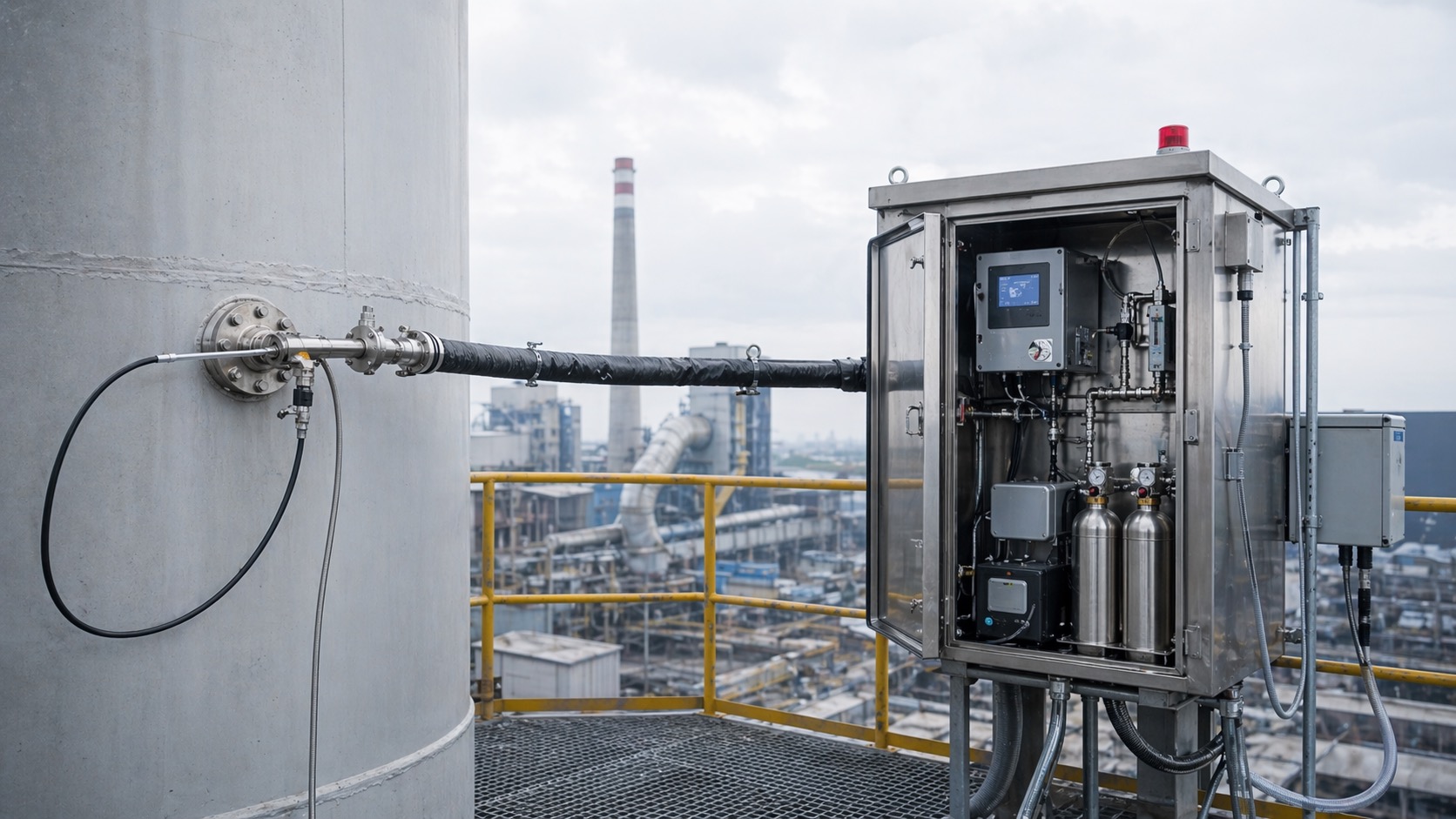
Brochure-aligned wall-mounted continuous emission monitoring system using high-temperature UV-DOAS (xenon/deuterium source) with integrated heated cell at 180–200 °C and zirconia O₂. Installs directly at the sampling point with no separate probe or heated transfer line, reducing project footprint versus cabinet CEMS. Measures SO₂, NO, NO₂, NH₃, Cl₂, O₂ in a single enclosure. Dual-range (1:10) capability supports both low-emission compliance ranges and high-concentration process duty on the same analyzer.
- Wall-mounted one-piece CEMS — no separate sampling probe or heated transfer line
- Six gases in one enclosure: SO₂ / NO / NO₂ / NH₃ / Cl₂ / O₂
- UV-DOAS with xenon or deuterium source, cell heated to 180–200 °C
- Dual-range 1:10 — covers ultra-low compliance and high-concentration process duty
Full Technical Specifications
Key Performance
| Metric | Value | Status |
|---|---|---|
| Gases | SO₂, NO, NO₂, NH₃, Cl₂, O₂ | confirmed |
| Principle | UV-DOAS @ 180–200 °C + ZrO₂ for O₂ | confirmed |
| O₂ Range | 0–25% vol | confirmed |
| Response | <120 s T90 | confirmed |
| Dual Range | 1:10 switchable | confirmed |
| Install | Wall-mount, no heated transfer line | confirmed |
Measurement
| Specification | Value |
|---|---|
| Gases | SO₂, NO, NO₂, NH₃, Cl₂, O₂ |
| Gas Principle | High-temperature UV Differential Optical Absorption Spectroscopy (UV-DOAS) |
| Light Source | Xenon or Deuterium lamp |
| O₂ Principle | Zirconia (ZrO₂) |
| O₂ Range | 0–25 % vol |
| Linearity | ≤ ±2 % F.S. |
| Repeatability | ≤ 2 % |
| Baseline Drift | ≤ ±2.5 % F.S. / 7 d |
| Range Drift | ≤ ±2.5 % F.S. / 7 d |
| Response (T90) | < 120 s |
| Dual Range | 1:10 switchable (low compliance + high process on same unit) |
Physical
| Specification | Value |
|---|---|
| Form Factor | Wall-mounted integrated CEMS — no separate probe or heated line |
| Housing | Wall-mount enclosure (measurement box + control box) |
| Cell Heating | 180–200 °C (integrated heated cell) |
Interface
| Specification | Value |
|---|---|
| Analog Output | 4–20 mA |
| Digital | RS-485 / RS-232 — protocol customizable (Modbus etc.) |
| Output Configuration | Customer-specified channels and protocol |
Where This Analyzer Fits
This model is mapped to the following industry applications and process duties.
Deployment Environments
Common process environments where this model is evaluated.
Certification Scope
Standards are listed with scope and status so engineering review can verify the applicable enclosure, area, and safety case.
| Standard | Scope | Status |
|---|---|---|
| CE | Approval listed in certificationsDetail | approved |
| Compact CEMS | Product packaging / form-factor badge, not a third-party CEMS type approval | not-claimed |
| Internal FAT protocol for UV-DOAS CEMS | Listed in certificationsDetail; site acceptance and regulatory certificate scope remain project-specific | conditional |
Request Documentation
Request technical datasheets, user manuals, certificates, and application notes for this model.
Evidence Notes
Compact wall-mounted CEMS architecture
ZS9100 packages high-temperature UV-DOAS channels and zirconia O2 into a wall-mounted enclosure at the sampling point. The engineering value is footprint and heated-transfer-line simplification for stacks where the declared gas set and certification scope match the project.
Compact CEMS boundary against cabinet CEMS
The v1 comparison positions ZS9100 for compact SO2 / NOx / NH3 / Cl2 / O2 duty, while GS-CEMS-300 remains the cabinet path for CO / CO2 inclusion, integrated dust and flow reporting, and broader type-approval requirements.
Technical & Engineering Details
Secondary engineering detail — expand each topic for the full measurement, envelope, sample-system, calibration, integration, maintenance and application evidence.
01 Measurement Principle and Limits
How the measurement is bounded
ZS9100 is a wall-mounted CEMS using high-temperature UV-DOAS for SO2, NO, NO2, NH3, and Cl2 with a zirconia ZrO2 O2 channel in the same enclosure.
Requires
- Integrated heated cell maintained at 180-200 C
- Direct wall-mount installation at the sampling point
- Channel configuration and protocol mapping confirmed at order
- Expected NH3 and SO2 peak concentrations reviewed before selection
Known Interferents
- Very high SO2 may affect simultaneous NH3 reading according to v1 known limitations
- High-concentration NH3 is outside the currently declared range
- UV-DOAS channels can require spectral-overlap review for acid-gas matrices
- ZrO2 O2 channel follows oxygen partial-pressure and cell-temperature constraints
Matrix Limits
- CO and CO2 are not declared channels for this compact CEMS path
- Dust above the stated low-dust boundary requires blowback and probe review
- CEMS-level type approval scope must be confirmed per project
02 Operating Envelope
Use these limits as selection inputs, then confirm sample condition, ambient exposure, and materials before quotation.
- High-concentration NH3 duty
- CO or CO2 reporting requirement
- CEMS-level QAL1 / MCERTS claim without project certificate review
- Dust above declared low-dust boundary without blowback review
03 Sample System Boundary
Sampling mode, conditioning components, and exclusions define where the analyzer responsibility ends and the sample system begins.
- wall-mounted analyzer enclosure
- integrated heated cell
- UV-DOAS optical path
- zirconia O2 cell
- control box
- 4-20 mA and RS-485 / RS-232 interface
- No separate heated transfer line is included in this compact CEMS path
- Cabinet CEMS remains the path when CO / CO2 and integrated dust / flow reporting are required
04 Calibration & Validation site-specific
Calibration method, interval, traceability, and audit support are shown only when structured data is available.
Zero / Span Method
Internal FAT protocol is listed; site zero/span and audit sequence must be specified per project
Interval
Not stated in v1 source data
Audit Support
- Internal FAT protocol for UV-DOAS CEMS
- Project-specific CEMS acceptance review
05 I/O & Integration
Signal outputs and communication interfaces shown from the published specification fields on this product page.
Analog Output
4–20 mA
Digital
RS-485 / RS-232 — protocol customizable (Modbus etc.)
Output Configuration
Customer-specified channels and protocol
DAHS Review Note
Confirm protocol map, channel naming, alarm states, and reporting format during project integration review.
06 Maintenance & Spares site-specific
Tasks, consumables, and access items are shown only when structured maintenance data is available.
- Inspect UV lamp, optical windows, and heated cell during scheduled service
- Confirm SO2 and NH3 peak matrix before relying on simultaneous reporting
- Review dust loading and blowback need before wall-mount stack installation
- Confirm RS-485 / RS-232 protocol and channel mapping at order
- UV lamp service parts
- optical window service parts
- zirconia O2 cell service parts
Service Access
Wall-mounted analyzer and control box; lamp and cell serviced in place per v1 service-access note
07 Application Evidence
Application context from real deployment scenarios — gases monitored, process conditions, target range, and the fit / not-fit boundary for each duty.
Post-SCR NH₃ Slip on Coal / Gas / Biomass Boilers
Why It Fits
Integrated 180–200 °C heated cell keeps NH₃ above dew point without a separate heated transfer line; DeNOx slip and NOₓ report from the same optical head.
Not a Fit When
Not a fit when expected NH₃ exceeds the low-ppm slip band, or when SO₂ peaks are very high and simultaneous NH₃ must stay active — send expected peaks for engineering review.
Waste-Incineration Acid-Gas Stack CEMS
Why It Fits
UV-DOAS six-channel measurement consolidates SO₂ / NOₓ / Cl₂ / O₂ into one wall-mount enclosure — reduces rack and shelter footprint on space-constrained incinerator retrofits.
Not a Fit When
Project certification target (QAL1 / MCERTS) must be confirmed per site — current CE marking is a CE conformity declaration, not CEMS-level type approval.
Chlor-Alkali Cell-Room / Vent Gas Cl₂
Why It Fits
UV-DOAS absorption gives direct Cl₂ measurement without an electrochemical sensing cell; optical inspection and calibration checks remain part of long-term Cl₂ reporting.
Not a Fit When
Hazardous-area Ex approvals are not currently declared on ZS9100 — if Zone 1 / Zone 2 mounting is mandatory, confirm project envelope with engineering before selection.
Retrofit CEMS Where Cabinet Footprint Is Not Available
Why It Fits
Integrated probe + heated cell removes the separate sampling probe and heated transfer line — drops installation cost and commissioning time versus rack CEMS where a climate-controlled cabinet is not feasible.
Not a Fit When
Not a fit when CO / CO₂ are required channels (choose GS-CEMS-300 turnkey cabinet instead), or when dust > 50 mg/m³ without blowback budget.
Frequently Asked Questions
How does ZS9100 compare with GS-CEMS-300 Turnkey Cabinet CEMS?
ZS9100 is a compact wall-mounted UV-DOAS unit measuring SO₂/NO/NO₂/NH₃/Cl₂/O₂ with no separate probe or heated line. GS-CEMS-300 is a turnkey cabinet CEMS combining NDIR + UV-DOAS + paramagnetic covering SO₂/NOₓ/CO/CO₂/O₂ plus dust/flow in a climate-controlled cabinet. Choose ZS9100 when Cl₂ or NH₃ is required and cabinet footprint is unavailable; choose GS-CEMS-300 for CO/CO₂ inclusion, EN 14181 QAL1 certification across all channels, and integrated dust/flow reporting.
Can ZS9100 measure high-concentration ammonia?
No. ZS9100 currently cannot measure high-concentration NH₃ — the analyzer is tuned for DeNOx slip and compliance ranges. Confirm expected NH₃ normal and peak concentration with the engineering team before quoting so range selection, range switching, or dilution can be reviewed.
What happens when SO₂ and NH₃ coexist at high concentrations?
Very high SO₂ may interfere with NH₃ reading. Confirm the expected SO₂ peak and whether NH₃ must be reported continuously or only as slip indication. Engineering review determines whether the duty profile is within ZS9100 capability or whether a cabinet CEMS with separate NH₃ channel is required.
Does ZS9100 need a heated sampling line?
The integrated heated cell at 180–200 °C and direct wall-mount installation at the sampling point can replace the separate probe and heated transfer line required by cabinet CEMS. This reduces project installation cost and footprint when the site matrix fits wall-mounted CEMS duty.
What is the “dual range 1:10” capability?
Each gas channel can be configured with two ranges in a 1:10 ratio — for example a low-emission compliance range and a high-concentration process range on the same analyzer. This is useful for stacks where normal duty is compliance-level but startup/upset events drive concentrations 5–10× higher.
Related & Alternatives
Alternative Solutions
 GS-CEMS-300
GS-CEMS-300 Turnkey CEMS System
Complete emission monitoring: SO₂, NOₓ, CO, CO₂, O₂, dust, flow
CEMS System View Specs GS-CEMS-200
GS-CEMS-200 CEMS SO₂/NOₓ Analyzer
UV-DOAS emission analyzer for continuous SO₂ and NOₓ compliance
CEMS System View Specs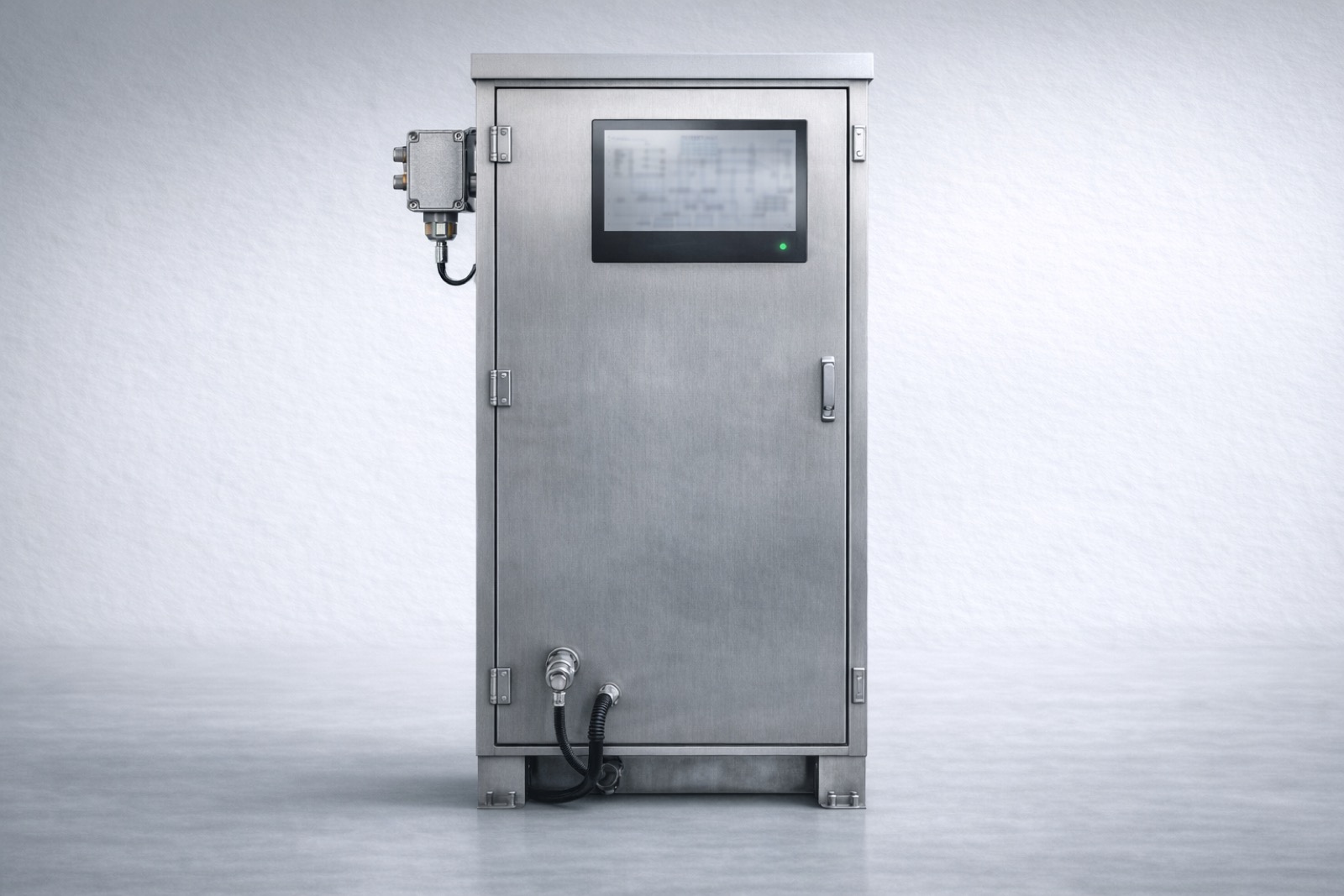 GS8701-NH3
CEMS Ammonia Analyzer
Extractive CEMS ammonia analyzer with UV-DOAS for continuous emission monitoring
CEMS / Multi-Gas View SpecsRelated Measurement Technologies
Measuring more than just multi-gas? Explore complementary analytical categories.
 CO / CO₂
CO/CO₂ Analyzers
Non-dispersive infrared (NDIR) analyzers for carbon monoxide and carbon dioxide measurement in combustion control, emission monitoring, and indoor air quality applications.
View Products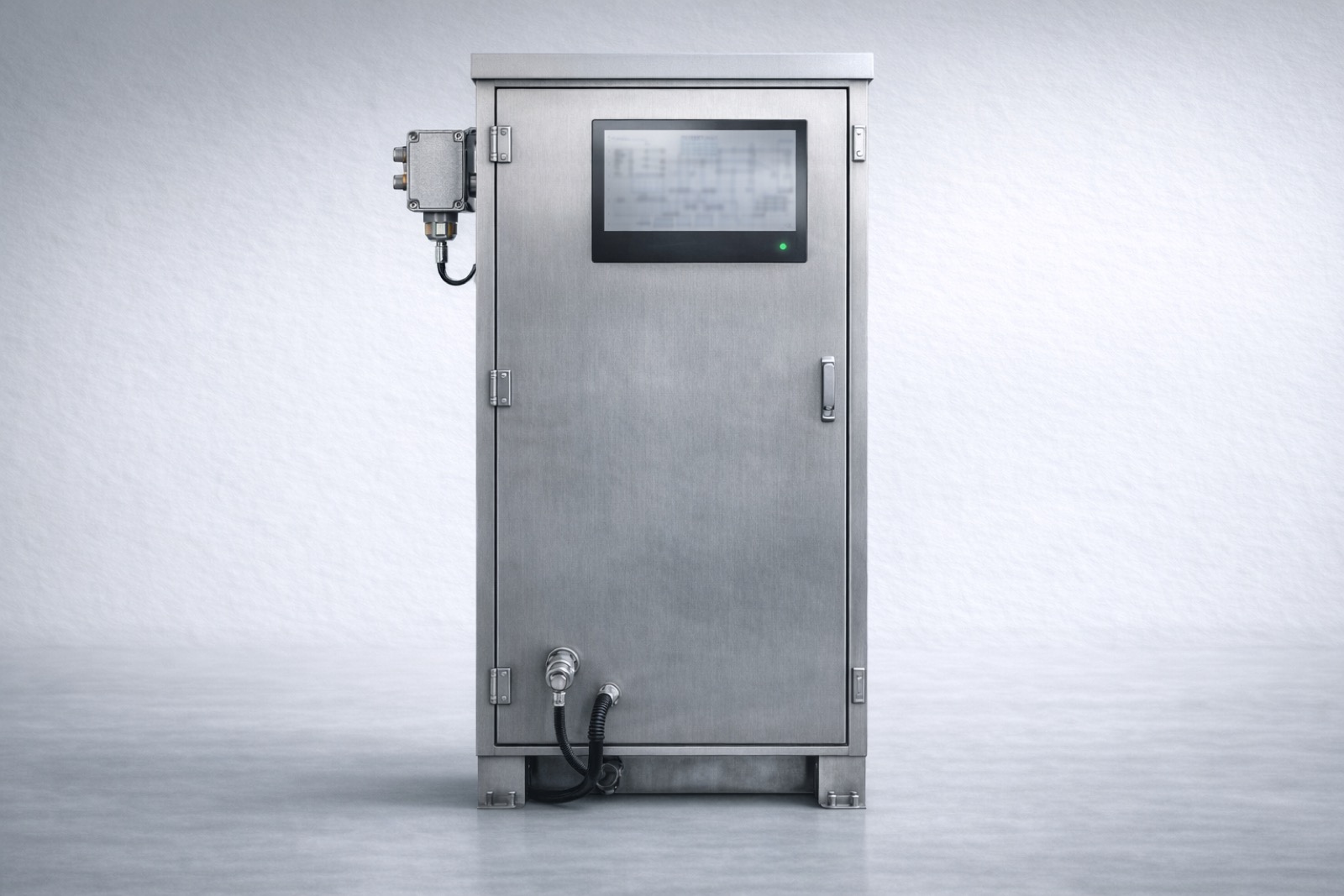 SO₂ / NOₓ
SO₂/NOₓ Analyzers
UV-DOAS and chemiluminescence analyzers for sulfur dioxide and nitrogen oxide measurement, essential for CEMS compliance and flue gas desulfurization control.
View ProductsCompare ZS9100 with adjacent options
Review neighboring models by technology, positioning, and form factor before moving to quotation.
When this model is preferred
Select ZS9100 when its measurement principle, range, and form factor match the process duty and certification scope.
When to consider an alternative technology
Consider another analyzer when the gas matrix, sample temperature, hazardous-area scope, or reporting requirement falls outside the stated envelope.
Review ZS9100 against site conditions
Send gas range, sample temperature, pressure, moisture, and certification needs before final model selection.