
GS8600-MG Multi-Component FTIR Analyzer
Flagship 12-component simultaneous gas analyzer with AI drift compensation
- Components
- Up to 12 simultaneous
- Accuracy
- ±0.5% of range
- Response
- <8s T90
- Drift
- <0.5% FS / month (AI-compensated)
Overview
The GS8600-MG is a process FTIR analyzer configured for simultaneous measurement of up to 12 gas components. AI-assisted drift compensation supports long-running optical stability review.
- 12-component simultaneous measurement
- AI-assisted drift compensation
- Self-learning cross-interference correction
- Industry 4.0: OPC-UA, MQTT, Modbus TCP
Full Technical Specifications
Key Performance
| Metric | Value | Status |
|---|---|---|
| Components | Up to 12 simultaneous | confirmed |
| Accuracy | ±0.5% of range per component | confirmed |
| Response | <8 s T90 | confirmed |
| Spectral Range | 2-16 µm (650-5000 cm-1) | confirmed |
| Resolution | 1 cm-1 | confirmed |
| Sample Cell | Up to 180 C heated cell | confirmed |
Measurement
| Specification | Value |
|---|---|
| Principle | Fourier Transform Infrared Spectroscopy |
| Components | Up to 12 simultaneous |
| Accuracy | ±0.5% of range per component |
| Response T90 | <8 s |
| Spectral Range | 2–16 µm (650–5000 cm⁻¹) |
| Resolution | 1 cm⁻¹ |
Physical
| Specification | Value |
|---|---|
| Dimensions | 600 × 480 × 550 mm (bench/rack) |
| Weight | 45 kg |
| Housing | Powder-coated steel with vibration-isolated optics |
| Interferometer | Corner-cube retroreflector (alignment-free) |
Electrical
| Specification | Value |
|---|---|
| Power | 100–240 VAC 50/60 Hz, 200 W |
| Analog Output | 4 × 4–20 mA isolated |
| Digital | Modbus TCP, OPC-UA, MQTT, Ethernet/IP |
| Display | 10″ industrial touchscreen |
| Storage | Internal SSD 500 GB |
Environmental
| Specification | Value |
|---|---|
| Operating Temp | +5 °C to +45 °C |
| Humidity | 0–85 % RH non-condensing |
| Sample Temp | Up to 180 °C (heated cell) |
| Sample Pressure | −50 to +500 mbar |
| N₂ Purge | Optional for low-ppm applications |
Certifications
| Specification | Value |
|---|---|
| EMC | EN 61326-1 |
| Safety | EN 61010-1 |
| Connectivity | OPC Foundation certified |
| Quality | ISO 9001:2015 |
Where This Analyzer Fits
This model is mapped to the following industry applications and process duties.
Deployment Environments
Common process environments where this model is evaluated.
Certification Scope
Standards are listed with scope and status so engineering review can verify the applicable enclosure, area, and safety case.
| Standard | Scope | Variant | Status | Document |
|---|---|---|---|---|
| CE / UKCA | Approvals listed in certification detail | Project variant | approved | On request |
| EN 61010-1 | Safety standard listed in specifications and certification detail | Project variant | approved | On request |
| EN 61326-1 | EMC standard listed in specifications and certification detail | Project variant | approved | On request |
| OPC-UA certified | Connectivity standard listed in specifications and certification detail | Project variant | approved | On request |
Request Documentation
Request technical datasheets, user manuals, certificates, and application notes for this model.
Evidence Notes
Multi-component FTIR architecture for refinery and petrochemical gas streams
The v1 petrochemical scenario uses one FTIR platform for several refinery gas components that would otherwise require separate analyzer paths. The engineering case is channel consolidation, shared sample handling, and model-based interference review rather than a promised reduction in footprint or calibration effort.
Technical & Engineering Details
Secondary engineering detail — expand each topic for the full measurement, envelope, sample-system, calibration, integration, maintenance and application evidence.
01 Measurement Principle and Limits
How the measurement is bounded
FTIR captures a full infrared spectrum and uses chemometric models to resolve multiple configured gas components from overlapping absorption bands.
Rejects
- Gas components not covered by the configured chemometric library
- Condensing sample without heated cell or conditioning review
- Field component changes without channel validation
Requires
- Component list and chemometric model selected for the target gas matrix
- Heated cell or sample conditioning selected according to moisture and condensation risk
- Vibration-isolated optics and stable purge / sample handling for low-ppm applications
- Channel-by-channel calibration and interference review before adding field components
Interferents and Limits
- H2O has broad infrared absorption and can affect FTIR channels if the model and conditioning are not matched to the matrix
- CO2, hydrocarbons, NH3, and H2O can share spectral regions and require chemometric deconvolution review
- Low-ppm duty may require N2 purge and tighter sample handling
02 Operating Envelope
Use these limits as selection inputs, then confirm sample condition, ambient exposure, and materials before quotation.
- Condensing sample without heated cell or conditioning review
- Unvalidated field addition of gas components
- Low-ppm duty without purge and matrix review
03 Sample System Boundary
Sampling mode, conditioning components, and exclusions define where the analyzer responsibility ends and the sample system begins.
- FTIR heated sample cell
- chemometric model library
- GS-SCS-800 heated sampling system or GS-SCS-600 cool-dry system as selected by moisture duty
- optional N2 purge for low-ppm applications
- No universal sample-conditioning path is declared; sample handling depends on moisture and target components
04 Calibration & Validation site-specific
Calibration method, interval, traceability, and audit support are shown only when structured data is available.
Zero / Span Method
Channel calibration and chemometric model verification are component-specific; v1 states software-configurable gases and drift-compensation workflow
Interval
Not stated in v1 source data; FAQ references extended intervals as architecture context only
05 I/O & Integration
Signal outputs and communication interfaces shown from the published specification fields on this product page.
Analog Output
4 × 4–20 mA isolated
Digital
Modbus TCP, OPC-UA, MQTT, Ethernet/IP
Display
10″ industrial touchscreen
Storage
Internal SSD 500 GB
DAHS Review Note
Confirm protocol map, channel naming, alarm states, and reporting format during project integration review.
06 Maintenance & Spares site-specific
Tasks, consumables, and access items are shown only when structured maintenance data is available.
- Verify the configured component list and chemometric model after process-matrix changes
- Inspect heated cell and optical path according to sample moisture and particulate loading
- Review N2 purge supply for low-ppm applications
- Confirm OPC-UA / MQTT / Modbus TCP data mapping after channel changes
- Optical-path service parts
- sample-line filter or conditioning parts
- calibration gases per configured channel
07 Application Evidence
Application context from complex industrial environments.
Application Context
Ethylene crackers needing simultaneous monitoring of 8 gas components (CO, CO₂, CH₄, C₂H₄, C₂H₆, C₃H₈, H₂O, NH₃) traditionally instrument 8 separate analyzers, consuming rack space and creating 8 independent calibration cycles.
Architecture Response
A single GS8600-MG replaces all 8 analyzers in one 6U rack space, and AI drift compensation supports stable calibration over extended intervals, so cracker-side instrumentation footprint and calibration overhead both shrink to a single platform.
Frequently Asked Questions
How does FTIR measure multiple gases simultaneously?
FTIR captures the complete infrared absorption spectrum in a single scan. Mathematical deconvolution (chemometric modeling) resolves overlapping absorption bands to quantify each component independently — even when spectral features overlap.
What is AI drift compensation?
The onboard AI model continuously analyzes measurement patterns and environmental conditions to predict and correct for long-term optical drift. This extends the interval between manual recalibrations from weeks to 6+ months.
Can I add or change measured components in the field?
Yes, the GS8600-MG is software-configurable. New gas components can be added by loading the appropriate chemometric model from the configured library — no hardware changes required.
What is the cross-interference correction?
When two gases absorb at similar wavelengths, the AI-powered cross-interference matrix automatically compensates. The self-learning algorithm improves correction accuracy over time as it accumulates operational data.
Does it support Industry 4.0 integration?
Yes, native OPC-UA (OPC Foundation certified), MQTT, and Modbus TCP. Direct integration with plant historians, SCADA, MES, and digital twin platforms without middleware.
What sample conditioning is required?
For process gas, use the GS-SCS-600 Cool-Dry System or GS-SCS-800 Heated System depending on moisture content. The optional heated 180 °C sample cell allows hot-wet measurement without sample conditioning for some applications.
Related & Alternatives
Alternative Solutions


Related Measurement Technologies
Measuring more than just multi-gas? Explore complementary analytical categories.
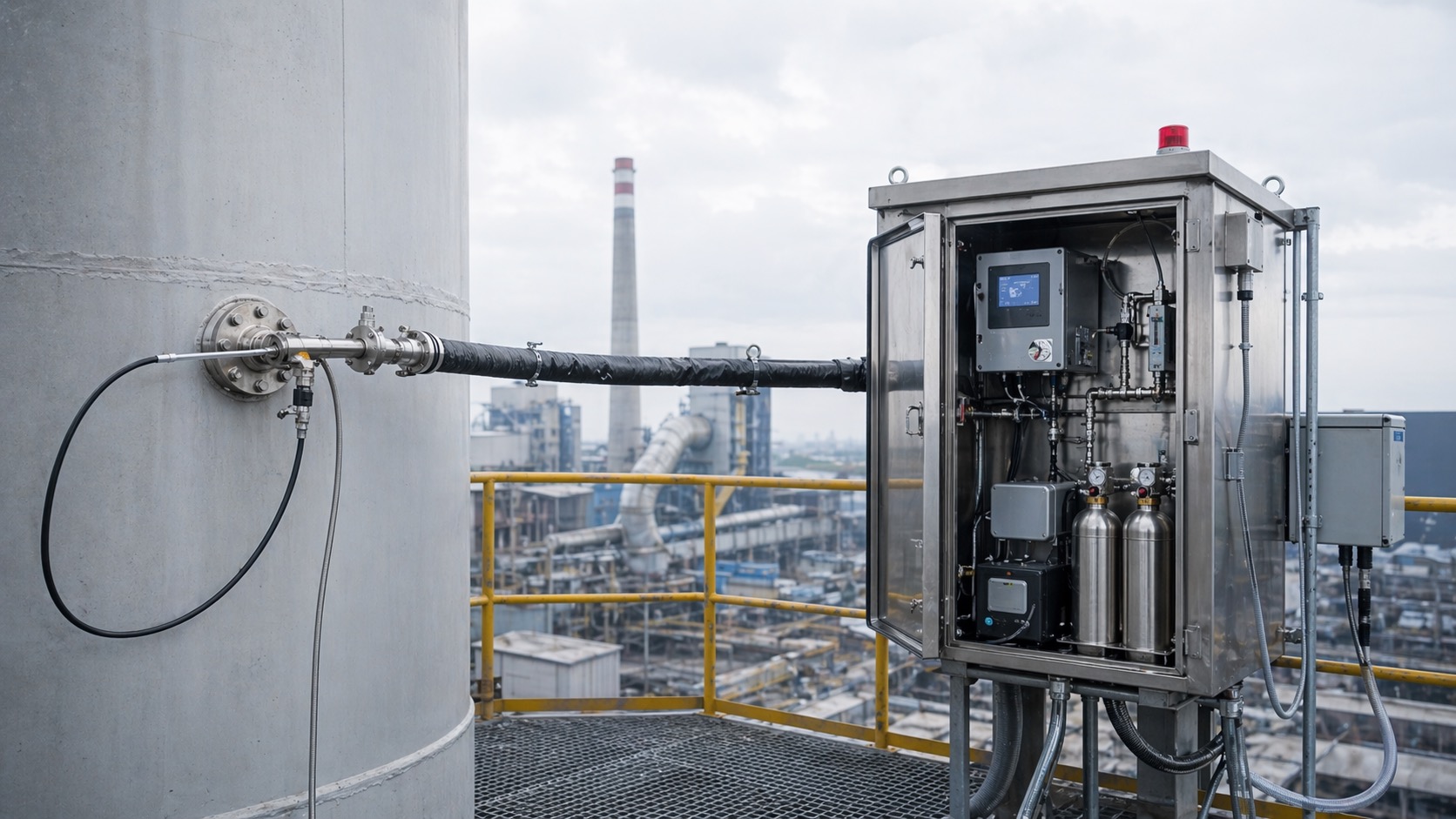 CO / CO₂
CO/CO₂ Analyzers
Non-dispersive infrared (NDIR) analyzers for carbon monoxide and carbon dioxide measurement in combustion control, emission monitoring, and indoor air quality applications.
View Products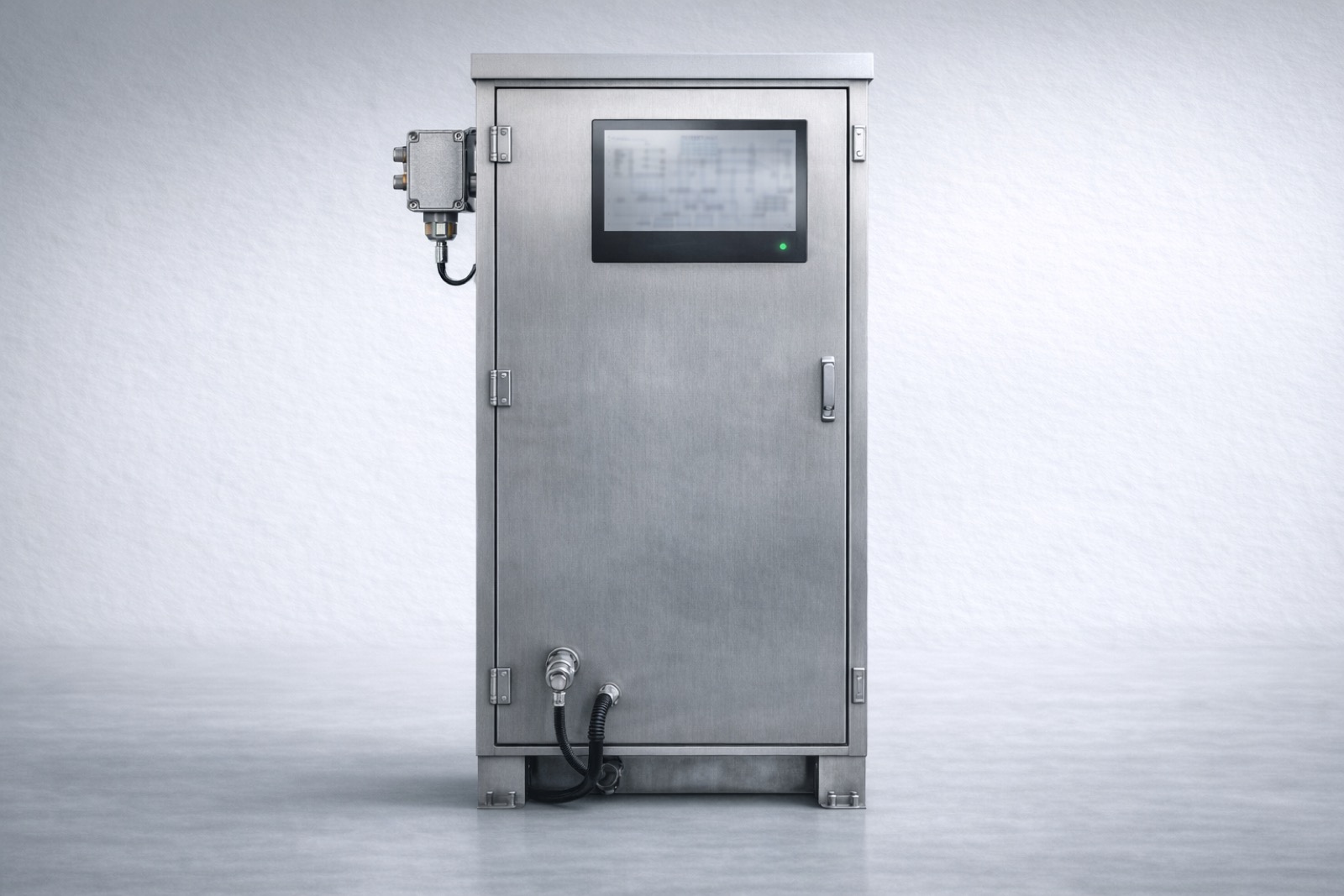 SO₂ / NOₓ
SO₂/NOₓ Analyzers
UV-DOAS and chemiluminescence analyzers for sulfur dioxide and nitrogen oxide measurement, essential for CEMS compliance and flue gas desulfurization control.
View ProductsCompare GS8600-MG with adjacent options
Review neighboring models by technology, range, accuracy basis, and form factor before moving to quotation.
When this model is preferred
Select GS8600-MG when its measurement principle, range, and form factor match the process duty and certification scope.
When to consider an alternative technology
Consider another analyzer when the gas matrix, sample temperature, hazardous-area scope, or reporting requirement falls outside the stated envelope.
Review GS8600-MG against site conditions
Send gas range, sample temperature, pressure, moisture, and certification needs before final model selection.