
TDLAS + NDIR Dual Technology
Biogas & Landfill Gas Analyzers — TDLAS and NDIR Multi-Gas Analysis Solutions
Precise gas analysis from wellhead to compliance report. GESHINE’s dual-technology analyzer platform monitors CH₄, CO₂, O₂, H₂S and trace gases in landfill, biogas & wastewater applications.
Why Accurate Biogas Analysis Matters for Your Operations
Biogas composition is not static. Methane in anaerobic digestion process varies in the range of 50-75% while landfill gas contains about 45-60% CH₄ with CO₂ present at 40-60%. Hydrogen sulfide — the corrosion factor for your engines, toxin to your catalysts, alert to your safety shutdowns — can be in the range of 0 to 30,000 mg/m³ depending on feedstock and digester condition.
When your analyzer gets them wrong, the flow of failures begins: unexpected shutdowns due to presence of H₂S, surface methane readings above EPA’s 500 ppm above-background action level, and corrosion of downstream equipment that fails to announce itself until cost counts roll in. At facilities performing quarterly wellhead surveys with portable instruments, monitoring blind spots develop between visits — blind spots where composition changes are missed and compliance liabilities pile up.
GESHINE gas analyzers overcome this problem with either continuous or sample-on-demand monitoring of the entire biogas range. Our TDLAS technology isolates individual molecular absorption lines to give trace-gas levels of accuracy down to parts per billion, while NDIR sensors monitor the bulk CH₄ and CO₂ concentrations with demonstrated stability over time. The result is a gas analysis system that detects composition changes at the moment — not six weeks later.
GESHINE Biogas & Landfill Gas Analyzer Series — Models & Selection Guide
Four core series plus specialized extractive and multi-fold analyzers — covering a wide range of deployment scenarios in biogas and landfill gas applications.
Bench-top TDLAS
Benchtop Laser Gas Analyzer
Direct measurement of O₂, CO, CO₂, CH₄, HF & H₂O in a mixed gas stream on a continuous basis. TDLAS-based, ≤±1% FS repeatability, T90 response <10 seconds and dual analog + digital output. For permanent site installation in control rooms or analyzer shelters at biogas or landfill gas-to-energy plants — bench-top TDLAS form factor by project review.
OEM TDLAS module
Laser Gas Analysis Module
OEM-ready TDLAS module for system integrators creating custom gas analysis systems. Measures the same gas species as the bench-top TDLAS analyzer in a compact 300×200×130mm form factor. Field-configurable measurement ranges — O₂ from 0-25%, CO₂ from 0-50%, CH₄ from 0-10% — with the same ≤±1% FS performance specifications. OEM laser-module form factor by project review.
ZS8300
Hazardous-Area Wellhead Analyzer
Engineered for hazardous-area review at landfill wellheads & biogas plant gas headers. Enclosure, ingress-protection, and functional-safety documentation are reviewed against the target installation before quotation. In-situ or extractive deployment and optical path are confirmed against the installation at project review.
ZS6500
Infrared Gas Analyzer (NDIR)
High-stability NDIR platform measuring CO, N₂O, CO₂, CH₄. Cooled infrared detector coupled with a long-path (up to 5m) absorption cell generates low-drift performance with ≤±2% FS accuracy. NDIR sensors for CH₄ & CO₂ are designed for long service life, reducing the recurring sensor replacement cost found with electrochemical-only solutions.
Analyzer Selection Guide
| Criteria | Bench-top TDLAS | OEM TDLAS module | ZS8300 | ZS6500 |
|---|---|---|---|---|
| Technology | TDLAS | TDLAS | TDLAS | NDIR |
| Gas Species | O₂, CO, CO₂, CH₄, HF, H₂O | O₂, CO, CO₂, CH₄, HF, H₂O | O₂, CO, CO₂ | CO, N₂O, CO₂, CH₄ |
| Accuracy | ≤±1% FS | ≤±1% FS | ≤±1% FS | ≤±2% FS |
| Response (T90) | ≤10s | ≤10s | ≥1s (adjustable) | — |
| Explosion Protection | — | — | Hazard review | — |
| Ingress Protection | Project review | — | Project review | — |
| Functional Safety | — | — | Loop review | — |
| Deployment | Analyzer shelter | OEM integration | Fixed / hazardous (project review) | Analyzer shelter |
| Best For | Biogas plant CEM | Custom systems | Landfill wellheads | Bulk CH₄/CO₂ monitoring |
| Output | RS485 + 4-20mA | RS485 + 4-20mA | RS485 + 4-20mA + Relay | RS232/RS485 |
All GESHINE analyzers can be factory-configured for custom measurement ranges. If your application needs a non-standard range (e.g., CH₄ at 0-100% for raw biogas vs. 0-5% for upgraded biomethane), let our application engineers know when requesting a quote so lead time and any engineering charges can be confirmed upfront.
Each analyzer series addresses a specific deployment scenario. The selection guide above helps engineers match technology to application requirements.
TDLAS vs NDIR — How Our Dual-Technology Approach Outperforms Single-Sensor Analyzers
Most biogas analyzers on the market use only one detection technology, operating on a compromise curve. GESHINE uses both TDLAS and NDIR in the same analyzer product line — so your facility receives a well-matched sensor technology for each gas species.
| Parameter | TDLAS (GESHINE ZS8xxx) | NDIR (GESHINE ZS6xxx) | Electrochemical (Typical Portable) |
|---|---|---|---|
| Detection Limit | ppb (parts per billion) | ppm to % range | ppm range |
| Accuracy | ≤±1% FS | ≤±2% FS | ≤±3% FS typical |
| Cross-Interference | Low — single absorption line | Moderate — broadband IR overlap | Significant — cross-sensitive to multiple gases |
| Response Time | Sub-second to 10s | 10–90s | 30–120s |
| Long-Term Stability | Excellent — minimal drift | Good — periodic zero/span needed | Fair — drift increases with age |
| Sensor Lifespan | Designed for analyzer service life (laser source) | Designed for analyzer service life (optical path) | 1–6 years (consumable cells) |
| Calibration Frequency | Verification-based (less frequent) | Periodic zero/span | Monthly to quarterly |
| Ideal Application | Trace gas (H₂S, NH₃, HCl, HF) | Bulk CH₄, CO₂ measurement | Field spot-checks |
| Relative Cost | Higher (decreasing) | Moderate | Lower (but higher lifetime cost) |
TDLAS operates by targeting a specific molecule’s absorption line — a single rotational-vibrational transition unique to a gas species. This target-specific absorption helps resolve H₂S measurement at 1 ppm with reduced cross-interference from the 60% CH₄ and 35% CO₂ surrounding it. Broadband infrared NDIR uses bandpass optical filters to identify an absorption band — this approach is well suited for high-concentration targets but it can give false readings in detection regions where different gas absorption bands overlap.
The total cost of ownership advantage of NDIR-based CH₄ and CO₂ analyzers is significant: these optical sensors generally avoid the recurring cell replacement cycle associated with electrochemical sensors. Over a five-year operating cycle, the analyzer that costs less initially may actually cost more in total.
Find Your Optimal Biogas Analyzer
The interactive selector loads three steps for application, gas species, and installation environment. If the tool does not load, send those details to application engineering for a configured recommendation.
Biogas & Landfill Applications — From Anaerobic Digesters to Wellhead Monitoring
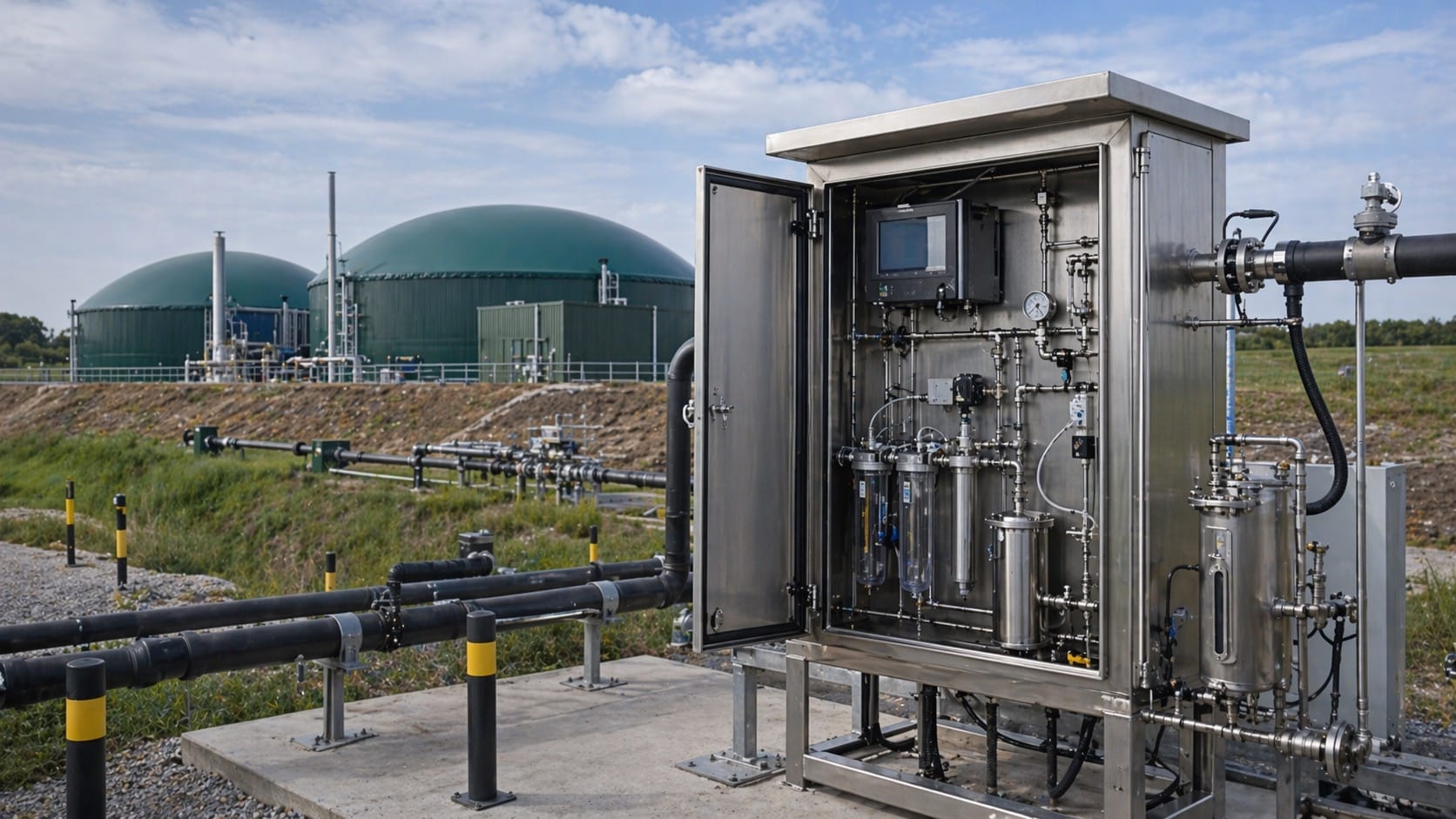
Landfill Gas Collection & Monitoring
40 CFR Part 60 Subpart XXX requires quarterly surface methane monitoring with a 500 ppm action level above background — repeat violations lead to enforcement.
GESHINE ZS8300 hazardous-area analyzer offers real-time wellhead coverage with zone suitability confirmed at RFQ, supplementing required surface checks with continuous process records.
500 ppm EPA action level — required surface survey context
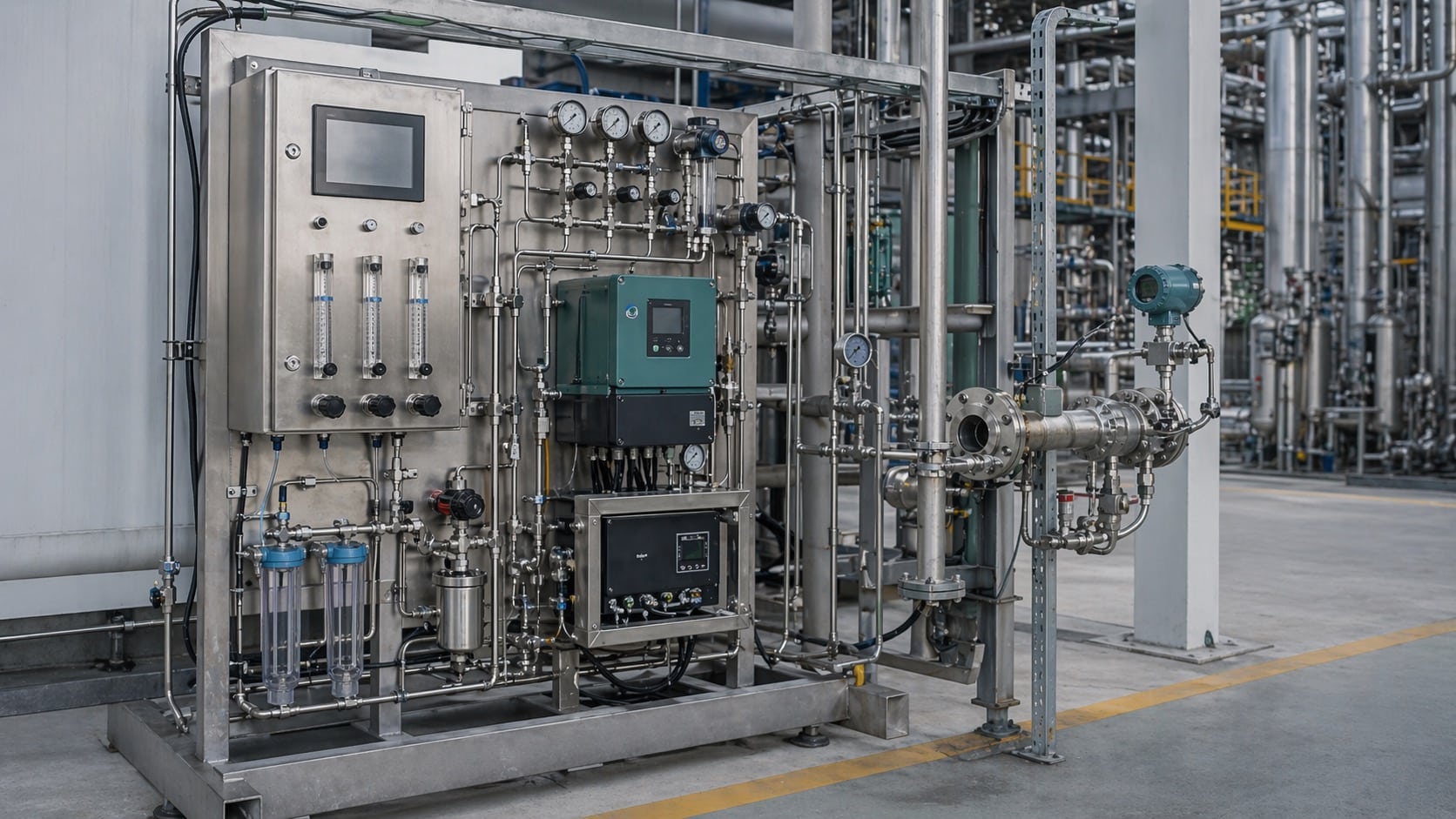
Anaerobic Digestion Biogas Plants
Variations in H₂S from 500 to 5,000 mg/m³ within hours can harm CHP catalysts before the next scheduled gas sampling.
Continuous biogas monitoring with the GESHINE bench-top TDLAS analyzer or ZS6500 heads off excursions before they cause damage — tracking methane percentage and identifying problems in real time.
500–5,000 mg/m³ H₂S variation range

Wastewater Treatment Plants
Biogas from anaerobic sludge digesters has a broader range of H₂S content than agricultural digestion, requiring reliable composition monitoring.
The OEM TDLAS laser module integrates directly into existing SCADA-controlled gas handling systems, providing continuous composition monitoring for equipment protection and compliance sampling.
Direct SCADA integration — OEM TDLAS module
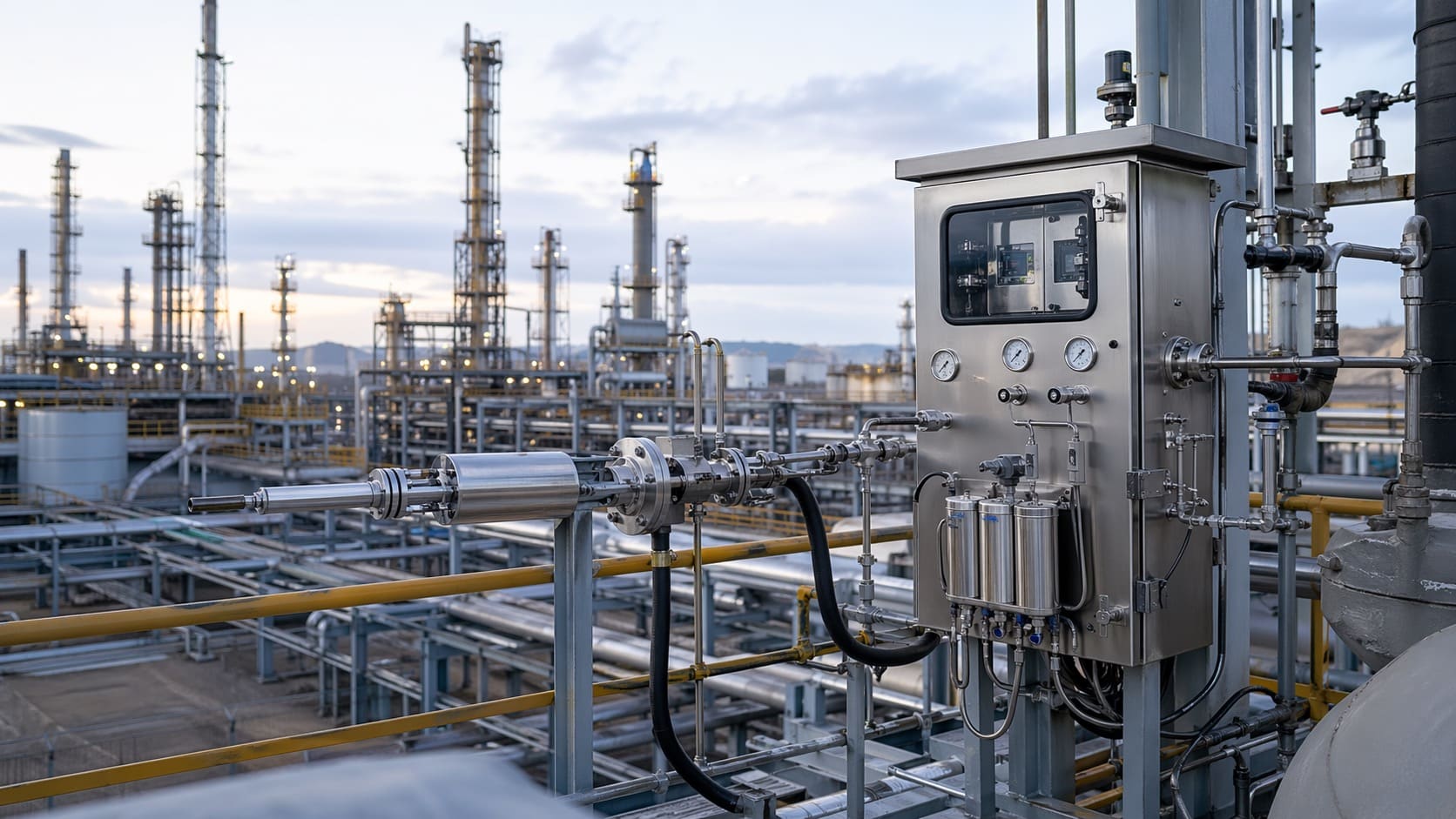
Biomethane Upgrading & RNG Facilities
Pipeline-quality methane (>96% CH₄) requires verification that trace contaminants are below pipeline injection specifications after upgrading.
GESHINE analyzers provide run-to-run confirmation of product purity at both the raw biogas inlet (high-range) and upgraded outlet (trace-level) from a single product line.
>96% CH₄ pipeline injection spec verification
Industrial Process Gas Analysis
CEMS and process gas applications require continuous extractive sampling with high-temperature capability for regulatory compliance monitoring.
The ZS8600 multi-fold optical path system and ZS8100 extractive analyzer provide the sensitivity needed for regulatory compliance in power plants, steel mills, and waste-to-energy facilities.
CEMS regulatory compliance — continuous monitoring
Biogas monitoring requirements vary dramatically by application. Our application engineers help match analyzer technology, range, and documentation scope to your specific operating conditions.
Biogas & Landfill Gas Composition Reference Chart
Typical composition ranges and recommended GESHINE sensor technology for each component. Data sourced from EPA, ATSDR, and published research.
Biogas (AD)
| Component | Typical Range | Visual | Recommended Sensor |
|---|---|---|---|
| CH₄ (Methane) | 50 – 75% | NDIRZS6500 / bench-top TDLAS | |
| CO₂ (Carbon Dioxide) | 25 – 55% | NDIRZS6500 / bench-top TDLAS | |
| H₂S (Hydrogen Sulfide) | 10 – 30,000 mg/m³ | TDLASZS8100 / bench-top TDLAS | |
| O₂ (Oxygen) | <1% | EC or TDLAS | |
| N₂ (Nitrogen) | <5% | — | |
| H₂O (Water Vapor) | <10% (saturated) | TDLASbench-top TDLAS | |
| NH₃ (Ammonia) | <1% | TDLASZS8100-NH₃ |
Landfill Gas
| Component | Typical Range | Visual | Recommended Sensor |
|---|---|---|---|
| CH₄ (Methane) | 45 – 60% | NDIRZS6500 / bench-top TDLAS | |
| CO₂ (Carbon Dioxide) | 40 – 60% | NDIRZS6500 / bench-top TDLAS | |
| N₂ (Nitrogen) | 2 – 5% | — | |
| O₂ (Oxygen) | 0.1 – 1% | TDLASZS8300 | |
| H₂S (Hydrogen Sulfide) | 0 – 1% | TDLASZS8100 | |
| NMOCs (Trace) | 0.01 – 0.6% | Specialized — contact engineering |
Biomethane/RNG
| Component | Pipeline Spec | Visual | Monitoring Point |
|---|---|---|---|
| CH₄ (Methane) | >96% | Outlet — NDIRZS6500 | |
| CO₂ (Carbon Dioxide) | <2% | Outlet — NDIRZS6500 | |
| H₂S (Hydrogen Sulfide) | <4 ppm | Outlet — TDLASbench-top TDLAS | |
| H₂O (Moisture) | <7 lb/MMscf | Outlet — TDLASbench-top TDLAS | |
| O₂ (Oxygen) | <0.4% | Outlet — TDLASbench-top TDLAS |
GESHINE vs Portable-Only Analyzers — 5-Year Cost Comparison
The interactive cost calculator compares portable spot-check monitoring against continuous online monitoring over five years. Defaults are illustrative planning values and can be adjusted to match your operation.
Request Custom Cost AnalysisCompliance, Documentation & Explosion Protection
GESHINE analyzers are built for regulated landfill and biogas applications. Below are the key standards and documentation scopes referenced for this page. Direct questions to our team on which documentation applies to your target installation environment.
Functional-Safety Documentation
The ZS8300 series can be reviewed against functional-safety hardware and software requirements in accordance with the target site lifecycle. SIL targets, diagnostic coverage, proof-test intervals, and voting architecture must be confirmed per project before safety-instrumented function use.
Documentation requirements vary by jurisdiction and application. Our engineering team advises on the specific approvals needed for your installation site and process conditions.
Procurement Guide — Pricing, Lead Time & After-Sales Support
GESHINE operates on a direct factory-to-application basis out of our facility in the East Lake High-Tech Development Zone (Hubei, China). This gives your procurement department direct access to our engineering department during specification design and quoting phases.
Pricing Structure
Analyzer pricing depends on model, gas species configurations, and measuring range customization. Itemized quotes separate base analyzer, sensor modules, sampling accessories, and installation support. Volume pricing applies for large-scale wellhead or aggregate biogas plant deployment.
Lead Time
Standard configurations ship from our Wuhan manufacturing plant. Custom range configurations require engineering review. Consult our team with your measurement range specifications for exact lead times.
After-Sales Support
All GESHINE analyzers include remote diagnostic support and a calibration verification package. Our service includes commissioning and calibration support on-site, remote diagnostics, sensor module replacement and calibration, and annual monitoring verification audits. The modular design allows sensor cell replacements in-site, keeping analyzers installed and online during upgrades.
Frequently Asked Questions — Biogas & Landfill Gas Analyzers
How does a biogas analyzer work?
A biogas analyzer pulls a gas sample through detection cells that identify and quantify individual gas species. NDIR sensors measure infrared absorption at wavelengths characteristic of CH₄ and CO₂ — reliable for bulk composition tracking in the 0-100% range. TDLAS sensors take a different approach: a tunable diode laser scans across a single molecular absorption line, narrowing the measurement to one gas species with ppb-level sensitivity. This is why TDLAS excels at trace-gas measurement — it helps quantify H₂S at 1 ppm even when surrounded by high methane and CO₂ backgrounds. For landfill and biogas operators, the practical difference is straightforward: NDIR tells you how much methane and CO₂ you have, TDLAS tells you how much of the dangerous trace contaminants are present.
What gases can GESHINE analyzers measure?
Our analyzer platform covers the full biogas and landfill gas spectrum: CH₄ (0-100%), CO₂ (0-50%), O₂ (0-25%), CO (0-100%), H₂S, HF, NH₃, and H₂O. Our bench-top TDLAS and OEM TDLAS module form factors handle primary components and trace gases alike, while the ZS6500 NDIR platform provides cost-effective bulk CH₄/CO₂ measurement with long-life optical sensor durability.
What factors should I consider when selecting a landfill gas analyzer?
Three critical questions: (1) Gas species measurement coverage — ensure the analyzer measures all component gases, including potential trace NMOCs if under EPA NSPS Subpart XXX. (2) Application type — portable for quarterly wellhead surveys vs. continuous online monitoring for real-time compliance. (3) Lifetime cost — the initial purchase accounts for only 30-40% of 5-year operating costs; sensor replacement cycles and calibration needs drive the rest.
Can GESHINE analyzers integrate with existing SCADA or PLC systems?
Yes. RS485 and 4-20mA outputs come standard on every series. The ZS8300 adds relay outputs for alarms. Most SCADA and PLC integrations can use standard industrial outputs without proprietary software.
Are these analyzers suitable for applications beyond landfills?
GESHINE analyzers support biogas-adjacent projects such as anaerobic digestion plants, secondary wastewater treatment, biomethane upgrading and RNG injection stations, CHP engine monitoring, and selected industrial process gas applications. The ZS8100 extractive series expands application coverage into power plants, steel mills, and waste-to-energy facilities for flue gas emissions monitoring (NH₃, HCl, HF). Same TDLAS measurement principle, different application context.
What is the typical sensor lifespan for biogas analyzers?
NDIR-based sensors for CH₄ and CO₂ measurement are designed for long service life, reducing the replacement cycle associated with consumable electrochemical cells. Electrochemical sensors for other gases typically last 4-6 years depending on exposure and maintenance. GESHINE’s standardized modular sensor platform enables each cell to be field-changed without sending the analyzer back to a service center, minimizing downtime.
Need analyzer configuration help for a specific biogas stream?
Talk to an EngineerReferences & Transparency
References & Data Sources
- EPA — Basic Information about Landfill Gas (LMOP Program)
- EPA — How Does Anaerobic Digestion Work? (AgSTAR Program)
- EPA — Municipal Solid Waste Landfills: NSPS, EG and Compliance (40 CFR Part 60 Subpart XXX)
- ATSDR — Landfill Gas Basics, Chapter 2: Landfill Gas Composition
- IEC 60079 — Explosive Atmospheres, Equipment Protection Standards
- GB/T3836.1 / GB/T3836.2 — Explosive Atmospheres, Electrical Equipment Standards (China)
- IEC 61508 — Functional Safety of Electrical/Electronic/Programmable Electronic Safety-Related Systems (SIL target framework)
- Third-party analyzer cost-of-ownership and TDLAS-vs-NDIR technology references used for engineering cross-checks
- PMC — Composition and Toxicity of Biogas Produced by Various Feedstock Sources (NCBI)
Our Engineering Perspective on Biogas Analysis
This technical information page is based on GESHINE’s direct experience developing TDLAS and NDIR gas analyzers at our R&D Center in Wuhan’s East Lake high-tech development zone. Composition data and standards references are taken from EPA, ATSDR, and peer-reviewed publications — not from competitor performance specifications. We build analyzers measuring CH₄ from 100 ppm to 100%, H₂S at concentrations that corrode industrial equipment, and national NSPS regulated pollutants. When performance specifications are cited, they are taken from test data. When application trends or cost-of-ownership factors are cited, these sources are identified. If you have regional composition data or regulatory reports not referenced here, our application engineering team can generate a customized assessment free of charge.
Get the Right Analyzer Configuration for Your Application
Provide us with your gas types, application environment, and monitoring parameters — we will determine the ideal GESHINE analyzer along with pricing.
- Target gas species (CH₄, CO₂, O₂, H₂S, CO, NH₃, HF, H₂O)
- Application type (landfill, biogas plant, RNG, wastewater, CEMS)
- Measurement range required per gas species
- Installation environment (hazardous area classification)
- Required accuracy and response time (T90)
- Output protocols (RS485, 4-20mA, relay)
- SCADA/PLC integration requirements
- Documentation needed (hazardous area, SIL target, CE)
Get Biogas Analyzer Expert Consultation
Our application engineers specialize in biogas and landfill gas analyzer configuration for anaerobic digestion, landfill gas, biomethane upgrading, and wastewater applications.


