
Total Hydrocarbon Analyzer Solutions for FID THC / NMHC Monitoring
FID-primary continuous total-hydrocarbon and non-methane-hydrocarbon monitoring for EPA Method 25A / 25B, EN 12619, refinery tail gas, VOC incinerators, coating-line exhaust, and process vents
Heated Flame Ionization Detector (FID) analyzers for continuous total hydrocarbon measurement in refinery tail gas, RTO / CatOx destruction-efficiency verification, coating-line VOC mass reporting, and ambient fenceline NMHC environmental CEMS within EPA Method 25A / 25B and EN 12619 target scope.
Why Industrial THC Monitoring Fails — And How We Solve It
Industrial THC / NMHC measurement is a compliance-engineering problem before it is a sensor problem. The gold-standard path for continuous total-hydrocarbon reporting is a heated Flame Ionization Detector (FID) because the carbon response is near-linear across five decades, compatible with EPA Method 25A and EN 12619, and defensible in regulatory audits. A heated-FID THC analyzer is the configuration GESHINE engineers for refinery tail-gas, VOC incineration / RTO / CatOx exhaust, coating-line and solvent-recovery vents, and ambient CEMS duty — scoped per project review rather than sold as a fixed catalog box. NDIR budget instruments, PID portable field-screening, and GC-FID lab speciation remain secondary / Conditional paths in this release; single-component VOC speciation continues under voc-analyzers and methane-only monitoring stays under combustible-gas-detectors.
Total-hydrocarbon monitoring looks simple on paper and fails for operational reasons. Regulators ask plants to report THC or non-methane hydrocarbons (NMHC) as if every compound responded equally; real stacks mix C1 through C10+, at wildly different concentrations, in hot wet gas that condenses if the sample line drops below dew point. A cold spot at the probe, the heated line, or the instrument inlet quietly under-reports exactly the heavier species regulators care about.
The second failure mode is selectivity posture. Non-FID alternatives trade compliance-grade defensibility for cost or portability. NDIR can provide a budget THC proxy on simple matrices, but its response is compound-dependent and it is not the default path for EPA Method 25A reporting. PID is useful for walk-around screening around solvent operations but does not respond to methane and is not a continuous stack instrument. GC-FID with a methane cutter gives lab-grade NMHC speciation but is not a default on-line process head.
GESHINE’s THC work therefore centers on the heated-FID process / CEMS approach — EPA Method 25A / 25B / EN 12619 target scope, multi-decade range, and a sample system engineered to stay above hydrocarbon dew point all the way from probe to burner. FID THC / EPA Method 25A solutions are available by project review rather than as an off-the-shelf SKU. NDIR, PID, and GC-FID stay Conditional engineering-review paths, and VOC single-component speciation and methane-only duty are explicitly routed to the voc-analyzers and combustible / methane categories.
How Heated FID Works for Total Hydrocarbons
Flame Ionization Detection — Heated
A hydrogen-fueled flame ionizes organic compounds entering the heated FID oven. The resulting ion current is near-linear per carbon atom across roughly five decades of concentration — the reference-method response behind EPA Method 25A, EN 12619, and VDI 3481 Part 3 for continuous total hydrocarbon measurement.
- Near-linear carbon response across ~5 decades (sub-ppmC fenceline to 100,000 ppmC flare)
- Heated probe + heated sample line + heated FID oven preserve heavy-VOC integrity above dew point; Method 25A requires heated components ≥110 °C, with final setpoint confirmed by matrix
- Optional catalytic methane cutter for NMHC operating mode (non-methane hydrocarbon reporting)
- EPA Method 25A / 25B, EN 12619, and VDI 3481 Part 3 target reference-method scope
FID Sensing Principle
Four THC Sensing Paths at a Glance
Heated FID is the primary and reference-method path for continuous THC / NMHC measurement across the full range. NDIR budget and GC-FID speciation are available as engineering-review pathways for specific applications.
Heated FID Process Analyzer
Primary Reference Method
Heated probe + heated sample line + heated FID oven. Near-linear carbon response across ~5 decades. EPA Method 25A / 25B target scope. Multi-range: 0–10 to 100,000 ppmC.
FID + Methane Cutter (NMHC)
Non-Methane Reporting Mode
Optional catalytic methane cutter (Pt / Pd at ~400 °C) upstream of FID oxidises CH₄ selectively — the uncut-minus-cut difference gives NMHC for permit reporting where methane is excluded.
NDIR Budget Path
Light-VOC Process Control
Band-limited NDIR for light-VOC process control without compliance mandate. Simplified utility supply (no H₂ fuel). Not a reference-method equivalent. Routed via engineering review — not independently registered on this page.
GC-FID Lab Speciation
Conditional Engineering Review
Chromatographic separation for NMHC speciation, TO-15 / TO-14A analysis, and source profiling. Routed per project — single-component VOC speciation is served under voc-analyzers, not this page.
Technology Comparison — FID (Primary) / NDIR (Conditional) / PID (Conditional) / GC-FID (Conditional)
Heated FID is the primary path for continuous THC / NMHC duty; NDIR, PID, and GC-FID remain Conditional engineering-review alternatives. The highlighted column tracks the FID path across every selection parameter.
| Parameter | FID (Primary) | NDIR (Conditional) | PID (Conditional) | GC-FID (Conditional) |
|---|---|---|---|---|
| Recommended Path | Heated-FID THC analyzer — continuous process + CEMS THC / NMHC (available by project review) | Conditional budget path only — compound-dependent response, not the default | Conditional portable field-screening for solvent / LDAR surveys | Conditional lab / bench-top path for speciated NMHC or Method 25C |
| Typical Deployment | Continuous stack / vent / duct and ambient CEMS reporting | Simple matrices where cost dominates and selectivity tolerance is wide | Walk-around fenceline, LDAR, or solvent-room screens (not continuous CEMS) | Periodic laboratory NMHC / speciation audits, not on-line process head |
| Carbon Response | Near-linear per carbon atom across ~5 decades; compliance-defensible | Compound-dependent; biased toward specific C–H / C=O absorption bands | Ionization-potential dependent; no response to methane | Column-separated peaks; sum or NMHC after methane cutter |
| Selectivity / Interference | Robust against most inorganic matrix species; sensitive to oxygen-background / oxygen-synergism effects, so calibration gas and stack O2 context must be aligned | Moisture / CO₂ overlap and heavy VOC loss are well-known failure modes | Humidity and aromatics can dominate response; no methane response and weak / lamp-dependent response to small alkanes such as ethane | Best speciation but carrier-gas + column maintenance burden is high |
| Sample System | Heated probe + heated sample line + heated FID oven (Method 25A: heated components ≥110 °C to prevent condensation; final setpoint by matrix) | Shorter heated lines acceptable; dryers erase heavy VOCs if misapplied | Battery-powered walk-around; requires zero-air bump-check discipline | Bench instrument + gas panel + cylinder management + method specialist |
| Maintenance Burden | Medium — H₂ fuel cylinder / zero air / span gas discipline; oven interlocks | Low to medium — source / detector drift + span discipline | High — lamp cleaning / bump-check / battery rotation | High — column conditioning, carrier gas, retention-time re-validation |
| Best For | EPA Method 25A / EN 12619 CEMS + refinery tail gas + RTO / CatOx + coating VOC vents | Budget vent / process indicators where a wide selectivity tolerance is acceptable | Plant-wide walk-around, LDAR, or fenceline screening | Lab NMHC speciation, Method 25C audits, or R&D exhaust characterization |
The highlighted column marks the heated-FID primary path; the three Conditional columns are engineering-review alternatives, not default continuous-compliance routes.
Choosing THC, NMHC, VOC Speciation, or Methane-Only Workflows
Heated-FID THC / NMHC analyzer configurations for EPA Method 25A / 25B, EN 12619 CEMS, RTO / CatOx DRE, coating-line VOC, and fenceline duty — scoped and built around your matrix during engineering review.
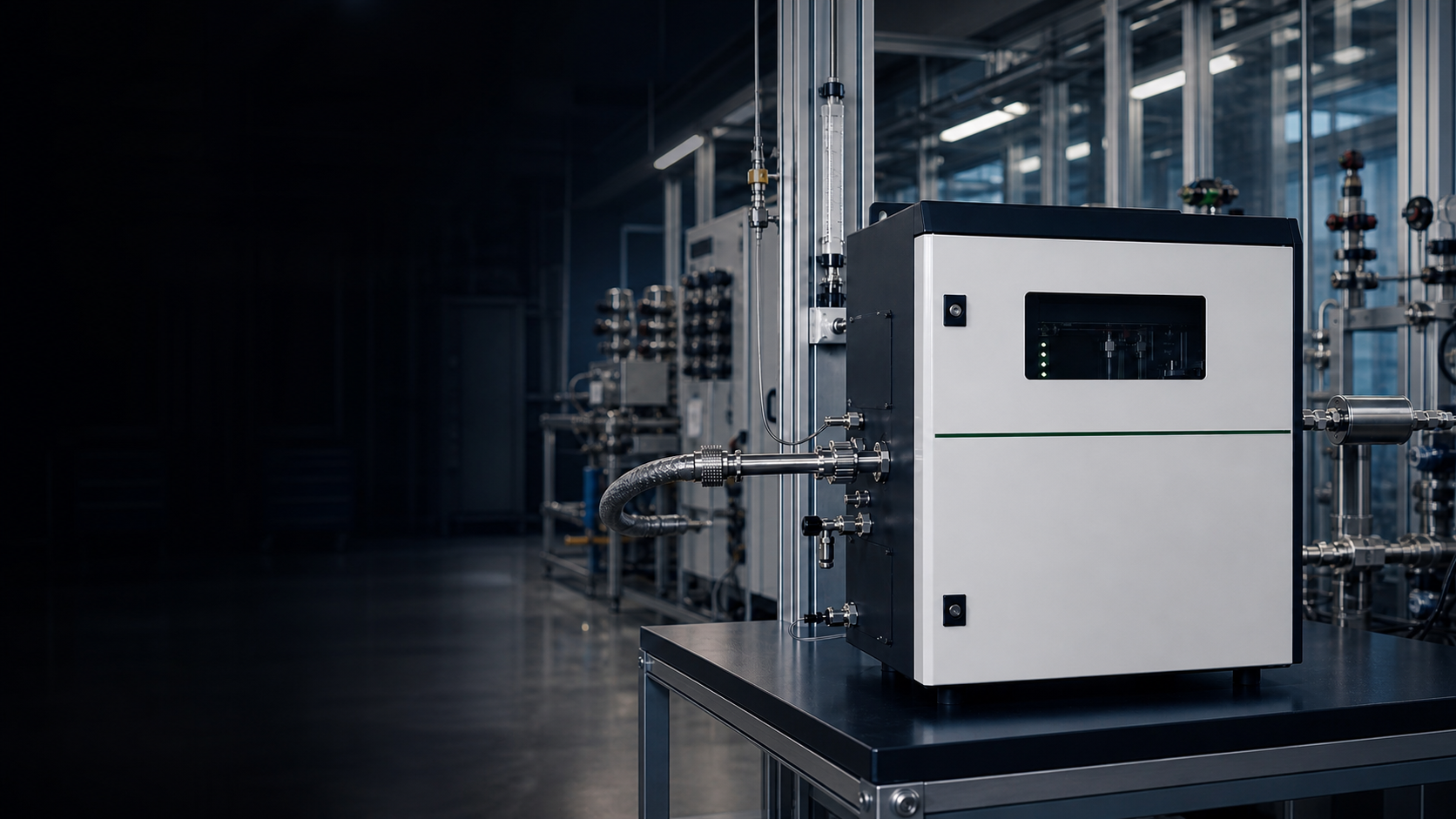 THC / NMHC · Heated FID
Heated FID (Flame Ionization Detector) · Reference-Method Workflow
Total THC / NMHC Compliance Workflow
Heated-FID total hydrocarbon (THC / NMHC) configuration for EPA Method 25A / 25B, EN 12619 CEMS, refinery tail gas, VOC incinerator (RTO / CatOx) DRE, coating-line VOC, and ambient fenceline NMHC duty — assembled by project review
- Range
- 0–10 ppmC / 0–100 ppmC / 0–10,000 ppmC / 0–100,000 ppmC (multi-range)
- Accuracy
- ±2 % FS or ±0.5 ppmC (whichever greater)
- Response (T90)
- <2 s (FID burner response)
- Detection Limit
- <0.05 ppmC (ambient / low-range duty)
- Zero / Span Drift
- <1 % FS / 24 h (typical, confirmed per project)
- Output
- 4–20 mA / RS-485 Modbus / HART (standard)
- Heated FID burner — near-linear carbon response across ~5 decades of concentration
- EPA Method 25A / 25B, EN 12619, and VDI 3481 Part 3 target scope for reference-method CEMS duty
- Heated probe + heated sample line + heated FID oven preserve heavy-VOC integrity above dew point; Method 25A requires heated components ≥110 °C, with final setpoint confirmed by matrix
- Optional catalytic methane cutter for NMHC operating mode (non-methane hydrocarbon reporting)
- Multi-range firmware spans sub-ppmC fenceline through ramp-up flare / tail-gas duty on one instrument
Heated-FID THC / NMHC process + CEMS configuration, available by project review. Numeric specifications are industry-typical targets pending GESHINE hardware documentation; compliance type-approval paths (MCERTS, US EPA PS-8A, VDI 3481) remain target / pending scope and are not claimed as certified.
A simplified NDIR budget path for non-compliance light-VOC duty is offered as a referenced engineering option, not a registered reference-method configuration on this page.
Choosing THC, NMHC, VOC Speciation, or Methane-Only Workflows
| Application Scenario | Recommended Path | Why |
|---|---|---|
| Stack CEMS THC / NMHC continuous reporting (EPA 25A / EN 12619) | Heated-FID THC analyzer | FID is the regulatory reference method; near-linear carbon response is defensible |
| VOC incinerator destruction-efficiency verification (inlet + outlet) | Heated-FID THC analyzer on inlet + outlet | Same reference method at both points eliminates carbon-bias bookkeeping |
| Coating line / printing / solvent recovery exhaust VOC mass monitoring | Heated-FID THC analyzer | Heavy-solvent integrity preserved by heated line + oven above dew point |
| Ambient / fenceline THC + NMHC environmental reporting | Heated-FID THC analyzer (low-range) | Sub-ppmC detection limit with standard scrubbed-zero air conditioning |
| Non-regulated vent / process THC indicator, wide selectivity tolerance | NDIR THC — Conditional (principle reference only) | Compound-dependent response; not a default EPA 25A path |
| Solvent / fugitive walk-around, LDAR, fenceline screens | PID portable — Conditional (sister voc-analyzers) | No CH4 response, no stack continuous certification |
| Laboratory speciated NMHC audit / Method 25C | GC-FID — Conditional (partner / lab path) | Best NMHC speciation but high OPEX and not a continuous CEMS head |
Extractive FID Mounting Configurations for THC / NMHC
Heated FID Process Analyzer (Rack-Mount)
A heated probe draws stack gas through a heated sample line held above the source dew point into a heated FID oven, where hydrocarbons ionize in a hydrogen-fueled flame. A heated-FID THC analyzer installs as a 19-inch rack unit or field enclosure — the standard configuration for continuous process and CEMS duty where heavy-VOC integrity must be maintained.
Heated probe at stack + heated sample line above source dew point + heated FID oven. Particulate filter upstream of oven. H₂ fuel gas (99.999 % grade) + zero-grade combustion air + span gas supply. No dryer required — heated path bypasses moisture condensation.
- Refinery tail gas and flare / vent THC continuous monitoring
- EPA Method 25A / 25B compliance-grade CEMS with propane span traceability
- Coating-line and solvent-recovery exhaust VOC mass emission tracking
Dual Inlet / Outlet DRE Configuration
Two heated-FID THC analyzers deployed simultaneously at the inlet and outlet of a VOC incinerator (RTO / CatOx) deliver live destruction removal efficiency (DRE) from continuous ppmC readings. Both analyzers share a synchronized calibration cycle and report to the DCS over Modbus — supporting solvent-using-process TOC reporting where EN 12619 or legacy EN 13526 applies, and EPA permit requirements for DRE verification.
Two independent heated probe + heated sample line assemblies at inlet and outlet sample points. Shared span gas supply for synchronized calibration. DCS integration for live DRE calculation from the differential ppmC signals.
- RTO / CatOx VOC incinerator destruction efficiency reporting and permit compliance
- Solvent-using process emission verification under EN 12619 or legacy EN 13526 (inlet loading + outlet residual)
- Live abatement performance tracking and alarm on DRE exceedance
Ambient / Fenceline NMHC CEMS
A low-range heated-FID THC analyzer (0–10 ppmC range) configured for ambient and fenceline THC / NMHC environmental monitoring stations. The heated FID with catalytic methane cutter provides the NMHC signal at ppmC levels required by fenceline monitoring programs and EPA Method 25A / 25C ambient duty.
Ambient air inlet with particulate pre-filter and moisture trap; short heated line to FID oven. Scrubbed zero air from integrated purifier. Traceable propane span cylinders per EPA Method 25A QA/QC protocol. Methane cutter active for NMHC mode.
- Refinery and chemical plant fenceline THC and NMHC monitoring programs
- EPA Method 25A / 25C ambient air NMHC CEMS where ppb sensitivity is required
- Environmental CEMS for photochemical ozone precursor reporting
Single heated-FID THC analyzer for stack outlet or process vent monitoring — fixed FID process duty with scheduled span gas checks per EPA Method 25A QA/QC protocol.
Dual-point inlet / outlet FID configuration for RTO / CatOx DRE verification — live destruction efficiency from synchronized continuous ppmC signals on both process connections.
Low-range (0–10 ppmC) fenceline NMHC configuration with methane cutter — designed for 24/7 unattended environmental CEMS with H₂ generator supply and remote data transmission.
Applications — Refinery Tail-Gas / RTO & CatOx DRE / Coating VOC / Ambient CEMS
Where total hydrocarbon measurement lives in the plant: from refinery tail gas and RTO destruction efficiency to coating-line VOC permits and fenceline NMHC programs, heated-FID measurement covers four distinct duties on the same reference-method backbone.

Refinery Tail-Gas and Flare Monitoring
Challenge
Refinery tail-gas and flare systems carry a dynamic mix of C1–C10+ hydrocarbons at ranges from a few ppmC (during steady operation) to percent-level (during upset and blowdown). Regulators expect continuous THC reporting that holds up in an audit, but heavy hydrocarbons condense the moment a sample line loses temperature, under-reporting exactly the species compliance cares about.
Solution
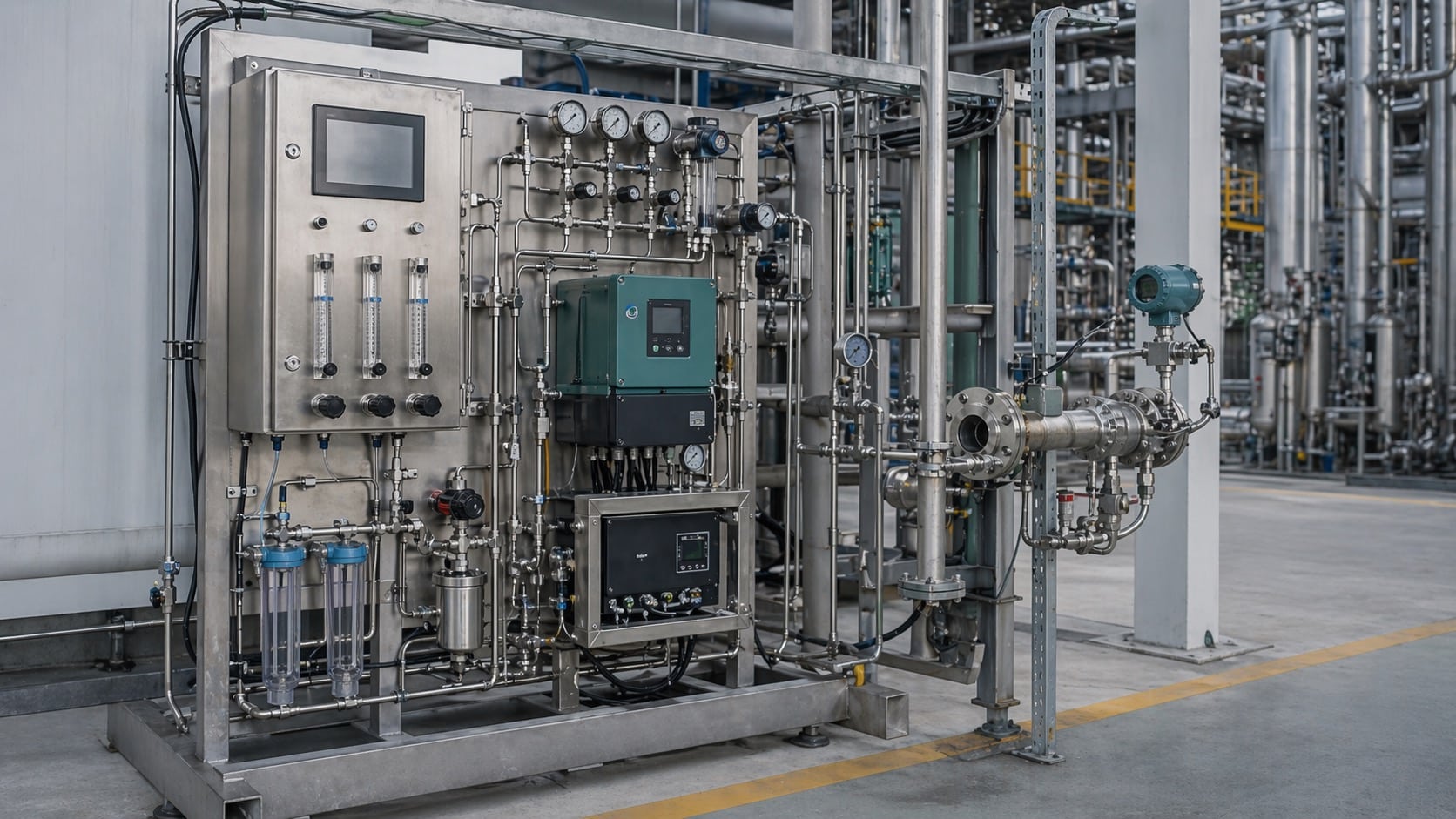
Specify a heated-FID THC analyzer on the tail-gas or flare-header duct with a heated probe, a heated sample line held above the hydrocarbon dew point, and an EPA Method 25A-style heated FID oven. The near-linear carbon response across five decades lets the same instrument cover steady-state and upset operation without saturation-driven rework.
VOC Incinerator (RTO / CatOx) DRE Verification
Challenge
Destruction-efficiency (DRE) proof for regenerative and catalytic oxidizers requires THC measurement at both inlet and outlet. Running two instruments on different reference methods silently biases the DRE result because the carbon-response curves disagree, especially with heavy aromatics and halogenated species.
Solution
Use two heated-FID THC analyzers on the same reference method at inlet and outlet. Identical carbon response eliminates inter-instrument bias; the shared heated-line specification and EN 12619 target scope make the DRE number directly defensible.

Coating Line and Solvent-Recovery VOC Emission
Challenge
Paint booths, printing presses, adhesive lines, and solvent-recovery units release a wide boiling-range mixture of oxygenated and aromatic hydrocarbons. Many budget instruments either drop heavy VOCs on unheated tubing or saturate on ramp-up, forcing operators into manual integrations regulators eventually question.
Solution
Install a heated-FID THC analyzer with heated stack sampling downstream of coating or solvent operations. Multi-decade linearity handles idle, ramp, and peak production phases on the same instrument and range profile.
Ambient and Fenceline THC / NMHC CEMS
Challenge
Environmental THC and NMHC reporting at refineries, petrochemical complexes, and chemical parks pushes detection down to sub-ppmC. Analyzers that are fine for stack work often cannot resolve ambient drift without compromised zero-air discipline.
Solution
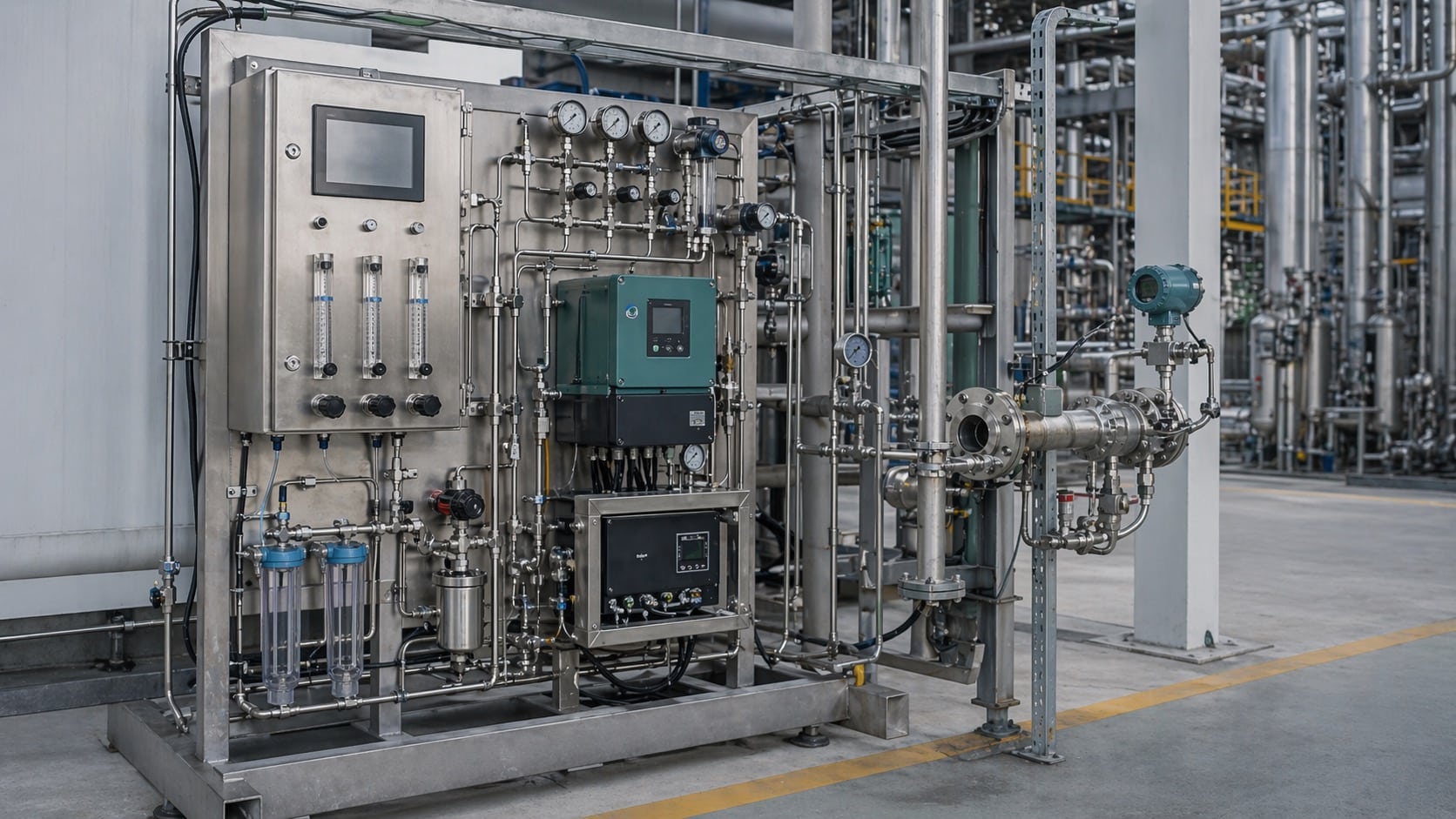
A heated-FID THC analyzer in low-range, catalyst-cutter-capable configuration handles fenceline THC and NMHC duty with scrubbed zero-air conditioning. NMHC operation uses an optional catalytic methane cutter upstream to report non-methane response only.
Equipment Certifications — CE / EPA 25A / EN 12619 / MCERTS / VDI 3481 (Target Scope)
For a heated-FID THC analyzer, certification and compliance scopes are treated as standard / method references confirmed per project, never as a pooled category claim; final scope is confirmed against the documentation package for the selected configuration during engineering review.
- CE Marking (EU equipment directive, target standard)
- EPA Method 25A / 25B compatibility (target reference-method scope, confirmed per project)
- EN 12619 compatibility (low-range stationary-source THC, target scope)
- MCERTS (UK environmental CEMS certification, target scope)
- VDI 3481 Part 3 (heated FID measurement, target scope)
- ATEX / IECEx hazardous-area variant — Conditional scope (application-dependent; confirmed per project)
- ISO 9001:2015 manufacturing quality system
Applicable Standards — EPA Method 25A / 25B / 25C / EN 12619 / VDI 3481 / MCERTS
Reference methods and performance specifications most commonly cited in THC / NMHC permits and CEMS programs:
- US EPA Method 25A — Determination of Total Gaseous Organic Concentration Using a Flame Ionization Analyzer
- US EPA Method 25B — Determination of Total Gaseous Organic Concentration Using a Nondispersive Infrared Analyzer (budget context)
- US EPA Method 25C — Determination of Nonmethane Organic Compounds (NMOC) in Landfill Gases (lab context)
- EN 12619 — Stationary source emissions — Determination of the mass concentration of total gaseous organic carbon at low concentrations in flue gases — Continuous FID method
- EN 13526 — legacy solvent-using-process TOC by continuous FID; use only where the permit or project specification still cites it, otherwise route current FID TVOC scope through EN 12619:2013
- VDI 3481 Part 3 / Part 4 — gaseous emission measurement by FID; Part 3 covers volatile organic compounds / solvents, and Part 4 covers simultaneous TOC and methane-C for NMTOC
- US EPA Performance Specification 8A — Specifications and Test Procedures for Total Hydrocarbon Continuous Monitoring Systems in Stationary Sources (where applicable; target CEMS scope)
THC / NMHC Monitoring FAQ
From THC vs NMHC reporting and EPA Method 25A requirements to FID vs NDIR selection, heated sample lines, and H₂ fuel supply.
Why is heated FID the primary path for industrial THC / NMHC monitoring?
Because the carbon response of a Flame Ionization Detector is near-linear across roughly five decades of concentration and is the explicit reference method in EPA Method 25A, EN 12619, and most MCERTS and VDI 3481 equivalents. That combination makes FID the only technology that simultaneously delivers compliance-grade defensibility and a wide enough dynamic range to cover everything from fenceline sub-ppmC duty to flare ramp events on the same instrument.
How is THC different from NMHC, VOC speciation, and methane monitoring?
THC is the sum of all carbon atoms in volatile organic species expressed as a single number (usually as ppmC). NMHC is THC minus methane, typically measured by routing sample gas through a catalytic methane cutter before the FID. VOC speciation reports individual compounds (benzene, toluene, formaldehyde, etc.) and belongs on the voc-analyzers category using PID, GC-MS, or photoacoustic paths. Methane-only duty — natural-gas leak detection, digester biogas, LEL alarms — is routed through combustible-gas-detectors / methane-analyzers. Mixing these scopes in one SKU would break both regulatory defensibility and operational ergonomics.
In an NMHC-capable heated-FID configuration, the sample is routed through an upstream catalytic methane cutter (Pt / Pd at ~400 °C) that oxidises CH₄ while passing higher hydrocarbons; the cut-channel signal subtracted from THC gives NMHC. A heated-FID THC solution typically runs THC by default and adds NMHC with the optional methane cutter — configured during project review.
When is NDIR THC ever acceptable, and when should I choose FID?
NDIR THC is a budget path for non-regulated vent indicators on simple matrices where the operator explicitly accepts compound-dependent response. NDIR appears in EPA Method 25B and is used in some industrial process indicators, but it is not the default path for CEMS THC reporting and is not a drop-in substitute for FID when an audit is involved.
In practice, choose FID whenever compliance with a reference method is required (EPA Method 25A / 25B, EN 12619), when the matrix contains heavy VOCs that would condense in an ambient-temperature NDIR sample path, when NMHC reporting is needed (methane cutter mode), or when the concentration range spans more than about 1,000 ppmC. NDIR budget analyzers work for simplified light-VOC process control without a compliance mandate where utility supply is constrained — but they do not cover heavy-VOC matrices or sub-ppmC fenceline sensitivity.
Is PID a continuous stack option?
No. Photoionization detectors are excellent for walk-around LDAR, solvent-room screens, fenceline surveys, and incident response, but they do not respond to methane, saturate on humid solvent-heavy exhaust, and are not a stationary-source reference method. On this page PID stays Conditional and cross-links to voc-analyzers for the solvent-speciation workflow.
Do we need GC-FID too?
Only when speciated NMHC data is a project deliverable — most commonly a Method 25C audit, a landfill-gas NMOC study, or a research-grade VOC characterization. GC-FID is a lab / periodic-sample path; it is not a continuous on-line THC head, and carrying it on a CEMS rack adds carrier-gas, column-conditioning, and method-validation burden that a continuous heated-FID THC analyzer avoids.
What utilities does a heated-FID THC analyzer need?
A heated-FID THC instrument needs four things on site: high-purity H2 fuel gas (99.999% / 5.0 grade, typically a dedicated cylinder or generator), zero-grade combustion air, scrubbed or certified zero gas for span / zero checks, and a heated sample line that is actually heated end to end. Skimping on any one of those — especially cold spots on the sample line — is the single most common reason THC numbers disagree with audit reference methods.
Why must a THC sample line stay heated under EPA Method 25A?
Because heavier hydrocarbons can condense before they reach the FID, biasing the THC reading low. EPA Method 25A requires all sampling components leading to the analyzer to be heated at ≥110 °C, and the heated sample line should be held at ≥110 °C to prevent condensation; it does not name 191 °C / 375 °F as the required setpoint. In practice, engineers may specify higher heated-line setpoints, including around 191 °C, when the source matrix is wet or contains high-boiling VOCs. Treat that value as a project-specific heated-line practice, not as the Method 25A requirement. The requirement that matters for compliance copy is end-to-end sample integrity: no cold spots from probe tip to FID, verified at the configured temperature. See /gas-analyzers/voc-analyzers for the related solvent-speciation workflow.
What does EPA Method 25A compliance actually require, and is a heated-FID THC analyzer certified out of the box?
EPA Method 25A is the US reference method for total gaseous organic concentration using a heated-FID continuous analyzer. It defines the probe, heated sampling components at ≥110 °C to prevent condensation (higher heated-line setpoints are matrix-specific), FID response-factor discipline, zero-gas / span-gas traceability (propane or methane as the reference carbon number), calibration error, calibration-drift, and data-handling criteria. A heated-FID THC solution is engineered around Method 25A — heated-line temperature, heated FID oven, zero / span gas connections, interlocks, and data outputs are designed to the method. Method 25A compatibility, EN 12619 target scope, VDI 3481 context, MCERTS target scope, and US EPA PS-8A total-hydrocarbon CEMS target scope are confirmed per project during engineering review. Treat a heated-FID THC / EPA Method 25A solution as a Method 25A-capable analyzer scope available by project review, not as an already-certified off-the-shelf CEMS.
Is hydrogen fuel gas safe for plant installation?
H₂ fuel gas is routinely used for FID analyzers in industrial plants under standard gas safety management. A well-specified heated-FID THC analyzer includes a full interlock system — H₂ pressure monitoring, air pressure monitoring, flame-out detection, and heated-line fault alarm — that shuts down the FID and closes the H₂ supply valve on any fault. H₂ generator units (on-site electrolysis from deionized water) are widely used instead of cylinders at unmanned monitoring stations to eliminate cylinder logistics. Site H₂ supply routing, classified-area requirements, and H₂ generator sizing should be confirmed during system specification.
How is RTO / CatOx destruction efficiency measured with a heated-FID THC analyzer?
Destruction Removal Efficiency (DRE) is calculated as (inlet ppmC – outlet ppmC) / inlet ppmC × 100 %. A dual-point configuration places one heated-FID THC analyzer upstream (inlet) and one downstream (outlet) of the RTO or catalytic oxidizer. Both analyzers run simultaneously on synchronized calibration cycles, and the DCS computes live DRE from the continuous ppmC signals. This arrangement supports solvent-using-process TOC reporting where EN 12619 or legacy EN 13526 applies, and 40 CFR Part 63 DRE permit requirements. The high-range capability of a heated-FID analyzer covers the concentrated inlet stream while the second analyzer can be configured for the low-concentration outlet range on the same instrument platform.
Does the FID analyzer need a sample conditioning system (SCS)?
The heated-FID system does not require a moisture dryer or Peltier cooler because the sample is maintained above the dew point throughout the heated path. However, a coarse particulate filter at the heated probe inlet is standard to protect the burner jet from fouling. For very high-particulate duty (sinter plant, kiln exhaust) a heated filter with automatic back-purge may be specified. The sample pressure regulator and flow controller that form the SCS on NDIR systems are replaced by the heated-path flow control integrated in the heated-FID oven module. H₂ fuel gas and zero-grade combustion air supplies are required utilities that NDIR systems do not need.
What certifications and standards apply to THC / NMHC continuous emission monitoring?
The primary reference frameworks for heated-FID THC / NMHC CEMS are: US EPA Method 25A / 25B (heated-FID continuous total organic concentration), EN 12619 (European standard for total organic carbon in stationary source emissions, FID method), EN 13526 (legacy solvent-using-process TOC by continuous FID, cited only where a permit or project specification still references it), and VDI 3481 Part 3 (German standard for heated FID). For CEMS type-approval the relevant certification paths include MCERTS (UK Environment Agency scheme) and US EPA Performance Specification 8A (total hydrocarbon CEMS target scope). A GESHINE heated-FID THC / EPA Method 25A solution targets these reference frameworks; certification numbers are confirmed per project following GESHINE documentation review and field-performance audit.
References & Transparency
Standards & References
- US EPA — Method 25A: Determination of Total Gaseous Organic Concentration Using a Flame Ionization Analyzer
- US EPA — Method 25B: Determination of Total Gaseous Organic Concentration Using a Nondispersive Infrared Analyzer
- US EPA — Method 25C: Determination of Nonmethane Organic Compounds (NMOC) in Landfill Gases
- CEN / EN 12619 — Stationary source emissions — Continuous FID method for low-concentration TOC
- CEN / EN 13526 — legacy solvent-using-process TOC by continuous FID; use only where the permit or project specification still cites it, otherwise route current FID TVOC scope through EN 12619:2013
- VDI 3481 Part 3 — Measurement of gaseous emissions; total organic carbon by FID (heated FID)
- VDI 3481 Part 4 — Measurement of gaseous emissions; simultaneous TOC and methane-C by FID for NMTOC
- ISO / IEC 17025 — General requirements for the competence of testing and calibration laboratories (for GC-FID NMHC speciation labs)
- US EPA — Performance Specification 8A: Specifications and Test Procedures for Total Hydrocarbon Continuous Monitoring Systems in Stationary Sources (where applicable; target CEMS scope)
- Environment Agency (UK) — MCERTS Performance Standards for Continuous Emissions Monitoring Systems
Transparency Statement
GESHINE does not yet offer a published THC / NMHC hardware SKU for this category; THC scope is delivered as a heated-FID THC engineering solution scoped around EPA Method 25A / EN 12619 / VDI 3481 reference-method practice, available by project review. Any range, accuracy, T90, heated-line temperature, and certification values referenced on this page reflect industry-typical heated-FID THC analyzers and remain target values until confirmed in the delivered GESHINE documentation package; MCERTS, US EPA PS-8A, and CEMS type-approval paths are listed as target / pending scope and are not claimed as certified. An NDIR THC budget configuration is referenced here only as a Conditional path discussed during engineering review, not as a separately published product. PID portable field-screening and GC-FID lab speciation remain Conditional engineering-review paths that are served better by the voc-analyzers and partner-lab workflows respectively. VOC single-component speciation stays under voc-analyzers and methane-only monitoring stays under combustible-gas-detectors / methane, so buyers on those paths should follow the sister-product cross-links instead of forcing THC into a role it is not scoped for.
Why GESHINE for Total Hydrocarbon Analyzers
Multi-range FID platform for EPA Method 25A / 25B, EN 12619, RTO DRE, and fenceline NMHC — with application engineering from specification through commissioning.
Multi-Range FID Architecture
A multi-range heated-FID architecture can span sub-ppmC ambient fenceline duty through high-load refinery tail gas and flare monitoring on a single instrument — no range switching hardware required and no compromise on heavy-VOC integrity across the full concentration span. Range strategy is confirmed per project during engineering review.
Application Engineering Support
From initial method review and sample conditioning specification through commissioning and calibration protocol setup — GESHINE application engineers assist with EPA Method 25A / 25B compliance, dual-point DRE configuration, and CEMS integration. Method review and H₂ utility requirements confirmed per project.
EPA Method 25A / EN 12619 Target Scope
FID THC / EPA Method 25A solutions, available by project review, are engineered around the heated-FID requirements of EPA Method 25A and EN 12619 — heated-line temperature, heated FID oven, zero / span gas connections, interlocks, and data outputs aligned to the method. Method compatibility and MCERTS / US EPA PS-8A total-hydrocarbon CEMS target scope confirmed per project and per-source QA/QC audit.
Manufacturer Direct
Direct access to the engineering team that designed and built your analyzer. Shorter lead times, application-specific configuration, and factory-level technical support including spare parts, H₂ fuel interlocks, and field service — with no distributor layer between you and the design team.
Engineering Review Inputs for FID THC Projects
Share your stack or vent matrix, whether you need continuous EPA Method 25A / EN 12619 CEMS, RTO / CatOx DRE verification on both inlet and outlet, coating-line VOC mass reporting, or ambient / fenceline NMHC duty. GESHINE application engineers offer FID THC / EPA Method 25A solutions, available by project review, and will return a 48-hour scoping response covering heated-FID configuration, heated-line setpoint basis, zero-gas strategy, and optional NMHC methane-cutter review. To define the right THC / NMHC monitoring approach for your duty point, please have these details ready:
- Measurement target — THC total, NMHC (with methane cutter), or both; expected concentration range (ppmC)
- Application type — stack / vent CEMS, RTO / CatOx DRE (dual-point), or ambient / fenceline NMHC
- Sample point temperature, pressure, and particulate loading; heavy-VOC compound classes if known
- Compliance standard — EPA Method 25A / 25B, EN 12619, legacy EN 13526 where cited, VDI 3481 Part 3 / Part 4 context, or MCERTS / US EPA PS-8A total-hydrocarbon CEMS target scope
- H₂ fuel gas supply available on site — cylinder or H₂ generator; available pressure and flow
- Installation environment — control room rack, field enclosure, or instrument shelter; IP requirement
- DCS integration — output protocols needed (4–20 mA, Modbus RTU, HART)
- Hazardous area classification (ATEX / IECEx zone, if applicable)

Get THC Expert Consultation
Our application engineers specialize in heated-FID selection, EPA Method 25A / EN 12619 compliance specification, dual-point DRE configuration, and H₂ fuel system integration.