
GS8610-4G Portable 4-Gas Detector
Simultaneous O₂, LEL, CO, and H₂S personal safety monitor
- Gases
- O₂, LEL, CO, H₂S
- Weight
- 220 g
- Runtime
- 18 hours continuous
- Rating
- ATEX Zone 0
Overview
Compact 4-gas personal safety detector measuring O₂, combustible gases (LEL), CO, and H₂S simultaneously. Essential for confined space entry, hot work, and general industrial safety.
- 4-gas simultaneous detection
- 220g ultra-compact design
- Pump or diffusion operation
- Fleet management via docking station
Full Technical Specifications
Key Performance
| Metric | Value | Status |
|---|---|---|
| Gases | O₂, LEL, CO, H₂S | confirmed |
| Weight | 220g | confirmed |
| Runtime | 18 hours continuous | confirmed |
| Rating | ATEX Zone 0 | confirmed |
| Response | <15 s all channels | confirmed |
Measurement
| Specification | Value |
|---|---|
| Sensors | O₂ (electrochemical) + LEL (catalytic) + CO (electrochemical) + H₂S (electrochemical) |
| O₂ Range | 0–30 % vol |
| LEL Range | 0–100 % LEL |
| CO Range | 0–1000 ppm |
| H₂S Range | 0–200 ppm |
| Response T90 | <15 s all channels |
Physical
| Specification | Value |
|---|---|
| Dimensions | 125 × 65 × 38 mm |
| Weight | 220 g |
| Housing | Rubberized polycarbonate IP68 |
| Display | Backlit LCD with gas bar graphs |
| Clip | Integrated stainless steel clip |
Electrical
| Specification | Value |
|---|---|
| Battery | Li-ion 3.7 V 3000 mAh rechargeable |
| Runtime | 18 hours continuous |
| Charging | Drop-in cradle, 3 hours |
| Data | Event log, 500 events |
Environmental
| Specification | Value |
|---|---|
| Operating Temp | −20 °C to +55 °C |
| Storage Temp | −30 °C to +65 °C |
| Humidity | 0–99 % RH |
| Drop | 3 m (MIL-STD-810G) |
| Vibration | MIL-STD-810G |
Certifications
| Specification | Value |
|---|---|
| ATEX | II 1G Ex ia IIC T4 (Zone 0) |
| IP | IP68 |
| Performance | EN 60079-29-1 |
| SIL | SIL 1 continuous (per IEC 61508) |
Where This Analyzer Fits
This model is mapped to the following industry applications and process duties.
Deployment Environments
Common process environments where this model is evaluated.
Certification Scope
Standards are listed with scope and status so engineering review can verify the applicable enclosure, area, and safety case.
| Standard | Scope | Variant | Status | Document |
|---|---|---|---|---|
| ATEX II 1G Ex ia IIC T4 Ga | Zone 0 portable detector rating listed in key specs, specifications, and certification detail | Project variant | approved | On request |
| IECEx / CSA / FM / MSHA / KOSHA | Approvals listed in certification detail | Project variant | approved | On request |
| EN 60079-29-1 | Gas detector performance standard listed in specifications and certification detail | Project variant | approved | On request |
| IEC 61508 SIL 1 | Functional safety standard listed in specifications and certification detail | Project variant | approved | On request |
| IP68 | Ingress rating listed in specifications, certification detail, and FAQ | Project variant | approved | On request |
Request Documentation
Request technical datasheets, user manuals, certificates, and application notes for this model.
Evidence Notes
Portable four-gas entry-program architecture
The v1 oil-and-gas scenario frames GS8610-4G as a single portable detector for O2, LEL, CO, and H2S with docking-station records. The evidence is safety workflow consolidation and record handling, not a promised reduction in administrative workload.
Technical & Engineering Details
Secondary engineering detail — expand each topic for the full measurement, envelope, sample-system, calibration, integration, maintenance and application evidence.
01 Measurement Principle and Limits
How the measurement is bounded
Portable 4-gas safety detector combines electrochemical O2, CO, and H2S sensors with catalytic LEL detection for confined-space and hot-work atmospheric checks.
Requires
- Bump-test and calibration workflow before personnel-safety use
- Pump or diffusion operation selected for the entry task
- Docking-station fleet workflow when calibration and event logs must be centralized
- Target gas response factors reviewed for LEL channel use
Interferents and Limits
- Electrochemical CO and H2S channels can have cross-sensitivity in mixed toxic-gas atmospheres
- Catalytic LEL sensor can be affected by catalyst poisons such as silicones, sulfur, or lead compounds
- Catalytic LEL response depends on sufficient oxygen for combustion at the bead
- O2 channel condition directly affects confined-space interpretation and LEL sensor suitability
Matrix Limits
- Personal safety monitoring, not process concentration measurement
- Additional gases beyond O2, LEL, CO, and H2S require a different portable detector
- Oxygen-depleted or catalyst-poisoning environments require detector-technology review
02 Operating Envelope
Use these limits as selection inputs, then confirm sample condition, ambient exposure, and materials before quotation.
- Process analyzer duty
- Fifth-gas or VOC monitoring without a different detector platform
- Oxygen-depleted LEL duty without catalytic sensor suitability review
03 Sample System Boundary
Sampling mode, conditioning components, and exclusions define where the analyzer responsibility ends and the sample system begins.
- portable detector body
- O2 electrochemical sensor
- CO electrochemical sensor
- H2S electrochemical sensor
- LEL catalytic sensor
- pump or diffusion inlet
- fleet docking station option
04 Calibration & Validation site-specific
Calibration method, interval, traceability, and audit support are shown only when structured data is available.
Zero / Span Method
Docking station can bump test, calibrate, charge, and download event logs according to v1 FAQ
Interval
Site safety policy; v1 states per-shift bump-test records in the caseStudy context
Audit Support
Fleet management docking station records; confined-space atmospheric testing workflow
05 I/O & Integration
Signal outputs and communication interfaces shown from the published specification fields on this product page.
Charging
Drop-in cradle, 3 hours
Data Logging
Event log, 500 events
Display
Backlit LCD with gas bar graphs
Integration Review Note
Confirm docking-station fleet workflow, event-log download format, and calibration record handling during project integration review.
06 Maintenance & Spares site-specific
Tasks, consumables, and access items are shown only when structured maintenance data is available.
- Run bump-test and calibration according to site confined-space entry policy
- Use docking station workflow for fleet charging, event-log download, and calibration records where required
- Replace O2, CO, H2S, and LEL sensors at stated service-life intervals
- Review catalytic LEL poisoning exposure before relying on a standard bump-test interval
- O2 electrochemical sensor
- CO electrochemical sensor
- H2S electrochemical sensor
- LEL catalytic sensor
- bump-test gas
- calibration gas
07 Application Evidence
Application context from complex industrial environments.
Application Context
Pipeline operators running 400+ confined-space entries per year using separate single-gas monitors per parameter face heavy admin overhead from per-monitor calibration logs and per-shift bump-test records.
Architecture Response
GS8610-4G consolidates 4-gas monitoring into a single 220 g device, and fleet-management docking stations automate calibration logs and bump-test records — supporting compressed admin workflows across the entry program.
Frequently Asked Questions
Why 4 gases specifically?
O₂, LEL, CO, and H₂S are the four gases required by OSHA 1910.146 for confined space atmospheric testing. Together they cover oxygen deficiency, explosion risk, and the two most common toxic hazards in industrial environments.
What is the fleet management docking station?
The DS-400 docking station automatically bump tests, calibrates, charges, and downloads event logs for up to 10 detectors simultaneously. A cloud-based dashboard tracks compliance status for the entire fleet.
Can I add a 5th gas sensor?
No, the GS8610-4G is a sealed 4-gas platform. For additional gases (SO₂, NO₂, VOC, etc.), see the application-specific portable analyzers.
What is the IP68 rating?
IP68 means dust-tight and protected against continuous submersion beyond 1 meter. The GS8610-4G is rated for submersion to 1.5 meters for 60 minutes — surviving accidental drops into water.
How often should sensors be replaced?
O₂: 24 months, LEL: 36 months, CO: 36 months, H₂S: 24 months typical. All sensors are user-replaceable without factory service. The instrument auto-detects new sensors and prompts for calibration.
Related & Alternatives
Alternative Solutions


Related Measurement Technologies
Measuring more than just multi-gas? Explore complementary analytical categories.
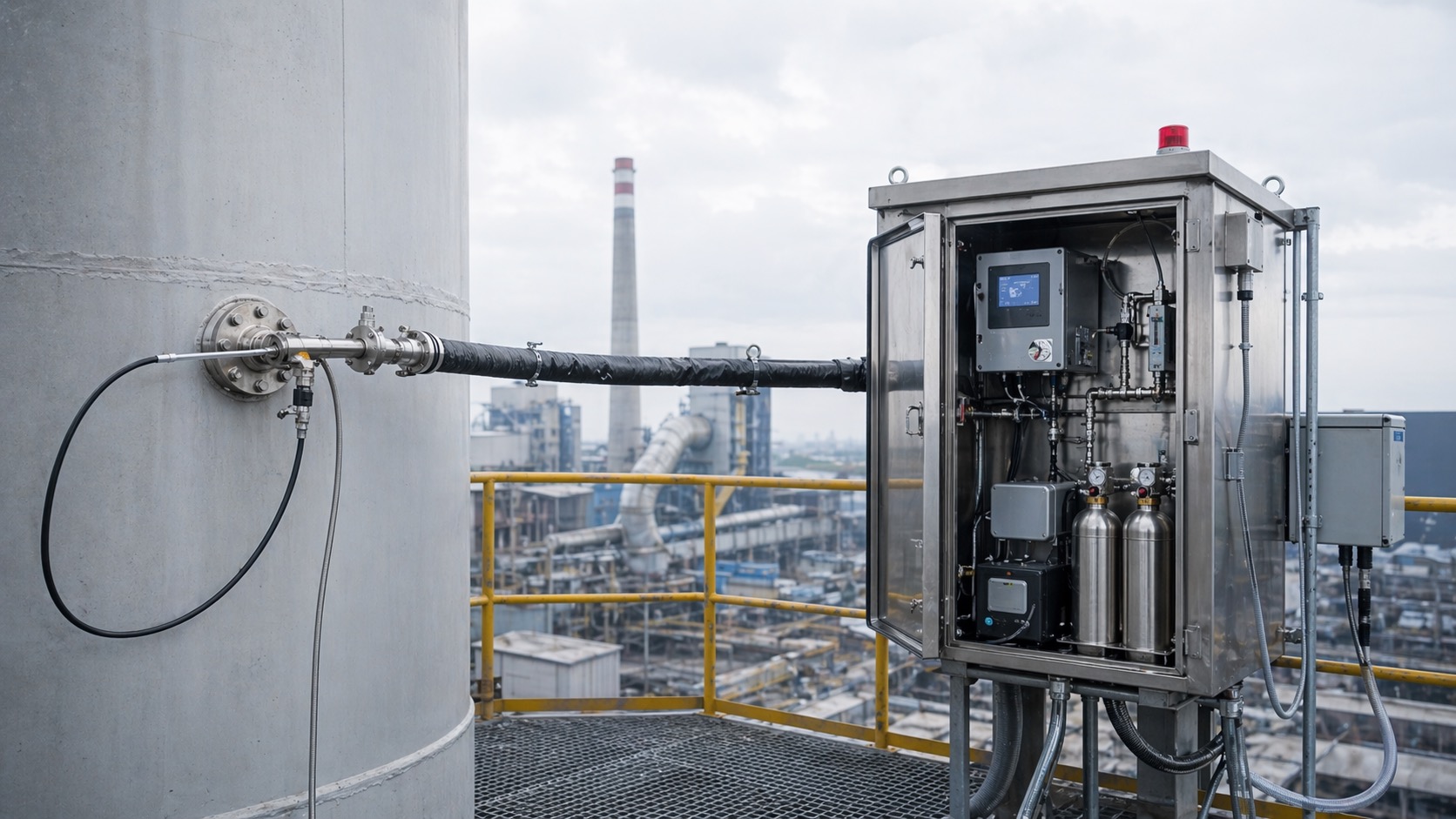 CO / CO₂
CO/CO₂ Analyzers
Non-dispersive infrared (NDIR) analyzers for carbon monoxide and carbon dioxide measurement in combustion control, emission monitoring, and indoor air quality applications.
View Products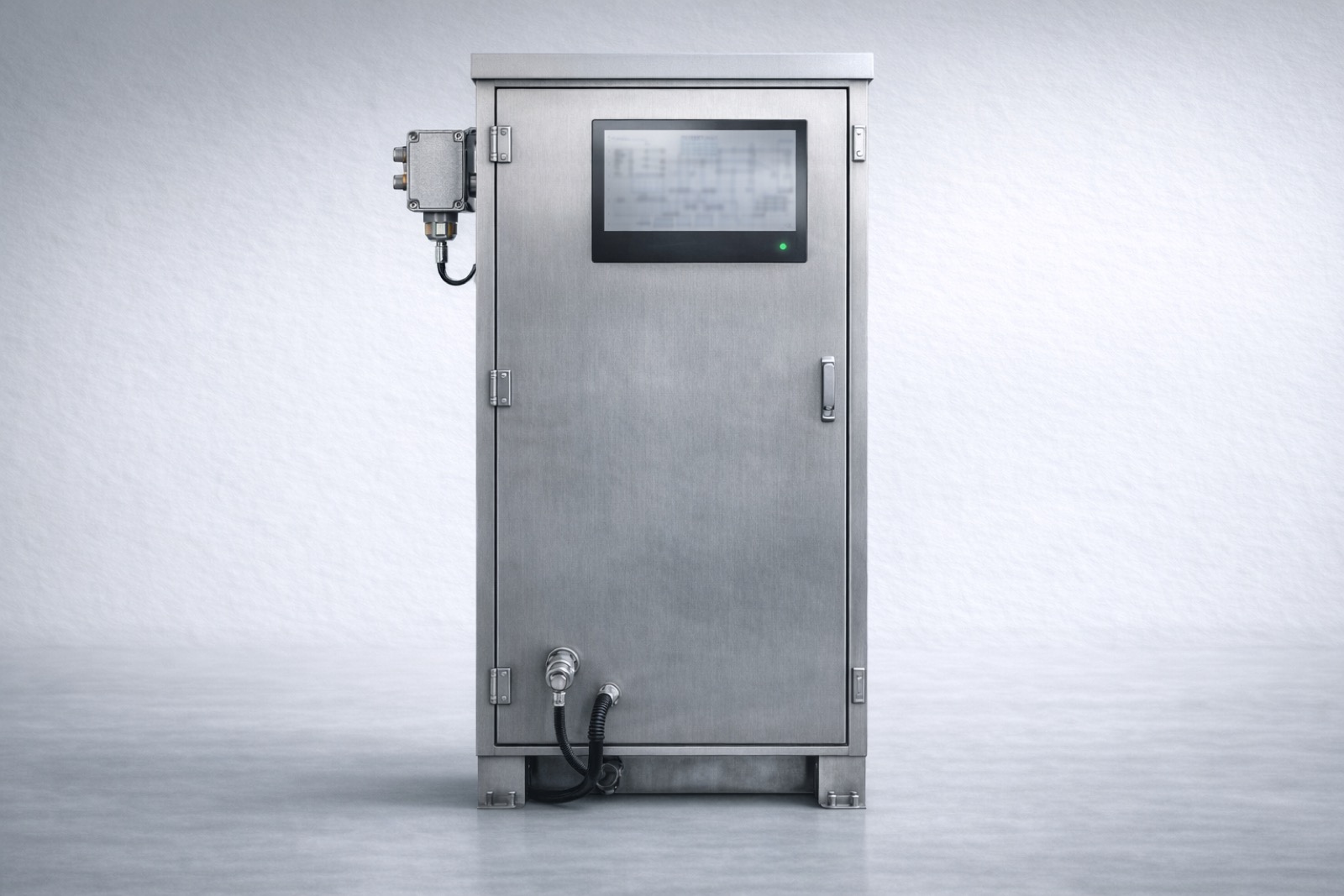 SO₂ / NOₓ
SO₂/NOₓ Analyzers
UV-DOAS and chemiluminescence analyzers for sulfur dioxide and nitrogen oxide measurement, essential for CEMS compliance and flue gas desulfurization control.
View ProductsCompare GS8610-4G with adjacent options
Review neighboring models by technology, measured gases, key specification, and form factor before moving to quotation.
When this model is preferred
Select GS8610-4G when its measurement principle, range, and form factor match the process duty and certification scope.
When to consider an alternative technology
Consider another analyzer when the gas matrix, sample temperature, hazardous-area scope, or reporting requirement falls outside the stated envelope.
Review GS8610-4G against site conditions
Send gas range, sample temperature, pressure, moisture, and certification needs before final model selection.