Multi-Gas Analyzers — Configured TDLAS and Turnkey CEMS Duties
Configured multi-pass TDLAS gas channels for process measurement, plus turnkey CEMS architecture for regulated stack reporting.
The question that settles a multi-gas purchase is not “how many gases from one spectrum?” — it is which duty class you are buying. ZS8600-MG measures selected gas channels on a 5 m multi-pass TDLAS path. ZS-CEMS-300 packages regulated CEMS channels into a project-scoped cabinet. Portable four-gas safety detectors are a separate personal-protective-equipment class — tell us the entry scenario and our engineering team will scope the right safety device.
Why Multi-Gas Monitoring Goes Wrong — Three Duty Classes, Three Distinct Failure Modes
A configured multi-gas analyzer bought without scoping the named channels quietly under-delivers inside the first operating cycles. Each measured gas channel needs its range, its sample matrix and its interference checks confirmed for the actual stream — acid-gas, NH₃ and moisture process duties behave very differently from hydrocarbon-rich streams. Buyers who treat a multi-gas analyzer as a plug-and-play “many gases at once” box discover that channel selection, sample conditioning and per-channel verification were the real work, and that performance figures only hold when they are read from the delivered datasheet for the as-built channel set, not from a generic component count.
A turnkey CEMS cabinet assembled from best-of-breed components by three or four different vendors looks efficient on the project spreadsheet and falls apart on site. EN 14181 QAL1 is certified per measurement channel, not per cabinet, so a channel that came from a sub-supplier without its own QAL1 type-test document blocks the QAL2 acceptance regardless of how well the rest of the cabinet performs. Sample lines heated by one vendor, analyzers commissioned by another, and a DAHS configured by the system integrator routinely produce a cabinet the regulator cannot sign off, which means three weeks of site audit turns into months of re-engagement, back-filed emission reports, and renegotiated consent orders.
A portable confined-space safety fleet managed with spreadsheets and manual bump-test records fails the audit after the first headcount doubling. Portable detectors carry consumable sensors with finite service lives, calibration that must be proven on a per-instrument basis, and batteries that age unevenly across a fleet. The consequence is rarely a single gas leak — it is an audit finding that confined-space entries were performed with instruments the site cannot prove were within calibration on the specific day. This is a personal-protective-equipment workflow, not an analyzer or CEMS purchase, and it belongs in a separate engineering conversation.
What a Wrong Multi-Gas Decision Actually Costs
Channel-Scoping Burden
A configured multi-gas analyzer is not free of engineering. Each measured channel needs its range, its sample-matrix assumptions and its interference checks confirmed for the actual stream, and performance is verified per channel rather than promised as a single component count. Buyers who price only the analyzer line item under-scope the application-engineering and verification work that makes the readings hold.
CEMS Dossier Scope — Per Channel, Not Per Cabinet
EN 14181 QAL1 is certified per measurement channel, not per cabinet. A single un-certified channel in a multi-vendor cabinet blocks QAL2 acceptance for the entire stack. ZS-CEMS-300 is the CEMS cabinet path for projects that require EN 15267-3 / EN 14181 documentation review. The delivered QAL1, DAHS, EPA, HJ 76 and local reporting scope is confirmed per gas channel and jurisdiction during project review.
Portable Safety Sensor-Life OPEX
A portable confined-space fleet is cheap per unit and expensive per fleet-year: consumable sensors reach end of life on their own schedules and must be proven calibrated per instrument. Without a docking-station programme that logs each bump-test and swap, the fleet drifts out of compliance silently. This is a safety-equipment workflow that should route to engineering, not an analyzer specification on this page.
Safety-Device Class ≠ Analyzer Accuracy
A portable detector reporting “% LEL” is rated against a fraction of an explosive limit — a safety-device class, not a gas-concentration tolerance. It cannot be compared on accuracy to a configured TDLAS analyzer’s per-channel figure or to a CEMS QAL1 per-channel review. For process control or compliance reporting, specify an analyzer; for atmospheric testing before confined-space entry, route the portable safety request to engineering.
Two Product Consolidation Paths — Plus One Safety Boundary
Multi-gas analysis sells on a consolidation story that is simple to state and hard to earn. A configured multi-pass TDLAS analyzer can carry several discrete gas channels on one optical platform when the named gases, ranges and sample matrix have been confirmed for the stream. A turnkey CEMS cabinet can replace a multi-vendor integration when each regulated measurement channel, DAHS output and sampling path is documented for the project scope. Portable confined-space safety is a third request that uses the same “multi-gas” search words but is a personal-protective-equipment workflow, not an analyzer or CEMS purchase. These are two GESHINE product paths plus one safety boundary, and they sit orders of magnitude apart in budget, evidence and acceptance workflow even though they share the words multi-gas.
Process Multi-Gas — Configured TDLAS Channels
- Pattern
- Acid-gas, ammonia, hydrocarbon and moisture process streams often need several discrete gases watched together — selected from the brochure set NH₃, HF, HCl, CH₄, CO₂, CO, O₂, H₂O, C₂H₂ and H₂S. Historically this meant separate single-gas instruments, each with its own optics and calibration schedule.
- Configured Path
- A ZS8600-MG multi-pass TDLAS analyzer carries the selected channels on one 5 m optical platform. Channel count, ranges, response and accuracy are configured per application and confirmed in the delivered datasheet, so the consolidation is scoped to the named channels rather than promised as a fixed component count.
- What to Confirm
- Named gas channels · per-channel ranges · sample matrix and interference checks · datasheet-confirmed performance for the as-built channel set.
Regulated Reporting — Turnkey CEMS Cabinet
- Pattern
- Regulated stack reporting under EN 14181, EPA 40 CFR 60/75 or HJ 76-2017 is frequently assembled from several vendors, which leaves QAL2 acceptance hostage to whichever channel lacks its own QAL1 type-test document.
- Configured Path
- A ZS-CEMS-300 turnkey cabinet packages the regulated channels, heated sampling path and DAHS mapping under one project dossier. EN 15267-3 / EN 14181 documentation review is confirmed per configured channel and jurisdiction during project review.
- What to Confirm
- Per-channel QAL1 documentation · DAHS report formats mapped to the site permit · project-scoped QAL2 acceptance plan with the local authority.
Portable four-gas confined-space safety is a separate PPE duty class and routes to our engineering team for scoping rather than appearing as a product here. These are configuration and documentation patterns, not reference installations; channel set, commissioning duration, reporting effort and acceptance outcome depend on the stream, permit scope, DAHS mapping, sampling design and local authority review, and no acceptance outcome is guaranteed.
Three Multi-Gas Duty Classes, Not One Measurement Physics
Multi-gas buyers use the same search language for very different jobs. One job is process measurement with configured TDLAS channels on a named gas matrix. One job is regulated stack reporting with a cabinet CEMS and a channel-by-channel documentation file. One job is portable confined-space safety, which is a PPE detector class rather than an analyzer or CEMS product path. Treat these as procurement envelopes first, then choose the measurement architecture.
Multi-Pass TDLAS → Configured Discrete Gas Channels
ZS8600-MG uses a 5 m multi-pass optical path and configured TDLAS gas channels selected for the application. It does not infer twelve gases from one FTIR spectrum. The engineering task is to confirm the named gases, ranges, sample matrix and interference checks for the selected channel set.
Process multi-gas measurement → ZS8600-MG
Turnkey CEMS Cabinet → Regulated Channel Package
ZS-CEMS-300 is the cabinet path when the deliverable is regulated emission reporting rather than process flexibility. The cabinet, sampling path, DAHS mapping and documentation review are scoped per configured channel and jurisdiction, with site acceptance still depending on the installed project and local authority review.
Regulated stack reporting → ZS-CEMS-300
Portable Four-Gas Safety → PPE Duty Class, Not a Product Card
Confined-space and hot-work checks usually ask for a portable detector class that reports O₂, LEL, CO and H₂S for atmospheric clearance. That duty is not process control and not continuous emissions reporting. We treat it as a routing boundary and send portable four-gas safety requests to our engineering team rather than listing a detector as a product here.
Portable safety request → route to engineering review
Chemometric Burden Belongs to FTIR, Not Multi-Pass TDLAS
Full-spectrum methods need model validation; configured TDLAS needs channel validation
Full-spectrum FTIR and other library-based multi-component methods can be powerful, but their multi-gas claim depends on a trained chemometric model, representative cross-interference validation and re-validation when the process envelope changes. That burden is inherent to the FTIR method itself, not to GESHINE’s multi-pass TDLAS analyzer.
GESHINE’s multi-pass TDLAS path measures configured gas channels on discrete absorption lines. The active channels are selected per application from the brochure gas set, and concentration is reported per configured channel rather than inferred from one full-spectrum chemometric library. The procurement question moves from “how many compounds can one model resolve from one spectrum?” to “which named gas channels, ranges, sample conditions and interference checks are required for this project?”
A Portable Safety Rating Is Not an Analyzer or CEMS Specification
Functional-safety and PPE ratings belong to the safety-device class · not to a process analyzer or a CEMS cabinet
Portable safety ratings do not carry over to process analyzers or CEMS cabinets
A portable confined-space safety detector is a safety device, not an analyzer. Two consequences follow for buyer specification. First, a safety-device accuracy class expressed as a fraction of a lower explosive limit is not a gas-concentration tolerance — it cannot be compared on accuracy to a configured TDLAS analyzer’s per-channel figure or to a CEMS QAL1 per-channel review. These classes measure different quantities even when the gas name is the same, and functional-safety or PPE certification marks earned by a portable detector do not transfer to a process analyzer or a regulated CEMS cabinet. Second, any buyer specification carrying a “SIL 2” functional-safety expectation needs a separate scope conversation with engineering before procurement commits; the analyzer and CEMS paths on this page are not published with a SIL rating. For process control specify a configured multi-gas analyzer, for regulated emission reporting specify a turnkey CEMS cabinet, and route portable confined-space atmospheric testing — OSHA 1910.146 entry, hot-work permits and emergency response — to engineering review rather than to a product card. Specifying any one of these outside its envelope is a category error the selector explicitly flags.
Configured TDLAS vs Turnkey CEMS — with FTIR, NDIR Rack and Portable Safety as Context
The comparison exists because multi-gas is the category where the honest answer is a routing decision, not a tier ladder. The two GESHINE product paths come first: a configured multi-pass TDLAS analyzer for process measurement and a turnkey CEMS cabinet for regulated reporting. The remaining rows are context only — full-spectrum FTIR and the per-gas NDIR rack are industry-method education that explains why buyers ask about consolidation, and portable four-gas safety is an industry duty-class boundary that routes to engineering. Neither the FTIR row nor the NDIR rack nor the portable-safety row is a GESHINE product path on this page.
| Technology | Principle | Components | Accuracy | Response | Best For / Limitations |
|---|---|---|---|---|---|
| Multi-Pass TDLAS (configured channels) — ZS8600-MG | Tunable diode laser absorption spectroscopy on a 5 m multi-pass optical path. Each configured channel measures a named gas on a discrete absorption line, selected per application from the brochure gas set (NH₃, HF, HCl, CH₄, CO₂, CO, O₂, H₂O, C₂H₂, H₂S) rather than inferred from one full-spectrum library. | Configured channels (count per application) | Per-channel, confirmed in the delivered datasheet | Per configured channel | Process multi-gas measurement where named gases, ranges and sample matrix are confirmed at scoping. The GESHINE product path on this row is the configured multi-pass TDLAS analyzer; channel count, ranges, response and accuracy are confirmed in the application matrix and delivered datasheet, not promised as a fixed component count. NOT a drop-in CEMS replacement for regulated multi-component reporting — that duty is the turnkey CEMS cabinet row below. |
| Turnkey CEMS Cabinet — ZS-CEMS-300 | Purpose-built detector per channel inside one turnkey cabinet, with an integrated heated sampling skid, integrated DAHS and automated zero/span/linearity. Channel set is configured to the project regulated scope. | Configured regulated channels + dust + flow | EN 15267-3 QAL1 documentation review per channel | Sampling-line dominated (heated-line transport) | Regulated emission reporting under EN 14181, EPA 40 CFR 60/75, HJ 76-2017 and GB/T 16157 — power plants, waste-to-energy, cement kilns and glass furnaces. ZS-CEMS-300 is the CEMS cabinet path for projects that require EN 15267-3 / EN 14181 documentation review; delivered QAL1, DAHS, EPA, HJ 76 and local reporting scope is confirmed per configured channel and jurisdiction during project review. HJ 76-2017 applies to SO₂ / NOₓ / particulate CEMS requirements; CO, CO₂, O₂ and DAHS report formats must be mapped to the site permit and supplied documents. NOT a process R&D instrument; configuration is fixed to the project gas, dust and flow scope. |
| FTIR full-spectrum methods (reference method) | A Michelson interferometer sweeps the infrared band and a Fourier transform reconstructs the full absorption spectrum; chemometric deconvolution then resolves overlapping bands. Shown here as industry-method context, not as a GESHINE product path. | Many compounds via one spectrum + model | Depends on trained chemometric model + validation | Method-dependent | Full-spectrum FTIR can be powerful for process and research consolidation, but its multi-gas claim depends on a trained chemometric model, representative cross-interference validation and re-validation when the process envelope changes. That model-validation burden belongs to the FTIR method choice. Shown so buyers can compare the configured-TDLAS approach against it. |
| Reference: Per-Gas NDIR Rack (baseline) | One NDIR analyzer per target gas mounted in a 19″ rack — historically a common way to measure several components at once. Each analyzer has its own optics, its own sampling interface and its own calibration schedule. Provided as a reference baseline only; GESHINE does not position this as a product path on this page. | 1 per analyzer (one rack slot per gas) | Per analyzer (dual-beam NDIR class) | Per analyzer | Historic baseline for process multi-component measurement and the denominator buyers have in mind when they ask about consolidation. This reference row explains why a single configured multi-gas analyzer is attractive; it is not a product on this page. |
| Portable Four-Gas Safety (industry boundary) | A portable confined-space detector reports atmospheric clearance gases (typically O₂, LEL, CO, H₂S) in a wearable clip-on. This is personal protective equipment, not a process analyzer or CEMS cabinet. | Fixed safety channel set | Safety-device class (% LEL, not concentration) | Safety-device class | Confined-space atmospheric go/no-go under OSHA 1910.146, hot-work permits and emergency response. This is an industry duty-class boundary, not a GESHINE product path on this page; a safety-device accuracy class is a fraction of an explosive limit, cannot be compared on accuracy to the analyzer or CEMS rows, and these requests route to engineering review. |
When to Select Which Path
Select the configured multi-pass TDLAS analyzer when the brief is process multi-gas measurement on a named gas matrix — confirm the gas channels, ranges, sample conditions and interference checks at scoping, and read performance from the delivered datasheet for the as-built channel set. Select the turnkey CEMS cabinet when the deliverable is regulated emission reporting under EN 14181, EPA 40 CFR 60/75 or HJ 76-2017 — because per-channel QAL1 documentation and an automated DAHS matter more than channel flexibility, and the plant wants one project dossier instead of four. Full-spectrum FTIR and the per-gas NDIR rack are shown only as industry-method context so buyers can compare approaches; they are not GESHINE product paths. Portable four-gas safety is a separate PPE duty class for confined-space go/no-go and routes to engineering review rather than to a product card.
With the two product paths and the surrounding industry context mapped, the next step is the decision router — it converges on the configured TDLAS analyzer or the turnkey CEMS cabinet, or flags an engineering-review case for portable safety and other out-of-scope requests.
How Configured TDLAS, a Turnkey CEMS Cabinet and Portable Safety Actually Measure
Multi-Pass TDLAS → Configured Discrete Gas Channels
A tunable diode laser is scanned across a discrete absorption line of each target gas while the beam folds through a 5 m multi-pass optical path to build sensitivity. Concentration is measured per configured channel from that line rather than inferred from one full-spectrum library. Active channels are selected per application from the brochure gas set, and channel count, ranges, response and accuracy are confirmed in the application matrix and delivered datasheet.
Turnkey CEMS Cabinet — Purpose-Built Detector per Regulated Channel
A turnkey CEMS cabinet places a purpose-built detector on every regulated channel, with one heated sampling skid, one DAHS and one project dossier to reduce integration friction. EN 15267-3 / EN 14181 documentation review is confirmed per configured channel and jurisdiction during project review; QAL2 acceptance remains a site commissioning outcome, not a cabinet-wide promise.
Portable Safety Detector — Atmospheric Go/No-Go Boundary
A portable confined-space safety detector stacks several consumable sensors behind a diffusion or pump inlet to report atmospheric clearance gases — typically oxygen, combustible (% LEL), carbon monoxide and hydrogen sulfide — for a quick go/no-go before entry. This is personal protective equipment governed by a safety-device workflow, not a process analyzer or CEMS cabinet, and these requests route to engineering review rather than to a product card on this page.
Accuracy classes are not comparable across these duty classes. A configured TDLAS analyzer reports per-channel gas concentration and a CEMS cabinet carries QAL1 per-channel certified concentration; a portable safety detector’s “% LEL” is a fraction of an explosive limit, which is a safety-device class. Specifying a portable safety detector for process control, or an analyzer for confined-space entry, is a category error.
Find Your Multi-Gas Analyzer
The decision router takes the duty class, regulation scope and form-factor constraint and converges on one of two GESHINE product paths — a configured multi-pass TDLAS analyzer for process measurement or a turnkey CEMS cabinet for regulated reporting — or flags an engineering-review case. Multi-gas search language covers jobs that sit orders of magnitude apart in budget, evidence and acceptance workflow, so the boundary cases below are worth checking first.
Boundary Cases — Check These First
Needs Engineering Review
Portable four-gas confined-space safety detection is a personal-protective-equipment duty class, not a process analyzer or CEMS purchase, so we do not list it as a product here. Contact engineering with the entry scenario and regional certification requirement so the right safety-device scope can be confirmed.
Needs Engineering Review
A configured process TDLAS analyzer is a process-measurement instrument, not a declared EN 15267-3 QAL1 stationary CEMS product for regulated multi-component reporting. If the deliverable is regulated stack reporting, the compliant path is the turnkey CEMS cabinet with EN 15267-3 / EN 14181 documentation review confirmed per configured channel. Contact engineering for a scope review.
Needs Engineering Review
The configured TDLAS path is selected per application from the brochure gas set (NH₃, HF, HCl, CH₄, CO₂, CO, O₂, H₂O, C₂H₂, H₂S). A target gas outside that set, or a channel combination that runs short of usable absorption lines, needs a scope review. Contact engineering with the target gas list, ranges and sample conditions.
Needs Engineering Review
If the scope is a single-analyte CEMS channel without a full cabinet, the multi-gas page is not the right shelf. For CO or CO₂ per-channel CEMS duty, see the CO / CO₂ analyzer category. For SO₂ or NOₓ per-channel duty, see the SO₂ / NOₓ analyzer category. Contact engineering for mixed scopes.
Standard Routings
ZS8600-MG
Process multi-gas measurement on a named gas matrix routes to the ZS8600-MG configured multi-pass TDLAS analyzer — a 5 m multi-pass optical path with channels selected per application from the brochure gas set. Channel count, ranges, response and accuracy are confirmed in the application matrix and delivered datasheet.
ZS-CEMS-300
Turnkey CEMS reporting under EN 14181 QAL1, EPA 40 CFR 60/75 or HJ 76-2017 with the regulated gas channels plus dust and flow fits the ZS-CEMS-300 cabinet — EN 15267-3 / EN 14181 documentation review confirmed per configured channel and jurisdiction during project review, integrated DAHS, automated zero/span/linearity, and a project-scoped QAL2 acceptance plan. HJ 76-2017 applies to SO₂ / NOₓ / particulate CEMS requirements; CO, CO₂, O₂ and DAHS report formats are mapped to the site permit and supplied documents.
Outside the Standard Routings
Your combination of persona, regulation, form factor and cost-of-ownership model falls outside the three standard routings on this page. Contact GESHINE engineering with a short description of the process, regulated scope, form factor constraint and integration target for a configured recommendation.
ZS8600-MG vs ZS-CEMS-300 — Side-by-Side with an Engineering-Review Column
The ZS8600-MG configured multi-pass TDLAS analyzer and the ZS-CEMS-300 turnkey CEMS cabinet are GESHINE’s two multi-gas products, for two distinct duty classes — process multi-gas measurement and regulated stack reporting. The matrix below lays out the dimensions that settle the selection conversation. The third column (“Engineering Review”) is explicit on purpose: portable four-gas confined-space safety, a process analyzer pressed into regulated CEMS duty, a single-analyte channel without a cabinet, or a target gas outside the brochure set do not map to a stock product, and the honest answer is a scope review before procurement commits.
| Parameter | ZS8600-MG (Configured Multi-Pass TDLAS) | ZS-CEMS-300 (Turnkey CEMS Cabinet) | Engineering Review |
|---|---|---|---|
| Duty Class | Process multi-gas measurement on a named gas matrix | Regulated stack / emission reporting | Portable safety, single-channel CEMS, mixed or novel scope |
| Typical Persona | Process engineer · plant process measurement | Environmental manager · EHS director · plant compliance lead | Confined-space programme owner · scope-review cases (see selector) |
| Regulation Scope | None mandated (process measurement) | EN 14181 QAL1, EPA 40 CFR 60/75, HJ 76-2017, GB/T 16157 (per project) | FTIR-as-CEMS, analyzer-only-no-cabinet, portable PPE safety |
| Measurement Principle | Multi-pass TDLAS on a 5 m optical path; per-channel discrete absorption line | Purpose-built detector per regulated channel in one turnkey cabinet | — |
| Gas Channels | Configured from the brochure set: NH₃, HF, HCl, CH₄, CO₂, CO, O₂, H₂O, C₂H₂, H₂S | Configured regulated channels (e.g. SO₂, NOₓ, CO, CO₂, O₂) + dust + flow | Gas outside the brochure set → scope review |
| Channel Count | Active channel count configured per application | Configured to the project regulated scope | — |
| Accuracy | Per channel, confirmed in the delivered datasheet | EN 15267-3 / EN 14181 documentation review per configured channel; uncertainty confirmed in the project scope | — |
| Response | Per configured channel (confirmed in the datasheet) | Sampling-line dominated (heated-line transport) | — |
| Certifications | Confirmed in the delivered ZS8600-MG datasheet for the as-built channel set | EN 15267-3 / EN 14181 documentation review per configured channel · EPA 40 CFR Part 60/75 project documentation review · HJ 76-2017 scope review for SO₂ / NOₓ / particulate CEMS; GB/T 16157 where applicable; type-test / MCERTS documentation where supplied | — |
| Form Factor | Analyzer (bench / rack) | Floor-standing turnkey cabinet | — |
| Typical Buyer | Acid-gas / NH₃ / hydrocarbon / moisture process streams | Power plant · waste-to-energy · cement / glass kiln stack reporting | Confined-space safety programme · mixed cabinet + analyzer scope |
| TCO Model | Several single-gas analyzers → one configured multi-pass TDLAS analyzer | Multi-vendor integration → one turnkey cabinet (incl. DAHS + project QAL2 support) | Mixed / custom — engineering quote |
The matrix narrows the choice in principle. The product cards below pull in the datasheet record — configured channels, documentation scope, I/O options and downloads — with the ZS-CEMS-300 card scoped explicitly to the turnkey cabinet narrative rather than any single-analyte framing, and the ZS8600-MG card scoped to its configured channel set.
GESHINE Multi-Gas Analyzer Series
Two indexed paths — configured multi-pass TDLAS process measurement and a turnkey CEMS cabinet for regulated stack reporting.
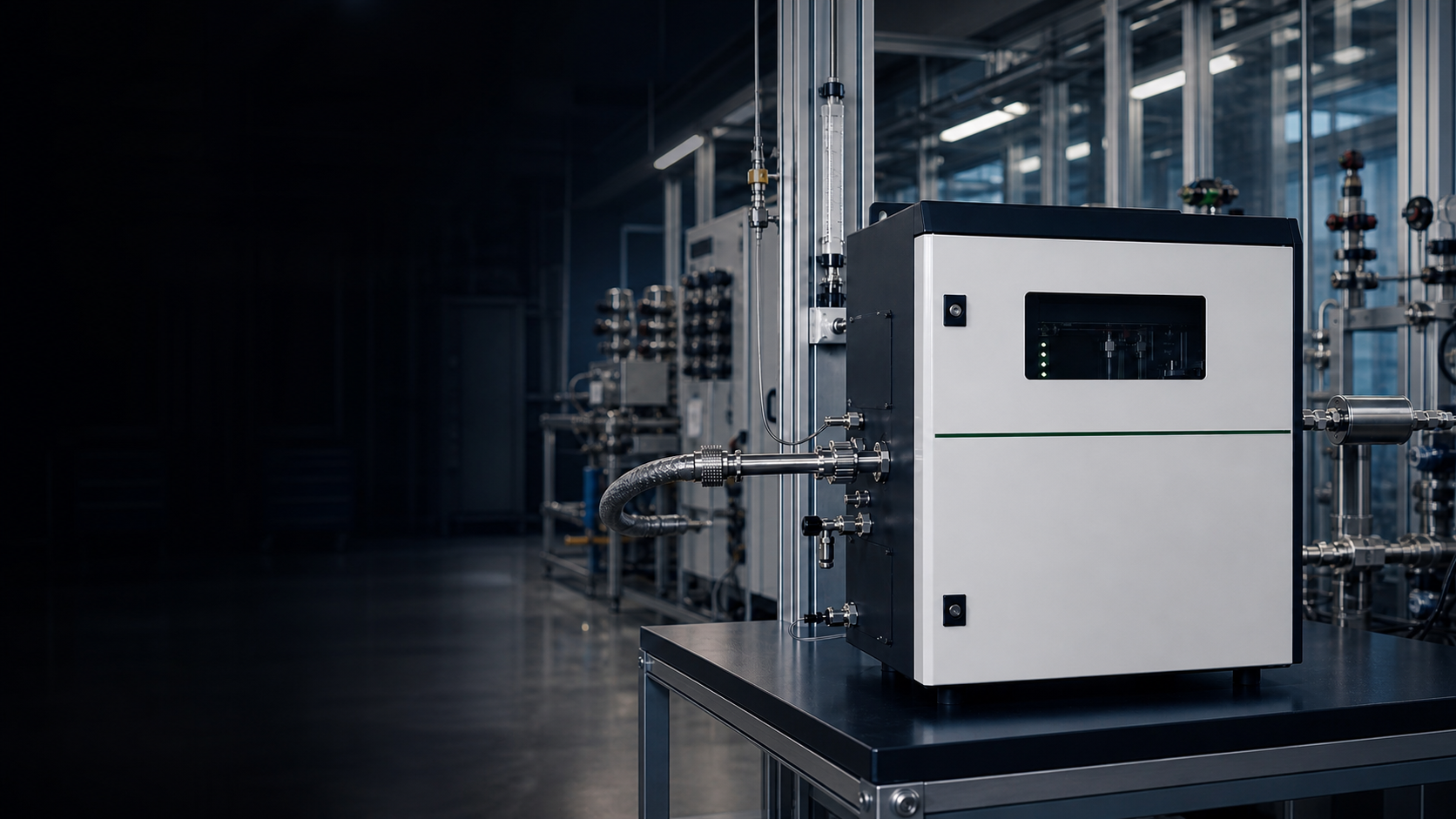 Extractive Process
ZS8600-MG · Multi-Pass TDLAS
ZS8600-MG Configured Multi-Gas TDLAS Analyzer
5 m multi-pass optical path with TDLAS gas channels configured per application.
- Optical Path
- 5 m multi-pass
- Channels
- Configured per application
- Brochure Gases
- NH₃·HF·HCl·CH₄·CO₂·CO·O₂·H₂O·C₂H₂·H₂S
- Performance
- Confirmed in delivered datasheet
CEMS CabinetZS-CEMS-300 · Turnkey CEMS
ZS-CEMS-300 Turnkey CEMS Cabinet
Regulated emission reporting: SO₂, NOₓ, CO, CO₂, O₂ plus dust and flow.
- Gases
- SO₂·NOₓ·CO·CO₂·O₂
- Plus
- Dust·Flow·T·P
- Docs Review
- EN 14181 / EPA / GB
- Scope
- Confirmed per project
Extractive Multi-Pass TDLAS Bench, Turnkey CEMS Cabinet, and the Portable-Safety Boundary
Multi-Pass TDLAS Bench / Rack (ZS8600-MG)
An extractive bench or rack draws a representative sample across the ZS8600-MG 5 m multi-pass optical path and measures the configured TDLAS gas channels — the choice for process streams where the named gas set and ranges are scoped at specification.
Cool-dry or ZS-SCS sample conditioning matched to the moisture level, or a heated sampling path for hot-wet measurement. Active channels are selected from the brochure gas set and confirmed against the application matrix.
- Multi-channel process and treatment streams
- Acid-gas, NH₃, CH₄/CO₂/H₂S and H₂O process measurement
Turnkey CEMS Cabinet (ZS-CEMS-300)
A complete floor-standing CEMS cabinet integrates the analyzers, heated extractive sampling, and calibration into one climate-controlled enclosure for regulated stack reporting of gas plus dust and flow.
Complete heated extractive system included — heated probe, heated transfer line, conditioning and automated calibration are part of the turnkey package.
- Regulated stack emissions (SO₂/NOₓ/CO/CO₂/O₂)
- Multi-parameter duty adding dust and flow
- Power, cement, and waste-to-energy reporting
Portable Confined-Space Safety (Route to Engineering)
Confined-space and hot-work atmospheric clearance usually asks for a worn portable detector class — a PPE duty that is neither process measurement nor continuous emission reporting, and is handled as an engineering-review request rather than a catalogue analyzer.
A portable safety detector needs no fixed sampling; it is worn or carried in diffusion mode for atmospheric go/no-go. This is a separate equipment class from the extractive analyzer and the CEMS cabinet above.
- Confined-space entry and hot-work atmospheric clearance
- Personal-safety duty, routed to an engineering review
One multi-gas analyzer replaces a rack of dedicated single-gas units — consolidating the instrument count a process or CEMS cabinet has to house.
Shared optics and one calibration routine cut the number of separate span-gas cycles compared with several independent analyzers.
Wall-mount and integrated-cabinet options shrink the installed footprint where floor space or retrofit access is constrained.
Where Configured TDLAS, Turnkey CEMS and the Portable-Safety Boundary Apply
Multi-gas requests do not segment cleanly by industry — a cement plant runs a CEMS cabinet on the kiln, and a gas-treatment plant runs configured process analysis on its acid-gas and CH₄/CO₂ streams. The cards below describe application patterns, not specific installs: three configured multi-pass TDLAS process patterns using gases from the ZS8600-MG brochure set (NH₃, HF, HCl, CH₄, CO₂, CO, O₂, H₂O, C₂H₂ and H₂S), two turnkey CEMS cabinet patterns where the deliverable is regulated emission reporting, and one portable confined-space safety boundary that routes to engineering review rather than to a product card. Ranges and performance remain project-configured throughout.

Configured TDLAS — Acid-Gas & NH₃ Process Stream
A process stream carrying acid gases and ammonia — for example HCl, HF, NH₃ and H₂O — is monitored on one analyzer instead of several dedicated single-gas units, where the named gas set is fixed at specification.
One ZS8600-MG on its 5 m multi-pass optical path measures the configured TDLAS channels for the selected acid-gas and NH₃ set. OPC-UA connectivity feeds the reading set into the plant control system; channels, ranges and response are confirmed against the application matrix and delivered datasheet.
HCl · HF · NH₃ · H₂O measured on one multi-pass TDLAS path (per application)
Configured TDLAS — Biogas & Gas-Treatment Stream
Biogas and gas-treatment streams typically need CH₄, CO₂, H₂S and H₂O watched together. The procurement question is which named channels, ranges and sample conditions the stream requires, not how many compounds one spectrum can infer.
ZS8600-MG measures the configured CH₄, CO₂, H₂S and H₂O TDLAS channels on discrete absorption lines, with concentration reported per channel. Active channels are selected from the brochure gas set, and interference checks plus ranges are confirmed during application review.
CH₄ · CO₂ · H₂S · H₂O measured per configured channel (per application)
Configured TDLAS — Process Combustion & Reformer-Adjacent Stream
Process combustion and reformer-adjacent streams often need CO, CO₂, CH₄ and H₂O measured on one sample point. A configurable channel set lets the named gases be scoped to the application rather than fixed to a generic datasheet.
ZS8600-MG measures the configured CO, CO₂, CH₄ and H₂O TDLAS channels on its multi-pass path. The active channel set, ranges and sample conditioning are selected per application; performance is confirmed in the delivered datasheet.
CO · CO₂ · CH₄ · H₂O measured on one multi-pass TDLAS path (per application)
Turnkey CEMS — Cement Kiln Stack Reporting
A cement kiln moving from manual stack testing to continuous monitoring needs SO₂, NOₓ, CO, CO₂, O₂, dust and flow reporting, with per-channel documentation review and DAHS mapping assembled as one project file rather than split across a multi-vendor integration.
ZS-CEMS-300 is scoped as a cabinet CEMS project with heated sampling, integrated DAHS and EN 15267-3 / EN 14181 documentation review confirmed per configured channel and jurisdiction. Commissioning duration, reporting effort and acceptance outcome depend on site baseline, permit scope, DAHS mapping, sampling design and local authority review.
Per-channel documentation review · integrated DAHS reporting workflow (per project)

Turnkey CEMS — Waste-to-Energy Multi-Regulation Reporting
Waste-to-energy plants must report SO₂, NOₓ, CO and CO₂ continuously, and in several markets the same plant must satisfy EU, US and China reporting formats from the same dataset. The deliverable is a defensible reporting workflow, not a single instrument.
ZS-CEMS-300 is the CEMS cabinet path for projects that require EN 15267-3 / EN 14181 documentation review. The delivered QAL1, DAHS, EPA, HJ 76 and local reporting scope is confirmed per gas channel and jurisdiction during project review; the integrated DAHS generates each regulator format from one dataset where the scope is in place.
Multi-regulation DAHS output · per-channel documentation review (per project)

Portable-Safety Boundary — Confined-Space Clearance
Confined-space entry and hot-work permits ask for a worn portable detector that reports atmospheric go/no-go before work can start. This is personal protective equipment for safety clearance, not process control and not continuous emissions reporting.
This duty sits outside the configured-TDLAS and turnkey-CEMS product paths on this page. Bring the confined-space safety requirement to an engineering review so the right portable safety class is specified rather than substituting a process analyzer or a CEMS cabinet for a PPE job.
Personal-safety duty class → route to engineering review
These application patterns cover the two product paths — configured TDLAS and turnkey CEMS — plus portable safety, which we scope separately. The next section documents the certification scope for each path, since process measurement and regulated CEMS reporting operate under different regulatory regimes and certification scope is confirmed per project.
The patterns above are illustrative application examples, not specific reference installations; channels, ranges and outcomes depend on site baseline, permit scope, sample matrix and local authority review.
Certifications & Compliance — Per Path, No Leakage
Multi-gas certification scope splits because the two product paths serve different regulatory regimes, and portable confined-space safety is a separate PPE class we scope separately rather than publish as a product here. ZS8600-MG is a configured multi-pass TDLAS process analyzer and carries equipment-safety, EMC and quality certifications — NOT QAL1, NOT ATEX, NOT SIL. ZS-CEMS-300 is a regulated CEMS cabinet path scoped for EN 15267-3 / EN 14181 documentation review per configured channel plus a multi-regulation reporting dossier confirmed per project. The per-path scope below prevents cross-path certification leakage in buyer specifications.
ZS8600-MG (Configured Multi-Pass TDLAS)
Process multi-gas TDLAS analyzer — equipment-safety, EMC and quality certifications only. NO QAL1. NO ATEX. NO SIL claim.
- CE Marking — European conformity (health, safety, environmental)
- UKCA — United Kingdom Conformity Assessment
- EN 61010-1 — Safety requirements for electrical equipment for measurement, control and laboratory use
- EN 61326-1 — Electromagnetic compatibility for measurement, control and laboratory equipment
- Native OPC-UA interface — OPC-UA protocol interoperability
- ISO 9001:2015 — Quality management system
ZS-CEMS-300 (Turnkey CEMS Cabinet)
Multi-parameter turnkey cabinet — EN 15267-3 / EN 14181 documentation review per configured channel plus multi-regulation reporting scope confirmed per project. NO ATEX. NO SIL claim. Cabinet is NOT intrinsically safe for hazardous-area duty.
- CE Marking
- UKCA
- TÜV / MCERTS documentation review where supplied in the current project dossier
- EN 14181 QAL1 — quality assurance of automated measuring systems; documentation review per configured channel
- EN 15267-3 — performance criteria and test procedures for CEMS
- EPA 40 CFR 60 — US Federal CEMS performance specifications (New Source Performance Standards)
- EPA 40 CFR 75 — Acid Rain Program CEMS requirements
- HJ 76-2017 scope review for SO₂ / NOₓ / particulate CEMS channels; CO, CO₂, O₂ and DAHS reporting mapped to the site permit and supplied documentation.
- GB/T 16157 — Chinese stationary-source emission sampling
Portable Confined-Space Safety (Boundary)
Portable PPE detectors are a separate equipment class — they carry hazardous-area and functional-safety approvals that do NOT transfer to the analyzer or CEMS paths above. Routed to engineering review, not published as a product here.
- Hazardous-area intrinsic-safety and functional-safety ratings belong to the PPE detector class, not to a process analyzer or a CEMS cabinet.
- A portable safety detector is specified for atmospheric clearance, not for quantitative process measurement or regulated emission reporting.
- Confined-space and hot-work safety requirements are scoped through an engineering review so the correct portable safety class is selected.
- Do not carry an ATEX Zone rating or a SIL claim from a safety detector into a ZS8600-MG or ZS-CEMS-300 specification.
Scope & Compliance Detail
Two distinctions matter for buyer specification. First, EN 14181 QAL1 scope is assessed per measurement channel, not per cabinet. For ZS-CEMS-300, EN 15267-3 / EN 14181 documentation review is confirmed per configured SO₂, NOₓ, CO, CO₂ and O₂ channel during project review, alongside DAHS mapping, sampling scope and local reporting requirements. A multi-vendor assembly where one channel lacks its required evidence can create a QAL2 acceptance gap until the documentation and installed performance evidence are resolved. Second, ISO 9001:2015 covers production quality across the portfolio but does not constitute a measurement-performance certification, and neither ZS8600-MG nor ZS-CEMS-300 carries a SIL or ATEX rating — those belong to the separate portable-safety detector class and must not leak into an analyzer or cabinet specification. Every analyzer ships with factory calibration documentation; national-metrology or NIST-traceable cylinder documentation is confirmed in the delivered certificate pack where required by project scope. For ZS-CEMS-300, channel documentation, DAHS mapping and QAL2 / AST support materials are reviewed and scoped per project rather than promised as a cabinet-wide acceptance package.
With technology, selector routing, decision matrix, application patterns and per-path certification scope all laid out, the remaining decisions are commercial — pricing scopes, lead time, warranty scope and after-sales support for each of the two product paths.
Total Cost of Ownership — 3 Personas
A single cost model cannot serve these buyer personas. A configured-TDLAS process measurement and a turnkey CEMS compliance project are budgeted by different teams against different cost structures, and a portable confined-space safety programme is a separate equipment class altogether. The cards below set out what actually drives cost in each path — the numbers themselves belong in a scoped quotation prepared against your own site baseline.
Configured-TDLAS process measurement
Process-measurement persona — measuring a configured gas channel set on one ZS8600-MG multi-pass TDLAS platform.
Cost drivers
- Analyzer configuration — platform, multi-pass optics and measuring-range set fixed at specification.
- Configured channel scope — each active gas channel selected from the brochure set carries its own setup and validation effort.
- Interference-check gases — reference mixtures required to verify the configured channels against the actual stream matrix.
- Sample conditioning — extraction, filtration and conditioning hardware sized for the process matrix.
- Application-engineering time — channel setup and stream-specific commissioning effort.
- Calibration and verification — scheduled per-channel zero/span and reference-gas checks over the service life.
Workflow burden
One analyzer and one calibration envelope across the configured channels, replacing several independent single-gas units.
Turnkey CEMS dossier consolidation
Compliance persona — consolidating a multi-vendor emissions stack into one ZS-CEMS-300 turnkey cabinet.
Cost drivers
- Heated sampling design — heated probe and sample-line specification matched to the stack matrix.
- Per-channel documentation review — each measured channel brings its own documentation package into the project file.
- DAHS mapping — data-acquisition and handling system signal mapping and report configuration.
- Cabinet climate control — enclosure heating and cooling sized for the installation environment.
- Commissioning and site acceptance scope — on-site commissioning effort and the acceptance activities agreed for the project.
Workflow burden
One vendor dossier and one automated zero/span routine replacing multi-vendor coordination.
Portable-safety boundary
Safety persona — portable confined-space detectors are a separate PPE equipment class, routed to an engineering review rather than budgeted against the analyzer paths.
Why it sits outside this model
- Different equipment class — a worn safety detector is PPE, not a process analyzer or a CEMS cabinet.
- Different duty — atmospheric go/no-go clearance, not quantitative measurement or regulated reporting.
- Not cost-comparable — a safety-device specification is not comparable to an analyzer on accuracy or cost-per-reading.
- Routed out — confined-space safety budgets are scoped through an engineering review, not on this page.
How to handle it
Bring the confined-space safety requirement to an engineering review so the correct portable safety class is specified.
Why the Cards Cannot Be Summed
These cost-of-ownership views cannot be summed. They address different buyer personas operating under different regulatory regimes, and the portable-safety boundary is a separate equipment class entirely. A safety-device specification is not comparable to an analyzer specification on accuracy or on cost-per-reading, so do not roll a PPE programme into a configured-TDLAS or CEMS budget.
Actual savings, commissioning duration and administrative effort depend on site baseline, permit scope, sample matrix, fleet size and local authority review; no financial or acceptance outcome is guaranteed.
Pricing, Lead Time & After-Sales Support
Pricing: Two RFQ Scopes Plus Portable-Safety Referral
Quoted by analyzer configuration
ZS8600-MG configured multi-pass TDLAS analyzer for a process gas channel set selected from the brochure gases. Budget moves with the configured channel list, range set, interference-check validation, sample-conditioning selection, integration protocol and factory training scope.
Quoted as installed project scope
ZS-CEMS-300 turnkey cabinet for SO₂, NOₓ, CO, CO₂, O₂ plus dust and flow reporting. Budget moves with jurisdictional documentation review, DAHS mapping, heat-traced sample-line length, cabinet climate-control specification, commissioning support and site acceptance scope.
Routed to engineering review
Portable confined-space safety detectors are a separate PPE equipment class, not a process analyzer or a CEMS cabinet. This duty is scoped through an engineering review so the correct portable safety class is specified, rather than quoted as a product path on this page.
What Moves the Price
The two biggest price movers on this page are unique to multi-gas. First, the configured-TDLAS channel set: each active channel selected from the brochure gases carries its own setup, interference-check validation and verification routine, and the range set and sample conditioning shape the analyzer configuration. Second, CEMS installation and acceptance: the cabinet may be turnkey, but heated sampling, DAHS mapping, documentation review and site acceptance still define the installed budget.
Buyer Advisory
Published price ranges are useful for first-pass budgeting only. The final quotation depends on which scope the buyer is actually procuring against: for the configured-TDLAS line, the named gas channels, ranges, sample matrix, expected interference conditions and integration target with the plant control system; for the CEMS cabinet, the regulated scope (EN 14181 alone or EU + US + China simultaneous), stack distance, heated-line length, certification dossier depth and QAL2 on-site engagement scope. Send those boundary conditions with the RFQ and the quote converges inside one or two iterations. If the duty is actually portable confined-space safety, say so — that is a separate PPE equipment class that is scoped through an engineering review rather than priced against the analyzer paths.
Lead Time
- Configured TDLAS (ZS8600-MG)
- Lead time is confirmed at order and covers factory calibration, configuration of the selected channel set for the specified gases, and the production-test report. Adding a channel that needs additional setup or interference-check calibration is scoped during application review rather than promised as a fixed duration.
- Turnkey CEMS Cabinet (ZS-CEMS-300)
- Lead time covers the cabinet build and factory integration test, with regulatory documentation review, DAHS mapping, heat-traced sample-line length, cabinet climate-control specification and site acceptance scope confirmed during project review. Site installation and QAL2 / AST support planning are scoped with the project rather than promised as a fixed acceptance duration.
- MOQ
- Single units ship as evaluation / pilot orders on ZS8600-MG; volume pricing is confirmed with the RFQ scope. ZS-CEMS-300 is quoted per cabinet.
Warranty
- Standard factory warranty
- Standard factory warranty terms are confirmed at order, covering electronics, optics, sampling hardware and cabinet climate control as applicable to the configuration. Consumable items carry their own service-life terms, confirmed in the delivered documentation.
- Extended service options
- Extended service and preventive-maintenance options are available at order, including scheduled maintenance visits, priority spares dispatch and QAL2 / AST support allowance for CEMS. Terms are priced per path because the service model differs between a configured-TDLAS analyzer and a turnkey CEMS cabinet.
- Calibration traceability
- Factory calibration documentation and certified reference-gas documentation are supplied per project. National-metrology or NIST-traceable cylinder documentation is confirmed in the delivered certificate pack where required by the project scope. For ZS-CEMS-300, EN 15267-3 / EN 14181, EPA, HJ 76 and local reporting documentation is reviewed per configured channel and jurisdiction during project review.
- Out-of-warranty service
- Refurbishment, optics and detector service, and firmware upgrade programmes keep units in service over a long service life. For CEMS installations this matters because regulator-approved cabinets cannot be swapped casually without QAL2 re-engagement.
After-Sales Support
Technical Support — Remote Diagnostics
Application engineers support phone and email triage, remote diagnostics where connectivity is available, and project-scoped response planning. Response windows, spares dispatch and quotation timing are confirmed with the service or RFQ scope. For analyzers connected to the plant network, remote diagnostics over OPC-UA, MQTT or Modbus TCP let the GESHINE service team review configured-TDLAS channel status, CEMS cabinet daily zero/span logs and DAHS archive status without needing a site visit, which typically shortens the mean-time-to-diagnosis for field issues.
Calibration & Validation — Per-Channel Reference Gases
ZS-CEMS-300 performs automated daily zero check, periodic span check with certified reference gases and linearity verification; results are logged and trended in the integrated DAHS for EN 14181 AST workflow. ZS8600-MG calibration uses reference-gas checks per configured channel on a scheduled interval confirmed in the delivered documentation. On-site QAL2 engagement visits bring a GESHINE factory-trained engineer with certified reference-gas cylinders to verify installed cabinet performance and issue the reference-method test report; cylinder traceability documentation is confirmed in the delivered certificate pack where required by the project scope.
Spare Parts & Critical Components
Optics, detector assemblies and sample-cell components for the configured-TDLAS analyzer; per-channel analyzer-cell spares plus heated-line segments for the CEMS cabinet — stocked for priority dispatch from the factory, with dispatch timing confirmed with the service or RFQ scope. A multi-year spares package is available at order so the site does not depend on emergency procurement, and customs documentation for cross-border shipments is pre-assembled by the logistics desk.
Operator Training — Commissioning & Validation
An on-site commissioning visit walks operators, maintenance technicians and EHS / quality staff through HMI workflows, alarm response, daily and periodic validation procedures, configured-channel handling for ZS8600-MG, and per-channel QAL2 / AST documentation for ZS-CEMS-300. Remote operator-training packages for shift handover and additional headcount are delivered through a customer portal with recorded modules, live screen-share sessions with an application engineer and per-user assessment worksheets.
Channel Configuration — Post-Install Changes
Changes to the configured ZS8600-MG channel set after installation are scoped per channel for application-engineering time, and include verification of the channel against the specific sample matrix, interference checks against the other configured channels, and documentation of the resulting measurement scope. Any change to the active channel set is confirmed in the delivered datasheet rather than promised as a fixed feature.
DAHS & Reporting Support
ZS-CEMS-300 DAHS supports reporting formats aligned to EN 14181 AST, EPA 40 CFR 60/75 Performance Specifications, HJ 76-2017 and GB/T 16157 workflows; the specific reporting templates loaded at delivery and any included reporting-cycle support period are confirmed in the delivered quotation/contract. Export formats include XML, CSV and direct Modbus / OPC-UA tags for a central historian bolt-on when the plant elects to consolidate onto PI, AVEVA or a vendor-specific MIS; on-board data storage scope is confirmed per project.
Further commercial, integration and technical questions are covered in the FAQ below. If your specific question is not answered there, the RFQ form brings an application engineer into the thread.
Frequently Asked Questions
Can ZS8600-MG configured TDLAS replace my existing rack of single-gas CEMS analyzers for regulatory reporting?
Usually no for regulated emission reporting. ZS8600-MG is a configured multi-pass TDLAS process analyzer, not a type-tested CEMS, so it does not carry per-channel QAL1 type-test coverage. For regulated emission reporting the compliant path is the ZS-CEMS-300 turnkey cabinet with EN 15267-3 / EN 14181 documentation review per configured channel (SO₂, NOₓ, CO, CO₂ and O₂), confirmed per project. Where ZS8600-MG does replace a rack of analyzers is on the process side — measuring a configured set of brochure gases on one multi-pass optical path instead of several dedicated single-gas units, with the active channels, ranges and performance confirmed in the delivered datasheet.
How are configured TDLAS channels verified after installation?
For configured TDLAS, drift and accuracy are managed per measurement channel through calibration and project-specific reference, zero/span or verification routines on a scheduled interval — not through chemometric model retraining. Each configured channel is verified against certified reference gas matched to its range. Any reference-cell, line-locking or automated correction feature is confirmed in the delivered datasheet before it is treated as a product claim; the verification schedule and method are recorded in the delivered documentation.
Adding a configured gas channel post-install — what is the procedure and cost?
Changes to the configured ZS8600-MG channel set after installation are scoped per channel. The procedure is to confirm the gas is within the brochure set, configure the channel and its range, run an interference check against the other configured channels using a representative sample gas mix, and document the resulting measurement scope. Each change is a per-channel application-engineering line item quoted with the RFQ, and the resulting active channel set is confirmed in the delivered datasheet rather than promised as a fixed feature.
How does configured TDLAS handle interference between gas channels?
Configured TDLAS measures each gas on a discrete absorption line rather than inferring concentrations from one full-spectrum library. Concentration is reported per configured channel, and interference between channels is addressed during application review with interference-check gases that verify each channel against the actual stream matrix. The engineering question is which named channels, ranges and sample conditions the project requires; the interference checks and resulting measurement scope are confirmed in the delivered datasheet.
“4-gas safety detector” vs “multi-gas analyzer” — which is which?
A 4-gas safety detector is a portable PPE device specified for confined-space atmospheric clearance under OSHA 1910.146, hot-work permit duty and emergency response. Its accuracy is expressed as a fraction of an explosive limit (%LEL) and a safety class, not a quantitative gas-concentration tolerance, and it carries hazardous-area and functional-safety ratings rather than an analyzer accuracy certification. ZS8600-MG and ZS-CEMS-300 are multi-gas analyzers — instruments specified for quantitative measurement against process control or regulated reporting, with accuracy defined as fraction-of-range or QAL1-per-channel respectively. The two classes measure different quantities even when the gas name is the same, so a portable safety detector is routed to an engineering review rather than substituted for an analyzer.
QAL1 for a turnkey cabinet vs individual CEMS analyzers — same certification scope?
EN 14181 QAL1 is assessed per measurement channel, not per cabinet. For ZS-CEMS-300, EN 15267-3 / EN 14181 documentation review is confirmed per configured SO₂, NOₓ, CO, CO₂ and O₂ channel during project review. That review helps expose channel-level documentation gaps before commissioning, but QAL2 acceptance remains a site outcome based on the installed sampling system, reference-method testing, DAHS mapping, permit scope and local authority review. In multi-vendor assemblies, a missing channel document can create a QAL2 acceptance gap until the evidence is resolved. The ZS-CEMS-300 turnkey advantage is that the per-channel documentation, DAHS mapping and sampling scope are assembled and reviewed as one project file rather than chased across multiple vendor packages.
Sample conditioning — Cool-Dry vs Heated for configured TDLAS?
For ZS8600-MG process gas, the correct sampling approach depends on moisture content and condensable species. A Cool-Dry sampling system suits streams that can be dried and cooled to ambient before they reach the analyzer — typical for many process and treatment streams. A Heated sampling system suits streams that contain species which would condense in a cold line (water, tar, ammonium salts) and must be kept hot through the sampling path. The right ZS-SCS conditioning option is selected against the actual gas matrix during application review and confirmed in the delivered configuration.
Why are the budgets for a portable safety detector, a configured-TDLAS analyzer, and a CEMS cabinet so different?
Because they are not three tiers of the same product. A portable confined-space safety detector is a PPE device for atmospheric clearance, scoped through an engineering review and not a product path on this page. ZS8600-MG is a configured multi-pass TDLAS process analyzer whose budget is driven by the configured channel set, range set, sample conditioning and verification. ZS-CEMS-300 is a regulated cabinet CEMS whose budget is driven by heated sampling, DAHS mapping, per-channel documentation review, installation and site acceptance. Compare them by duty and evidence burden, not by sticker price.
When is a multi-gas analyzer cheaper than a rack of single-gas analyzers — and when not?
Whether multi-gas consolidation lowers total cost is project-specific, not a fixed gas-count threshold. The break-even is not the instrument price alone; it is the total cost of ownership. A single-gas rack multiplies sample handling, calibration gas, spares and technician hours by the number of analyzers, and consumes rack space and DCS channels per unit. One multi-gas analyzer shares a single sample system, one calibration routine and one maintenance visit across the configured components, so the OPEX curve flattens as gases are added. Whether that consolidation actually wins depends on the gas count, the number of sample points, the calibration burden, spares, panel space, DCS channels and how much sample-conditioning duplication a single-gas rack would create — which is why the comparison is evaluated per project rather than against a generic break-even number. Count total gases, sample points and the annual calibration-and-spares burden — not the sticker price — and have it evaluated against your specific duty.
What does a ‘5-gas analyzer’ actually measure, and is it the same as a multi-gas analyzer?
A “5-gas analyzer” usually means one of two very different things, so confirm which before you buy. In the safety world a “5-gas” is a portable confined-space monitor measuring a fixed bundle — typically O₂, %LEL combustible, CO, H₂S plus one extra (often a PID VOC channel) — for atmospheric clearance before entry, at %LEL and safety-class accuracy, not quantitative process tolerances. In the process world a “5-gas analyzer” can instead mean a fixed multi-component instrument quantifying five named gases for control or emissions. So “5-gas” describes how many channels while “multi-gas analyzer” describes the instrument class; the terms overlap but are not synonyms — a 5-gas safety monitor is a multi-gas device, yet most fixed multi-gas analyzers measure a configurable list rather than a fixed five. Always specify the five gas names, the ranges, and whether the duty is safety clearance or quantitative measurement.
Portable multi-gas analyzer vs fixed multi-component CEMS — duty boundary?
A portable multi-gas analyzer and a fixed multi-component CEMS sit at opposite ends of the duty spectrum, and the split is duty cycle plus regulatory standing. A portable multi-gas analyzer is carried to the measurement — commissioning, troubleshooting, periodic surveys, spot compliance checks — running on battery for a shift, with fast warm-up and rugged handling; it is a productivity tool, not a continuous reporting datum. A fixed multi-component CEMS is mounted permanently on the stack, runs unattended around the clock, and carries the QAL1 / QAL2 / AST or EPA Performance Specification standing required for continuous emission reporting. The boundary matters because a portable cannot substitute for a certified CEMS during regulated reporting, and a CEMS is overkill for a one-off survey. If the question is “is this stream within limits today?” a portable serves; if it is “report this stack continuously to the regulator,” specify the fixed CEMS.
Does it support Industry 4.0 integration?
Yes. Native OPC-UA, MQTT and Modbus TCP are available for analyzer-to-historian, SCADA, MES and digital-twin integration; protocol availability, tag mapping and any gateway or middleware requirement are confirmed during project review.
Standards & References
- EN 14181:2014 — Stationary source emissions — Quality assurance of automated measuring systems (QAL1 / QAL2 / QAL3 / AST)
- EN 15267-3:2023 — Air quality — Assessment of air quality monitoring equipment — Part 3: Performance criteria and test procedures for stationary automated measuring systems for continuous monitoring of emissions from stationary sources
- EN 15267-4:2023 — Air quality — Assessment of air quality monitoring equipment — Part 4: Performance criteria and test procedures for portable automated measuring systems for periodic measurements of emissions from stationary sources
- EN 60079-29-1 — Explosive atmospheres — Part 29-1: Gas detectors — Performance requirements of detectors for flammable gases
- IEC 60079-0 — Explosive atmospheres — Part 0: Equipment — General requirements
- IEC 60079-11 — Explosive atmospheres — Part 11: Equipment protection by intrinsic safety “i”
- IEC 61508 — Functional safety of electrical / electronic / programmable electronic safety-related systems (a functional-safety standard for the portable safety-detector class, not an analyzer accuracy class)
- EPA 40 CFR Part 60 — Standards of Performance for New Stationary Sources (US Federal CEMS performance specifications)
- EPA 40 CFR Part 75 — Continuous Emission Monitoring (Acid Rain Program)
- HJ 76-2017 — Specifications and test procedures for continuous emission monitoring systems for flue gas emitted from stationary sources (China)
- GB/T 16157 — Chinese national standard for stationary-source emission sampling
- OSHA 1910.146 — Permit-required confined spaces (US; establishes atmospheric testing requirements for permit-required confined spaces)
- ANSI/ISA 92.00.01 — Performance Requirements for Toxic Gas Detectors
- ISO 9001:2015 — Quality management systems requirements (production quality framework across the GESHINE portfolio)
The Engineering Team Behind This Guide
GESHINE’s multi-gas category recommendations rest on configured-TDLAS channel engineering and CEMS documentation workflow — capabilities our engineering team applies across real multi-component gas-analysis projects. We do not pretend to originate every subsystem: laser, detector and optical components come from partners selected because their technology is the best available at the component level. What GESHINE owns is the integration and application layer — configuring the ZS8600-MG multi-pass TDLAS channels to a named gas set so the process-measurement story is defensible on real process gas, and the ZS-CEMS-300 project-dossier workflow that brings per-channel documentation review, DAHS mapping and sampling scope into one project file. We scope each product path against the buyer it actually serves, route portable confined-space safety to an engineering review as a separate equipment class, and every specification on this page is sourced from production-test data, the corresponding GESHINE product datasheet or the cited standards.
Why GESHINE for Multi-Gas Analyzers
Channel configuration engineering, multi-standard CEMS documentation review, lifecycle service, and native Industry 4.0 integration across the two product paths.
Channel Configuration Engineering
From configured multi-pass TDLAS gas channels to turnkey CEMS channels, GESHINE configures each analyzer to your named gas set and sample conditioning — process measurement or regulated reporting, scoped by engineering review and confirmed in the delivered datasheet rather than a fixed spec sheet.
Multi-Standard Documentation Review
CEMS systems are scoped against the standard your jurisdiction enforces — EN 14181, EPA 40 CFR 60/75, MCERTS, and HJ 76 — with DAHS reporting and automated calibration reviewed per project.
Lifecycle Service
Span-gas scheduling, spare optics and sensors, and proof-test support keep a multi-gas platform reporting across its service life — one supplier for the whole installed fleet.
Industry 4.0 Integration
Native OPC-UA, MQTT and Modbus TCP connect analyzers to historians, SCADA, MES and digital-twin platforms; protocol availability, tag mapping and any gateway requirement are confirmed during project review.
Ready to Specify a Multi-Gas Analyzer?
Tell us which scope you are procuring against — a configured multi-pass TDLAS analyzer for process measurement, or a turnkey CEMS cabinet for regulated reporting — and share the named gas channels, ranges and matrix or the regulated scope as applicable. Our application engineers will return a configured quotation, including the configured-channel and per-channel documentation-review line items that scope-blind quotes often miss; quotation timing is confirmed with the RFQ scope. Portable confined-space safety is a separate equipment class — flag it and we route it to an engineering review. To configure the right instrument for your duty, please have these details ready:
- Target component list (which gases you need to measure)
- Per-component concentration ranges
- Gas matrix (moisture, corrosivity, particulates)
- Installation: extractive bench/rack process analyzer or turnkey CEMS cabinet; note any wall-mount constraint or portable-safety requirement separately for engineering review.
- Applicable regulations (EN 14181, EPA, HJ 76, ATEX)
- Required response time (T90)
- Digital interface (OPC-UA, Modbus, MQTT)
- Site ambient temperature and enclosure constraints
- Budget scope (configured-TDLAS analyzer configuration / installed CEMS project scope)
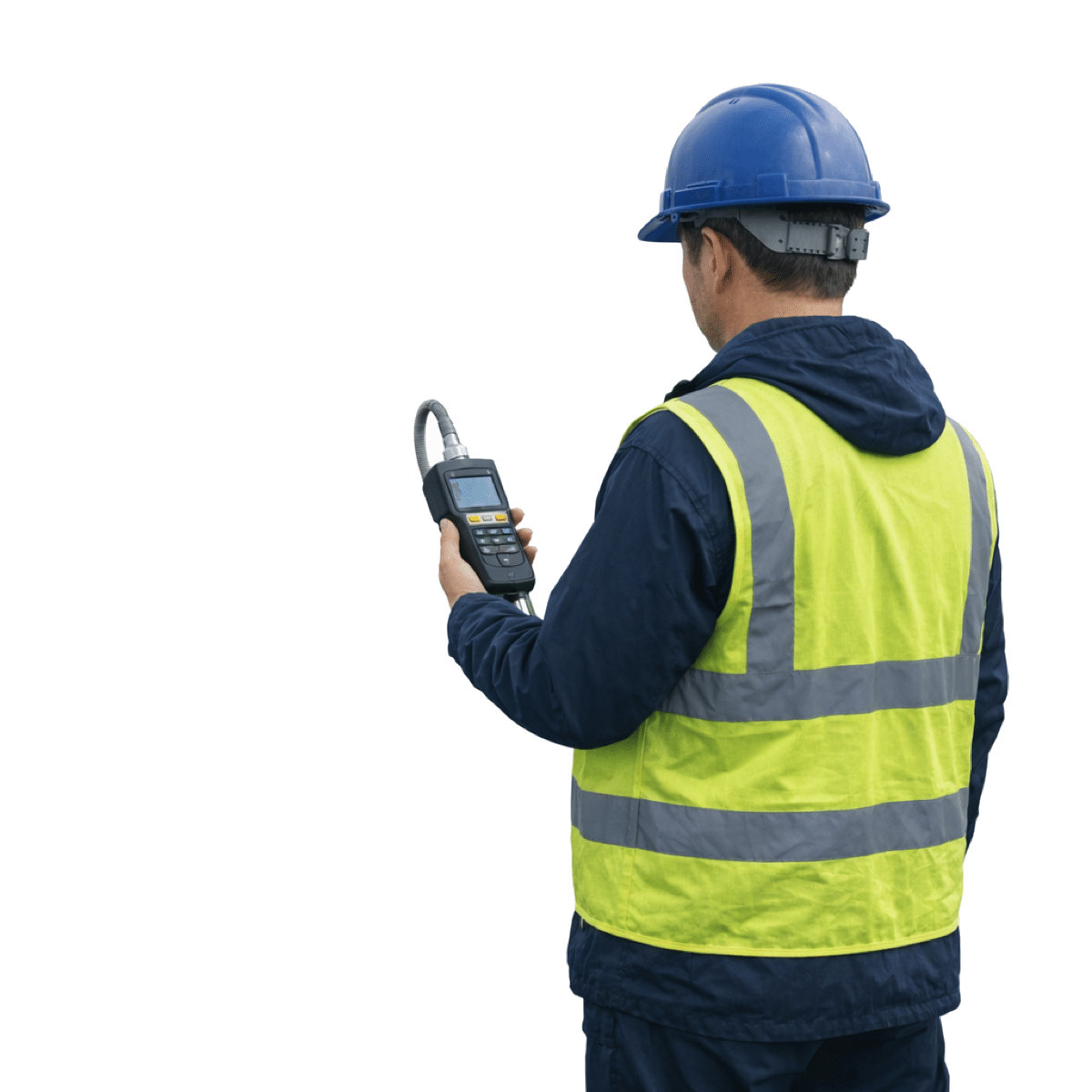
Get Multi-Gas Expert Consultation
Our application engineers specialize in configured multi-pass TDLAS channel selection and turnkey CEMS documentation review, and route portable confined-space safety to the right equipment class.