
Oxygen Analyzers
Accurate O₂ measurement from ppm to %vol — for combustion, inerting, and safety.
Precision oxygen measurement using paramagnetic, zirconia, and electrochemical sensing for process control, combustion optimization, and safety monitoring.
For high-interference, high-temperature, or in-situ O₂ duty, GESHINE also supports a TDLAS laser-based feasibility review as an engineering path beyond the conventional analyzer envelope.
How Paramagnetic / Zirconia Sensing Works
Paramagnetic & Zirconia Oxide Sensing
Paramagnetic sensors exploit the unique magnetic susceptibility of O₂ molecules for selective O₂ measurement in conditioned sample gas. Zirconia cells measure oxygen partial pressure at elevated temperatures, ideal for in-situ combustion applications.
- Selective O₂ response in stated sample matrices
- Fast T90 response (<5 s)
- Long-term stability with scheduled field checks
- Dual-sensor option for redundancy
O₂ Sensing Principle
Four O₂ Sensing Paths at a Glance
Paramagnetic, zirconia, and electrochemical remain the default oxygen analyzer choices in most plants. TDLAS is positioned as an engineering / upgrade path for duties that push beyond the conventional envelope.
Paramagnetic
Default Extractive Standard
Industrial extractive O₂ standard — ±0.05% accuracy, ppm-capable with proper sample conditioning, multi-component measurement compatibility.
Zirconia
In-Situ Combustion Duty
Direct-mount stack probe for combustion trim and boiler O₂. Cross-sensitivity to CO / H₂ / CH₄ below 1% O₂ — see warning below.
Electrochemical
Portable & Safety
Portable instruments and safety detection. Lowest purchase price; sensor cell replacement every 1–3 years drives 5-year TCO.
TDLAS
Engineering / Upgrade Path
Single-line laser absorption — interference-free against combustibles, sub-second response, hot/wet stack tolerant. Scoped per project via feasibility review; not a default shipping SKU on this page.
In-Situ vs Extractive Oxygen Analyzer Installation
Zirconia (ZrO₂)
The zirconia probe mounts directly in the flue gas duct or stack, measuring oxygen at process temperature without sample extraction. The heated ceramic cell operates at approximately 700 °C, providing sub-3-second response for real-time combustion feedback.
No sample extraction or conditioning required. Process gas contacts the sensor directly. Purge air system recommended in high-dust environments to keep the sensor clean.
- Combustion control in boilers, furnaces, and kilns where fast response is critical for air-fuel ratio optimization
- Suitable for flue gas temperatures up to 700 °C
Paramagnetic
A gas sample is drawn from the process through a heated sample line, conditioned (filtered, cooled, dried), and delivered to an external paramagnetic measurement cell. The cell exploits the unique magnetic susceptibility of O₂ molecules for selective O₂ measurement in clean, dry gas.
Requires a complete sample conditioning system: heated sample probe, heated transfer line (maintained above dew point), coalescing filter, sample cooler/dryer, and flow control. The paramagnetic cell requires clean, dry, particulate-free gas.
- High-accuracy process analysis, sample-cell-grade measurement under stated sample conditions
- Applications where cross-gas effects are managed through conditioning
- Inerting verification, air separation purity monitoring, quality control
Electrochemical
A handheld instrument with an internal electrochemical galvanic cell that produces a current proportional to the O₂ concentration diffusing through a gas-permeable membrane. Battery-powered with one-button operation.
Ambient diffusion or manual sample draw via built-in pump. No external sample conditioning needed. Operates at ambient temperature and pressure.
- Field spot checks, confined space entry clearance (OSHA 1910.146)
- Weld purging verification, modified atmosphere packaging (MAP) checks
- On-site emission verification
Zirconia in-situ: lowest installation cost, no sample system. ROI within first year from combustion savings.
Paramagnetic extractive: higher upfront cost for sample conditioning, but lowest annual maintenance and calibration drift.
Electrochemical portable: lowest purchase price, but sensor replacement every 1–3 years adds to 5-year TCO.
When Does TDLAS Become Worth It for O₂?
Paramagnetic and zirconia remain the default oxygen analyzer choices in many plants. TDLAS becomes relevant when the installation, matrix, or control objective pushes beyond their comfortable operating envelope.
| Dimension | Paramagnetic | Zirconia | TDLAS (Engineering) |
|---|---|---|---|
Best-fit duty |
Extractive multi-component O₂ | Combustion in-situ trim | High-interference / low-range / in-situ |
★Cross-sensitivity risk |
Low (with proper SCS) | High vs CO / H₂ / CH₄ at low O₂ | Line-specific laser — interference-free |
★Response time (T90) |
3 – 5 s | 2 – 4 s (ZrO₂ cell) | < 1 s |
★Installation format |
Extractive (needs SCS) | Direct-mount probe | In-situ cross-duct or extractive |
Sample conditioning |
Required (heated line + dry) | Not required | Optional — cross-duct removes SCS |
Temperature tolerance |
Cell limit ~70 °C | Direct duty up to ~700 °C | Hot/wet stack direct (to ~600 °C) |
★Low-range O₂ confidence |
OK to ppm with proper SCS | Drift and cross-error below 1% | ppb–ppm linear on a single laser line |
★Maintenance burden |
Cell + SCS periodic service | Probe replacement + drift recalibration | No wet parts — periodic optics check |
★ marks the four dimensions most likely to push an O₂ application from a conventional analyzer toward a TDLAS feasibility review.
Oxygen Analyzer Selection by Sensor Type and Purity Duty
Three questions decide most oxygen analyzer specs: which sensor matches your matrix, how low the trace range goes, and whether the duty is combustion control or high-purity monitoring.
Zirconia, Paramagnetic & Electrochemical Sensor Variants
The oxygen sensor you specify follows the matrix, not a spec-sheet ranking. A zirconia (ZrO₂) cell reads O₂ in-situ at combustion temperature and suits hot boiler and furnace flue where excess-air trim is the goal. A paramagnetic cell handles clean, dried extractive samples and resists cross-sensitivity from CO₂ and hydrocarbons, so it fits process and high-purity duty. An electrochemical cell covers lower-cost fixed monitoring and trace ranges, with a finite cell life that belongs in the total cost of ownership.
Trace O₂ Below 100 ppm in High-Purity Lines
For trace O₂ below 100 ppm — inert-gas blanketing, glovebox feed, electronics-grade N₂ / Ar — the analyzer needs a trace-calibrated range and a leak-tight sample path, because ambient-air ingress at a single fitting can swamp a sub-ppm reading. A dual-range (trace + %vol) configuration fits a duty point that swings between purge start-up (%vol) and steady-state purity (ppm), with the trace span confirmed against certified gas.
Air Separation & High-Purity O₂ Duty
In air separation units (ASU), oxygen analyzers monitor O₂, N₂ and Ar purity across the cold box and product streams — the same plant needs %vol product-grade O₂ readings and trace O₂-in-N₂ / Ar contamination checks. Purity targets depend on product grade. For O₂ combustion control on a boiler or furnace stack, see the boiler and stack combustion section on the flue gas analyzers page.
Browse Oxygen Analyzers
3 instruments — filter by type or application to find your match.
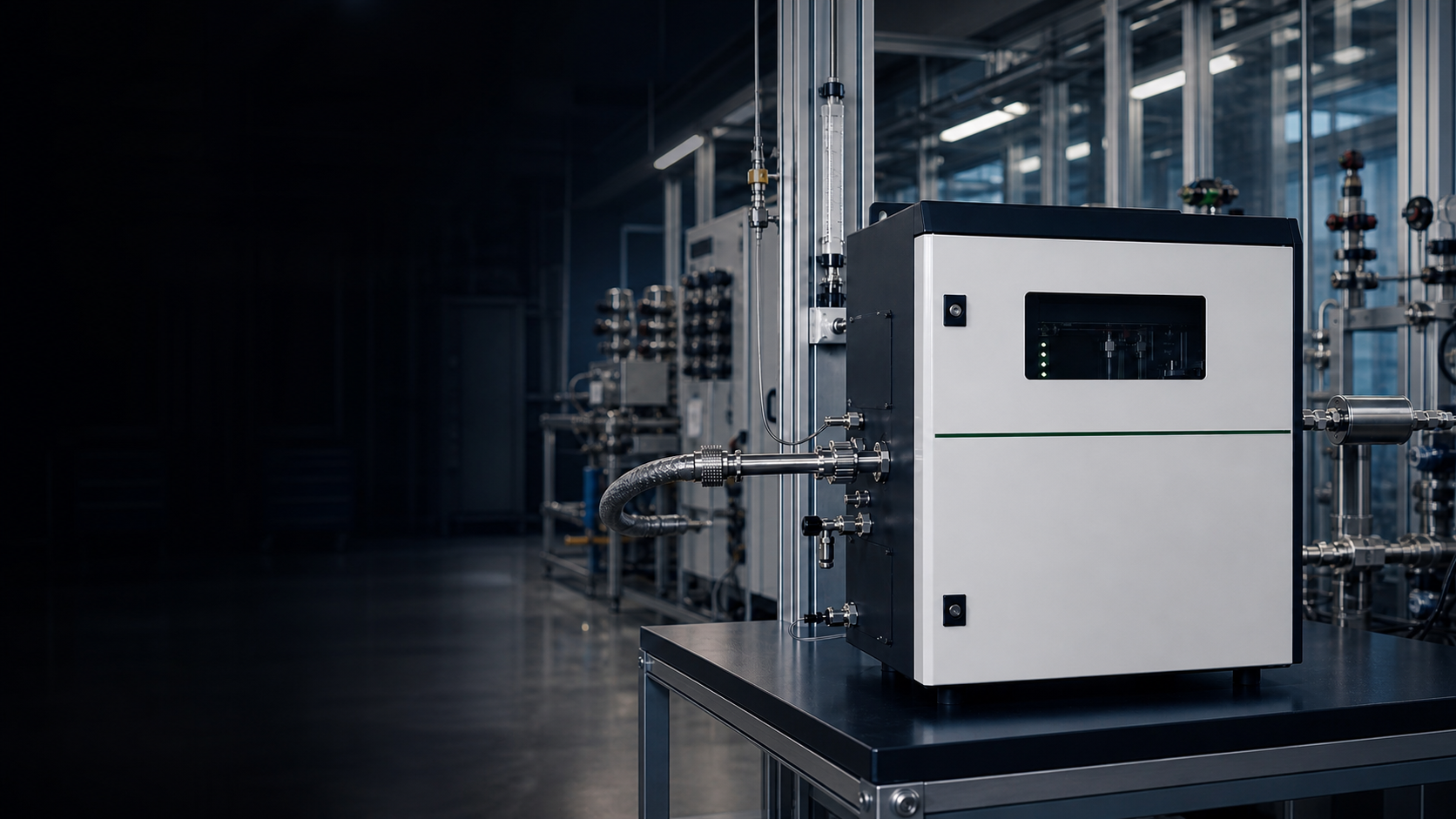 In-line Process
ZS8100-O2 · Paramagnetic / Zirconia
ZS8100-O2 Process Oxygen Analyzer
High-accuracy paramagnetic O₂ measurement for process optimization.
- Range
- 0-25 %vol O₂
- Accuracy
- ±0.05 %vol
- Response
- <5s T90
- Output
- 4-20mA · Modbus · HART
Portable
Portable Electrochemical Variant
Portable Electrochemical O₂ Variant
Field-ready handheld O₂ survey path using a galvanic electrochemical cell, available by project review. Suits spot checks, confined-space entry, and walk-around verification where a battery-powered handheld is preferred over a fixed in-line analyzer. Cell life, range, and ingress rating are matched to the duty during specification — talk to our team to confirm the right build for your application.
Laboratory
Benchtop Paramagnetic Variant
Benchtop Paramagnetic O₂ Variant
Bench-top paramagnetic O₂ measurement path for R&D and quality labs, available by project review. Targets laboratory and quality-control duty where clean, dried samples and high cell-level resolution matter more than in-situ mounting. Sample handling, range, and interface options are scoped to the lab workflow during specification — talk to our team to confirm the right build for your application.
Where O₂ Measurement Lives in the Plant
From combustion trim to inerting verification — the same gas in three very different control loops.
Petrochemical & Refining
Oxygen measurement in ethylene crackers, reformers, and inerting systems to prevent explosive atmospheres and optimize combustion efficiency.
See petrochemical applications
Power Generation
Flue gas O₂ monitoring for combustion optimization in coal, gas, and biomass-fired boilers — reducing fuel costs by 2–5%.
See power applications
Steel & Metallurgy
Oxygen control in blast furnaces, BOF converters, and continuous casting to maintain product quality and prevent oxidation.
See steel applicationsWhy GESHINE for Oxygen Analyzers
Three technologies, one engineering team, manufacturer-direct support.
Three Sensing Technologies
Paramagnetic, zirconia, and electrochemical oxygen measurement on a single platform — select the technology that matches your process conditions, accuracy requirements, and installation constraints.
Application Engineering Support
From feasibility study through commissioning — GESHINE engineers assist with technology selection, optical path design, sample conditioning specification, and integration with your DCS or SCADA system.
Safety Integration Review
For combustion control, inerting, or interlock-related oxygen duty, GESHINE scopes safety integration, hazardous-area classification, and documentation requirements during engineering review. Functional-safety or hazardous-area approvals should be confirmed against the selected model and project certificate package before procurement.
Manufacturer Direct
Direct access to the engineering team that designed and built your analyzer. Shorter lead times, competitive pricing, and factory-level technical support including spare parts and field service.
Oxygen Analyzer Questions, Answered
From sensor selection to calibration cadence and hazardous-area certification.
When should I upgrade from zirconia to TDLAS for O₂?
The zirconia envelope starts breaking down on four signals: a process matrix carrying CO, H₂, or CH₄ (cross-sensitivity false-low readings), a required range below 1% O₂ with low-ppm accuracy, hot or wet stack conditions where direct-mount probes face condensation and corrosion, and a control loop that needs sub-second response. When any two of these apply at the same point, a TDLAS feasibility review is the right next step — single-line laser absorption is interference-free against combustibles, linear into the ppm range, and tolerates hot/wet matrix without sample conditioning. Paramagnetic and zirconia remain the default analyzers in many plants; TDLAS is positioned as the engineering path for the duties that push beyond their comfortable operating envelope.
How does TDLAS compare with paramagnetic for low-range O₂ or high-interference service?
Paramagnetic with proper sample conditioning remains accurate down to ppm and is the catalogue default for extractive O₂ measurement — cell response sits around 3-5 seconds, and the heated-line plus cool-dry sample train adds engineering cost and a maintenance rota. TDLAS uses a single-line laser tuned to a specific O₂ absorption feature, giving sub-second response, linear low-range performance without an SCS, and selectivity that is unaffected by combustible-gas interference. The trade-off: paramagnetic is shipping product with predictable lead time and certification; TDLAS for O₂ is engineering-scoped per project and routed through a feasibility review rather than a standard order. Buyers running long-haul control loops, in-situ cross-duct installations, or low-range CEMS duty under interference pressure typically benefit from the TDLAS conversation.
What is an oxygen analyzer?
An oxygen analyzer is an analytical instrument that measures the concentration of molecular oxygen (O₂) in a gas mixture. Industrial oxygen analyzers use sensing technologies such as paramagnetic, zirconia, or electrochemical cells to provide continuous or spot measurements for combustion control, safety monitoring, and process quality assurance.
In industrial settings, precise oxygen measurement is essential for optimizing fuel efficiency in combustion processes (where even a 0.5% O₂ reduction can save 1–2% in fuel costs), verifying inert atmospheres to prevent explosions, and ensuring product gas purity in air separation and chemical processing. The choice of analyzer technology depends on the required accuracy, response speed, installation method, and process conditions.
What types of oxygen analyzers are available?
The three main types of industrial oxygen analyzers are paramagnetic, zirconia, and electrochemical. Paramagnetic analyzers exploit the unique magnetic properties of O₂ molecules for selective extractive measurement with high sample-cell accuracy (±0.05% vol). Zirconia analyzers use a heated ceramic cell for fast in-situ measurement directly in the flue gas duct. Electrochemical analyzers use a disposable galvanic cell for portable spot checks.
Each technology has distinct strengths: paramagnetic provides high absolute accuracy but requires sample conditioning; zirconia offers the fastest response (<3 s) for combustion control but has cross-sensitivity to combustible gases; electrochemical is the most portable and affordable but has limited sensor lifetime (1–3 years). GESHINE offers all three technologies, allowing engineering selection against the specific application matrix.
What is the difference between in-situ and extractive oxygen analyzers?
In-situ analyzers mount directly on the process duct and measure oxygen at the point of interest without extracting a sample. Extractive analyzers draw a gas sample through a conditioning system to an external measurement cell. The key trade-off is response speed versus measurement accuracy and flexibility.
In-situ zirconia probes provide the fastest possible response (T90 < 3 s) because there is no sample transport lag, making them ideal for real-time combustion control. However, they are limited to a single measurement point and may be affected by local gas stratification. Extractive paramagnetic analyzers introduce a transport delay (15–60 s) but isolate the measurement cell from process vibration and temperature extremes, and can be shared across multiple sample points using a multiplexer.
How accurate are industrial oxygen analyzers?
Accuracy varies by technology: paramagnetic analyzers achieve ±0.05% vol O₂ (full scale), zirconia analyzers typically achieve ±1% of reading, and electrochemical sensors offer ±0.1% vol. The appropriate accuracy level depends on the application — combustion optimization may tolerate ±1%, while inerting verification and air separation purity monitoring often require ±0.05% or better.
It is important to distinguish between accuracy under laboratory conditions and accuracy in the installed environment. Factors such as sample conditioning quality, ambient temperature variation, calibration gas traceability, and sensor aging all affect real-world measurement performance. GESHINE process analyzers are factory-calibrated against NIST-traceable reference gases and include automatic compensation for barometric pressure and sample temperature.
How often should an oxygen analyzer be calibrated?
Calibration frequency depends on the analyzer technology and application requirements. Paramagnetic analyzers typically maintain specification for 3–6 months between calibration checks due to their inherent stability. Zirconia analyzers may require monthly zero/span verification depending on process conditions. Electrochemical sensors should be checked before each use in safety-critical applications.
For regulatory CEMS applications, calibration intervals are often defined by local standards (e.g., EN 14181 QAL3 in Europe, 40 CFR Part 60 in the US) regardless of analyzer technology. GESHINE process analyzers support automatic zero and span checks using internal reference cells or external calibration gas, reducing manual intervention and ensuring audit-ready measurement records.
What certifications are required for oxygen analyzers in hazardous areas?
Oxygen analyzers installed in potentially explosive atmospheres must be matched to the site zone classification, gas group, temperature class, enclosure design, and local acceptance framework. For safety-instrumented functions, the required safety integrity level and proof-test workflow should be defined by the project hazard analysis.
GESHINE scopes hazardous-area, safety, CE/EMC, and ingress-protection documentation during application engineering review. Do not treat this page as a universal certificate statement; confirm the selected oxygen analyzer model, certificate package, and installation classification before procurement or permit submission.
What industries use oxygen analyzers?
Oxygen analyzers are used across virtually all process industries where combustion, inerting, or gas purity monitoring is required. Major applications include power generation (boiler combustion optimization), steel and metallurgy (blast furnace and converter atmosphere control), petrochemical (inerting verification and safety monitoring), air separation (product purity), and waste incineration (combustion control and CEMS compliance).
In each industry, the choice of analyzer technology depends on the specific process conditions. For example, steel plants often prefer in-situ zirconia probes for their fast response in BOF converter gas analysis, while pharmaceutical facilities require paramagnetic analyzers for their superior accuracy and traceability in GMP-controlled environments.
Zirconia vs paramagnetic vs electrochemical — which oxygen sensor for my matrix?
Match the sensor to your gas matrix and mounting constraint. Zirconia (ZrO₂) cells run hot and mount in-situ, so they suit boiler and furnace flue where fast O₂ feedback drives combustion control — but combustibles such as CO and H₂ bias the reading at low O₂. Paramagnetic cells are extractive and respond selectively to the magnetic susceptibility of O₂, so they fit high-purity or cross-sensitive streams such as inerting and air-separation product gas. Electrochemical cells are compact for portable spot checks and confined-space safety, with a finite cell life that belongs in TCO. In short: hot in-situ duty points to zirconia, clean high-accuracy extractive points to paramagnetic, and portable safety points to electrochemical.
What oxygen analyzer should I specify for boiler combustion control?
For boiler combustion control, specify an in-situ O₂ analyzer at the economizer or stack outlet — zirconia or tunable diode laser (TDLAS) — because stack O₂ is the true control variable for air-fuel trim. Measuring O₂ in the flue lets operators trim excess air toward the optimum band (often a few percent O₂ in the flue matrix), lowering fuel use while keeping CO in check. In-situ mounting removes sample-transport lag so the trim loop reacts to stack O₂ quickly; zirconia tolerates high flue temperature, while TDLAS sidesteps the combustibles cross-effect that biases zirconia at low O₂.
Request a Quote for Oxygen Analyzers
To configure the optimal O₂ analyzer for your process, please have these details ready:
- Oxygen concentration range (ppm or %vol)
- Process temperature & pressure at sample point
- Background gas matrix (presence of combustibles)
- In-situ, extractive, or portable requirement
- Hazardous area classification and local approval framework, if applicable
- Required response time (T90)
- Output protocols (4-20mA, Modbus, HART)
- Certifications needed (SIL 2, CE, ATEX)
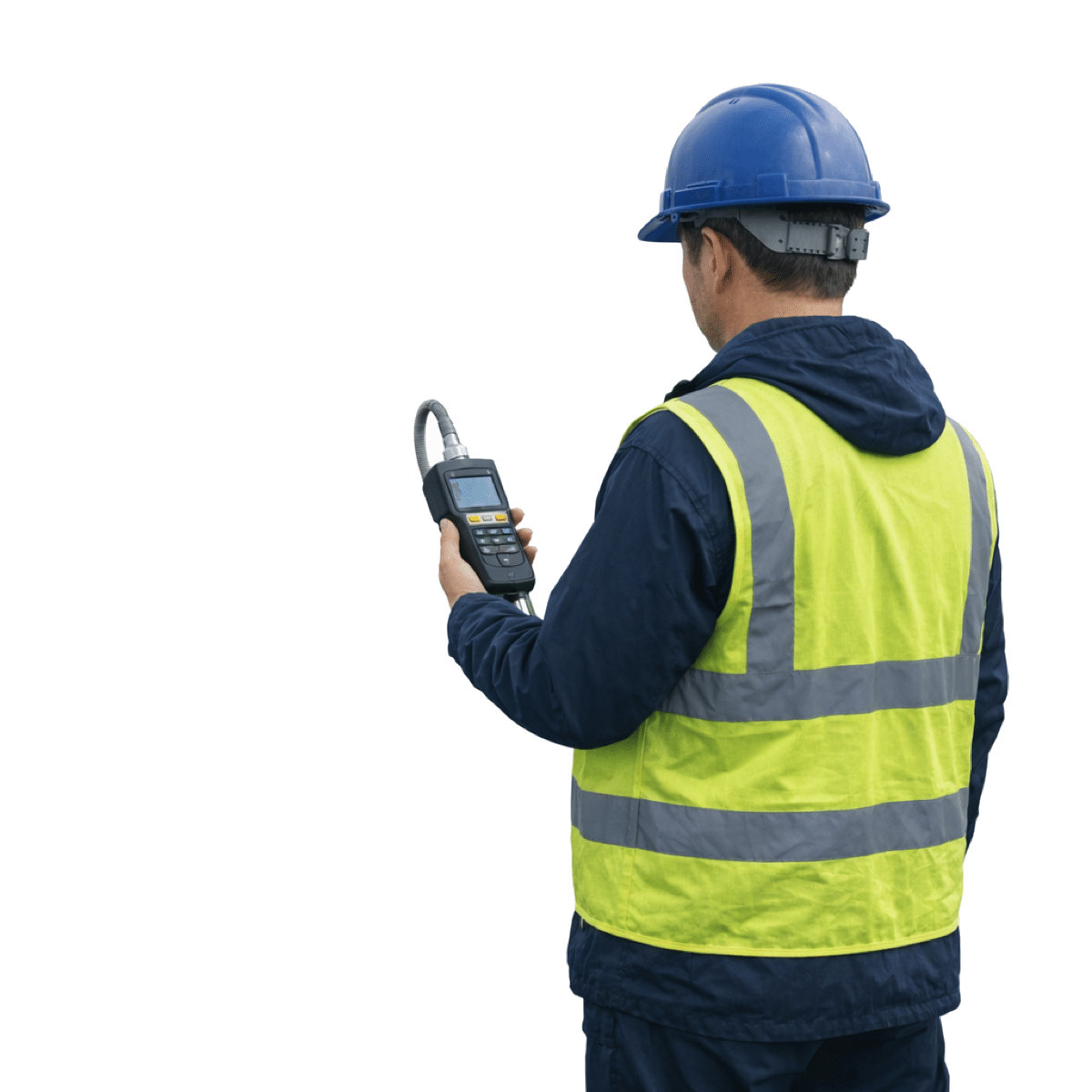
Get O₂ Expert Consultation
Our application engineers specialize in oxygen analyzer configuration for combustion, inerting, and safety applications.