
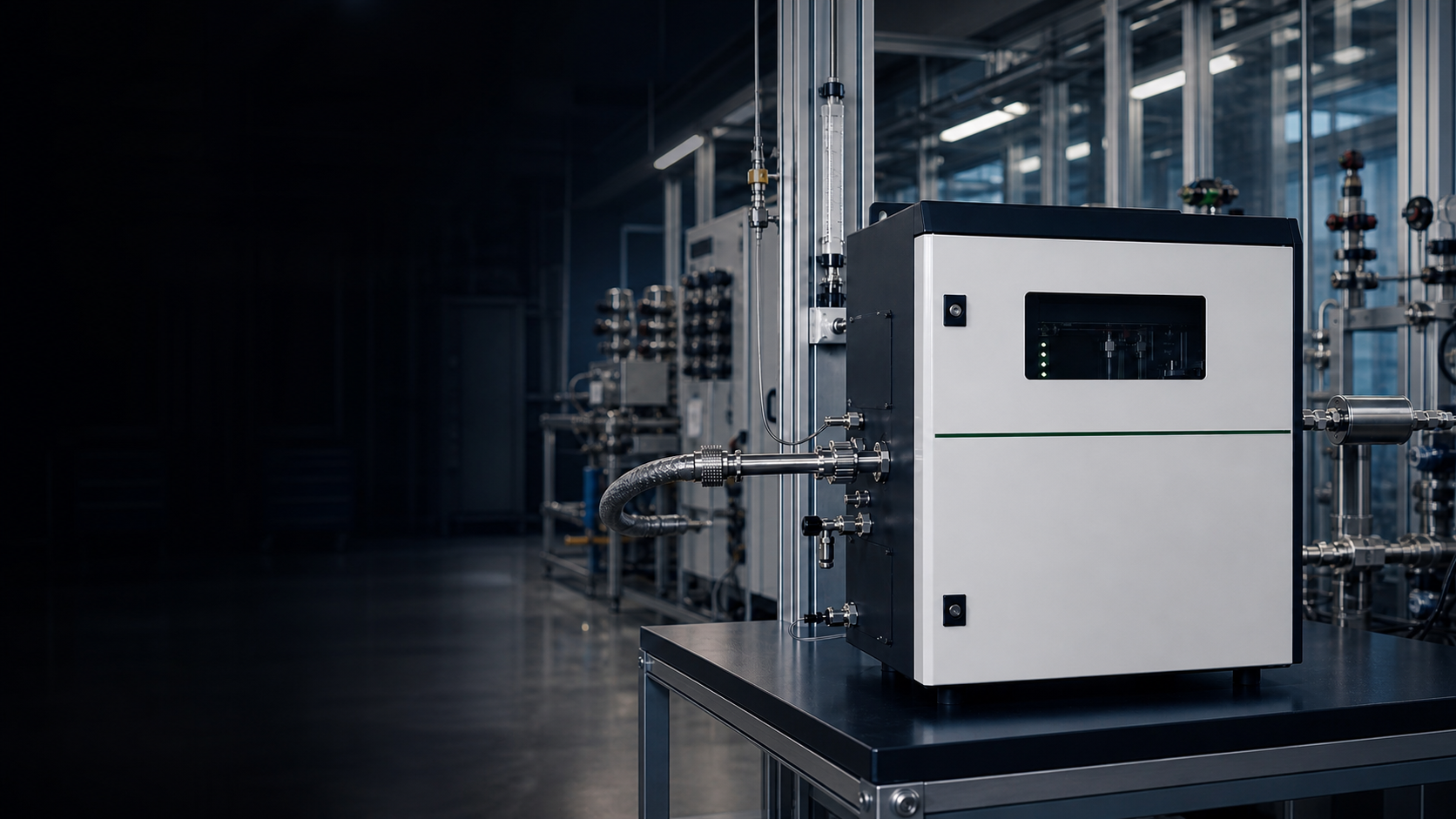
H₂S Analyzer: In-Situ Explosion-Proof TDLAS for Hydrogen Sulfide
In-situ cross-stack laser H₂S measurement for sour gas, oil & gas, biogas, and refinery process duty.
GESHINE’s primary H₂S path is the ZS8300-H2S in-situ explosion-proof cross-stack TDLAS analyzer — diode-laser absorption read directly across the process optical path, with measurement range configured per application. Extractive UV-fluorescence and electrochemical screening remain industry methods we reference where the duty calls for them.
Why H₂S Monitoring Fails — And How Multi-Technology Analyzers Solve It
Most H₂S monitoring failures trace back to one fundamental mistake: forcing an extractive or consumable-based principle onto a hot, wet, dirty process gas it was never built for. Electrochemical cells are inexpensive and familiar in the 0–100 ppm range, but they carry the potential for cross-interference from mercaptans and other sulfur compounds — a real concern in sour-gas matrices that can skew the reading and trigger false compliance alarms. Lead-acetate tape has long regulatory acceptance and genuine ppb sensitivity, but the tape is a consumable that is not real-time and drives a continuous maintenance rota. And every extractive method shares one weakness on sour service: H₂S is “sticky” and adsorbs onto sample-line surfaces before it reaches the cell, so the reading runs low unless the whole sample train is heated and inerted.
Periodic grab samples and laboratory methods give lab-accurate numbers, yet they reveal what the concentration was, not what it is — and continuous H₂S analysis is not optional in most processes, where personnel safety, corrosion control, and emissions compliance all depend on a live, trustworthy reading.
GESHINE’s primary H₂S path removes the sample train altogether. The ZS8300-H2S measures H₂S in situ, with a tunable diode laser reading absorption directly across the process optical path inside an explosion-proof cross-stack enclosure. There is no extractive line to adsorb the gas, no consumable tape, and no electrochemical cell to deplete — the measurement sees the real process stream in real time. Extractive UV-fluorescence and electrochemical screening remain valid industry methods, and we reference them where a duty genuinely calls for an extractive process bench or a personnel-safety alarm; but for harsh, hazardous-area sour-gas duty, in-situ TDLAS is the path we lead with.
Tunable diode laser absorption spectroscopy tunes a laser to a specific H₂S absorption line and measures how much light the gas absorbs across the optical path. Because the analyzer reads the single target line, it is highly selective and largely free of cross-interference from background gases. The ZS8300-H2S applies this across the stack itself — transmitter and receiver mounted on the process duct, optical path under 5 m — so the gas is never extracted, cooled, or held in a sample line where it could adsorb or react. Response is adjustable above 1 second, and the explosion-proof Ex db IIC T6 Gb / IP67 enclosure is built for high-temperature, dusty and corrosive process environments. Measurement range is configured per application and confirmed in the delivered datasheet.
Knowing why extractive and consumable methods break down on harsh sour service informs the next question: which GESHINE configuration is optimal for your process conditions?
Exposure & Process Risk
Regulatory H₂S exposure thresholds that drive alarm set-points and define the monitoring scope.
Must not be exceeded; 50 ppm peak permitted up to 10 min once per shift.
8-hour time-weighted average occupational baseline.
15-minute short-term limit, max four times per shift.
Immediately Dangerous to Life or Health — evacuate.
Typical fixed-detector setup: low alarm 10 ppm, high alarm 15 ppm tied to ESD logic. Site-specific confined-space permit limits (OSHA 29 CFR 1910.146) override general regulations.
How In-Situ TDLAS Works for H₂S
In-Situ Cross-Stack TDLAS (primary) + extractive and safety methods referenced
A tunable diode laser is locked to a single H₂S absorption line and fired across the process optical path; the H₂S in the stream absorbs part of the beam, and the loss is proportional to concentration — selective, real-time, and free of the consumable cell or tape that extractive methods depend on. The ZS8300-H2S applies this in situ, mounting transmitter and receiver across the stack inside an explosion-proof enclosure.
- Single-line laser selectivity; largely free of cross-interference from background gases
- No extractive sample line, no consumable tape, no electrochemical cell to deplete
- Explosion-proof Ex db IIC T6 Gb / IP67 enclosure for hazardous-area duty
- Continuous real-time reading; response adjustable above 1 second, range configured per application
In-Situ TDLAS Sensing Principle
Four H₂S Measurement Paths at a Glance
In-situ cross-stack TDLAS is GESHINE’s primary process path for harsh, hazardous-area sour gas. Extractive UV-fluorescence, electrochemical safety screening, and lead-acetate tape are industry methods referenced here for context — the right fit depends on the duty, and our engineers will confirm it for your stream.
In-Situ Cross-Stack TDLAS
ZS8300-H2S Process Analyzer
Diode-laser absorption read directly across the process optical path, inside an explosion-proof Ex db IIC T6 Gb / IP67 enclosure — no sample line, no consumable, for hot, dusty, corrosive sour-gas duty. Range configured per application.
Extractive UV-Fluorescence
Process Bench Reference
An extractive optical method that excites H₂S with UV light and reads the fluorescence; ppb-capable but needs a heated, scrubbed sample train. Referenced where an extractive bench genuinely suits the duty.
Electrochemical Safety Screening
Personnel-Safety Class
Electrochemical cells give a current proportional to H₂S and are common for fixed-point and portable personnel-safety alarms in the 0–100 ppm range. A safety-detector duty class, distinct from a process analyzer.
Lead-Acetate Tape
Regulatory Legacy Reference
A long-proven photometric method (ASTM D4084) where coated tape darkens in proportion to H₂S. Widely accepted for custody-transfer duty, but the tape is a consumable and the method is not real-time.
How H₂S Analyzers Work: Five Detection Methods
The measurement principle determines accuracy, range, response time and consumable load. Five proven principles cover the full duty range — GESHINE leads with in-situ TDLAS (marked Primary) and references the others as industry methods for context and engineering-scoped requirements.
Tunable diode laser absorption spectroscopy uses a laser tuned to a specific H₂S absorption line. This is an extremely selective technique that avoids contamination from background gases. An in-situ TDLAS analyzer reads directly across the process optical path and does not require extracted samples, so the gas is never lost to an adsorbing sample line. The most appropriate application is the harshest, hazardous-area environments where speed, selectivity and low maintenance are paramount — the basis of GESHINE’s ZS8300-H2S.
Pulsed UV fluorescence excites H₂S molecules with a precisely timed ultraviolet light pulse, causing them to emit characteristic fluorescent radiation at a longer wavelength. The intensity of the fluorescence signal is directly proportional to the H₂S concentration. This technique offers high selectivity and no consumable sensing element, but as an extractive method it depends on a heated, scrubbed sample train held above the dew point — a common process bench in gas processing and pipeline applications.
Electrochemical cells produce a current across two electrodes separated by a permeable membrane as a consequence of an electrochemical reaction with the hydrogen sulfide gas. This principle of operation is inexpensive and the most commonly used in the 0–100 ppm natural gas and biogas measurement range, primarily for personnel-safety screening. It does, however, have the potential for cross-interference from mercaptans and other sulfur compounds, and the cell is a consumable that depletes over time.
The lead acetate tape method is one of the longest-proven methods of hydrogen sulfide measurement and complies with ASTM D4084-82 and ASTM D4468-85. When in contact with hydrogen sulfide, the chemically coated tape darkens, and this is measured spectroscopically by a photometric sensor. Long-standing, with minimal response to most other gases and widely accepted in custody transfer and pipeline-quality applications — but periodic tape replacement is the limiting factor.
Gold film sensors measure H₂S at low-level parts-per-billion sensitivity. Jerome-type analyzers are capable of measuring down to 3 ppb of H₂S. Gold film sensors change electrical resistance in response to H₂S molecules binding to the film surface. These instruments are the industry standard for ambient air-quality measurements, odor investigations adjacent to wastewater treatment plants, and occupational-hygiene surveys where ultra-trace levels of H₂S need to be detected.
| Method | Typical Range | Response Time | Key Advantages | Limitations |
|---|---|---|---|---|
| In-Situ TDLASPrimary | Configured per application | > 1 s (adj.) | In-situ cross-stack, highest selectivity, no sample line or consumable | Premium cost; alignment-sensitive optics |
| Pulsed UV FluorescenceIndustry Method | 0–100 ppm (to %vol) | < 10 s | No consumable element, high H₂S selectivity | Extractive; needs heated, scrubbed sample train |
| ElectrochemicalIndustry Method | 0–100 ppm | < 30 s | Cost-effective, compact; safety-screening class | Cross-interference with mercaptans; consumable cell every 1–2 years |
| Lead Acetate TapeIndustry Method | 0–200 ppm | ~60 s | ASTM-compliant, minimal interference | Tape consumable cost; not real-time |
| Gold Film SensorIndustry Method | 0.003–50 ppm | < 15 s | ppb-level sensitivity, portable | Requires regeneration cycle; mercury interference |
GESHINE’s primary H₂S analyzer, the ZS8300-H2S, uses in-situ cross-stack TDLAS. Pulsed UV fluorescence, electrochemical, lead-acetate tape and gold-film methods are shown for comparison as industry methods and addressed via engineering review where an application genuinely requires them.
In-Situ Process vs Extractive Bench vs Safety Screening
In-Situ Cross-Stack TDLAS
The ZS8300-H2S mounts transmitter and receiver across the process duct and reads H₂S with a diode laser directly in the stream — no extractive line. Built for refinery sour gas, SRU and amine-unit duty, and other high-temperature, dusty or corrosive process environments.
No sample extraction. Cross-stack optical alignment across the duct (path under 5 m); 0.3–0.8 MPa industrial nitrogen purge keeps optical windows clear.
- Continuous in-situ sour-gas process measurement
- Hot, wet, dusty or corrosive duct gas where a sample train would adsorb H₂S
- Hazardous-area duty needing an explosion-proof enclosure
Extractive UV-Fluorescence Bench
An industry extractive method: a heated line draws sour gas to an optical cell where a UV source excites H₂S and a detector reads the fluorescence. Referenced where an extractive bench genuinely suits the duty, such as a conditioned slipstream off NG dehydration or biogas upgrading.
Heated probe + heated line above dew point, particulate filter, scrubber for cross-interferents (SO₂, hydrocarbons), flow controller.
- Conditioned slipstream process analysis at ppb–ppm range
- Pipeline custody-transfer specifications (<4 ppm H₂S)
- Amine-scrubber treated gas verification
Electrochemical Safety Screening
Fixed-point and portable electrochemical detectors are a personnel-safety class, not a process analyzer: a permeable-membrane cell gives a current proportional to H₂S to drive area or personal alarms. A distinct duty class referenced here for context — alarm chains are scoped through engineering review.
Ambient diffusion through a gas-permeable membrane; no sample line. The electrochemical cell is a consumable that depletes and is replaced periodically.
- Process-area and fence-line personnel-safety alarms
- Wellhead, compressor station, tank-farm safety coverage
- Confined-space entry and personal protection for crews
ZS8300-H2S: higher upfront cost, but no extractive sample train, no consumable tape and no electrochemical cell to replace — recurring spend is periodic optical verification, which keeps long-term cost low on continuous duty.
An extractive UV-fluorescence bench avoids a consumable tape but carries the upkeep of a heated, scrubbed sample train — probe, filters, scrubber media and dew-point management all add to recurring cost.
Electrochemical safety detectors are inexpensive to buy, but the cell is a consumable that depletes and is replaced periodically, so OPEX is moderate and step-wise — and it is a safety-screening class, not a process measurement.
Technical Specifications and Measurement Ranges
Key specifications for the primary H₂S analyzer. Measurement range and detection limit are configured per application and confirmed in the delivered datasheet — our applications team will set the right configuration for your duty.
ZS8300-H2S In-Situ TDLAS Analyzer — Full Specification
| Measurement | |
|---|---|
| Measuring Principle | In-Situ Cross-Stack TDLAS (diode-laser absorption) |
| Measurement Range | Configured per application (datasheet pending) |
| Detection Limit | Configured per application (datasheet pending) |
| Linearity Error | ≤ ±1% FS |
| Span Drift | ≤ ±1% FS |
| Optical Path Length | <5 m |
| Response Time | >1 s (adjustable) |
| Physical | |
| Installation | In-situ cross-stack (transmitter + receiver across process optical path) |
| Enclosure | Explosion-proof Ex db IIC T6 Gb, IP67 |
| Dimensions / Weight | Configured per installation (datasheet pending) |
| Electrical | |
| Power Supply | 24 VDC (220 VAC optional), <20 W |
| Analog Output | 2 × 4–20 mA (isolated) |
| Digital Output | Modbus RTU/TCP, HART 7 |
| Relay Outputs | 4 × SPDT |
| Display | 5″ color TFT touchscreen |
| Environmental | |
| Ambient Temperature | -30 °C to +60 °C |
| Purge Gas | 0.3–0.8 MPa industrial nitrogen |
| Ingress Protection | IP67 |
| Process Environment | High-temperature, dusty and corrosive process gas |
| Certifications | |
| Explosion Protection | Ex db IIC T6 Gb |
| Design Standards | GB/T 3836.1 and GB/T 3836.2 |
| Safety Integrity | SIL2 certification |
| Ingress Protection | IP67 |
Specifications reflect the ZS8300-H2S in-situ cross-stack TDLAS analyzer. Measurement range, detection limit and installed dimensions are configured per application and confirmed in the delivered datasheet.
Why In-Situ TDLAS Is the Primary H₂S Process Path
In-situ cross-stack TDLAS reads H₂S directly in the process gas — no extracted sample, no consumable. Extractive UV-fluorescence and electrochemical screening remain valid industry methods, but for harsh, hazardous-area sour-gas duty the in-situ laser is the path GESHINE leads with. The table marks where the boundary between methods falls.
| Dimension | In-Situ TDLAS (Primary) | Extractive UV-Fluorescence | Electrochemical Screening |
|---|---|---|---|
Best-fit duty | In-situ cross-stack / hot/wet sour matrix | Conditioned slipstream process | Personnel-safety alarm |
★Measurement range | Configured per application | 0–100 ppm (to %vol) | 0–100 ppm |
★Response time | > 1 s (adjustable) | < 10 s (extractive) | 30 – 60 s |
★Installation format | In-situ cross-stack (no sample line) | Extractive rack (SCS required) | Direct-mount fixed/portable |
Sample conditioning | None — in-situ across the duct | Heated line + scrubber | Not required |
Cross-interference | Line-specific laser — selective | SO₂ / hydrocarbons (scrubber) | CO, SO₂, mercaptans |
★Hot/wet sour gas duty | Direct in-situ; Ex db IIC T6 Gb / IP67 | SCS dew-point margin needed | Limited above 50 °C ambient |
Maintenance burden | No wet parts — periodic optics check | UV source + scrubber + filters | Consumable cell replacement |
★ marks the dimensions where in-situ TDLAS most clearly separates from the extractive and safety-screening industry methods on harsh sour-gas duty.
H₂S Analyzer Selection by Process Duty, Safety Class and Exposure Limit
Three questions narrow most H₂S specs: process measurement or personnel safety, the regulatory exposure limit your duty point sits against, and whether the matrix carries cross-interferent SO₂ / mercaptans.
Process Analyzer vs Safety Detector — Different Duties
The in-situ cross-stack TDLAS process analyzer (ZS8300-H2S) reads H₂S directly in the process gas for sour-gas process measurement, amine-unit and SRU duty — range configured per application. Electrochemical screening is a separate personnel-safety class that triggers area or personal alarms at OSHA / NIOSH thresholds. Don’t conflate the two: a safety detector is not a process analyzer, and vice versa. Alarm-chain and safety-loop scope is handled through engineering review.
OSHA / NIOSH / ACGIH Exposure Limits
Set safety-alarm setpoints against the regulatory regime applicable to your facility. OSHA PEL Ceiling = 20 ppm; NIOSH IDLH = 100 ppm; ACGIH TLV-TWA = 1 ppm and TLV-STEL = 5 ppm. Typical industrial practice: low alarm at 10 ppm (worker alert), high alarm at 15 ppm (ESD trigger). Personal monitors alarm at STEL = 5 ppm for shift-cumulative protection. The right setpoint depends on jurisdiction and OSHA 29 CFR 1910.146 permit-required-confined-space scope.
In-Situ TDLAS vs Extractive Industry Methods
Extractive industry methods — UV-fluorescence benches and lead-acetate tape — all draw the gas to the instrument through a sample line, where H₂S can adsorb onto the walls and read low unless the train is heated and inerted; the tape is also a consumable that drives a maintenance rota. The ZS8300-H2S avoids both: it reads in situ across the duct, with no sample line and no consumable. See why in-situ TDLAS is the primary H₂S process path for where the boundary between methods falls.
GESHINE H₂S Analyzer — Primary Model & Selection Guide
The in-situ explosion-proof cross-stack TDLAS analyzer for harsh, hazardous-area sour-gas process duty.
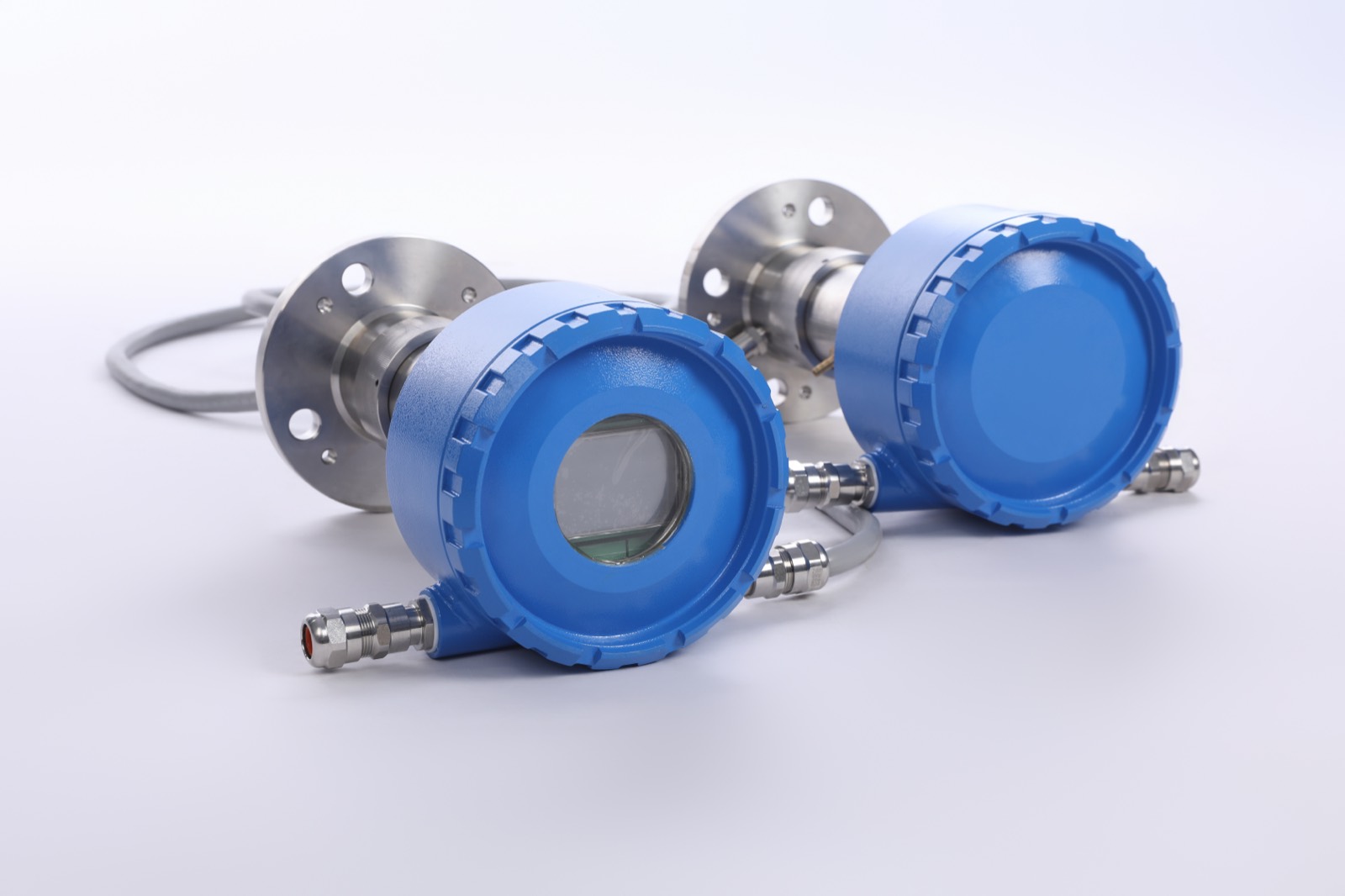 In-Situ Cross-Stack
ZS8300-H2S · In-Situ Cross-Stack TDLAS
ZS8300-H2S Process H₂S Analyzer
In-situ explosion-proof cross-stack TDLAS for H₂S in harsh, hazardous-area sour-gas, refinery, and SRU process streams.
- Principle
- In-Situ TDLAS
- Range
- Per application
- Response
- >1s (adjustable)
- Ex Protection
- Ex db IIC T6 Gb
Certifications, Compliance, and Safety Standards
The ZS8300-H2S in-situ TDLAS analyzer is built for the hazardous-area and quality-assurance requirements of demanding sour-gas industries. Applicable certification scope, hazardous-area documentation and safety-integrity evidence are confirmed per project against the target installation.
Hazardous Area Classifications, Explained
- Zone 0 — an explosive gas atmosphere is present continuously or for long periods.
- Zone 1 — an explosive gas atmosphere is likely to occur during normal operation.
- Zone 2 — an explosive atmosphere is unlikely, and if it occurs, only for short periods.
Hazardous-area documentation, the IP67 ingress rating and the Ex db IIC T6 Gb protection concept are reviewed and matched to the site classification before quoting. Installations follow the applicable explosion-protection standards and OSHA H₂S exposure limits to safeguard plant personnel.
H₂S Analyzer Applications — From Oil & Gas to Wastewater
From wellhead sour gas to amine treatment, refinery SRU tail, and wastewater digester — process verification meets personnel safety.
Natural Gas Processing
ChallengePipeline specifications typically require products to contain less than 4 ppm of H₂S in transportation.
SolutionPipeline quality control, amine treating process control and custody transfer measurement — H₂S analyzers at gathering points, processing facilities and delivery stations.
Oil & Gas Refining
ChallengeRefinery operations must inject chemical sulfur at controlled rates to meet specifications and build the sulfur end point.
SolutionCrude oil H₂S specification, Claus process tail-gas measurement and SO₂ feedstock monitoring. Online analyzers avoid reagents and give continuous, accurate data within the operating window.
Biogas & Landfill Gas
ChallengeRaw biogas contains between 100 and 10,000 ppm of hydrogen sulfide depending on feedstock.
SolutionAnaerobic digestion process control, pre- and post-desulfurization measurement and biogas upgrading — monitoring the difference to track scrubber performance.
Wastewater Treatment
ChallengeCommunity-acceptable odor levels and scrubber emission gas must be monitored effectively.
SolutionOdor monitoring around headworks and primary clarifiers, scrubber trickle testers and confined-space safety assessments.
Petrochemical & Chemical Plants
ChallengeOperations must protect catalyst life, validate product quality, and comply with stack and fugitive gas release regulations.
SolutionProcess gas analysis for reactor off-gas streams, LPG and LNG quality checking, and plant-wide fence-line pollution monitoring.
Pulp & Paper
ChallengeKraft pulping releases H₂S as a by-product; continuous monitoring is essential to comply with emission permits.
SolutionVerification of Kraft process total reduced sulfur (TRS) for recovery boiler off-gas streams, with continuous emissions monitoring to stay within regulatory standards.
Why GESHINE for H₂S Monitoring
In-situ TDLAS as the primary H₂S process path, with hazardous-area and safety-integrity documentation reviewed where the duty demands it.
In-Situ, No Sample Line
The ZS8300-H2S reads H₂S with a diode laser directly across the process stack — no extractive train to adsorb a sticky gas, no consumable tape, no electrochemical cell to deplete. The measurement sees the real process stream in real time.
Single-Line Laser Selectivity
Locking the laser to one H₂S absorption line keeps the reading largely free of cross-interference from background gases — an advantage in CO₂- and CH₄-heavy refinery, amine-unit and SRU streams. Range is configured per application.
Built for Hazardous Areas
An explosion-proof Ex db IIC T6 Gb / IP67 enclosure and SIL2-certified platform are reviewed against the target hazardous-area classification and safety-integrity requirements before integration.
Manufacturer Direct
Direct access to the engineering team that designed and built your analyzer. Shorter lead times, competitive pricing, and factory-level technical support including spare optics and field service.
H₂S Analyzer Pricing: Key Cost Factors
H₂S analyzer pricing varies widely with measurement technology, range, certifications, and system-integration needs. The tiers below show how cost scales by analyzer class — contact us for a budgetary quote matched to your configuration.
Electrochemical Safety Screening
Personnel-safety alarms
Fixed-point and portable electrochemical detectors for personnel-safety alarms. Low entry cost, but the cell is a consumable that depletes — a safety class, not a process measurement.
Extractive Process Bench
Conditioned slipstream
Extractive process analyzers such as UV-fluorescence benches, typically supplied with a sample-conditioning system and the heated, scrubbed train it requires.
In-Situ Cross-Stack TDLAS
Hazardous-area process
The ZS8300-H2S in-situ laser analyzer reads directly across the stack with no sample line or consumable — higher upfront cost, offset by low recurring spend on harsh, hazardous-area sour-gas duty.
Total Cost of Ownership
The total cost of ownership goes well beyond the purchase price. Extractive and electrochemical methods carry recurring costs — consumable cells, sample-system upkeep, NIST-traceable calibration span gas and maintenance labour. In-situ TDLAS removes the sample train and the consumable cell or tape entirely, so its recurring spend is periodic optical verification only; a higher initial investment is typically offset over the service life on continuous duty. Contact us for a solution matched to your application and budget.
After-Sales Support, Calibration, and Maintenance
We provide full lifetime support to keep your H₂S analyzers reading accurately for years to come. Our post-installation services are designed to minimize maintenance overhead and total cost of ownership.
Applications engineers are available by phone and email should questions arise. For complex analyzers, remote diagnostics via Ethernet-connected units let our engineers review configuration, calibration data, and alarm history without a site visit.
Calibrations can be handled in our laboratory using NIST-traceable calibration gas standards. On-site calibration kits are also available for hands-on calibration by your own technicians. Typically an analyzer is recalibrated every 6–12 months, depending on operating conditions.
Critical components — optical assemblies, purge-gas fittings and electronics modules for the in-situ analyzer — are held in stock for quick shipment. Field service covers optical realignment and verification, with industry-method instruments supported through engineering review where they are deployed.
On-site operator training covers installation, operation, calibration and troubleshooting. Customer portal accounts can be set up to provide online operator training lessons as needed.
Frequently Asked Questions About H₂S Analyzers
From what an H₂S analyzer is and how it works to exposure limits, certifications, cost, and when in-situ TDLAS is the right choice.
What is an H₂S analyzer?
A hydrogen sulfide analyzer measures hydrogen sulfide concentration in process or ambient air streams. Unlike alarm-based monitors, 4-20 mA outputs provide a continuous, quantitative representation of the H₂S concentration in ppm or ppb. H₂S analyzers are used in the oil and gas industries, wastewater applications, chemical industry operations and biogas plant operation.
How does an H₂S analyzer work?
H₂S analyzers use different sensing techniques depending on the application. Common industry methods include tunable diode laser absorption spectroscopy (TDLAS) for high-selectivity optical detection, pulsed UV fluorescence that measures characteristic fluorescent emission from UV-excited H₂S molecules, electrochemical cells that produce a current proportional to H₂S concentration, lead acetate tape that darkens photometrically in response to H₂S, and gold film sensors that register resistance change as H₂S adsorbs onto the surface. GESHINE’s primary H₂S analyzer is the ZS8300-H2S, which uses in-situ cross-stack TDLAS — reading the gas directly across the process duct rather than through an extracted sample. UV-fluorescence, electrochemical and other methods are referenced as industry methods for context and addressed through engineering review where a duty calls for them.
What is a safe level of H₂S?
The OSHA Permissible Exposure Limit (PEL) for hydrogen sulfide is a 20 ppm ceiling, with a 50 ppm peak permitted for up to 10 minutes once per 8-hour shift; ACGIH sets a TLV-TWA of 1 ppm and a TLV-STEL of 5 ppm. Concentrations over 100 ppm are categorized as Immediately Dangerous to Life or Health (IDLH). H₂S is readily identified by its peculiar “rotten egg” smell at low concentrations, but olfactory fatigue occurs quickly above 100 ppm, at which point the wearer may no longer perceive the gas. Continuous analyzer-based monitoring is required in any environment where H₂S is likely to be present.
What is the difference between an H₂S analyzer and an H₂S detector?
An H₂S detector is a safety instrument that alarms when the H₂S level exceeds a set value — a simple go/no-go indication device. By contrast, an H₂S analyzer is a measuring device that continuously provides the precise H₂S level across the entire measurement range. Analyzers produce numerical (ppm, ppb, %) data for process control and optimization. Many sites deploy both: detectors for personnel alarms, analyzers for process readings.
Do H₂S analyzers suffer from false positives?
Cross-sensitivity is a real concern, particularly with electrochemical sensors. Mercaptans, sulfur dioxide, carbon monoxide and other compounds can give a response that may be misinterpreted as H₂S, depending on the detection technique used. Optical methods such as pulsed UV fluorescence and TDLAS are highly selective and least affected by cross-sensitivities. When using electrochemical based analyzers in complex gas matrices, compensation mechanisms and scrubber pre-filters can be used to reduce these effects.
Can one analyzer measure both H₂S and CO₂?
Yes. Multi-component analyzers using UV-Vis spectroscopy or NDIR techniques can measure H₂S, CO₂, and moisture simultaneously within the same optical bench. For biogas or natural gas applications where tracking both H₂S and CO₂ is critical, GESHINE offers dedicated multi-gas analyzers in the multi-gas analyzer category. The H₂S analyzer category focuses on single-component H₂S measurement, led by the in-situ cross-stack TDLAS ZS8300-H2S.
Can H₂S analyzers be installed outdoors?
Yes. Industrial analyzers are suitable for outdoor installation. They are generally water resistant to the IP66 or IP67 standards that cover protection against incoming dust and high-pressure jets of water (or immersion). For hazardous areas, the public ZS8300-H2S explosion-protection scope is Ex db IIC T6 Gb built to GB/T 3836.1 / 3836.2, with SIL2 and IP67; regional approvals such as ATEX, IECEx, CSA, FM or CE are confirmed during project selection against the target installation. Outdoor installations in very cold, hot or humid environments can benefit from a weatherproof cabin with climate control.
How often should an H₂S analyzer be calibrated?
The calibration interval depends on the analyzer type, operating conditions and requirements of the application. In general, we recommend calibration checks be performed at 6 to 12 month intervals, with verifications at shorter intervals in more aggressive or high-concentration environments. Optical analyzers such as pulsed UV fluorescence and TDLAS systems tend to maintain stability for several months between calibrations. All GESHINE analyzers have built-in calibration checking routines that can be initiated from the front panel or remotely.
What certifications do industrial H₂S analyzers need?
The certification requirements vary by application and location. For uses in hazardous areas with a potential for explosive environments, an explosion-protected enclosure is necessary; for safety-critical processes, a Safety Integrity Level (SIL) rating per IEC 61508 may be required; and regional approvals such as CSA, FM or CE may be needed depending on the market. The ZS8300-H2S carries an Ex db IIC T6 Gb explosion-protection enclosure built to GB/T 3836.1 / 3836.2, a SIL2-certified platform and IP67 ingress protection; applicable certification scope is reviewed and confirmed per project against the target installation. Our engineers are happy to advise on your specific certification requirements.
How much does an H₂S analyzer cost?
H₂S analyzer pricing spans a wide range — from entry-level portable units (typically electrochemical), through fixed online monitors, to premium multi-component and optical systems. The technology, measurement range, certifications and integration needs all drive the price. Beyond the purchase price, the recurring cost of operation — calibration gas, sensor or consumable replacement, and maintenance labour — should be factored over the analyzer lifetime. Contact us for a budgetary quote matched to your configuration.
When is in-situ TDLAS the right choice for H₂S?
In-situ cross-stack TDLAS is the strongest fit for harsh, hazardous-area sour-gas process duty: hot or wet gas where an extractive sample line would adsorb H₂S and read low, in-situ duct mounting that removes sample-conditioning hardware entirely, and refinery amine / SRU tail matrices with heavy CO₂ / CH₄ background where single-line laser selectivity matters. The ZS8300-H2S reads directly in the process gas with no consumable cell or tape, inside an explosion-proof Ex db IIC T6 Gb enclosure. Where a duty genuinely suits an extractive bench or a personnel-safety alarm instead, our engineers will say so.
How does in-situ TDLAS compare with lead-acetate tape for refinery duty?
Lead-acetate tape has long regulatory acceptance and is genuinely sensitive to ppb H₂S, but the tape is a consumable that drives a maintenance rota, and as an extractive method it draws the gas through a sample line that can adsorb H₂S. In-situ TDLAS sidesteps both: it reads directly across the duct with no extracted sample and no consumable, so the measurement sees the real process stream in real time. The trade-off is that lead-acetate tape ships with familiar, long-established regulatory paperwork, while in-situ TDLAS measurement range is configured per application and confirmed in the delivered datasheet.
What’s the realistic OPEX — in-situ TDLAS vs lead-acetate tape vs electrochemical H₂S?
Operating cost is driven by consumables and labour, and the three methods sit far apart. Lead-acetate tape analyzers consume a physical tape cassette plus periodic reagent, so they carry the highest recurring cost — budget a tape change on a regular cadence (project-specific) plus the technician time to do it. Electrochemical H₂S cells are cheap to buy but the cell is a consumable that depletes and needs periodic replacement, so OPEX is moderate and step-wise. In-situ TDLAS has the lowest recurring cost — no tape, no reagent, no consumable cell, and no extractive sample train to maintain — its spend is periodic optical verification labour only, though the capital cost is higher up front. In a continuous sour-gas or sulfur-recovery matrix the in-situ TDLAS OPEX advantage compounds over a multi-year service life.
Why does my H₂S reading run low — sulfur adsorption in the sampling line?
A low H₂S reading is often the sampling line, not the analyzer — H₂S is “sticky” and adsorbs onto sample-system surfaces before it reaches the cell. H₂S reacts with and adheres to ordinary stainless steel, rust, and any moisture or particulate film in the line, so a fraction of the gas is lost in transit and the measured value reads below the true process concentration, especially at low ppm. The fixes are material and thermal: use inert wetted parts (treated or coated tubing such as Sulfinert-type surfaces, or PTFE), keep the line short and heated above the dew point, minimise dead legs, and let the system fully condition before trusting the reading. If a reading climbs slowly over many minutes after a step change, line adsorption is the usual cause — confirm by comparing a direct-cell reading against the end-of-line value in the prevailing sour-gas matrix.
Can one analyzer measure total sulfur, or only H₂S?
No — an H₂S analyzer measures hydrogen sulfide only, not total sulfur, because total sulfur includes species the H₂S measurement does not see. Total sulfur is the sum of all sulfur-bearing compounds — H₂S plus mercaptans, COS, CS₂ and organic sulfur — and quantifying it requires either a total-sulfur analyzer that combusts or converts every sulfur species to a common detectable form (for example SO₂ by UV fluorescence after oxidation) or a speciating GC. A dedicated H₂S analyzer (UV fluorescence, TDLAS or electrochemical) reports the H₂S fraction, which is what most pipeline-quality and safety duties actually regulate. If your specification is written as “total sulfur” (common in fuel and custody contexts) an H₂S-only reading will understate it — scope a total-sulfur instrument instead, and contact application engineering to confirm which species your limit covers.
References & Transparency
The standards, exposure limits and methods cited across this guide, with a plain statement of the engineering experience behind our H₂S analyzer recommendations.
Sources & Standards Referenced
- Occupational Safety and Health Administration (OSHA) hydrogen sulfide standards, 29 CFR 1910.1000, Table Z-2: Toxic and Hazardous Substances
- ASTM D4084-82: Standard Test Method for Analysis of Hydrogen Sulfide in Gaseous Fuels (Lead Acetate Reaction Rate Method)
- ASTM D4468-85: Standard Test Method for Total Sulfur in Gaseous Fuels by Hydrogenolysis and Rateometric Colorimetry
- ISO 9001:2015: Quality Management Systems — Requirements
- US ATSDR — Toxicological Profile for Hydrogen Sulfide (chemical properties and toxicology).
- IEC 60079: Explosive Atmospheres — Equipment Protection Standards (Parts 0, 1, 2, 11)
Our Engineering Perspective on H₂S Monitoring
Our design and application team at GESHINE technologies works hands-on designing and deploying H₂S analyzers for process control and safety applications in the petrochemical, environmental, and oil & gas industries. Our primary expertise is in-situ laser spectroscopy (TDLAS) for harsh, hazardous-area process streams, supported by working knowledge of the wider industry methods — pulsed UV fluorescence, electrochemical cells and lead-acetate tape — and the calibration techniques behind them. We apply field-proven engineering practices across a broad range of installation environments, adapting material selection, sample handling and enclosure protection to the conditions of each site.
Ready to Solve Your H₂S Monitoring Challenge?
To configure the optimal H₂S monitoring chain for your duty point, please have these details ready:
- Duty type: process measurement (ppb–ppm) vs personnel safety alarm
- Measurement range (ppb / ppm / %vol) and expected concentration
- Process matrix (sour gas / amine / SRU tail / biogas / digester)
- Sample temperature, pressure, moisture content at sample point
- Known cross-interferents (SO₂, mercaptans, COS, hydrocarbons)
- Hazardous area classification (ATEX zone, IECEx, NEC class/div)
- Required SIL level for safety duties (SIL 2 typical)
- Output protocols and DCS integration (4-20mA, Modbus, HART, WirelessHART)
Get H₂S Expert Consultation
Our application engineers specialize in in-situ cross-stack TDLAS for harsh, hazardous-area sour-gas process measurement across oil & gas, refinery, and wastewater duty, and will advise where an extractive or safety-screening industry method fits instead.