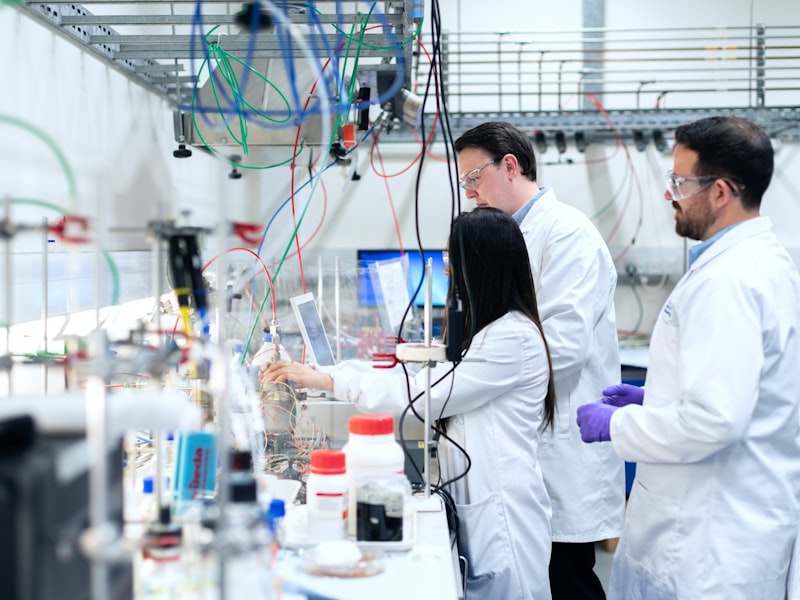
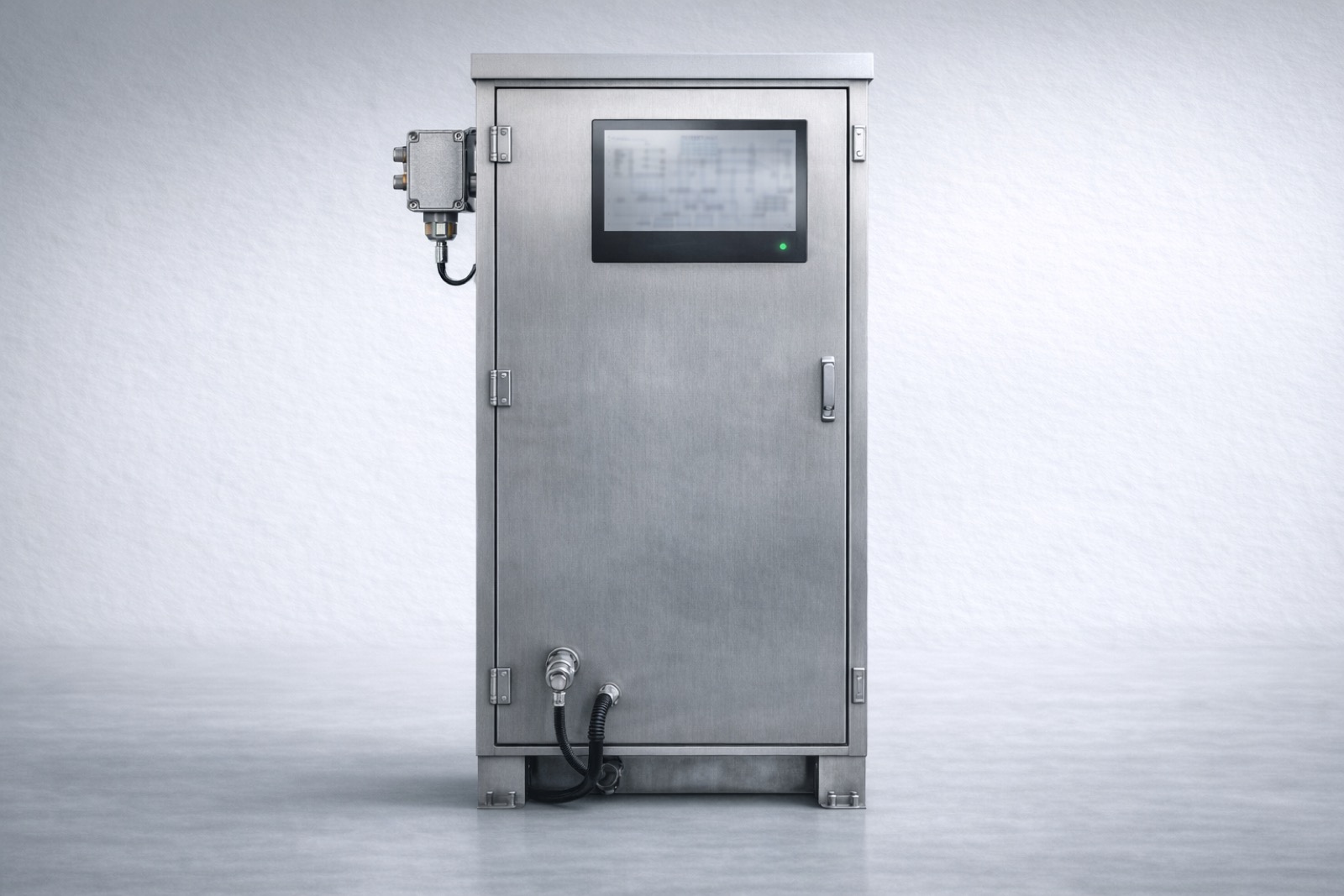
DPD Colorimetric Chlorine Analyzer
EPA 334.0 DPD colorimetric chlorine analyzer for regulatory permit reporting
- Range
- 0–10 ppm (auto-dilution to 20 ppm)
- Accuracy
- ±0.02 ppm or ±1% of reading
- Cycle Time
- 2.5-min measurement cycle
- Output
- 4-20mA, RS485, Ethernet (optional)
Overview
The GS-WCL300 is an EPA-approved DPD colorimetric chlorine analyzer that mixes a DPD reagent with the sample in a flow cell and measures the resulting color photometrically — delivering ±0.02 ppm sample-cell accuracy under stated water conditions for drinking-water plant-outlet compliance reporting under EPA 334.0 / ISO 7393-2 / SM 4500-Cl G.
- EPA 334.0 / ISO 7393-2 / SM 4500-Cl G compliant
- Self-calibrating on every measurement cycle
- Free or total chlorine (channel-switchable)
- Reagent cartridge life ~90 days
- Auto-dilution for high-range excursions
- IP54 indoor / sheltered outdoor enclosure
Full Technical Specifications
Key Performance
| Metric | Value | Status |
|---|---|---|
| Range | 0-10 ppm; auto-dilution to 20 ppm | confirmed |
| Accuracy | ±0.02 ppm or ±1% of reading | confirmed |
| Cycle Time | 2.5-min measurement cycle | confirmed |
| Output | 4-20mA, RS485, Ethernet optional | confirmed |
| Reagent cartridge | ~90 days | confirmed |
Specifications
| Specification | Value |
|---|---|
| Range | 0–10 ppm (auto-dilution to 20 ppm) |
| Accuracy | ±0.02 ppm or ±1% of reading |
| Cycle Time | 2.5-min measurement cycle |
| Output | 4-20mA, RS485, Ethernet (optional) |
Deployment Environments
Common process environments where this model is evaluated.
Certification Scope
Standards are listed with scope and status so engineering review can verify the applicable enclosure, area, and safety case.
| Standard | Scope | Variant | Status | Document |
|---|---|---|---|---|
| EPA 334.0 | DPD chlorine analyzer method listed in tagline, certification badges, description, and features | Project variant | approved | On request |
| ISO 7393-2 | Method standard listed in certification badges, description, and feature list | Project variant | approved | On request |
| SM 4500-Cl G | Method standard listed in description and feature list | Project variant | approved | On request |
| CE | Approval listed in v1 certification badges | Project variant | approved | On request |
Request Documentation
Request technical datasheets, user manuals, certificates, and application notes for this model.
Evidence Notes
DPD colorimetric panel architecture for permit reporting
The v1 applications place this analyzer at drinking-water plant outlets and regulatory verification points. The architecture uses DPD reagent chemistry, a flow-cell photometric reading, method references, and channel selection for aqueous free or total chlorine measurement.
Technical & Engineering Details
Secondary engineering detail — expand each topic for the full measurement, envelope, sample-system, calibration, and maintenance information.
01 Measurement Principle
How the measurement is bounded
DPD colorimetric chlorine measurement mixes DPD reagent with water in a flow cell and reads the resulting color photometrically for regulatory free or total chlorine reporting.
Requires
- DPD reagent cartridge installed and within service life
- Flow-cell measurement cycle kept stable for the stated 2.5-minute cycle
- Method selection for free or total chlorine channel before permit reporting
Interferents and Limits
- Color, turbidity, and suspended solids can affect photometric measurement if not managed by the sample path
- Reagent depletion or expired reagent changes the measurement basis
- High-range excursions depend on the auto-dilution configuration
- Non-regulatory low-service-duty applications may not need the DPD method workflow
- Water temperature, pressure, flow, and pH numeric ranges are not stated in v1 source data
- Chlorine-air area monitoring is outside this aqueous panel boundary
02 Operating Envelope
Use these limits as selection inputs, then confirm sample condition, ambient exposure, and materials before quotation.
- Operation without active DPD reagent cartridge
- Permit reporting without method, QA/QC, and sample-path review
- Use as a chlorine-air area monitor
03 Sample System Boundary
Sampling mode, conditioning components, and exclusions define where the analyzer responsibility ends and the sample system begins.
- DPD reagent cartridge panel
- flow cell
- photometric measurement path
- auto-dilution path
- sample bypass or online flow path
- Not a stack, duct, or ambient-air chlorine detector
04 Calibration & Validation site-specific
Calibration method, interval, and traceability are shown only when structured data is available.
Zero / Span Method
Self-calibrating measurement cycle is listed in v1 features; method QA/QC remains site-specific
Interval
Every measurement cycle per v1 feature wording; external verification interval not stated
05 Maintenance & Spares site-specific
Tasks, consumables, and access items are shown only when structured maintenance data is available.
- Replace DPD reagent cartridge according to the stated cartridge life
- Verify flow-cell cleanliness where color, turbidity, or suspended solids are present
- Review auto-dilution configuration for high-range excursions
- Confirm free or total chlorine channel selection before regulatory reporting
- DPD reagent cartridge
- flow-cell service parts
- calibration or verification standards
Cell Life
DPD reagent cartridge life ~90 days stated in v1 features
Related & Alternatives
Alternative Solutions
 GS8600-CL2
Process Chlorine Analyzer
UV-DOAS chlorine analyzer for continuous process monitoring in chlor-alkali and chemical plants
In-line Process View Specs GS8601-CL2
Fixed Chlorine Detector
Fixed-point Cl₂ safety detector with UV-DOAS for area monitoring and leak detection
Fixed-Point View Specs GS-WCL100
Free Chlorine Analyzer
Amperometric free chlorine analyzer with automatic pH compensation for drinking water distribution
Wall-Mount Panel View Specs GS-WCL200
Total Chlorine Reagentless Analyzer
Reagentless total chlorine analyzer with bare-electrode amperometric sensor for wastewater and seawater duty
Wall-Mount Panel View Specs GS-WCL400
Reagentless Solid-State Chlorine Sensor
Reagentless solid-state chlorine sensor with IP68 submersible rating and 30–90 day calibration interval
Submersible Sensor + Panel View Specs GS-WCL500
Multi-Parameter Water Quality Panel
Integrated chlorine + pH + turbidity + temperature panel with selectable amperometric or DPD method
Multi-Parameter Controller View SpecsRelated Measurement Technologies
Measuring more than just chlorine? Explore complementary analytical categories.
 SO₂ / NOₓ
SO₂/NOₓ Analyzers
UV-DOAS and chemiluminescence analyzers for sulfur dioxide and nitrogen oxide measurement, essential for CEMS compliance and flue gas desulfurization control.
View Products Multi
Multi
Multi-Gas Analyzers
Simultaneous multi-component gas analysis using FTIR, NDIR, and combined-sensor platforms for complex process streams, comprehensive CEMS, and research applications.
View ProductsReview GS-WCL300 against site conditions
Send gas range, sample temperature, pressure, moisture, and certification needs before final model selection.