

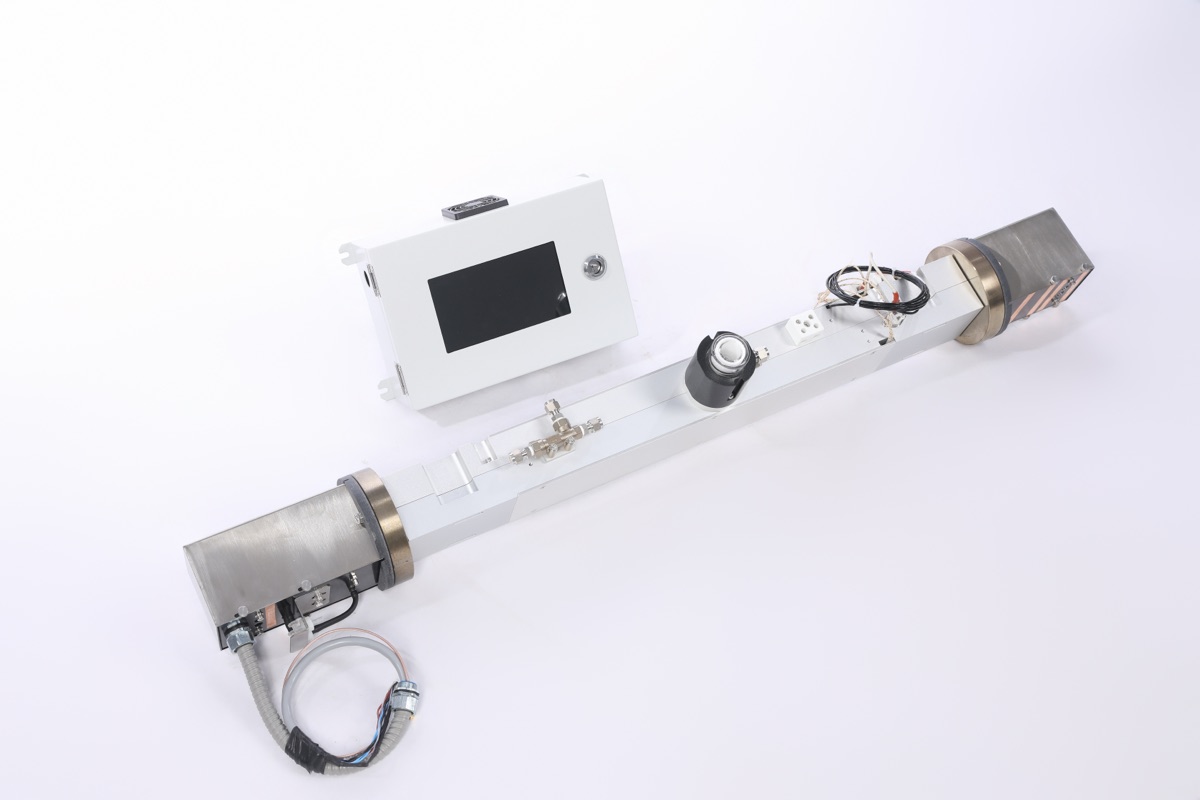
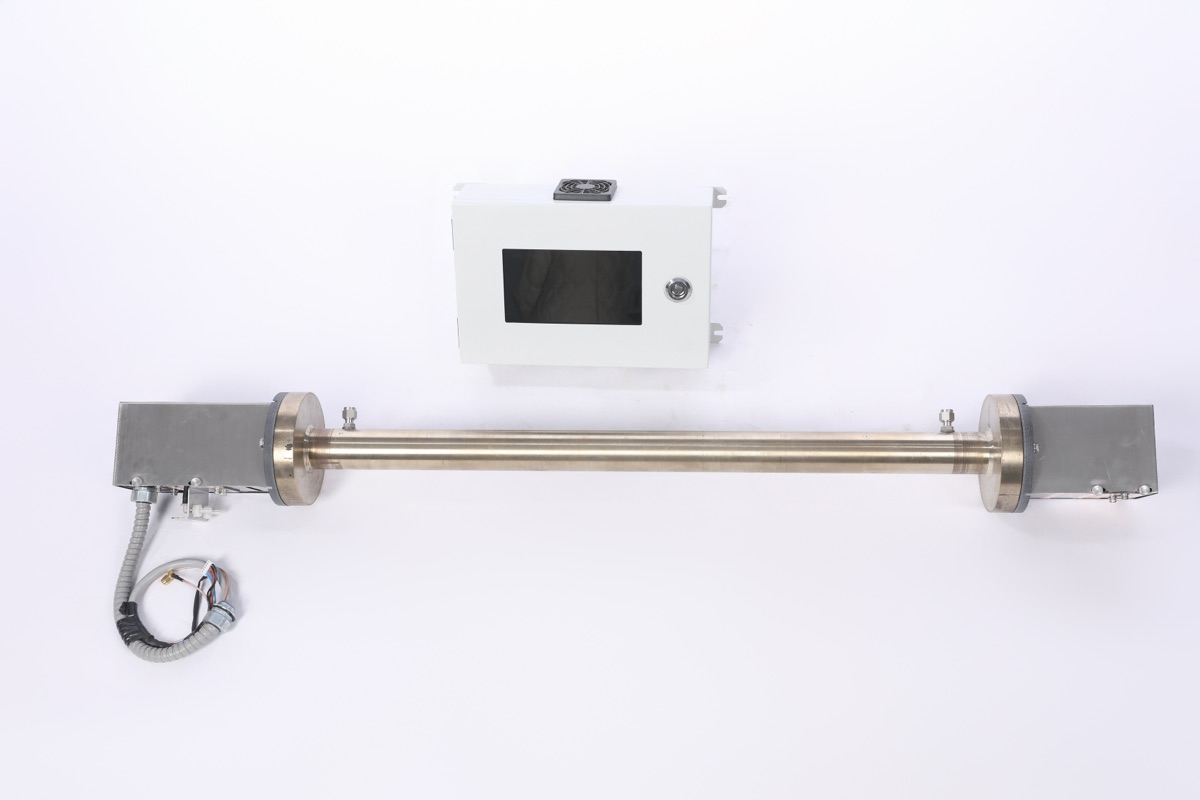
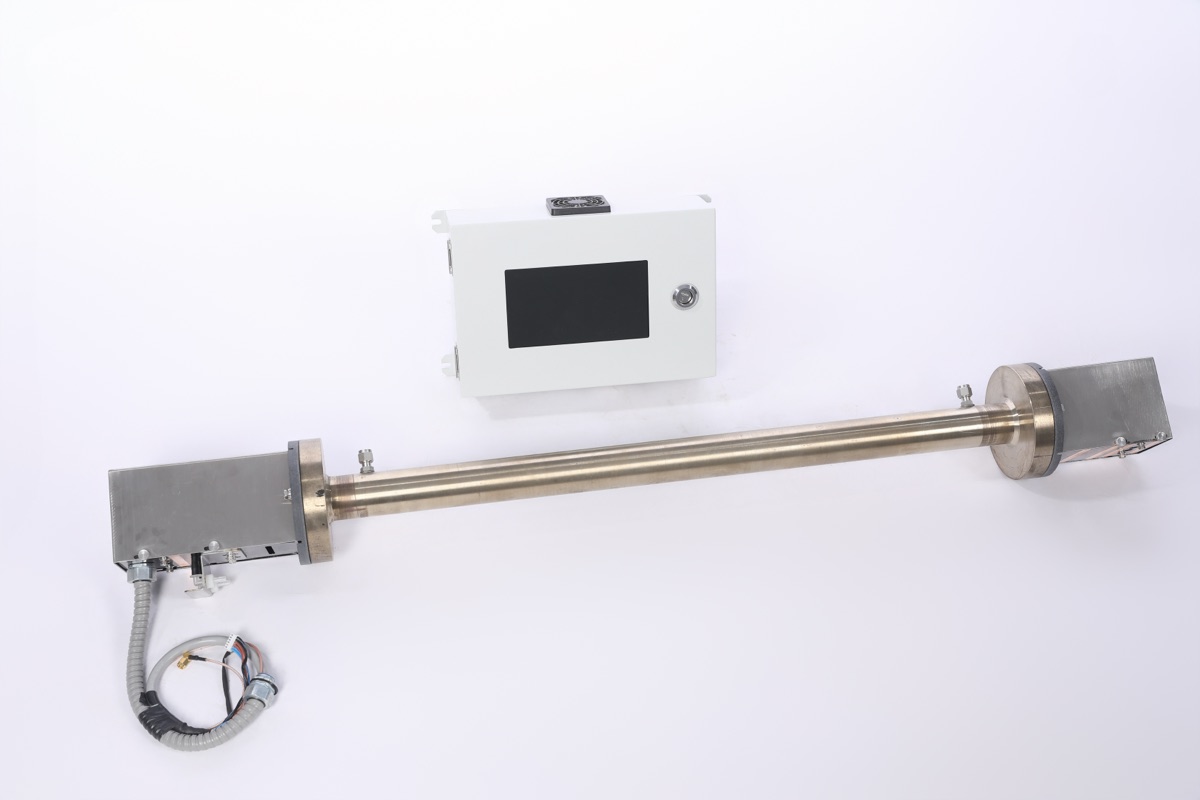
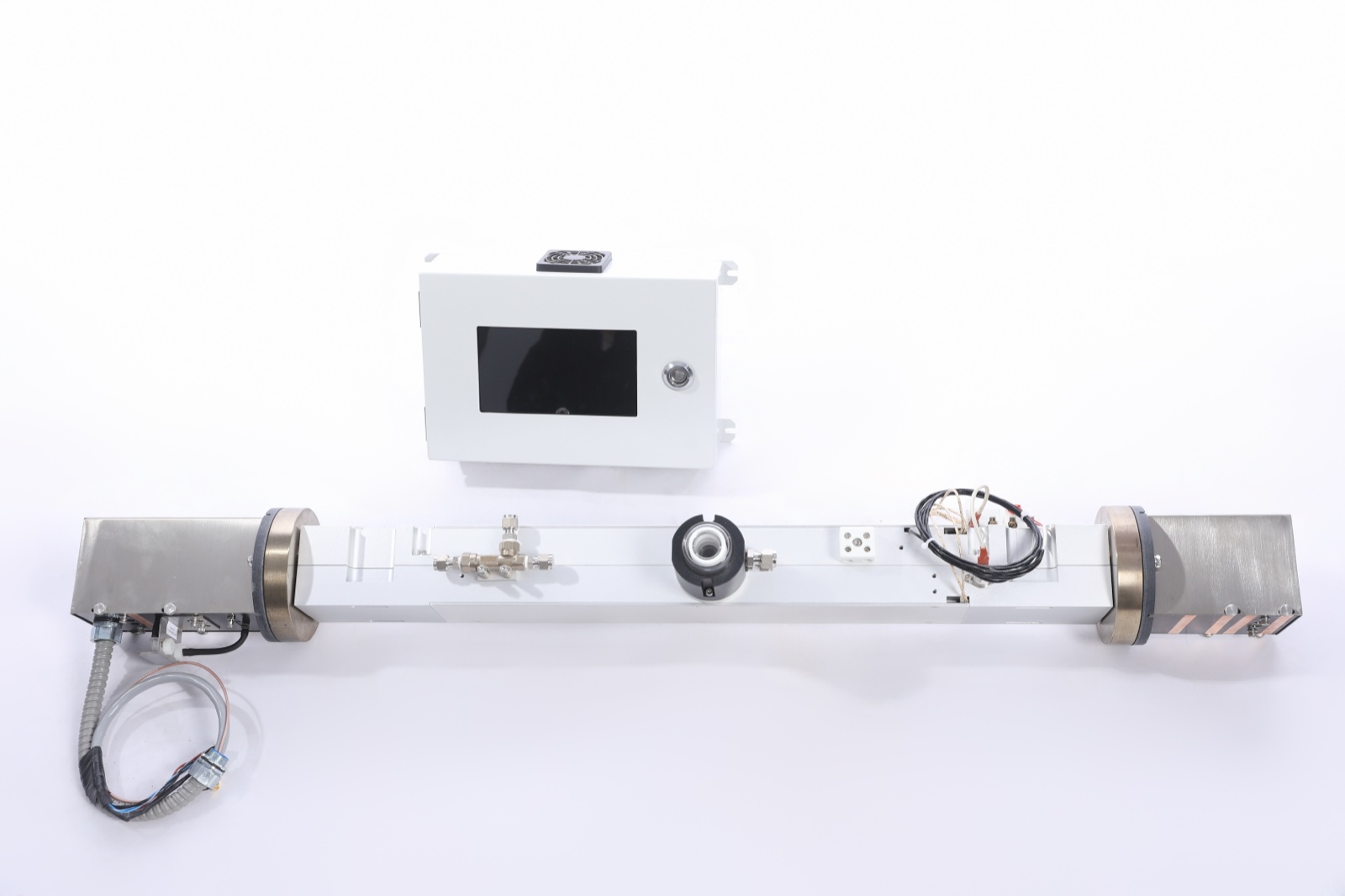
ZS8100-HF Process Hydrogen Fluoride Analyzer
TDLAS diode-laser hydrogen fluoride analyzer for aluminum smelter FTC/GTC, HF alkylation, semiconductor acid-etch, glass etching, and incineration CEMS under EU BAT ≤1 mg/m³
- Range
- 0–10 / 0–50 / 0–500 ppm
- Accuracy
- ±2 % FS or ±0.1 ppm
- Response (T90)
- <10 s
- Wetted Parts
- Monel 400 / PTFE / PFA
Overview
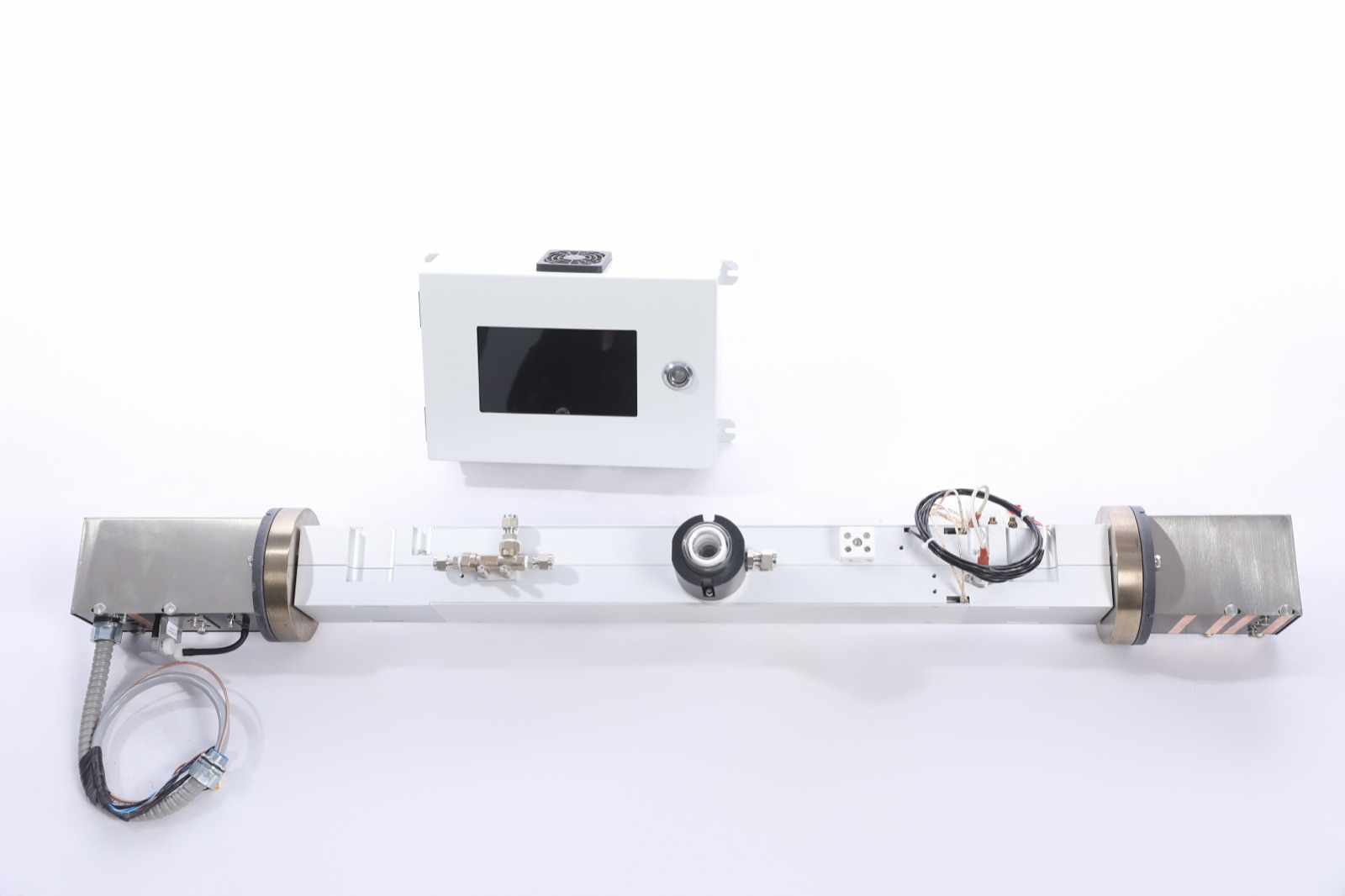
The ZS8100-HF is an extractive TDLAS hydrogen fluoride analyzer built for low-ppm, corrosive, dew-point-sensitive service — primary-aluminum smelter Fume Treatment Center / Gas Treatment Center fugitive monitoring, petroleum refinery HF alkylation catalyst tracking and perimeter leak response, semiconductor acid-etch exhaust and scrubber-inlet measurement, optical / display glass etching acid concentration control, incineration CEMS under the EU BAT ceiling of 1 mg/m³, and fluorochemical / refrigerant plant process duty. A narrow-line near-IR diode-laser at the HF fundamental separates the HF feature from H₂O / CO₂ / SO₂ / HCl background through line selection and matrix review. The measurement path uses Monel 400 wetted parts with PTFE / PFA internal tubing to resist HF attack and reduce wall adsorption.
- TDLAS single-line laser absorption — reagent-free optical cell; heated sample path remains a service item
- Laser-line selection separates HF from H₂O / CO₂ / SO₂ / HCl spectral background after matrix review
- Monel 400 wetted parts + PTFE / PFA internal tubing for HF attack and low-ppm adsorption
- Multi-range firmware spans fugitive ppm (smelter FTC/GTC) to CEMS (EU BAT ≤1 mg/m³) and process duty
Full Technical Specifications
Key Performance
| Metric | Value | Status |
|---|---|---|
| Range | 0–10 / 0–50 / 0–500ppm (multi-range) | conditional* |
| Accuracy | ±2 % FS or ±0.1ppm (whichever greater) | conditional* |
| Response (T90) | <10 s | conditional* |
| Detection Limit | <0.05ppm (fugitive-useful) | conditional* |
* Industry-typical TDLAS HF values — shown as target scope; confirmed values are issued with the final datasheet at quotation.
Measurement
| Specification | Value |
|---|---|
| Measuring Principle | TDLAS (Tunable Diode Laser Absorption Spectroscopy) |
| Target Wavelength | Near-IR ≈ 1.27 μm (HF fundamental / overtone region) |
| Measurement Range | 0–10 ppm / 0–50 ppm / 0–500 ppm (multi-range) |
| Lower Detection Limit | <0.05 ppm (fugitive-useful; smelter FTC/GTC scope) |
| Accuracy | ±2 % FS or ±0.1 ppm (whichever greater) |
| Repeatability | ≤1 % FS |
| Response Time (T90) | <10 s |
| Matrix Resolution | H₂O / CO₂ / SO₂ / HCl handled through laser-line selection and application matrix review |
Sample System
| Specification | Value |
|---|---|
| Sampling Mode | Extractive via heated probe + heated sample line (above HF dew point) |
| Wetted Parts | Monel 400 on sample path; PTFE / PFA internal tubing; no Mo-containing alloys on HF contact surfaces |
| Sample Temperature | Up to 180 °C (heated line; application-dependent) |
| Sample Pressure | -30 to +500 mbar g |
| Recommended Conditioning | ZS-SCS-800 heated sampling system (project-dependent; HF-specific Monel / PFA lined sample lines recommended for low-ppm fugitive duty) |
| Long-Path Alternative | A UV-DOAS long-path analyzer for stack geometry where extractive sampling is impractical |
Environmental
| Specification | Value |
|---|---|
| Operating Temperature | -20 °C to +50 °C |
| Storage Temperature | -40 °C to +70 °C |
| Humidity | 0–95 % RH (non-condensing) |
| Ingress Protection | IP65 (standard) / IP66 (field enclosure) |
Electrical
| Specification | Value |
|---|---|
| Power Supply | 100–240 VAC, 50/60 Hz, 100 W max (heated line separate) |
| Analog Output | 2 × 4–20 mA (isolated, configurable) |
| Digital Output | RS-485 Modbus RTU / HART 7 (optional) |
| Relay Outputs | 4 × SPDT (alarm, fault, maintenance, range) |
| Display | 5″ color TFT with local touchscreen HMI |
Physical
| Specification | Value |
|---|---|
| Dimensions (W×H×D) | 483 × 177 × 420 mm (19″ rack) / field enclosure optional |
| Weight | ≈16 kg (rack) / ≈34 kg (field enclosure) |
| Housing Material | Powder-coated aluminum enclosure; Monel 400 wetted parts + PTFE / PFA tubing on sample path |
| Mounting | 19″ rack (4U) / wall-mount / field enclosure |
Certifications
| Specification | Value |
|---|---|
| CE Marking | EU equipment directive compliance (standard) |
| Hazardous Area | ATEX / IECEx — Conditional scope (confirmed per project) |
| CEMS Type-Approval | MCERTS (UK) / US EPA HF CEMS reference method — target scope, confirmed per project |
| EMC | EN 61326-1 |
| Quality System | ISO 9001:2015 manufactured |
| Application Standards | EU IED BAT (incineration HF ≤1 mg/m³); OSHA PEL 3 ppm 8-hr TWA (aluminum FTC/GTC); US EPA Method 13A/B / 320 (HF CEMS reference) |
Where This Analyzer Fits
This model is mapped to the following industry applications and process duties.
Deployment Environments
Common process environments where this model is evaluated.
Certification Scope
Standards are listed with scope and status so engineering review can verify the applicable wetted-material, regulatory method, and hazardous-area case. Performance and CEMS approvals are shown as target scope — current certification status for your configuration is confirmed at quotation; hazardous-area scope is tracked as a Conditional engineering-review path, not a default catalogue claim.
| Standard | Scope | Variant | Status | Document |
|---|---|---|---|---|
| CE (EU declaration of conformity) | EU equipment directive compliance (standard) | Project variant | target | On request |
| MCERTS / HF CEMS reference method | MCERTS (UK) / US EPA HF CEMS reference method — target scope; current certification status, certificate numbers, and validity windows must be confirmed at quotation | Project variant | target | On request |
| ATEX / IECEx hazardous area | Engineering-review scope; confirmed per project | Project variant | conditional | On request |
| ISO 9001:2015 | Quality management system — manufactured under ISO 9001:2015 | Project variant | approved | On request |
Request Documentation
Request technical datasheets, user manuals, certificates, and application notes for this model.
Evidence Notes
HF corrosive-service sampling architecture
For aluminum smelter, HF alkylation, semiconductor etch, and incineration duties, the architecture pairs TDLAS line selection with Monel / PTFE / PFA wetted handling and heated sampling so HF reaches the optical cell without relying on cold generic sample lines.
Technical & Engineering Details
Secondary engineering detail — expand each topic for the full measurement, envelope, sample-system, calibration, integration, maintenance and application evidence.
01 Measurement Principle and Limits
How the measurement is bounded
TDLAS uses a narrow HF absorption line in the near-IR region for extractive low-ppm hydrogen-fluoride measurement in corrosive stack and process duty.
Rejects
- Electrochemical HF safety-alarm positioning as the default process/CEMS path
- NDIR budget positioning for wet acid-gas matrices
- Unreviewed long-path UV-DOAS substitution
Requires
- Heated extractive sample path above HF dew point
- Monel 400 wetted metal with PTFE / PFA internal tubing
- HF-specific matrix review for H₂O / CO₂ / SO₂ / HCl background
- ZS-SCS-800 or equivalent heated corrosive sampling where stack duty requires it
Interferents and Limits
- H₂O background
- CO₂ and SO₂ spectral background
- HCl overlap in mixed acid-gas service
- HF wall adsorption on unsuitable wetted materials
02 Operating Envelope
Use these limits as selection inputs, then confirm sample condition, ambient exposure, and materials before quotation.
- Condensing HF service without heated sample path
- Mo-containing alloys on HF contact surfaces
- Unreviewed ppb semiconductor audit duty
03 Sample System Boundary
Sampling mode, conditioning components, and exclusions define where the analyzer responsibility ends and the sample system begins.
- Heated probe
- Heated sample line above HF dew point
- Monel 400 sample path
- PTFE / PFA internal tubing
- ZS-SCS-800 heated sampling system
- Cool-dry conditioning that absorbs HF before the analyzer cell
- Unlined generic stainless sample path for low-ppm HF
04 Calibration & Validation
Calibration method, interval, traceability, and audit support for this analyzer.
Zero / Span Method
Project-specific HF zero/span method with application matrix review
Interval
Site-specific
Reference Methods
US EPA Method 13A / 13B reference context; US EPA Method 320 extractive FTIR context
Span Gas Traceability
Project-specific calibration gas or validation media
Audit Support
- US EPA Method 13A / 13B reference context
- US EPA Method 320 extractive FTIR context
- EU IED BAT HF reporting review
05 I/O & Integration
Signal outputs and communication interfaces for control-system integration.
Output
4–20 mA / RS-485 Modbus / HART
Analog Output
2 × 4–20 mA (isolated, configurable)
Digital Output
RS-485 Modbus RTU / HART 7 (optional)
Relay Outputs
4 × SPDT (alarm, fault, maintenance, range)
DAHS Review Note
Confirm protocol map, channel naming, alarm states, and reporting format during project integration review.
06 Maintenance & Spares site-specific
Routine service tasks, consumables, and access requirements for this analyzer; exact intervals are site-specific.
- Inspect heated sample line
- Check Monel / PTFE / PFA wetted path condition
- Verify HF zero/span setup
- Review acid-gas condensation risk
- HF-compatible filters
- Heated-line service parts
- Project-specific calibration gas or validation media
07 Application Evidence
Application context from complex industrial environments.
Application Context
Primary-aluminum smelters running 400 kA-class potlines need continuous fugitive-HF data in the potroom and at the gas-treatment-center exhaust, but lab-return measurement workflows leave the operator without anode-effect HF visibility for days at a time.
Architecture Response
A ZS8100-HF TDLAS network with Monel 400 + PTFE/PFA wetted parts and ZS-SCS-800 heated Monel-lined sample lines provides continuous low-ppm HF architecture for potroom and gas-treatment-center review.
Frequently Asked Questions
What HF concentrations should we expect in aluminum-smelter FTC/GTC monitoring, and does the ZS8100-HF cover them?
Potroom fugitive HF typically sits between 0.05 and 5 ppm, with the OSHA PEL at 3 ppm as an 8-hour TWA and EU BREF abatement targets driving post-GTC stack concentrations into sub-ppm territory. The ZS8100-HF is sized for that envelope — the 0–10 ppm range covers fugitive potroom duty, the 0–50 ppm range handles GTC inlet excursions, and the 0–500 ppm range handles pot-start and feed-failure events. The <0.05 ppm detection floor is claimed as fugitive-useful, not as a trace-metrology figure; the achievable number in a real potroom depends on path length, sample-line cleanliness and the baseline fluorides background (HF ≠ total fluoride). Total-fluoride sampling (particulate + gaseous via EPA Method 13A / 13B or ISO 15713) is the reference for compliance reporting; the TDLAS provides the continuous HF-only trace that feeds the control loop.
Why does the ZS8100-HF specify Monel 400 + PTFE / PFA wetted parts instead of Hastelloy C-276 as on the HCl SKU?
Hastelloy C-276 is a Ni-Mo-Cr alloy containing 15–16 % molybdenum. Anhydrous and low-moisture HF attacks the Mo component via fluoride-complex formation, pits the surface and then leaches Mo into the sample — unacceptable for both instrument longevity and sample integrity. Monel 400 is a Ni-Cu alloy with no reactive Mo content and is the industry reference for HF-wetted service (refinery alkylation loops, HF storage, semi acid-etch vent). Internal tubing uses PTFE or PFA to reduce HF wall adsorption at low ppm, since HF is sticky on bare metal relative to HCl. HCl does not share the Mo-attack chemistry, so the ZS8100-HCl uses Hastelloy C-276 where weldability and strength at high temperature matter more. HF and HCl SKUs therefore look mechanically similar but cannot share sample paths.
Can the ZS8100-HF monitor semiconductor acid-etch vapor down to low-ppb concentrations?
Semi etch exhaust sits downstream of a wet scrubber where HF is typically held below 1 ppm in the vent, with abatement targets approaching single-digit ppb depending on fab commitments and local permitting. The ZS8100-HF is claimed as low-ppm / fugitive-useful with a <0.05 ppm detection floor — the TDLAS can reach this range on an optimised heated-path configuration, but delivering repeatable ppb performance needs extended-path optics, PFA-lined sample lines, dedicated zero-gas discipline and a longer averaging window, all of which are scoped project-by-project as a Conditional engineering-review path rather than a default catalogue configuration. Fabs that require continuous sub-ppb audit typically co-deploy a dedicated trace instrument (cavity ring-down, ion-mobility, or ion-chromatography on a scrubber take-off) alongside the TDLAS loop.
Why is the HF absorption line chosen at ~1.27 μm, and how does that affect matrix separation?
HF has its strongest ro-vibrational structure in the 2.4–2.7 μm fundamental band and a strong overtone near 1.27 μm. The 1.27 μm overtone is the industry-preferred TDLAS window because telecom-grade near-IR diode lasers, InGaAs detectors and optical components are mature and field-rugged; the 2.5 μm fundamental is stronger per line but demands mid-IR lasers and detectors that are costlier and less robust in plant environments. At 1.27 μm the selected HF line sits in a valley between H2O continuum features, and the TDLAS tuning across the line centre at MHz-scale resolution resolves HF from adjacent H2O, CO2, SO2 and HCl absorbers. Broadband NDIR photometers can struggle on stack matrices where water and acid gases are all present.
When should I choose a UV-DOAS long-path alternative, and why is electrochemical HF monitoring flagged as Conditional?
A UV-DOAS (differential optical absorption spectroscopy) long-path alternative is specified for long-path stack geometries — flue ducts with open-path insertion, multi-point averaging or large-bore geometry where extractive sampling is impractical. UV-DOAS trades the low-ppm fugitive sensitivity of TDLAS for better integration over long open paths, so it is positioned as the stack-geometry option rather than a potroom fugitive option. Electrochemical HF sensors (ppb-range) are widely used for single-point safety alarm on alkylation loops but are a consumable, drift-prone technology with aggressive cross-sensitivity to HCl, Cl2 and SO2 — appropriate for personal / area-alarm F&G duty, not for reference-method process or CEMS measurement. GESHINE tracks EC HF safety as a Conditional engineering-review path so application engineering can confirm the fit before it is bundled into a self-branded catalogue.
Related & Alternatives
Alternative Solutions
 ZS8100-HCl
ZS8100-HCl Process Hydrogen Chloride Analyzer
TDLAS HCl analyzer with Hastelloy C-276 acid-gas sample path for process and stack duty
In-line Process View Specs ZS8100-C2H2
ZS8100-C2H2 Process Acetylene Analyzer
TDLAS diode-laser acetylene analyzer for process monitoring
In-line Process View SpecsRelated Measurement Technologies
Measuring more than just hydrogen fluoride? Explore complementary analytical categories.
 Cl₂
Cl₂
Chlorine Analyzers
UV-DOAS gas-phase and aqueous residual-chlorine analyzers for chlor-alkali, water treatment, and industrial process and safety monitoring.
View Products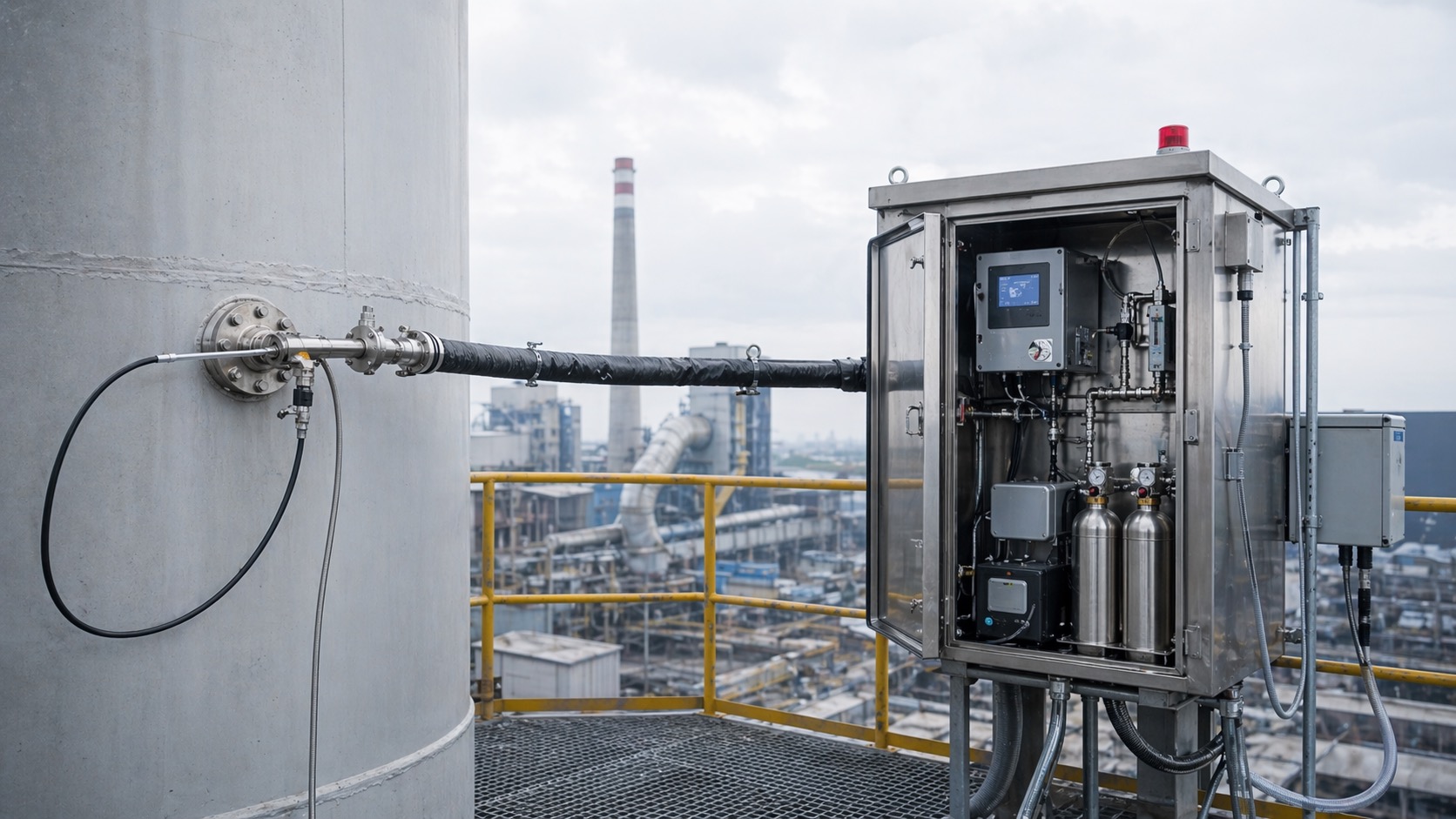 SO₂ / NOₓ
SO₂ / NOₓ Analyzers
CEMS-grade sulfur dioxide and nitrogen oxide analyzers for combustion, incineration, and emission-monitoring duty under regulatory reference methods.
View ProductsCompare ZS8100-HF with adjacent options
Review neighboring models by technology, range, accuracy basis, and form factor before moving to quotation.
When this model is preferred
Select ZS8100-HF when its measurement principle, range, and form factor match the process duty and certification scope.
When to consider an alternative technology
Consider another analyzer when the gas matrix, sample temperature, hazardous-area scope, or reporting requirement falls outside the stated envelope.
Review ZS8100-HF against site conditions
Send gas range, sample temperature, pressure, moisture, and certification needs before final model selection — we confirm specifications and return a quotation within 24 hours.


