
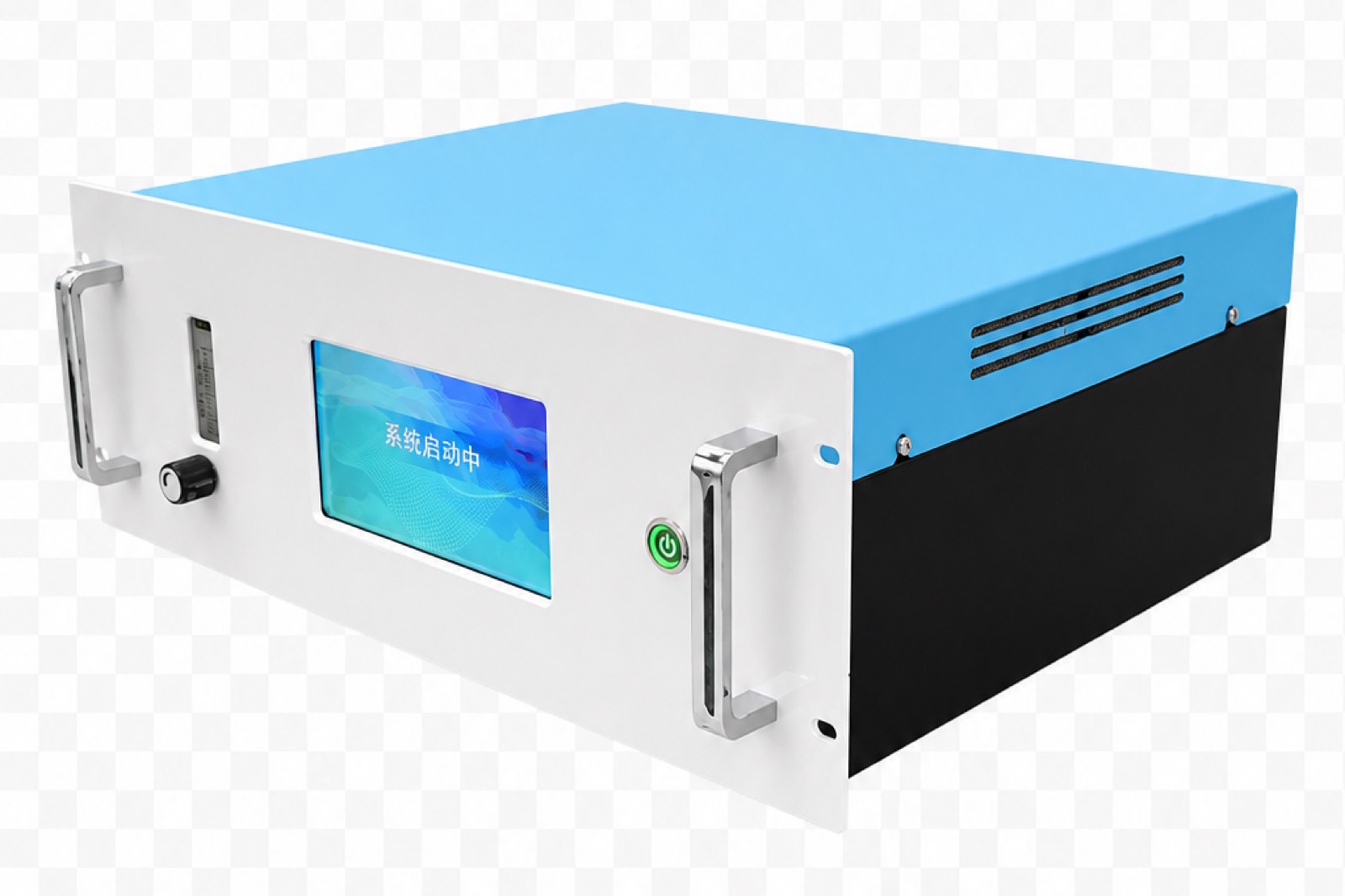

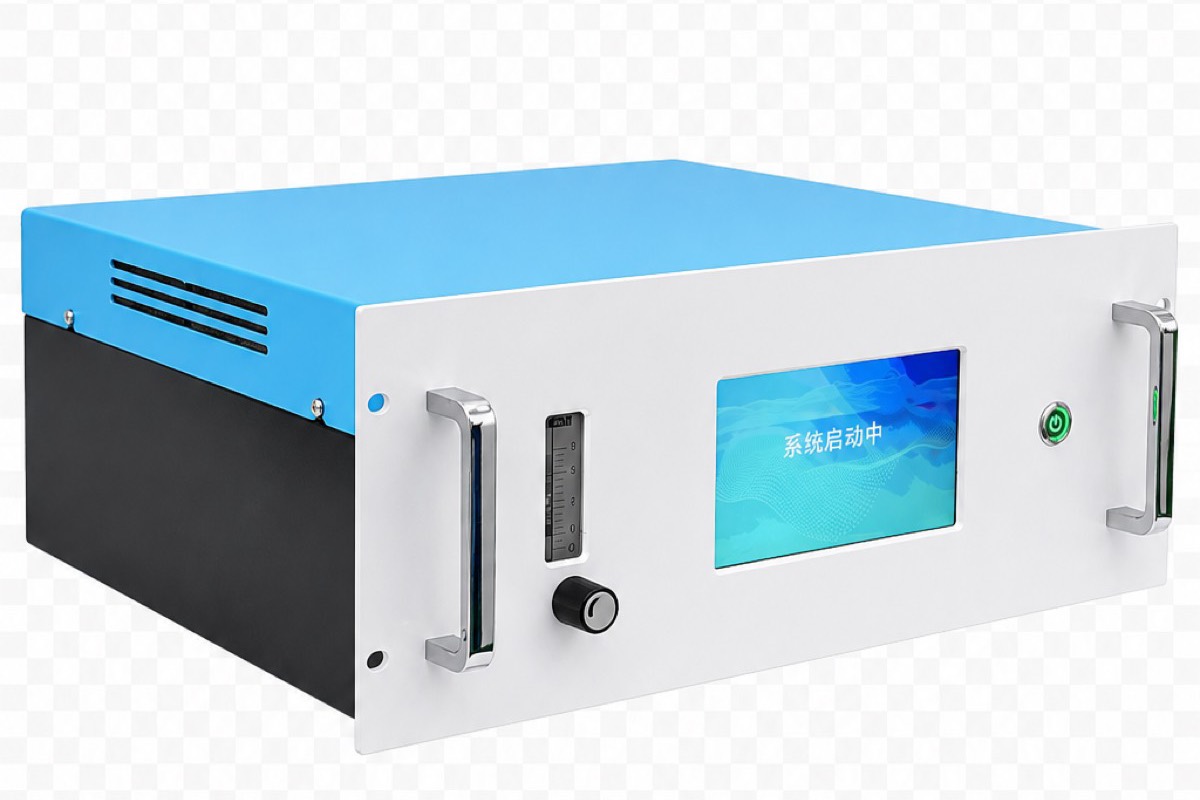
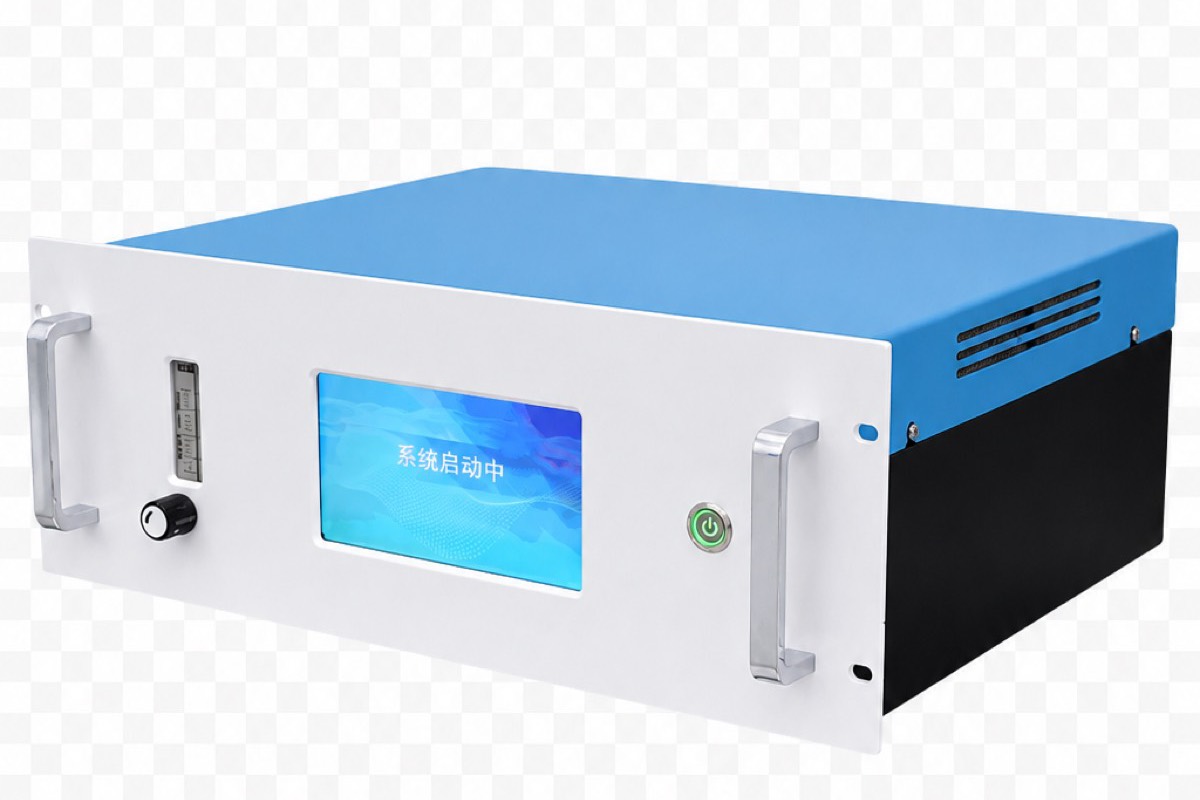
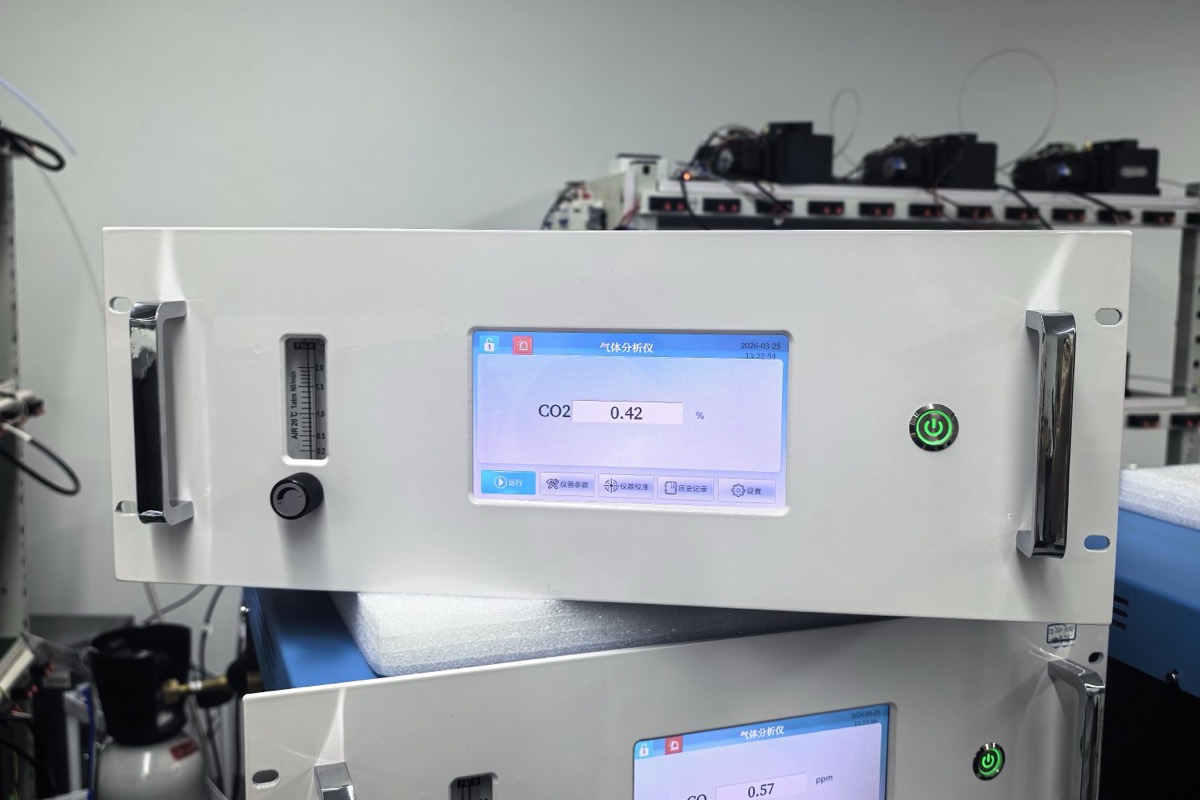
ZS6500-N2O Process Nitrous Oxide Analyzer
GFC (Gas Filter Correlation) infrared nitrous oxide analyzer for nitric acid tail-gas abatement, greenhouse-gas CEMS under 40 CFR Part 98 / EU ETS MRV, ESG carbon accounting, and medical oxygen QA
- Range
- 0–50 / 0–500 ppm / 0–5 %vol
- Accuracy
- ±2 % FS or ±1 ppm
- Response (T90)
- <60 s
- Detection Limit
- ≤0.5 ppm
Overview
The ZS6500-N2O is an in-line GFC (Gas Filter Correlation) infrared nitrous oxide analyzer built for regulatory stack duty — nitric acid tail-gas N2O abatement verification, greenhouse-gas CEMS reporting under 40 CFR Part 98 Subpart V and EU ETS MRV Regulation 2018/2066, ESG / ISO 14064 carbon accounting, medical oxygen purity QA to USP and EP monographs, and agricultural chamber / soil-flux studies. A rotating reference cell self-references against H2O and CO2 matrix drift at the 4.5 μm N2O absorption feature, addressing wet-stack matrix effects that can constrain broadband NDIR. An NDIR budget / module path is available for simpler matrices; electrochemical ppm safety sensing and FTIR multi-gas measurement remain Conditional engineering-review paths.
- GFC rotating reference cell — self-referenced compensation for H2O and CO2 matrix drift
- CEMS-ready signal chain for regulatory MRV reporting (40 CFR Part 98, EU ETS)
- Multi-range firmware spans ppm (CEMS / research) to %vol (process) without optics change
- NDIR budget / module path available for simpler matrix deployments
Full Technical Specifications
Key Performance
| Metric | Value | Status |
|---|---|---|
| Range | 0–50 / 0–500 ppm / 0–5%vol (multi-range) | conditional* |
| Accuracy | ±2 % FS or ±1ppm (whichever greater) | conditional* |
| Response (T90) | <60 s(typical 30–60 s) | conditional* |
| Detection Limit | ≤0.5ppm (CEMS-useful) | conditional* |
* Industry-typical GFC IR N2O values — shown as target scope; confirmed values are issued with the final datasheet at quotation.
Measurement
| Specification | Value |
|---|---|
| Measuring Principle | GFC (Gas Filter Correlation) Infrared — rotating reference cell |
| Target Absorption Band | ≈ 4.5 μm N2O fundamental (self-referenced against H2O / CO2) |
| Measurement Range | 0–50 ppm / 0–500 ppm / 0–5 %vol (multi-range) |
| Lower Detection Limit | ≤0.5 ppm (CEMS-useful) |
| Accuracy | ±2 % FS or ±1 ppm (whichever greater) |
| Repeatability | ≤1 % FS |
| Response Time (T90) | <60 s (typical 30–60 s) |
| Zero / Span Drift | <2 % FS per 7 days (typical, confirmed per project) |
Sample System
| Specification | Value |
|---|---|
| Sampling Mode | Extractive (heated probe + cool-dry or heated conditioning) |
| Sample Temperature | Up to 180 °C (with heated line) |
| Sample Pressure | -30 to +500 mbar g |
| Recommended Conditioning | ZS-SCS-600 cool-dry / ZS-SCS-800 heated (project-dependent) |
| Budget Path | NDIR module path for non-regulatory / simpler matrix deployments |
Environmental
| Specification | Value |
|---|---|
| Operating Temperature | -20 °C to +50 °C |
| Storage Temperature | -40 °C to +70 °C |
| Humidity | 0–95 % RH (non-condensing) |
| Ingress Protection | IP65 (standard) / IP66 (field enclosure) |
Electrical
| Specification | Value |
|---|---|
| Power Supply | 100–240 VAC, 50/60 Hz, 80 W max |
| Analog Output | 2 × 4–20 mA (isolated, configurable) |
| Digital Output | RS-485 Modbus RTU / HART 7 (optional) |
| Relay Outputs | 4 × SPDT (alarm, fault, maintenance, range) |
| Display | 5″ color TFT with local touchscreen HMI |
Physical
| Specification | Value |
|---|---|
| Dimensions (W×H×D) | 483 × 177 × 420 mm (19″ rack) / field enclosure optional |
| Weight | ≈16 kg (rack) / ≈34 kg (field enclosure) |
| Housing Material | Powder-coated aluminum enclosure; SS316L wetted parts on sample path |
| Mounting | 19″ rack (4U) / wall-mount / field enclosure |
Certifications
| Specification | Value |
|---|---|
| CE Marking | EU equipment directive compliance (standard) |
| Hazardous Area | ATEX / IECEx — Conditional scope (confirmed per project) |
| Stack / CEMS Type-Approval | MCERTS (UK), 40 CFR Part 98, EU ETS MRV, EPA Method 320 — target reference frameworks (confirmed per project) |
| EMC | EN 61326-1 |
| Quality System | ISO 9001:2015 manufactured |
| Application Standards | 40 CFR Part 98 Subpart V / EU ETS MRV 2018/2066 / ISO 14064 (GHG); USP / EP (medical oxygen) |
Where This Analyzer Fits
This model is mapped to the following industry applications and process duties.
Deployment Environments
Common process environments where this model is evaluated.
Certification Scope
Standards are listed with scope and status so engineering review can verify the applicable GHG-MRV reporting framework, regulatory method, and hazardous-area case. Performance and CEMS approvals are shown as target scope — current certification status for your configuration is confirmed at quotation; hazardous-area and medical-oxygen release scopes are tracked as Conditional engineering-review paths, not default catalogue claims.
| Standard | Scope | Variant | Status | Document |
|---|---|---|---|---|
| CE (EU declaration of conformity) | EU equipment directive compliance (standard) | Project variant | target | On request |
| MCERTS / 40 CFR Part 98 / EU ETS MRV / EPA Method 320 | MCERTS (UK), 40 CFR Part 98 Subpart V, EU ETS MRV 2018/2066, EPA Method 320 — target reference frameworks; current method-alignment status, certificate numbers, and validated method packages must be confirmed at quotation | Project variant | target | On request |
| ATEX hazardous area | ATEX / IECEx — optional application-dependent scope; confirmed per project | Project variant | conditional | On request |
| ISO 9001:2015 | Quality management system — manufactured under ISO 9001:2015 | Project variant | approved | On request |
Request Documentation
Request technical datasheets, user manuals, certificates, and application notes for this model.
Evidence Notes
Nitric-acid N₂O MRV architecture
For nitric-acid tail-gas and GHG reporting work, the architecture uses extractive GFC infrared measurement, pressure compensation, and project-defined zero/span routines to support continuous N₂O records without claiming a finished MCERTS or MRV certificate package.
Technical & Engineering Details
Secondary engineering detail — expand each topic for the full measurement, envelope, sample-system, calibration, integration, maintenance and application evidence.
01 Measurement Principle and Limits
How the measurement is bounded
GFC infrared measurement uses a rotating reference cell around the N₂O absorption band to compensate H₂O and CO₂ matrix drift better than a simple broadband NDIR path in wet tail-gas duty.
Rejects
- NDIR budget positioning for regulated wet nitric-acid tail gas
- FTIR campaign-only architecture as the default continuous signal path
- Electrochemical safety sensing as a process/CEMS substitute
Requires
- Extractive sample conditioning selected for wet tail gas
- Pressure compensation for pressure-broadened response
- Certified N₂O span gas for project validation
- Method-alignment review for GHG MRV programs
Interferents and Limits
- High H₂O background
- CO₂ shoulder near the N₂O band
- Residual NO / NO₂ in nitric-acid tail gas
- Pressure-broadening matrix effects
02 Operating Envelope
Use these limits as selection inputs, then confirm sample condition, ambient exposure, and materials before quotation.
- Unconditioned wet tail gas
- Regulatory CEMS claim without project method package
- GMP release claim without customer validation
03 Sample System Boundary
Sampling mode, conditioning components, and exclusions define where the analyzer responsibility ends and the sample system begins.
- Heated probe or cool-dry conditioning
- Pressure compensation
- ZS-SCS-600 cool-dry option
- ZS-SCS-800 heated option
- Unconditioned high-moisture tail gas
- Simpler NDIR budget path for regulated wet GHG CEMS
04 Calibration & Validation
Calibration method, interval, traceability, and audit support for this analyzer.
Zero / Span Method
Zero-gas path plus certified N₂O span cylinder
Interval
Site-specific
Reference Methods
40 CFR Part 98 / EU ETS MRV method-alignment review; EPA Method 320 context
Span Gas Traceability
NIST / NPL-traceable N₂O standard where audit scope requires it
Audit Support
- QAL3-style internal reference flag
- 40 CFR Part 98 / EU ETS MRV method-alignment review
- EPA Method 320 context
05 I/O & Integration
Signal outputs and communication interfaces for control-system integration.
Output
4–20 mA / RS-485 Modbus / HART
Analog Output
2 × 4–20 mA (isolated, configurable)
Digital Output
RS-485 Modbus RTU / HART 7 (optional)
Relay Outputs
4 × SPDT (alarm, fault, maintenance, range)
DAHS Review Note
Confirm protocol map, channel naming, alarm states, and reporting format during project integration review.
06 Maintenance & Spares site-specific
Routine service tasks, consumables, and access requirements for this analyzer; exact intervals are site-specific.
- Verify GFC wheel timing and baseline
- Check pressure compensation
- Service sample conditioning path
- Run zero/span verification
- Certified N₂O span gas
- Zero gas
- Sample filters and conditioning consumables
07 Application Evidence
Application context from complex industrial environments.
Application Context
Weak-nitric-acid producers under tightened national GHG MRV programs typically rely on quarterly FTIR campaigns for N₂O reporting, which leaves continuous SCR-outlet visibility absent and triggers MRV audit findings on transient emissions.
Architecture Response
Two ZS6500-N2O GFC analyzers on the SCR outlet — with ZS-SCS-800 heated sampling and integrated pressure compensation — deliver continuous hourly N₂O records, so MRV audit findings tied to the absence of continuous data are addressed at the architecture level.
Frequently Asked Questions
In nitric-acid tail gas, how does GFC handle the N2 / O2 / CO2 / H2O background?
Nitric-acid abatement tail gas is wet (15–25 %vol H2O after the absorption tower) and CO2-dilute, with residual NO / NO2 and pressure surges through the SCR / NSCR outlet. The rotating gas-filter correlation cell carries a sealed reference charge of N2O plus zero-gas in alternating sectors, so the photodetector difference signal cancels any absorber that is not N2O — including the H2O continuum and the CO2 shoulder at 4.3 μm adjacent to the 4.5 μm N2O band. Residual matrix effect is driven by pressure-broadening rather than chemical overlap, which is why the analyzer logs pressure-compensated readings from an integrated capacitance-manometer instead of relying on stack pressure alone.
Is the ZS6500-N2O certified for 40 CFR Part 98 Subpart V or EU ETS MRV reporting today?
CE marking and ISO 9001:2015 manufacturing are standard. Stack-CEMS type-approval is currently tracked through MCERTS target scope, while 40 CFR Part 98 Subpart V / EU ETS MRV and EPA Method 320 method alignment is likewise listed as target scope. Current method-alignment status, certificate numbers, and validated method packages must be confirmed at quotation, so the analyzer should be specified against those GHG-MRV frameworks as a target-scope instrument rather than as an already-certified CEMS. Sales engineering will confirm the current certification and method-alignment status before project commit.
Can the ZS6500-N2O be used for medical oxygen USP / EP release testing?
The USP and Ph. Eur. monographs for medical oxygen require N2O impurity below 2 ppm v/v by a validated method with appropriate reference standards. The ZS6500-N2O meets the detection-limit envelope (≤0.5 ppm CEMS-useful) but USP / EP release is a batch workflow in a GMP environment — method validation (IQ / OQ / PQ), qualified calibration-gas traceability, and 21 CFR Part 11-aware data integrity must be established on the customer side. The analyzer is therefore offered as the measurement engine for medical oxygen QA wrapped in a customer-validated procedure, not as a pre-qualified pharmacopoeia kit.
What do I give up by moving to the NDIR budget path?
The NDIR budget module is positioned for simpler matrices — dry, low-CO2 streams typical of agricultural chamber studies or clean medical gas QA after conditioning. It replaces the rotating gas-filter cell with a broadband NDIR detector, so the H2O continuum and the CO2 overlap at 4.3 μm are no longer self-referenced at the same fidelity; regulatory CEMS duty under 40 CFR Part 98 / EU ETS is therefore not recommended on that path. For GHG-MRV reporting on wet nitric-acid tail gas or combustion stacks the GFC ZS6500-N2O is the regulated recommendation; the NDIR path is an ESG screening / research option.
What calibration gas is required and how often do I run span verification?
The ZS6500-N2O is supplied with a zero-gas path (N2 ≥5.0) and a traceable certified span cylinder — two-point span at 80 % of the primary range, plus a QAL3-style daily internal reference flag that confirms the GFC wheel timing and photodetector baseline. For MCERTS-style QAL3 cadence, field span verification runs weekly with an AST audit every 6 months against a NIST / NPL-traceable N2O standard. Certified N2O in N2 is available through standard gas-mixture suppliers; cylinder shelf life is ≥24 months at 80 % of the rated pressure.
Related & Alternatives
Alternative Solutions
Related Measurement Technologies
Measuring more than just nitrous oxide? Explore complementary analytical categories.
 CO / CO₂
CO / CO₂ Analyzers
NDIR carbon monoxide and carbon dioxide analyzers for combustion optimization, greenhouse-gas accounting, and process and emission-monitoring duty.
View Products SO₂ / NOₓ
SO₂ / NOₓ Analyzers
CEMS-grade sulfur dioxide and nitrogen oxide analyzers for combustion, incineration, and emission-monitoring duty under regulatory reference methods.
View ProductsCompare ZS6500-N2O with adjacent options
Review neighboring models by technology, range, accuracy basis, and form factor before moving to quotation.
When this model is preferred
Select ZS6500-N2O when its measurement principle, range, and form factor match the process duty and certification scope.
When to consider an alternative technology
Consider another analyzer when the gas matrix, sample temperature, hazardous-area scope, or reporting requirement falls outside the stated envelope.
Review ZS6500-N2O against site conditions
Send gas range, sample temperature, pressure, moisture, and certification needs before final model selection — we confirm specifications and return a quotation within 24 hours.


