
Combustible Gas Detectors — Catalytic Bead and Infrared LEL Detection Solutions
Explosion prevention with catalytic and infrared LEL detection — hazardous-area scope reviewed per project.
Fixed and portable combustible gas detection using catalytic bead and infrared sensors for explosion prevention in petrochemical, mining, and industrial environments. Catalytic is blind in inert atmospheres and infrared is blind to hydrogen — matching the right sensing principle to the real hazard is the whole game.
Why Traditional LEL Detection Fails — Silent-Failure Triad Every Safety Engineer Must Name
A catalytic bead detector installed on a nitrogen-blanketed cargo tank, an inerted reactor or any oxygen-depleted atmosphere produces a zero reading during a real combustible-gas event, because the catalytic oxidation reaction at the heart of the pellistor requires at least ten percent oxygen to sustain itself. The instrument looks healthy — its fault flag is clear, its 4–20 mA loop sits quietly at 4 mA, the panel reads 0 %LEL — and the atmosphere inside the vessel is nevertheless flammable. This is the single most consequential silent-failure mode in the combustible-gas category, and it is the reason marine LNG cargo tanks, FPSO slop tanks and chemical plant inerted reactors specify a fixed IR LEL detector rather than catalytic. The phrase to internalise before selection is: catalytic is blind in inert atmospheres. Specify IR for those services.
An infrared hydrocarbon detector installed in hydrogen service produces a zero reading during an H₂ release, because hydrogen is a homonuclear diatomic with no absorption band in the mid-infrared window the dual-wavelength optical bench uses to measure hydrocarbons. Every modern IR LEL detector on the market shares this limitation — it is not a vendor weakness, it is the physics of the measurement. An HDS refinery hydrogen-compressor skid, a fuel-cell electrolyser test cell, a biogas upgrade H₂-rich residual stream, or any process where hydrogen is the primary combustible-gas risk requires a fixed catalytic bead LEL detector or a dedicated electrochemical hydrogen sensor. Specifying IR on an H₂ service is a functional-safety lie that will pass every bump test until the day it matters.
Catalytic beads degrade permanently when exposed to four well-documented poison classes: silicones (RTV sealants, silicone greases, laboratory lubricants), organo-phosphorus compounds (certain herbicides, fire-retardants, plasticisers), lead (Pb) compounds (ageing leaded-gasoline fleets, solder flux), and high-concentration hydrogen sulphide at or above 20 ppm (sour-gas service, digester headspace). A poisoned sensor does not fail fast — its response curve flattens, its T90 stretches, its %LEL reading drifts low over weeks or months, and the plant only discovers the problem during the next bump test. A poison-resistant rare-earth catalyst formulation on the fixed catalytic bead LEL detector extends service life past four years, but it does not eliminate the mechanism — periodic bump-test verification and a published poison-compound watch list remain mandatory.
Three Silent-Failure Modes
Catalytic Blind in N₂-Blanket / Inert Service
A catalytic bead head on a nitrogen-blanketed cargo tank or inerted reactor reads zero during a real combustible-gas event because the pellistor oxidation reaction needs ≥10 % O₂. Typical exposure: marine LNG, FPSO slop tanks, chemical inerted reactors. Specify a fixed IR LEL detector on all inert services — IR is the correct hazard answer here.
IR Blind to Hydrogen (H₂)
An infrared LEL detector installed in H₂ service produces a zero reading during an event — H₂ has no absorption band at the wavelengths IR optics use. Typical exposure: HDS refinery hydrogen compressors, fuel-cell test cells, electrolyser rooms. Specify a fixed catalytic bead LEL detector (or a dedicated electrochemical H₂ sensor) for hydrogen-primary service.
Catalytic Poisoning — Slow Silent Drift
Silicones, organo-phosphorus compounds, lead (Pb) and H₂S above 20 ppm permanently reduce catalytic-bead response. A poisoned sensor drifts low over weeks; the plant discovers the loss only at the next bump test. The fixed catalytic bead LEL detector path uses a poison-resistant catalytic formulation with a stated service-life target beyond four years under suitable duty, but silicones, lead compounds, organophosphorus compounds and sulfur/H2S exposure can still poison or inhibit the bead; bump-test records decide whether the sensor remains fit for service.
For hydrogen, this page covers the %LEL safety path — fixed catalytic bead LEL detectors and portable combustible-gas detectors. For process H2 purity or bulk %vol measurement, see our hydrogen analyzers. For O2 / LEL / CO / H2S confined-space PPE monitoring, see the multi-gas analyzers range.
How Catalytic Bead and Infrared LEL Detection Work (Side-by-Side Physics)
Catalytic Bead — Heated-Bead Oxidation (Fixed Catalytic LEL Detector)
Heated Bead in the Sample Path
A platinum-wire coil embedded in a rare-earth catalyst bead is heated electrically to around 450 °C and exposed to the ambient sample through a sintered flame-arrestor disc. A matched reference bead — identical construction but passivated so it does not oxidise combustibles — sits next to the active bead in the same thermal environment so both beads track ambient temperature and humidity drift in lockstep.
Combustible Oxidation Produces a Temperature Rise
When combustible gas reaches the active bead in the presence of oxygen, catalytic oxidation at the bead surface releases heat proportional to the fuel concentration. The bead temperature rises, its platinum-wire resistance rises with it, and the Wheatstone-bridge circuit reads a differential voltage between the active and the passivated reference bead. The reaction requires ≥10 % O₂, which is why this principle is blind in nitrogen-blanketed or inerted atmospheres.
Signal Conditioning, Alarm Trip and Fault Indication
The bridge differential is linearised against a methane-in-air calibration curve (factory-traceable 50 %LEL standard) and presented on a 4–20 mA HART 7 loop with two SPDT alarm relays. Site-configurable %LEL alarms; OSHA 1910.146 requires permit-space atmospheric testing and treats flammable gas/vapour above 10 percent LFL as a hazardous atmosphere. Alarm setpoints and bump-test cadence must follow the site permit plan, manufacturer instructions and functional-safety procedure. A loss-of-bead or out-of-range condition latches a fault flag, not a false-safe zero.
Infrared Point — Dual-Wavelength Absorption (Fixed IR LEL Detector)
Broadband IR Source and Dual-Wavelength Detectors
A long-life broadband infrared emitter projects a modulated beam across a short optical path through the sample volume onto two detector channels. The sample channel is filtered at roughly 3.4 µm where aliphatic hydrocarbons absorb; the reference channel is filtered at a neighbouring wavelength where hydrocarbons are transparent. Both channels share the same source, window and path, so any optical contamination attenuates both signals equally.
Dual-Wavelength Ratio Cancels Optical Drift
The firmware ratios the sample-channel signal against the reference-channel signal. Window fouling, source ageing and detector warm-up attenuate both channels together and ratio out; only the hydrocarbon-specific absorption at 3.4 µm separates the two channels. That ratio is proportional to %LEL via the Beer–Lambert law. The measurement requires no oxygen. IR is not vulnerable to catalytic-bead poisons because there is no catalyst bead to deactivate; optical-window contamination, source ageing and detector diagnostics still require scheduled inspection and fault handling. This is why IR is the correct pick for nitrogen-blanketed and poison-prone service. The trade-off is that hydrogen — which has no absorption band in the IR window — is invisible to this measurement.
Fail-Safe Fault Indication and Alarm Trip
The optical-integrity watchdog continuously validates source intensity and detector response; any window blockage, source failure or reference-channel imbalance latches a fault flag and drives the 4–20 mA output to a configurable fault value (typically 3.2 mA) rather than sitting at a false-safe zero. Site-configurable alarm setpoints (factory-default 20 %LEL / 50 %LEL) trip on a step change. >10-year IR optical-head service target with scheduled optical checks; no catalytic bead consumable. This is the main lifetime-cost advantage over catalytic.
Response Time: <10 s T90 catalytic (fixed catalytic bead LEL detector) · <8 s T90 infrared (fixed IR LEL detector) · <10 s T90 portable (portable combustible-gas detector)
The fixed catalytic bead LEL detector path uses a poison-resistant catalytic formulation with a stated service-life target beyond four years under suitable duty, but silicones, lead compounds, organophosphorus compounds and sulfur/H2S exposure can still poison or inhibit the bead; bump-test records decide whether the sensor remains fit for service.
Catalytic Bead vs Infrared Point vs IR Open-Path / Portable Hybrid
Three combustible-gas detector architectures share the industrial LEL market, and all three sit in the same decision tree: catalytic bead pellistors on heated beads, infrared point detectors with dual-wavelength filter photometry, and portable hybrids that pair a primary catalytic bead with an IR backup channel for poison-prone hot-work service. The table below reports hazard coverage, the documented silent-failure mode per technology, typical service life and the matching detector form factor so a safety engineer can map the real hazard — nitrogen-blanket, hydrogen, poison exposure, perimeter survey — to the correct detector, rather than treating "LEL detector" as one undifferentiated category. Naming the silent-failure mode up-front is the selection tool.
| Technology | Detection Principle | Best Hazard Coverage | Known Silent-Failure Mode | Typical Service Life | Detector Form Factor |
|---|---|---|---|---|---|
| Catalytic Bead (pellistor) | Combustible gas oxidises on a heated platinum-coil catalyst bead; the resulting temperature rise changes bead resistance against a passivated reference bead, producing a signal proportional to %LEL. | Hydrogen service, broad combustible response wherever the atmosphere reliably contains ≥ 10 % O₂, with fixed-rack zone suitability confirmed from the delivered certificate extract. | Zero reading in nitrogen-blanketed or inerted atmospheres (requires ≥ 10 % O₂); vulnerable to poisoning by silicones, organo-phosphorus, lead (Pb) and H₂S ≥ 20 ppm. | The fixed catalytic bead LEL detector uses a poison-resistant catalytic formulation with a stated service-life target beyond four years under suitable duty, but silicones, lead compounds, organophosphorus compounds and sulfur/H2S exposure can still poison or inhibit the bead; bump-test records decide whether the sensor remains fit for service. | Fixed catalytic bead LEL detector (ATEX hazardous-area marking per certificate extract · SIL 2 per IEC 61508 — confirmed per project review) |
| Infrared Point (dual-wavelength) | Hydrocarbon absorption near 3.4 µm is ratioed against a reference wavelength that hydrocarbons do not absorb; the ratio cancels source, window and detector drift and converts directly to %LEL via Beer–Lambert. | Nitrogen-blanketed / inerted vessels, CO₂-rich atmospheres, poison-prone service (silicones / Pb / H₂S > 20 ppm), offshore FPSO and marine cargo. | Zero reading in hydrogen service — H₂ has no absorption band in the IR window; optical-window contamination in dusty service requires quarterly cleaning to preserve dynamic range. | >10-year IR optical-head service target with scheduled optical checks; no catalytic bead consumable. | Fixed IR LEL detector (Zone 1 Ex db IIB+H₂ · SIL 2 per IEC 61508 — confirmed per project review) |
| Infrared Open-Path / Portable Hybrid (catalytic + IR) | Open-path IR beam across a fence-line or perimeter (engineered-package fixed install) OR portable catalytic bead with IR backup channel (handheld hybrid covering a 60+ gas correction-factor library). | Perimeter, fence-line and flare-stack leak-survey; hot-work permit verification; confined-space clearance before entry; multi-plant contractor routes requiring broad gas selection. | Portable hybrid inherits both failure modes — catalytic primary is still blind in N₂, IR backup is still blind to H₂. Hazard-specific gas selection and pre-shift bump test required. | Portable: 16-hr Li-ion runtime · 4-yr catalytic cartridge hot-swap | Portable combustible-gas detector (Zone 0 Ex ia IIC intrinsically safe · IP67 — confirmed per project review) |
When to Select Which LEL Technology
When to select which LEL detection technology: the fixed catalytic bead LEL detector is the right pick whenever hydrogen is a primary combustible-gas risk, whenever the hazard profile requires broad response across the full combustible-gas family in oxygen-containing atmospheres, and whenever the delivered hazardous-area marking matches the site classification. Within the LEL detection paths on this page, catalytic bead is the hydrogen-capable path; infrared hydrocarbon channels are blind to H2. For hydrogen-only safety duties, a dedicated electrochemical hydrogen detector can also be valid; for process H2 purity, route to the hydrogen analyzer page. Catalytic bead is the broadest-coverage pick for conventional aerobic hot-work and process service where the certificate extract supports the installation. The fixed IR LEL detector is the right pick whenever the atmosphere is nitrogen-blanketed, inerted or oxygen-depleted, whenever poisoning compounds (silicones, organo-phosphorus, lead, high H₂S) are present in the ambient air, and whenever a >10-year IR optical-head service target with scheduled optical checks and no catalytic bead consumable would materially change the plant lifecycle cost — marine LNG, FPSO, CO₂-rich biogas-upgrade residuals, HF alkylation and sulphuric-acid plant perimeters. The portable combustible-gas detector is the right pick for leak survey, confined-space clearance before entry and hot-work permit verification where the operator needs a single handheld covering 60+ gases across a multi-plant contractor route; the portable hybrid inherits both failure modes of its parent technologies and therefore requires hazard-specific gas selection before every shift. Going up the tiers buys resistance to a specific silent-failure mode — not a different physics.
Catalytic vs Infrared LEL — Hazard-Based Selection
Combustible-gas detection is not an upgrade ladder. Catalytic bead and infrared are lateral choices for different hazards — neither is universally better.
| Attribute | Catalytic Bead | Infrared Point | Portable Hybrid |
|---|---|---|---|
| Oxygen requirement | Requires ≥ 10 % O₂ | None — optical measurement | Catalytic primary needs O₂; IR backup does not |
| Poison resistance | Rare-earth formulation extends life but does not eliminate poisoning | IR is not vulnerable to catalytic-bead poisons because there is no catalyst bead to deactivate; optical-window contamination, source ageing and detector diagnostics still require scheduled inspection and fault handling. | Catalytic cartridge is still poisonable |
| Hydrogen (H₂) response | Responds to H₂ — the hydrogen-capable path within the LEL detector decision paths on this page | Blind to H₂ — no absorption band | Catalytic primary responds; IR backup does not |
Each technology is the correct answer for a different hazard, and the green cell marks which principle stays sighted on that axis.
Having framed which detector variant matches which hazard, the next block walks through the two physical measurement principles in parallel so a functional-safety engineer can see catalytic oxidation and IR absorption side by side.
Find Your Combustible Gas Detector
The selection decision tree takes four inputs — hazardous-area zone, detection principle, form factor and target-gas profile — and converges on one of three detection paths or flags an engineering-review case. Rules apply in first-match order, so the boundary cases below are checked before any standard routing. Each path is available by project review — confirm sourcing, approvals, range, accessories and documentation in the project quotation.
Hydrogen note: If hydrogen is the only target and process purity is not required, a dedicated hydrogen safety detector can also be valid; if purity or bulk %vol H2 is required, use the hydrogen analyzer path.
Boundary Cases — Check These First
Do Not Specify Infrared
Infrared detectors do not respond to hydrogen — H₂ has no absorption band in the IR window and a fixed IR LEL detector on H₂ service would read zero during an event. Specify a fixed catalytic bead LEL detector or a dedicated electrochemical hydrogen sensor for this service.
Needs Engineering Review
A dual-technology (catalytic + IR) fixed-point detector on a single head is not a standard configuration; sites that require both principles on the same head are handled as an engineered package. Contact engineering for a functional-safety review and a combined fixed catalytic + fixed IR loop proposal.
Route to Multi-Gas Analyzers
A 4-gas portable PPE (O₂ / LEL / CO / H₂S) for confined-space entry lives on the Multi-Gas Analyzers page, not on this combustible-gas detector page. The single-gas portable combustible-gas detector path on this page covers LEL only. See the 4-gas confined-space page.
Common Selection Paths
Portable Combustible-Gas Detector
Intrinsically safe handheld detection for leak survey, confined-space clearance and hot-work permit work fits the portable combustible-gas detector path — an ATEX Ex ia intrinsically safe portable form factor with a 60+ gas correction-factor library and a long Li-ion shift runtime, on a MIL-STD-810G drop-test basis. Range, accessories, certification scope and documentation are available by project review.
Fixed Catalytic Bead LEL Detector
Fixed-point catalytic service is the fixed catalytic bead LEL detector envelope for hydrogen-primary and broad-combustible duties in oxygen-containing atmospheres; the ATEX hazardous-area marking and zone suitability must be confirmed from the delivered certificate extract before the configuration is specified for a Zone 0 installation. The fixed catalytic bead LEL detector uses a poison-resistant catalytic formulation with a stated service-life target beyond four years under suitable duty, but silicones, lead compounds, organophosphorus compounds and sulfur/H2S exposure can still poison or inhibit the bead; bump-test records decide whether the sensor remains fit for service. Within the LEL detection paths on this page, catalytic bead is the hydrogen-capable path; infrared hydrocarbon channels are blind to H2. For hydrogen-only safety duties, a dedicated electrochemical hydrogen detector can also be valid; for process H2 purity, route to the hydrogen analyzer page.
Fixed IR LEL Detector
Zone 1 fixed-point infrared for nitrogen-blanketed, inerted, CO₂-rich or poison-prone service is the fixed IR LEL detector envelope — a flameproof Zone 1 form factor with dual-wavelength optics, a >10-year IR optical-head service target with scheduled optical checks, and no catalytic bead consumable; hazardous-area marking and SIL 2 per IEC 61508 evidence are confirmed per certificate extract. Specify this path whenever catalytic would be blind in the target atmosphere.
Fixed IR LEL Detector
Nitrogen-blanketed and inerted service demands infrared — catalytic is blind in these atmospheres because the pellistor oxidation reaction requires ≥ 10 % O₂. The fixed IR LEL detector dual-wavelength IR head is the correct hazard-first selection for marine cargo tanks, FPSO slop tanks and chemical inerted reactors.
Portable Combustible-Gas Detector
Handheld leak survey, confined-space clearance and hot-work permit duty fit the portable combustible-gas detector path — a 60+ gas correction-factor library, switchable pump / diffusion mode, a full-shift Li-ion battery, an ATEX Zone 0 intrinsically safe form factor and a MIL-STD-810G drop-test basis. Configuration and certification scope are confirmed by project review.
Outside the Common Selection Paths
Your combination of hazardous-area zone, detection principle, form factor and target-gas profile falls outside the three standard configurations. Contact GESHINE engineering with the site hazard description, zone classification and target-gas list for a functional-safety review — open-path fixed, dual-technology fixed and 4-gas PPE are all handled as engineered packages rather than catalog selections.
Fixed Catalytic vs Fixed IR vs Portable — Side-by-Side
All three combustible-gas detection paths on this page share a 0–100 %LEL measurement range, and the right choice between them is a function of hazard class — hazardous-area zone, detection principle, form factor and the silent-failure mode that dominates at the site. The fixed catalytic bead LEL detector is the fixed-point catalytic head for hydrogen service, broad-combustible process racks and loading skids in aerobic atmospheres, with hazardous-area zone suitability confirmed from the delivered certificate extract. The fixed IR LEL detector is the Zone 1 infrared fixed-point head that watches nitrogen-blanketed vessels, CO₂-rich biogas residuals and poison-prone service where catalytic would be silently blind. The portable combustible-gas detector is the Zone 0 intrinsically safe portable hybrid that the contractor, EHS auditor or maintenance technician carries through leak survey, confined-space clearance and hot-work permit work. The matrix below compares every parameter that typically settles the selection conversation between a safety engineer and a procurement specialist; each path is available by project review.
| Parameter | Fixed Catalytic Bead LEL Detector | Fixed IR LEL Detector | Portable Combustible-Gas Detector |
|---|---|---|---|
| Form Factor | Fixed-point head, wall / pipe mount | Fixed-point head, wall / pipe mount | Handheld portable, 0.6 kg, clip-on |
| Detection Principle | Catalytic bead (pellistor) | Dual-wavelength infrared | Catalytic bead + IR backup channel |
| Range | 0 – 100 %LEL | 0 – 100 %LEL | 0 – 100 %LEL |
| Accuracy | ± 3 %LEL | ± 5 %LEL | ± 5 %LEL |
| Response Time | <10 s T90 catalytic | <8 s T90 infrared | <10 s T90 portable |
| Hazardous-Area Zone | ATEX hazardous-area marking per certificate extract | Zone 1 Ex db IIB+H₂ T4 Gb (flameproof) | II 1G Ex ia IIC T4 Ga (Zone 0) |
| Functional Safety | SIL 2 per IEC 61508 | SIL 2 per IEC 61508 | The portable combustible-gas detector is portable PPE and is not SIL-rated as a fixed SIF sensing element. |
| Ingress Protection | IP66 | IP66 | IP67 + MIL-STD-810G 3 m drop |
| Silent-Failure Mode to Understand Before Selection | Zero reading in N₂-blanketed / inert atmospheres; poisonable by silicones, Pb, organo-phosphorus, H₂S ≥ 20 ppm | Zero reading in hydrogen service (H₂ has no IR absorption band); optical window contamination in dusty service needs quarterly cleaning | Inherits both failure modes — hazard-specific gas selection and pre-shift bump test required |
| Target-Gas Note | Hydrogen service — this detection path is the H₂ answer; broad combustible response in aerobic atmospheres | N₂-blanket, inerted vessels, CO₂-rich biogas residuals, offshore FPSO — this detection path is the inert-service answer | Leak survey, hot-work permit, confined-space clearance — 60+ gas correction-factor library |
| Sensor Service Life | > 4 yr (poison-resistant rare-earth formulation) | >10-year IR optical-head service target with scheduled optical checks; no catalytic bead consumable. | 4-yr catalytic cartridge hot-swap + 16-hr Li-ion runtime |
| Power / Outputs | 24 VDC loop-powered · 4–20 mA HART 7 · 2 × SPDT relays | 24 VDC · 4–20 mA HART 7 · 2 × SPDT relays | Li-ion 3600 mAh · USB-C · Bluetooth · 10 000-event log |
The decision matrix narrows the selection to a single detection path in principle. The decision-path cards below give a selection-route summary — typical certification scope, I/O directions and form-factor notes — so the engineering and procurement conversation can move from path selection to a configured RFQ in one step. Exact configuration, certification scope and documentation are confirmed by project review.
LEL Detection Paths — Sensing-Principle Selection Routes
3 detection paths — fixed catalytic, fixed infrared Zone 1, and portable intrinsically safe form factors. Each path is available by project review; confirm sourcing, approvals, range, accessories and documentation in the project quotation.
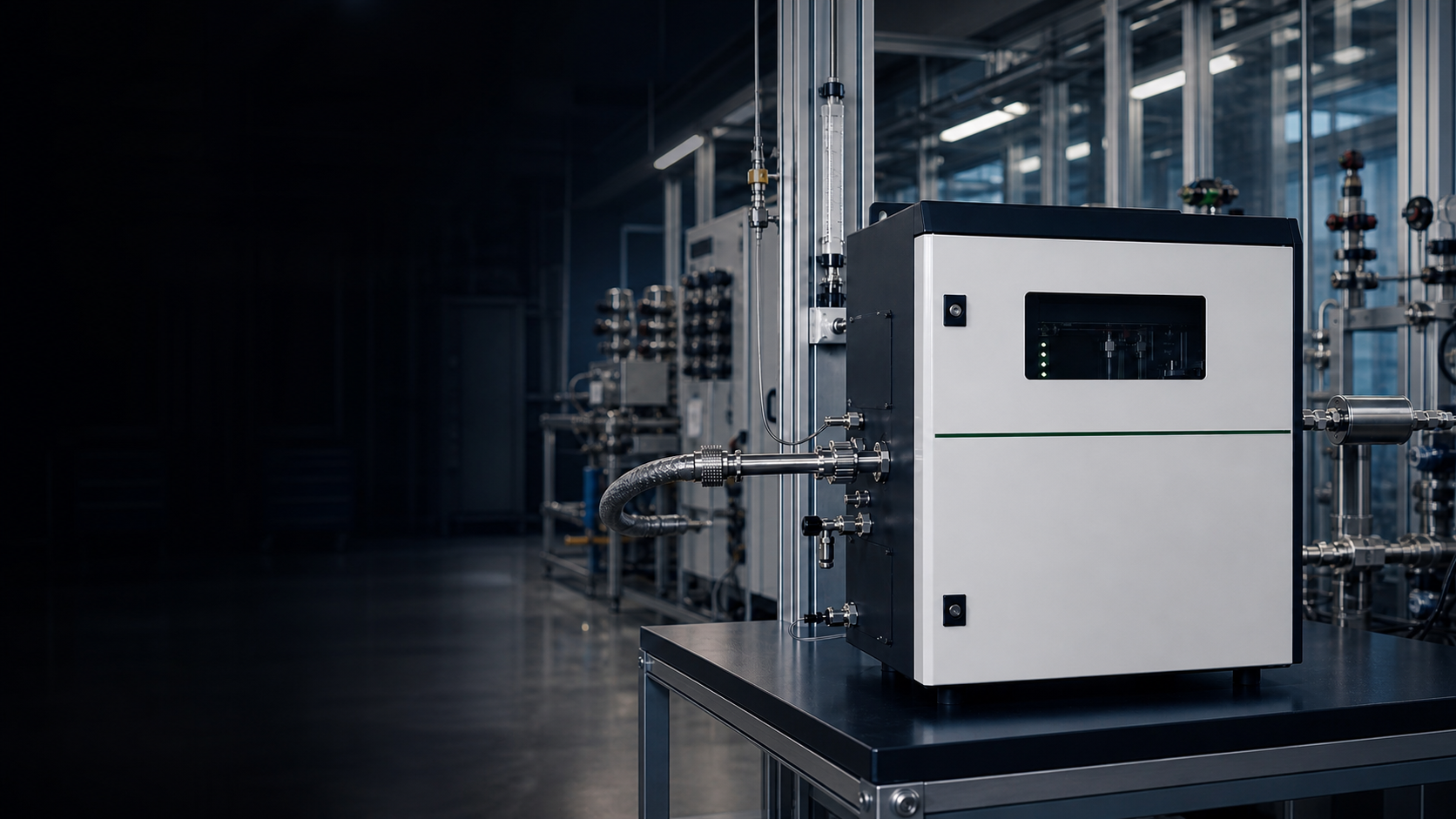 Fixed Catalytic
Sensing Principle · Catalytic Bead
Fixed Catalytic Bead LEL Detector
Catalytic bead LEL detection for explosion prevention — the hydrogen-capable catalytic path within the LEL detection routes on this page.
- Range
- 0–100 %LEL
- Accuracy
- ±3 %LEL (envelope)
- Review
- Zone / loop scope
- Service-Life Target
- >4 years
Fixed Infrared · Zone 1Sensing Principle · Dual-Wavelength IR
Fixed IR LEL Detector
Infrared LEL detection — not vulnerable to catalytic-bead poisons because there is no catalyst bead to deactivate; works in inert atmospheres. >10-year IR optical-head service target with scheduled optical checks; no catalytic bead consumable.
- Range
- 0–100 %LEL
- Accuracy
- ±5 %LEL (envelope)
- Review
- Zone / loop scope
- Service-Life Target
- >10 years
Portable · Ex iaSensing Principle · Catalytic + IR Hybrid
Portable Combustible-Gas Detector
Intrinsically safe handheld with 60+ gas correction factors for survey and confined-space work.
- Range
- 0–100 %LEL
- Accuracy
- ±5 %LEL (envelope)
- Weight
- ~0.6 kg
- Battery
- Full-shift Li-ion
Fixed Catalytic vs Fixed Infrared vs Portable Intrinsically Safe Mounting
Catalytic Bead Fixed Head (Fixed Catalytic LEL Detector)
A fixed catalytic head configuration with a poison-resistant rare-earth catalyst bead. Within the LEL detection paths on this page, catalytic bead is the hydrogen-capable path; infrared hydrocarbon channels are blind to H₂. For hydrogen-only safety duties, a dedicated electrochemical hydrogen detector can also be valid; for process H₂ purity, route to the hydrogen analyzer page. Hazardous-area enclosure scope is reviewed against the site classification.
24 VDC loop-powered, 4–20 mA HART 7 with 2 × SPDT relays. Wall or pipe mount, 3/4″ NPT entries, IP66 316SS housing. Hot-swap bayonet bead replacement without opening the enclosure.
- Hydrogen service — catalytic is the hydrogen-capable path
- Zone-classified loading skids, vessel inlets, compressor racks
Infrared Fixed Head (Fixed IR LEL Detector)
A dual-wavelength infrared fixed-head configuration that needs no oxygen — the correct detector principle for nitrogen-blanketed, inerted and poison-prone service, with > 10 yr sensor-life target. IR is not vulnerable to catalytic-bead poisons because there is no catalyst bead to deactivate; optical-window contamination, source ageing and detector diagnostics still require scheduled inspection and fault handling.
24 VDC, 4–20 mA HART 7 with 2 × SPDT relays, IP66 flameproof housing. Quarterly optical-window cleaning in dusty service preserves dynamic range; no bead to poison or replace.
- N₂-blanket / inerted vessels — marine LNG, FPSO, reactors
- Poison-prone service (silicones, Pb, H₂S > 20 ppm)
- CO₂-rich biogas-upgrade residual streams
Portable Intrinsically Safe (Portable Combustible-Gas Detector)
A handheld hybrid concept with catalytic primary sensing and an IR backup channel for leak survey, confined-space clearance and hot-work permit work. Availability and certification scope require engineering review.
Li-ion runtime, switchable pump / diffusion mode, event logging, ingress protection, and drop-resistance targets are confirmed with the application team before quotation.
- Confined-space atmospheric clearance before entry
- Hot-work permit verification and leak survey
- Multi-plant contractor routes across 60+ gases
The fixed catalytic bead LEL detector uses a poison-resistant catalytic formulation with a stated service-life target beyond four years under suitable duty, but silicones, lead compounds, organophosphorus compounds and sulfur/H₂S exposure can still poison or inhibit the bead; bump-test records decide whether the sensor remains fit for service.
Fixed IR LEL detector: >10-year IR optical-head service target with scheduled optical checks; no catalytic bead consumable.
Portable combustible-gas detector: a full-shift Li-ion runtime with a hot-swap catalytic cartridge; MIL-STD-810G ruggedness controls the replacement-from-damage line item across a contractor fleet.
Where Catalytic, Infrared and Portable LEL Detection Matter
Combustible-gas hazards are not distributed evenly across an industrial site, and the right detector for a confined-space permit is not the right detector for a nitrogen-blanketed cargo tank. The seven hazard cards below frame each combustible-gas scenario in terms that a functional-safety engineer actually works in — hazardous-area zone, target gas, the silent-failure mode that dominates if the wrong principle is specified, and the detection path — fixed catalytic, fixed IR or portable — that matches, rather than sorting by industry. Hazard-first framing is the reason ATEX Zone 0 gets a dedicated card even though it overlaps with Zone 1 on several sites: the ignition protection is different (Zone 0 requires equipment protection level Ga; Zone 1 accepts Gb), which drives a different detection path and configuration.
Confined-Space Entry — Atmospheric Clearance Test
OSHA 29 CFR 1910.146 requires an atmospheric clearance test before any permit-required confined-space entry: oxygen level, combustible-gas %LEL, and toxic-gas exposure must all be verified from outside the space via a pump-mode handheld before personnel cross the plane of entry.
A portable combustible-gas detector in pump mode draws the sample through a probe at 500 mL/min from outside the space, logs the reading against the permit ticket, and continues personal monitoring in diffusion mode once entry is authorised. A Zone 0 Ex ia intrinsically safe rating covers the worst-case atmosphere the permit can describe, confirmed per certificate extract.
OSHA 29 CFR 1910.146 permit-required confined space
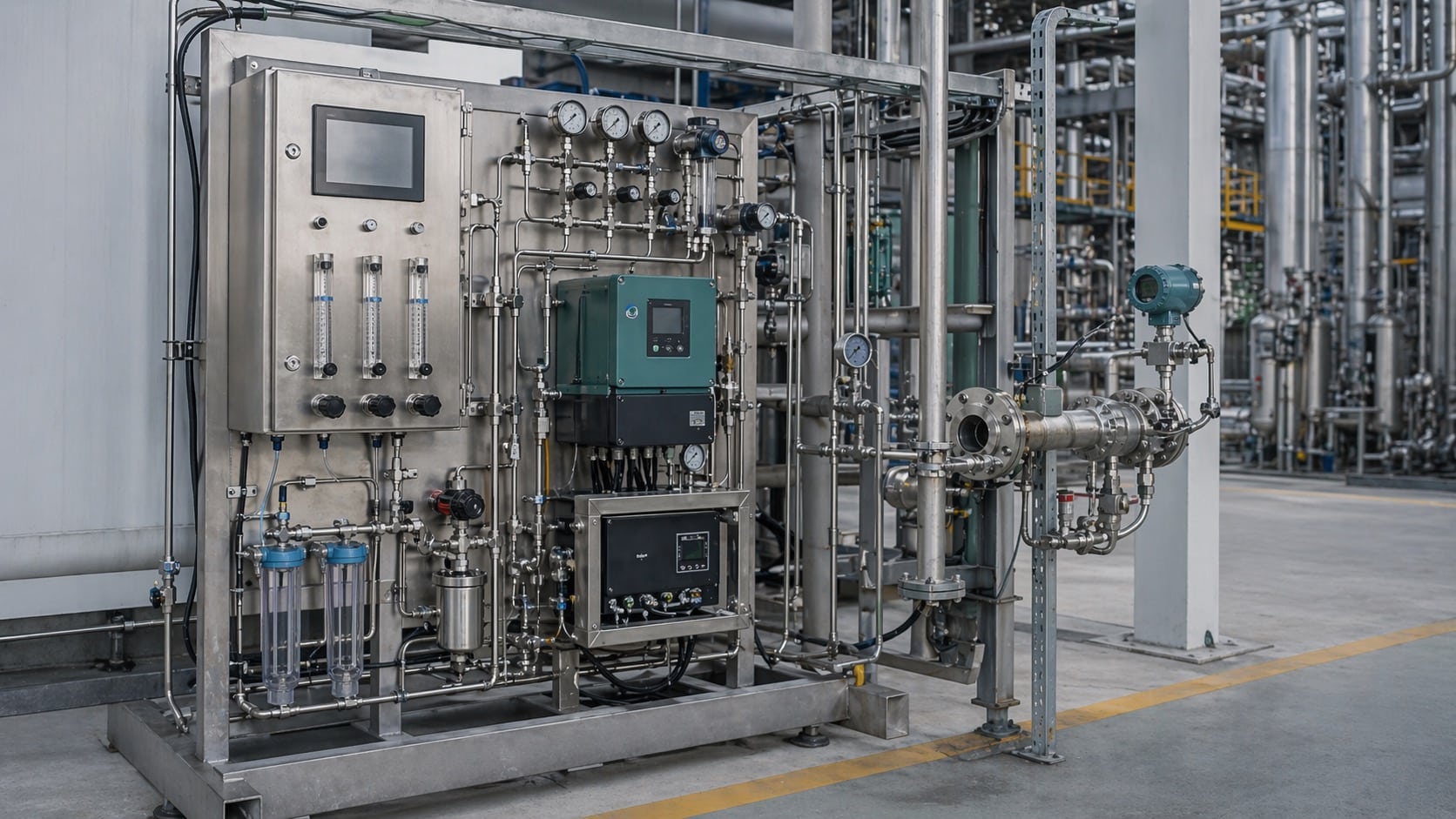
N₂-Blanket / Inerted Vessels — Marine LNG, FPSO, Reactors
Cargo tanks on LNG carriers, slop tanks on FPSO platforms and chemical inerted reactors operate at < 10 % O₂ for fire-prevention reasons. A catalytic bead detector installed here would read zero during a real release because the pellistor oxidation reaction needs oxygen.
A fixed IR LEL detector with dual-wavelength infrared produces a correct %LEL reading regardless of oxygen level — IR is an optical measurement, not an oxidation reaction. Specify this path on every inert-service tank, reactor and recovery line where catalytic would be silently blind.
EN 60079-29-1 + marine type-approval per delivered certificate package
Hydrogen Service — HDS Refinery, Fuel-Cell, Electrolyser
Hydrogen is the primary combustible-gas risk in HDS refinery compressor skids, in polymer-electrolyte fuel-cell test cells, in alkaline and PEM electrolyser rooms, and in biogas-upgrade residual streams. Infrared detectors are blind to H₂ because it has no absorption band in the IR window.
A fixed catalytic bead LEL detector is the correct pick for hydrogen-primary service — within the LEL detection paths on this page, catalytic bead is the hydrogen-capable path; infrared hydrocarbon channels are blind to H₂. Gas grouping IIC on the ATEX label confirms coverage of the hydrogen MESG class, per certificate extract. For hydrogen-only safety duties, a dedicated electrochemical hydrogen detector can also be valid; for process H₂ purity, route to the hydrogen analyzer page.
IEC 60079-20-1 gas grouping IIC for hydrogen
ATEX Zone 0 Continuous Hazard — Loading Skid, Vessel Inlet
ATEX Zone 0 is the most severe classification: an explosive gas atmosphere is present continuously or for long periods. Loading and unloading skids, vessel inlets and high-venting stacks on propylene, ethylene and butadiene service routinely classify to Zone 0 and demand equipment-protection-level Ga ignition protection.
For this duty, use only a detector whose delivered certificate extract explicitly supports the site Zone 0 marking and EPL. The fixed catalytic bead LEL detector remains the catalytic fixed-head path for hydrogen-primary and dense-hydrocarbon aerobic service, but its exact ATEX marking must be reconciled from the certificate extract before it is assigned to a Zone 0 fixed installation. The rare-earth poison-resistant catalyst is specified for dense-hydrocarbon loading-rack environments where older catalytic formulations can degrade quickly.
ATEX hazardous-area marking per certificate extract + SIL 2 per IEC 61508 fixed-head evidence (confirmed per project)
ATEX Zone 1 Intermittent Hazard — Compressor Station, Process Area
ATEX Zone 1 covers areas where an explosive gas atmosphere is likely to occur in normal operation — compressor stations, process areas downwind of flanges, and maintenance-access corridors. Zone 1 does not require the Zone 0 severity of ignition protection, and the target gas profile often includes hydrogen coming out of reformers and hydro-crackers.
A fixed IR LEL detector carries a flameproof Zone 1 Ex db IIB+H₂ envelope — gas grouping IIB+H₂ explicitly covers hydrogen-containing hydrocarbon streams, confirmed per certificate extract. Dual-wavelength IR physics is not vulnerable to catalytic-bead poisoning from compressor oil mists, silicone sealants or residual H₂S in sour service because there is no catalyst bead to deactivate.
ATEX 2014/34/EU Zone 1 + SIL 2

Perimeter / Fence-Line / Flare-Stack Monitoring
LNG terminals, bulk storage facilities and flare-stack perimeters need combustible-gas coverage across a fence-line kilometre rather than a single flange — the hazard geometry is long and thin, not a point. Traditional point detectors on 10 m spacing would require dozens of heads to deliver equivalent coverage.
Engineering review is the honest answer here — a dense mesh of fixed IR LEL detector points or an open-path IR configuration are both valid, and the correct pick depends on wind-rose, fence geometry and response-time budget. GESHINE engineers the open-path install as a package including ATEX coordination, site SIF review inputs and commissioning.
NFPA 59A LNG perimeter + API RP 752

Hot-Work Permit & Leak Survey — Maintenance Turnaround
A maintenance contractor running a 15-plant turnaround route needs a single portable LEL instrument that covers methane, propane, butane, hydrogen and solvent vapours across every permit, without carrying a dedicated instrument per plant or hand-transcribing calibration factors between gases.
A portable combustible-gas detector with a 60-plus pre-programmed correction-factor library lets the operator pick the target gas on the menu and the detector applies the correct factor automatically. A MIL-STD-810G drop-test basis, a full-shift Li-ion runtime, and a Zone 0 intrinsically safe form factor cover the full contractor route, confirmed per project review.
NFPA 51B hot-work + OSHA 1910.252
The seven hazard cards above cover the majority of combustible-gas installation scenarios these detection paths address. The next block walks through the certification landscape that governs where and how each detection path can be deployed, and organises certification considerations by path so no cert claim crosses between heads.
Certifications & Hazardous-Area Scope (by Detection Path)
Combustible-gas detectors sit inside a dense certification regime — ATEX for European hazardous-area coverage, IECEx for the international equivalent, CSA and FM for North American approval, MSHA for underground mining, DNV / DNV GL for marine, IEC 61508 for functional safety, EN 60079-29-1 for performance — and the wrong scope on the wrong detection path is the kind of compliance gap an auditor finds the week after commissioning. The certification considerations below are organised by detection path rather than as a blanket category claim, so the buyer can reason about the catalytic, infrared and portable routes separately before procurement commits rather than inheriting a category-wide assertion that would not hold up against a notified-body file. Nothing on this page is a guarantee of delivered certification: the applicable scope is review-required and confirmed only in the delivered quotation, certificate pack or certificate extract for the configuration actually supplied.
Certification Considerations Across Detection Paths
These are the certification dimensions to review when scoping a combustible-gas detector. The path notes below describe which routes typically carry which approval — they are review dimensions for the RFQ, not a guarantee that any specific configuration ships with the listed scope. Applicable approvals are confirmed only in the delivered quotation or certificate pack.
- ATEX 2014/34/EU — European hazardous-area directive. Fixed catalytic bead path: ATEX hazardous-area marking confirmed per certificate extract · Fixed IR path: typically Zone 1 (II 2G Ex db IIB+H₂ T4 Gb) · Portable path: typically Zone 0 intrinsically safe (II 1G Ex ia IIC T4 Ga).
- IECEx — international equivalent of ATEX. Typically available across all three detection paths, confirmed per project.
- CSA + FM — North American hazardous-area approvals. Typically available across all three detection paths, confirmed per project.
- MSHA — US Mine Safety and Health Administration approval for underground-mining service. Associated with the portable detection path where confirmed.
- SIL 2 per IEC 61508 — IEC 61508 SIL 2 evidence applies to fixed catalytic bead and fixed IR detection heads; final SIF verification is performed against the site safety lifecycle. The portable detection path is portable PPE and is not SIL-rated as a fixed SIF sensing element.
- EN 60079-29-1 — performance standard for combustible-gas detectors. Applies within flammable-gas (LEL) performance scope only; confirmed per configuration.
- DNV / DNV GL marine type-approval — associated with the fixed catalytic bead path, where the delivered certificate or datasheet package includes the marine approval scope.
- CE + UKCA — European and UK conformity. Typically available across all three detection paths, confirmed per project.
- INMETRO — Brazilian hazardous-area approval. Associated with the fixed catalytic bead path where confirmed.
Certification Considerations by Detection Path
Fixed Catalytic Bead LEL Detector
- ATEX hazardous-area marking per certificate extract
- SIL 2 per IEC 61508
- EN 60079-29-1
- DNV / DNV GL marine type-approval — where the delivered certificate or datasheet package includes the marine approval scope
- IECEx · CSA · FM · UKCA · INMETRO
Fixed IR LEL Detector
- ATEX Zone 1 (II 2G Ex db IIB+H₂ T4 Gb)
- SIL 2 per IEC 61508
- EN 60079-29-1
- IECEx · CSA · FM · UKCA
Portable Combustible-Gas Detector
- ATEX Zone 0 intrinsically safe (II 1G Ex ia IIC T4 Ga)
- IP67 + MIL-STD-810G 3 m drop
- MSHA approval for underground-mining service
- EN 60079-29-1
- IECEx · CSA · FM
- The portable combustible-gas detector is portable PPE and is not SIL-rated as a fixed SIF sensing element.
Scope & Compliance Detail
Two per-path distinctions drive most of the compliance questions buyers bring to an RFQ. First, Zone 0 versus Zone 1 is not a quality tier — it is a different ignition-protection requirement driven by how continuously the explosive atmosphere is present, and a fixed IR LEL detector installed in a Zone 0 area would not carry the correct certificate even though the head is physically robust. Second, SIL 2 applies to the safety-instrumented function a fixed head participates in, not to the portable PPE device a contractor carries; the portable combustible-gas detector is not SIL-rated and must not be specified as a SIL component, even though it is Zone 0 intrinsically safe. The page is assertive about these boundaries for a reason — a cross-path certification claim is a compliance lie that propagates from the datasheet to the bid package to the notified-body file, and it is the kind of error that costs a plant its Safety Operating Envelope. Every buyer-facing certification statement on this page must be traceable to the delivered product datasheet, certificate extract or project documentation package for the selected configuration.
With per-path certification considerations laid out, the next sub-pillar walks through the functional-safety layer above the detector — how voting architectures, SFF and proof-test intervals turn fixed-head SIL 2 evidence into inputs for site SIF verification.
SIL 2 Voting Architecture: From Fixed-Head Evidence to Loop-Level SIL Verification
The detector certificate is one input to the SIF; final SIL verification depends on voting, proof-test interval, diagnostics, common-cause assumptions, logic solver, final element, and site LOPA. Functional safety per IEC 61508 is a loop-level property that depends on three architectural choices above the sensing element: the voting architecture (how many detectors in parallel, and how their outputs are combined), the safe-failure fraction (SFF) of the sensor plus its diagnostic coverage (DC) against the dangerous-undetected failure rate, and the proof-test interval at which the loop is verified against a known reference. The table below enumerates the four standard voting architectures — 1oo1, 1oo2, 2oo2, 2oo3 — with the PFD / HFT rule for each and the hazard scenario where each is the correct specification, so a functional-safety engineer can match the architecture to the consequence-of-failure profile rather than over-specifying redundancy that does not earn its upfront cost.
| Voting | Purpose | PFD / HFT Rule | When to Specify |
|---|---|---|---|
| 1oo1 | One detector channel drives the trip decision. | HFT 0. Baseline PFDavg is calculated from device failure data, diagnostic coverage, proof-test coverage, proof-test interval and common-cause assumptions; do not assign a generic SIL band from architecture alone. | Use only where the site LOPA accepts a single sensing channel or where the calculated loop PFDavg still meets the target with the rest of the SIF. |
| 1oo2 | Two detector channels in parallel; either detector can trip the SIF. | HFT 1 for a single dangerous channel failure when channels are independent. PFDavg generally improves versus 1oo1, but nuisance-trip frequency rises because either channel can trip. | Use when missing a real combustible-gas release is more consequential than a spurious trip: high-pressure hydrogen, Zone 0 loading, compressor skids, and similar high-consequence releases. |
| 2oo2 | Two detector channels in parallel; both must agree before trip. | HFT 0 for dangerous missed-detection logic. Spurious trips fall, but dangerous-failure coverage is worse than 1oo2 and can be worse than 1oo1 if either channel can suppress the trip. | Use only where spurious trips create exceptional process risk and an independent layer or LOPA explicitly accepts the missed-detection penalty. Do not present as a default SIL 2 gas-detection architecture. |
| 2oo3 | Three detector channels; any two agreeing channels trip the SIF. | HFT 1 with better nuisance-trip immunity than 1oo2. PFDavg must be calculated with beta/common-cause factors, diagnostics and proof-test assumptions. The SIL 2 low-demand target is 10⁻³ to less than 10⁻²; 10⁻⁴ to less than 10⁻³ is SIL 3 territory. | Use for high-consequence or high-availability duties where both missed detection and nuisance shutdown matter: LNG loading, bulk hydrogen, refinery HDS units, and dense perimeter meshes after placement review. |
Total Cost of Ownership
Over a multi-year fleet horizon, catalytic and infrared heads should be compared by hazard first and lifecycle burden second. IR can reduce bead-replacement work in inert or poison-prone hydrocarbon service, while catalytic remains required for hydrogen-primary LEL safety in oxygen-containing atmospheres.
Catalytic Fixed (Fixed Catalytic Bead LEL Detector)
Catalytic fixed heads usually start with the lower hardware scope but carry catalytic-bead replacement, bump-test, target-gas correction and proof-test record burden. They remain the correct path for hydrogen-primary LEL safety in oxygen-containing atmospheres.
Infrared Fixed (Fixed IR LEL Detector)
Infrared fixed heads usually quote above catalytic heads but avoid catalytic-bead consumables. Lifecycle burden shifts to optical-window inspection, source / detector diagnostics and proof-test records. They are selected for inert or poison-prone hydrocarbon service, not for hydrogen.
Portable Hybrid (Portable Combustible-Gas Detector)
Portable LEL fleet cost is driven by docking or bump-test workflow, calibration gas, cartridges, batteries, charging cradles, record retention and user training rather than instrument price alone.
Actual lifecycle cost depends on detector count, exposure to poisons, proof-test policy, optical-cleaning burden, labor rate, spares strategy and site documentation requirements; no savings or acceptance outcome is guaranteed.
Pricing, Lead Time & After-Sales Support
Pricing: Entry, Mid and Premium RFQ Scopes
Entry RFQ – portable LEL safety detector
A portable combustible-gas detector for leak survey, confined-space clearance and hot-work permits. Budget moves with pump / diffusion workflow, docking or bump-test accessories, fleet size, data-log requirements, charging cradles, replacement cartridges and regional hazardous-area documentation.
Mid RFQ – fixed-point catalytic or infrared head
The fixed catalytic bead and fixed IR LEL detector heads are quoted by hazardous-area marking, sensing principle, loop I/O, fixed-head functional-safety documentation scope, regional documentation, calibration hardware, commissioning support and proof-test scope. The fixed catalytic bead LEL detector is the hydrogen-capable catalytic path; the fixed IR LEL detector is the infrared path for inert or poison-prone hydrocarbon service.
Premium RFQ – engineered open-path or dense-mesh package
Perimeter, fence-line and flare-stack configurations are quoted as engineered systems: open-path infrared where available, or dense mesh fixed heads with visualization and alarm integration. Budget moves with area classification, detector spacing study, wind / plume review, ATEX / IECEx coordination, site SIF review inputs, commissioning and site acceptance scope.
What Moves the Price
The biggest price mover on a combustible-gas detector quote is the certification scope demanded by the site, not the base instrument. A fixed catalytic bead LEL detector carries ATEX hazardous-area marking per certificate extract, IECEx, CSA, FM, UKCA, INMETRO and DNV / DNV GL marine type-approval where confirmed per project — adding MSHA, an additional notified-body file or a DNV / DNV GL type-approval extension to a configuration that does not ship with it is a multi-week engineering and fee cycle, not a line-item upgrade. The second mover is the fixed-head functional-safety documentation scope: IEC 61508 SIL 2 evidence applies to the fixed catalytic bead and fixed IR LEL detector heads, with SFF, PFDavg budget, proof-test interval and voting-architecture materials reviewed against the site functional-safety plan rather than sold as a loop-level SIL promise. The third mover is the sensor-formulation scope — the poison-resistant rare-earth catalyst on the fixed catalytic bead LEL detector is a premium formulation worth the upfront-cost delta over generic pellistors wherever silicones, Pb or H₂S ≥ 20 ppm are present in the ambient air, and wherever the sensor-replacement labour budget exceeds the sensor cost. Sample-handling accessories (flame arrestor dust caps, calibration hood, BT-200 bump-test cradle) are modest additions. Optional items — HART 7 configuration kit, Modbus gateway, poison-resistant replacement cartridges, extended-warranty service — stack additively but rarely dominate the quote.
Buyer Advisory
Use RFQ budget tiers as planning language only. The final quote depends on hazardous-area zone, target gas list, sensing principle, form factor, SIL evidence scope, voting architecture, proof-test cadence, regional documentation and plant integration. Hazard-first selection must outrank purchase-price comparisons because the wrong principle can create a silent-failure path that no accessory fixes after commissioning.
Lead Time
- Standard configuration
- Lead time is a typical review dimension on the RFQ, not a fixed catalogue commitment. Base configurations across the catalytic, infrared and portable detection paths are usually scoped in weeks from order confirmation; the binding date, factory-calibration reference and production-test scope are confirmed in the delivered quotation.
- Hazardous-area documentation package
- When the order requires an ATEX / IECEx certificate extract bundle, a marine DNV / DNV GL type-approval letter for the fixed catalytic bead LEL detector where supplied, or INMETRO documentation for Brazilian service, notified-body retrieval, translation and review timing are confirmed with the order scope.
- Functional-safety documentation
- Documentation scope for the fixed catalytic bead or fixed IR LEL detector is confirmed per RFQ, including SFF / PFDavg / proof-test-interval data and voting-architecture materials reviewed against the site functional-safety plan. Build timing and documentation turnaround are confirmed with the order scope.
- MOQ
- Order quantity is a review dimension, not a fixed rule: single units are typically handled as evaluation or pilot orders (useful for fixed-head functional-safety documentation review), with volume and framework-agreement pricing for multi-site fleets and turnaround-package procurement. The applicable terms are confirmed in the delivered quotation.
Warranty
- Standard factory warranty
- Warranty term and coverage are typical review dimensions confirmed in the delivered quotation, not a fixed catalogue promise. A standard term commonly runs from commissioning (with a shipment-based backstop) covering electronics, catalytic bead or IR optical bench, housing, loop terminals and the sensor-replacement cradle, with sensor consumables (catalytic beads, portable cartridges) typically carrying a shorter, separately stated coverage period.
- Extended warranty options
- Extended-warranty terms can be scoped at order; preventive-maintenance visits, spares priority and proof-test support are scoped per fleet and service agreement. Extended coverage is the usual pick for larger fleets where unplanned downtime affects the SIF availability budget. The available terms are confirmed in the delivered quotation.
- Certification traceability
- Where confirmed in the delivered quotation or certificate pack, a configuration can be supplied with a factory calibration certificate traceable to national metrology standards and the relevant notified-body certificate extract (ATEX, IECEx, CSA, FM, UKCA, INMETRO, MSHA). Orders with fixed-head functional-safety documentation scope can include an SFF / PFDavg worksheet and proof-test protocol for site functional-safety-plan integration. None of this is guaranteed until confirmed for the delivered configuration.
- Out-of-warranty service
- Fixed-rate optical-bench refurbishment, catalytic bead cartridge replacement and firmware upgrade programmes are offered to keep fixed heads in service for 10+ years — important for Zone 0 installations where the notified-body file is tied to a specific serial number and casual replacement resets the proof-test record.
After-Sales Support
Poison Resistance & Bump-Test Calendar
Combustible-gas detectors are the one product class where bump-test cadence is load-bearing rather than cosmetic. The published poison watch list — silicones (RTV sealants, silicone greases), organo-phosphorus compounds (herbicides, flame-retardants, plasticisers), lead (Pb) compounds, and H₂S at or above 20 ppm — drives a daily or pre-shift bump-test cadence under most facility SOPs. All combustible-gas detectors require verification against methane-in-air or target-gas reference gas, with cadence set by manufacturer instructions, site SOP and functional-safety plan. Fixed heads use commissioning zero/span, target-gas correction setup, alarm-relay / 4-20 mA loop checks and periodic proof-test records. Portable combustible-gas detector units use before-use or daily bump testing through a docking / bump-test station where required by site procedure, with full calibration after failed bump tests, sensor replacement, overdue interval or audit requirement. The BT-200 automatic bump station workflow delivers hands-free pass/fail verification against a 50 %LEL methane cylinder, and the catalytic cartridge hot-swap protocol (fixed catalytic bead LEL detector bayonet fitting, per the service manual) releases the replacement sensor without a gas-free certificate or enclosure disassembly. GESHINE supports these workflows as documented aftermarket programmes.
Fixed-Head Proof-Test Protocol
Proof-testing at the interval set in the site functional-safety plan is the cadence the safety-instrumented function is designed around per IEC 61508. Where the order includes fixed-head functional-safety documentation scope, a configuration-specific proof-test procedure can be supplied with SFF and PFDavg disclosure, a signed logbook template, and a voting-architecture option brief (1oo1 / 1oo2 / 2oo2 / 2oo3). On-site proof-test engagements are available from the factory engineering team, and any SFF / PFDavg recalculation after sensor replacement or voting-architecture changes is scoped against the site functional-safety plan.
ATEX & IECEx Periodic Inspection
Periodic inspection per IEC 60079-17 runs on an interval typically not exceeding three years for Zone 0 and Zone 1 installations, unless a longer interval is justified by a documented expert assessment. The on-site workflow covers flameproof-joint gap inspection against the certificate extract, cable-gland torque verification, enclosure paint-film integrity check, and cement-joint wear measurement. A periodic-inspection checklist can be supplied for fixed-head installations, and GESHINE supports on-site engagements.
Spare Parts & Hot-Swap Cartridges
Priority spares dispatch from the factory on catalytic bead cartridges, IR optical window assemblies, BT-200 tubing kits and sensor cradle hardware, with dispatch timing confirmed with the service or RFQ scope — critical where proof-test availability is part of the site SIF availability budget. No-tools, no-enclosure-disassembly replacement is the default on the fixed catalytic bead LEL detector (bayonet fitting per the service manual) and the portable combustible-gas detector cartridges; replacement happens under a permit without a gas-free certificate. Customs documentation for cross-border shipments is pre-assembled by the logistics desk.
Remote Fault-Indication Diagnostics
HART 7 and Modbus RTU fault indication covers optics contamination, bead integrity, loop drift and cable-integrity faults in real time from the plant DCS or SIS — the system fails to a fault flag and a 3.2 mA loop value rather than sitting at a false-safe zero. Technician dispatch happens only after the fault is confirmed remotely, which typically halves the mean-time-to-diagnosis on fixed-head issues and avoids unnecessary hot-work permits for no-fault-found visits.
Training for EHS and Technician Staff
On-site bump-test workshop walks EHS staff through OSHA 1910.146 permit-space atmospheric-testing requirements, the bump-test cadence set by the site permit plan, manufacturer instructions and functional-safety procedure, and the BT-200 workflow; a functional-safety refresher covers fixed-head SIL 2 evidence, site SIF verification, SFF / PFDavg arithmetic and the 1oo1 / 1oo2 / 2oo3 voting decisions; an ATEX Zone classification workshop per IEC 60079-10-1 covers zone boundary definition and detector-placement methodology. All three modules are available as remote sessions with recorded content and per-attendee certificate of completion.
Application engineers support RFQ review, remote diagnostics where connectivity is available, spares planning and proof-test documentation. Response windows, spares dispatch, customs timing and quotation turnaround are confirmed with the service or RFQ scope. Further commercial, integration, certification and functional-safety questions are covered in the FAQ below. If the specific question is not answered there, the RFQ form brings a GESHINE application engineer into the thread.
Combustible Gas Detector Questions, Answered
From catalytic-vs-infrared selection and %LEL basics to hazardous-area zones, bump-test cadence, SIL target and catalytic poisons.
How do I choose between catalytic bead and infrared for my service?
The decision hinges on three hazard attributes. First, oxygen level: catalytic beads require at least 10 % O₂ to oxidise combustibles, so any nitrogen-blanketed, inerted or oxygen-depleted atmosphere demands infrared (a fixed IR LEL detector). Second, target gas: hydrogen has no IR absorption band, so an H₂-primary service demands catalytic (a fixed catalytic bead LEL detector) or a dedicated electrochemical H₂ sensor. Third, poison exposure: if silicones, organo-phosphorus compounds, lead or H₂S ≥ 20 ppm are present in the ambient air, IR is not vulnerable to catalytic-bead poisons because there is no catalyst bead to deactivate; optical-window contamination, source ageing and detector diagnostics still require scheduled inspection and fault handling, while poison-resistant catalytic still requires periodic bump-test verification. Hazard first, cost of ownership second.
Does an infrared combustible-gas detector respond to hydrogen?
No. Hydrogen is a diatomic molecule with no vibrational absorption band in the 3.4 µm mid-infrared window that dual-wavelength IR detectors use to measure hydrocarbons. A fixed IR LEL detector installed in hydrogen service would produce a zero reading during an actual H₂ release, which is a silent-failure mode that no bump test on a methane cylinder would catch. For hydrogen-primary service — HDS refinery compressors, fuel-cell test cells, electrolyser rooms, biogas-upgrade residuals — specify the fixed catalytic bead LEL detector head. Where hydrogen is the sole target, a dedicated electrochemical hydrogen sensor is also an acceptable alternative.
What exactly is %LEL? How does 100 %LEL compare to the gas concentration in volume?
The Lower Explosive Limit (LEL) is the minimum concentration of a combustible gas in air that will propagate a flame when ignited. It is gas-specific: 100 %LEL for methane is approximately 5 %vol in air, for propane it is about 2.1 %vol, for hydrogen it is about 4 %vol. An LEL detector reports concentration as a percentage of that LEL threshold — 20 %LEL means the atmosphere is at one-fifth of the flammable limit, regardless of which combustible gas is present. Correction factors in the portable combustible-gas detector gas library map a methane-calibrated reading to the correct %LEL for the 60-plus other combustible gases the library covers.
What is ATEX Zone 0 versus Zone 1 versus Zone 2, and when do I need Ex ia versus Ex d?
ATEX Zone 0 is the most severe classification — an explosive gas atmosphere is present continuously or for long periods (loading skids, vessel inlets). Zone 1 is intermittent — an explosive atmosphere is likely in normal operation (compressor stations, process areas). Zone 2 is infrequent — the atmosphere is present only under abnormal conditions (peripheral equipment rooms). Ex d (flameproof) contains any internal explosion inside a robust enclosure and is used on fixed heads; Ex ia (intrinsic safety) limits electrical energy below the ignition threshold and is the usual pick for portable devices. Match the protection concept to the site classification during engineering review.
How often must I bump-test a combustible-gas detector? Does weekly satisfy my facility audit?
All combustible-gas detectors require verification against methane-in-air or target-gas reference gas, with cadence set by manufacturer instructions, site SOP and functional-safety plan. Fixed heads use commissioning zero/span, target-gas correction setup, alarm-relay / 4-20 mA loop checks and periodic proof-test records. Portable combustible-gas detector units use before-use or daily bump testing through a docking / bump-test station where required by site procedure, with full calibration after failed bump tests, sensor replacement, overdue interval or audit requirement.
OSHA 1910.146 requires permit-space atmospheric testing and treats flammable gas/vapour above 10 percent LFL as a hazardous atmosphere. Alarm setpoints and bump-test cadence must follow the site permit plan, manufacturer instructions and functional-safety procedure.
Weekly bump-test cadence is usually accepted only when a site-specific functional-safety plan documents the rationale and the site has historical evidence that the detectors have not failed a bump test in a defined window — this is common on low-exposure fixed installations but uncommon on portable PPE. The BT-200 automatic bump station delivers hands-free pass/fail verification against a 50 %LEL methane cylinder and logs the result for audit.
Is SIL 2 enough for my safety instrumented function, or do I need a higher SIL target?
SIL 2 is a common target for combustible-gas safety-instrumented functions, but the target must come from the site LOPA and IEC 61508 / IEC 61511 safety lifecycle. Higher SIL targets are typically reserved for catastrophic-consequence, high-demand safety functions such as LNG cargo-tank blowdown, large flare-stack relief paths, or reactor over-temperature protection with irreversible runaway. IEC 61508 SIL 2 evidence applies to the fixed catalytic bead and fixed IR LEL detector heads; final SIF verification is performed against the site safety lifecycle. The detector certificate is one input to the SIF; final SIL verification depends on voting, proof-test interval, diagnostics, common-cause assumptions, logic solver, final element, and site LOPA. GESHINE does not market any configuration on this page above SIL 2, and any loop target above SIL 2 requires a dedicated functional-safety engineering review before GESHINE will quote, so that the voting architecture, diagnostic coverage and proof-test interval are engineered against the site LOPA rather than inferred from a datasheet bullet.
What compounds poison catalytic sensors, and how does the poison-resistant formulation extend life?
Four compound classes poison catalytic bead sensors: silicones (RTV sealants, silicone greases, laboratory lubricants), organo-phosphorus compounds (certain herbicides, fire-retardants, plasticisers), lead (Pb) compounds (ageing leaded-gasoline fleets, solder flux), and hydrogen sulphide at 20 ppm or above (sour-gas service, digester headspace). A poisoned sensor drifts low silently over weeks until the next bump test catches the loss. The fixed catalytic bead LEL detector uses a poison-resistant catalytic formulation with a stated service-life target beyond four years under suitable duty, but silicones, lead compounds, organophosphorus compounds and sulfur/H2S exposure can still poison or inhibit the bead; bump-test records decide whether the sensor remains fit for service.
What calibration gas do I use for a combustible-gas detector?
The primary calibration standard is methane in air at 50 %LEL (2.5 %vol CH₄) — this is the reference cylinder the factory uses and the one the BT-200 bump station ships with. For target-gas-specific calibration — propane, butane, pentane, hydrogen — use a cylinder at 50 %LEL of that gas against a certified air balance. The portable combustible-gas detector applies the correct gas library correction factor automatically once the operator picks the target gas from the menu; on fixed heads (the fixed catalytic bead and fixed IR LEL detector) the correction factor is set once during commissioning and re-verified whenever the dominant target gas on the skid changes.
Fixed heads use commissioning zero/span, target-gas correction setup, alarm-relay / 4-20 mA loop checks and periodic proof-test records. Portable combustible-gas detector units use before-use or daily bump testing through a docking / bump-test station where required by site procedure, with full calibration after failed bump tests, sensor replacement, overdue interval or audit requirement.
How does hot-swap sensor replacement work, and do I need a gas-free certificate?
The fixed catalytic bead LEL detector catalytic bead sits in a quick-disconnect bayonet fitting on the detector head. A twist-and-pull motion disengages the old bead; the new bead snaps in without tools and without enclosure disassembly. The electronics recognise the replacement, run a self-check and re-latch the loop within seconds. Because the enclosure is never opened, no gas-free certificate is required under most hot-work permit regimes — the sensor replacement counts as a cold-work activity. This is the operational reason the fixed catalytic bead LEL detector is preferred for dense-sensor fleets where casual enclosure entry would otherwise lock out hours of plant time per replacement.
How do I reconcile CSA / FM with ATEX / IECEx for a cross-border detector fleet?
CSA and FM are the North American hazardous-area approval regimes; ATEX is the European regime; IECEx is the international mutual-recognition scheme that most of the rest of the world accepts. All three detection paths — fixed catalytic bead, fixed IR and portable combustible-gas detector — typically support CSA, FM, ATEX and IECEx, so a suitably specified configuration can cover the US, Canada, EU, UK, Australia, Southeast Asia, Middle East and most of Latin America; the applicable scope is confirmed in the delivered certificate pack rather than assumed. MSHA (underground-mining service) is associated with the portable detection path, and INMETRO (Brazil) with the fixed catalytic bead path. The certification-considerations section on this page organises these dimensions by detection path so the exact list can be confirmed per project.
Gas detector vs gas analyzer — when does a %LEL detector suffice and when do I need a concentration analyzer?
A %LEL gas detector is enough for safety; a concentration gas analyzer is needed when you must know how much gas, not just whether it is dangerous. A combustible-gas detector reports percent of the lower explosive limit (%LEL) and fires an alarm or trip when the atmosphere approaches a flammable fraction — the right and sufficient tool for leak detection, confined-space entry and area safety, with fixed-head SIL 2 per IEC 61508 evidence only where the detector is being used as one input to a site-verified SIF. A concentration analyzer reports the actual gas concentration (ppm or %vol) on a calibrated, traceable output for process control, efficiency or emissions — a different measurement with a different accuracy class. Rule of thumb: if the question is “is it safe to enter, or is there a leak?” a %LEL detector suffices; if the question is “what is the concentration for control or reporting?” you need the analyzer. Many sites run both, for different jobs.
Where does combustible-gas safety detection stop and methane process measurement begin?
Combustible-gas safety detection stops at “is the atmosphere approaching flammable?” and methane process measurement begins at “how much CH₄ is in this stream?” — two different questions answered by two different instrument classes. A %LEL combustible detector treats methane as a generic flammable hazard and reads percent of the explosive limit for area or leak safety; it does not report a quantitative CH₄ concentration and is not specified for process or custody duty. Methane process measurement reports actual CH₄ (ppm to %vol) with a calibrated, traceable output for combustion control, biogas / RNG quality or emissions accounting, typically by NDIR or TDLAS. The boundary matters when scoping: a safety detector cannot stand in for a process CH₄ reading, and a process analyzer is not a substitute for a combustible-gas safety detector or for the site-verified SIF when one is required. For the quantitative CH₄ measurement side, see /gas-analyzers/methane-analyzers.
Standards & References
- IEC 61508:2010 — Functional safety of electrical/electronic/programmable electronic safety-related systems (Parts 1–7); base functional-safety standard for fixed-head SIL 2 evidence.
- IEC / EN 60079-29-1:2016 (IEC amendment 1:2020 where cited in IEC form) — Explosive atmospheres — Part 29-1: Gas detectors — Performance requirements of detectors for flammable gases; valid for portable, transportable and fixed LEL equipment for flammable gas or vapour concentrations with air.
- IEC 60079-0:2017 — Explosive atmospheres — Part 0: Equipment — General requirements.
- IEC 60079-1:2014 — Explosive atmospheres — Part 1: Equipment protection by flameproof enclosures “d”; use Ex da/Ga or Ex db/Gb exactly as the certificate marks it.
- IEC 60079-11:2023 — Explosive atmospheres — Part 11: Equipment protection by intrinsic safety “i”; older certificate files may cite IEC 60079-11:2011, which remains valid where the delivered certificate quotes that edition.
- ANSI/ISA-12.13.01 / ISA12.13 — Performance requirements for combustible-gas detectors (ANSI/ISA-92.00.01 covers toxic-gas detectors and does not apply to LEL combustible-gas equipment).
- ATEX 2014/34/EU — European directive on equipment and protective systems intended for use in potentially explosive atmospheres.
- IECEx Scheme — International Electrotechnical Commission scheme for certification of equipment for use in explosive atmospheres.
- CSA C22.2 No. 152 + FM Class 3615 / 3600 — North American hazardous-area approvals applicable to all three GESHINE detection paths.
- MSHA 30 CFR Part 22 — Portable Methane Detectors; applies to the portable combustible-gas detector mining / methane-detector scope where certificate-backed.
- OSHA 29 CFR 1910.146 — US Federal permit-required confined-space entry regulation; requires permit-space atmospheric testing and treats flammable gas/vapour above 10 percent LFL as a hazardous atmosphere. Alarm setpoints and bump-test cadence must follow the site permit plan, manufacturer instructions and functional-safety procedure.
- MIL-STD-810G — Environmental Engineering Considerations and Laboratory Tests; referenced as the drop-test report basis for the portable combustible-gas detector 3-m drop claim, not as a certification badge.
The Integration-Lead Pedigree Behind This Guide
GESHINE is honest about where our expertise starts and stops on combustible-gas detectors. From our Wuhan Optics Valley facility we do not manufacture the catalytic pellistor bead or the dual-wavelength infrared optical bench from raw materials — we source premium poison-resistant rare-earth catalyst elements and dual-λ IR benches from established sensor-element suppliers and engineer the integration around them: flameproof and intrinsically safe enclosure integration, the Ex ia portable enclosure with MIL-STD-810G 3-m drop resistance, the hot-swap bayonet sensor head that releases a bead without a gas-free certificate, fixed-head SIL 2 per IEC 61508 evidence support for the fixed catalytic bead and fixed IR LEL detector heads, and ATEX / IECEx / CSA / FM / MSHA / DNV / DNV GL / INMETRO documentation coordination per configuration. That is the integration-lead pedigree behind every recommendation on this page — it is not a claim to sensor intellectual property we do not own, and it is not a laser-spectroscopy claim that belongs to a different product class. It is the integration pedigree behind a detector fleet that arrives with the evidence needed for the site’s first proof-test review.
Why GESHINE for Combustible Gas Detectors
Integration-lead functional-safety engineering — sensor-element selection, enclosure review, hot-swap service planning, and loop documentation coordination.
Functional-Safety Integration
GESHINE scopes the sensing principle, enclosure approach, hot-swap service plan, and safety-loop evidence as one engineering package before a combustible-gas detector is tied to ESD logic.
Per-Project Documentation Review
Hazardous-area, functional-safety, marine, mining, and regional approvals are not treated as category-wide claims. The applicable evidence is confirmed per configuration and per installation before quotation.
Silent-Failure-Aware Selection
We name the failure mode before the sale: catalytic blind in inert atmospheres, infrared blind to hydrogen, catalytic poisoning by silicones, lead and H₂S ≥ 20 ppm. Hazard-first selection keeps the detector sighted on the day it actually matters.
Manufacturer Direct
Direct access to the engineering team that builds your detector and its Ex housing. Shorter lead times, competitive pricing, and factory-level support including hot-swap beads, replacement cartridges, and field service.
Ready to Specify a Combustible Gas Detector?
Tell us the hazardous-area zone classification, target-gas list (hydrogen? nitrogen-blanket? poison-prone?) and fixed-head SIL evidence / site SIF review scope, and our application engineers will prepare a configured quotation with functional-safety documentation scope called out separately. Application engineers support RFQ review, remote diagnostics where connectivity is available, spares planning and proof-test documentation. Response windows, spares dispatch, customs timing and quotation turnaround are confirmed with the service or RFQ scope. Hazard-first beats price-first — the wrong principle chosen for an apparent purchase-price saving is a silent-failure liability. To configure the right detector, please have these details ready:
- Hazard type and dominant combustible gas (hydrogen, hydrocarbons, solvents)
- Hazardous-area zone classification (ATEX Zone 0 / 1 / 2)
- Target gases and cross-poisoning risk (silicones, Pb, H₂S, oxygen level)
- SIL requirement and voting architecture (1oo1 / 1oo2 / 2oo3)
- Site-configurable %LEL alarms; OSHA 1910.146 requires permit-space atmospheric testing and treats flammable gas/vapour above 10 percent LFL as a hazardous atmosphere. Alarm setpoints and bump-test cadence must follow the site permit plan, manufacturer instructions and functional-safety procedure.
- Form factor: fixed catalytic, fixed infrared, portable, or open-path
- DCS / SIS integration (4-20 mA HART, Modbus, relay outputs)
- Proof-test cadence and documentation target (ATEX, IECEx, CSA/FM, MSHA)
- Budget tier (Entry RFQ – portable LEL safety detector / Mid RFQ – fixed-point catalytic or infrared head / Premium RFQ – engineered open-path or dense-mesh package)
Get Combustible-Gas Expert Consultation
Our application engineers specialise in catalytic-vs-infrared selection, hazardous-area coordination, and safety-loop integration review.


