
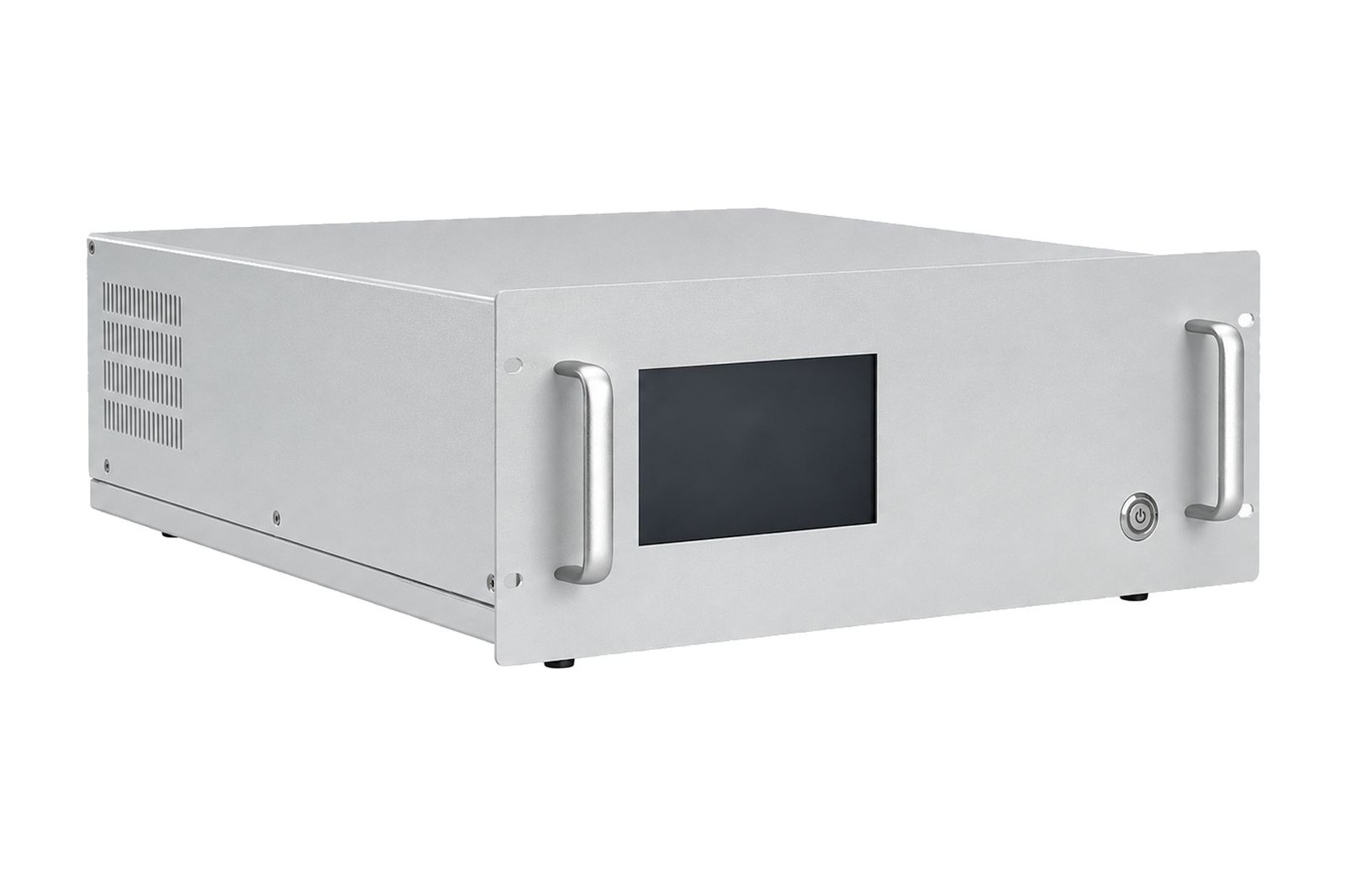
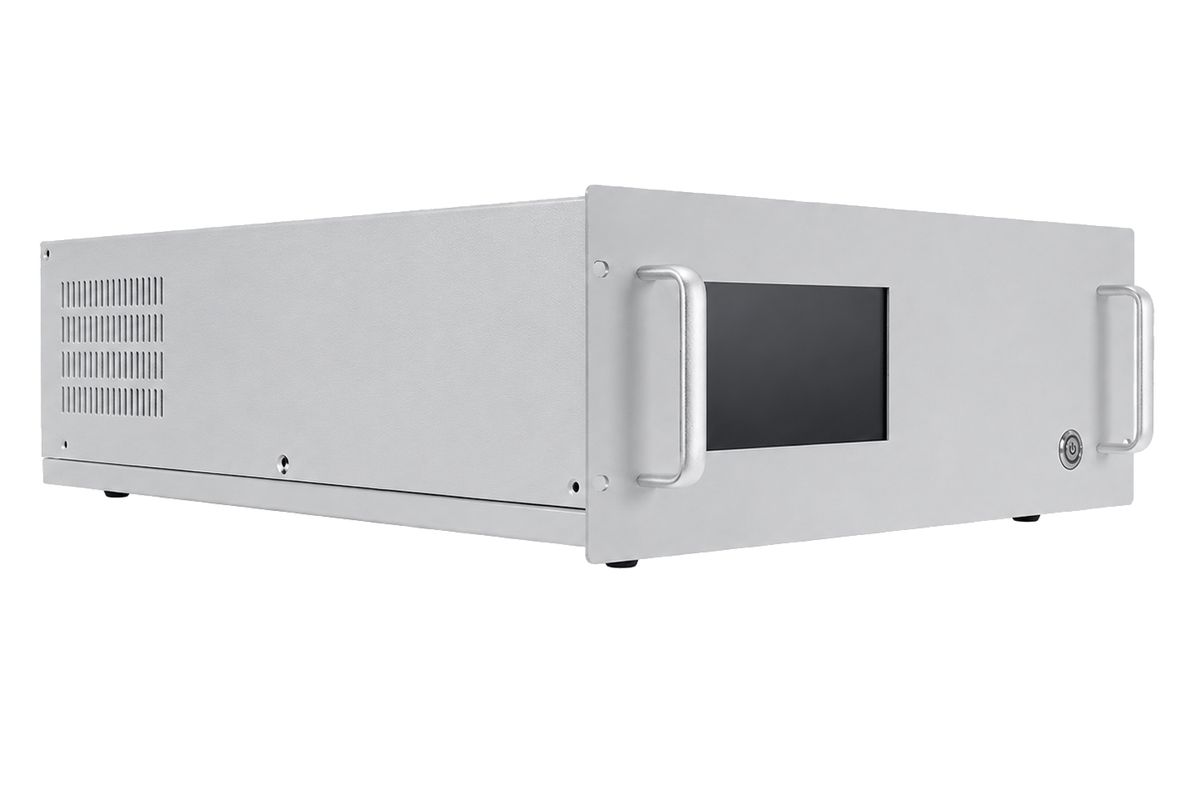
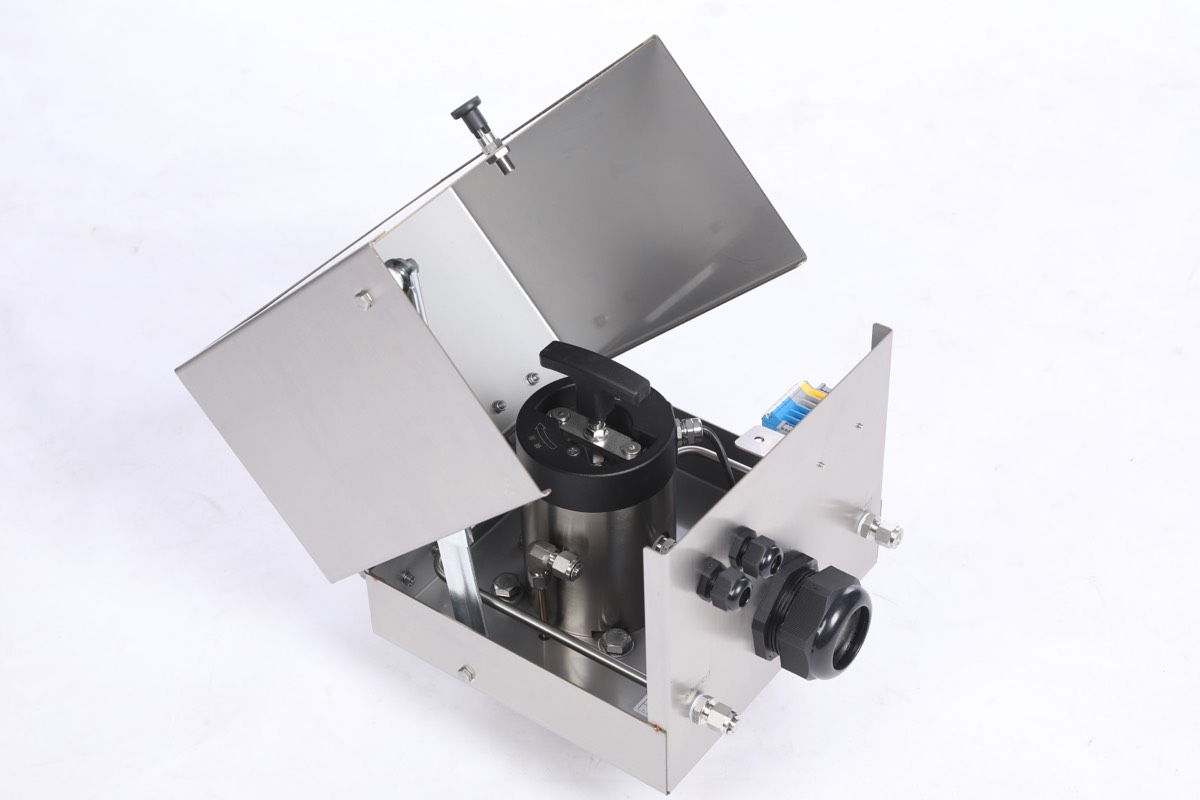


ZS-CEMS-300 Turnkey CEMS System
Complete emission monitoring: SO₂, NOₓ, CO, CO₂, O₂, dust, flow
- Gases
- SO₂, NOₓ, CO, CO₂, O₂
- Plus
- Dust, Flow, T, P
- Cert
- EN 14181 QAL1 scope · EPA · GB
- Availability
- >99.5%
Overview
Turnkey continuous emission monitoring system combining gas analyzers, dust monitor, flow meter, data acquisition, and automated calibration in a climate-controlled cabinet.
- All-in-one cabinet: analyzers + DAHS
- Automated zero/span/linearization
- Remote diagnostics via VPN
- Multi-regulation reporting (EU/EPA/GB)
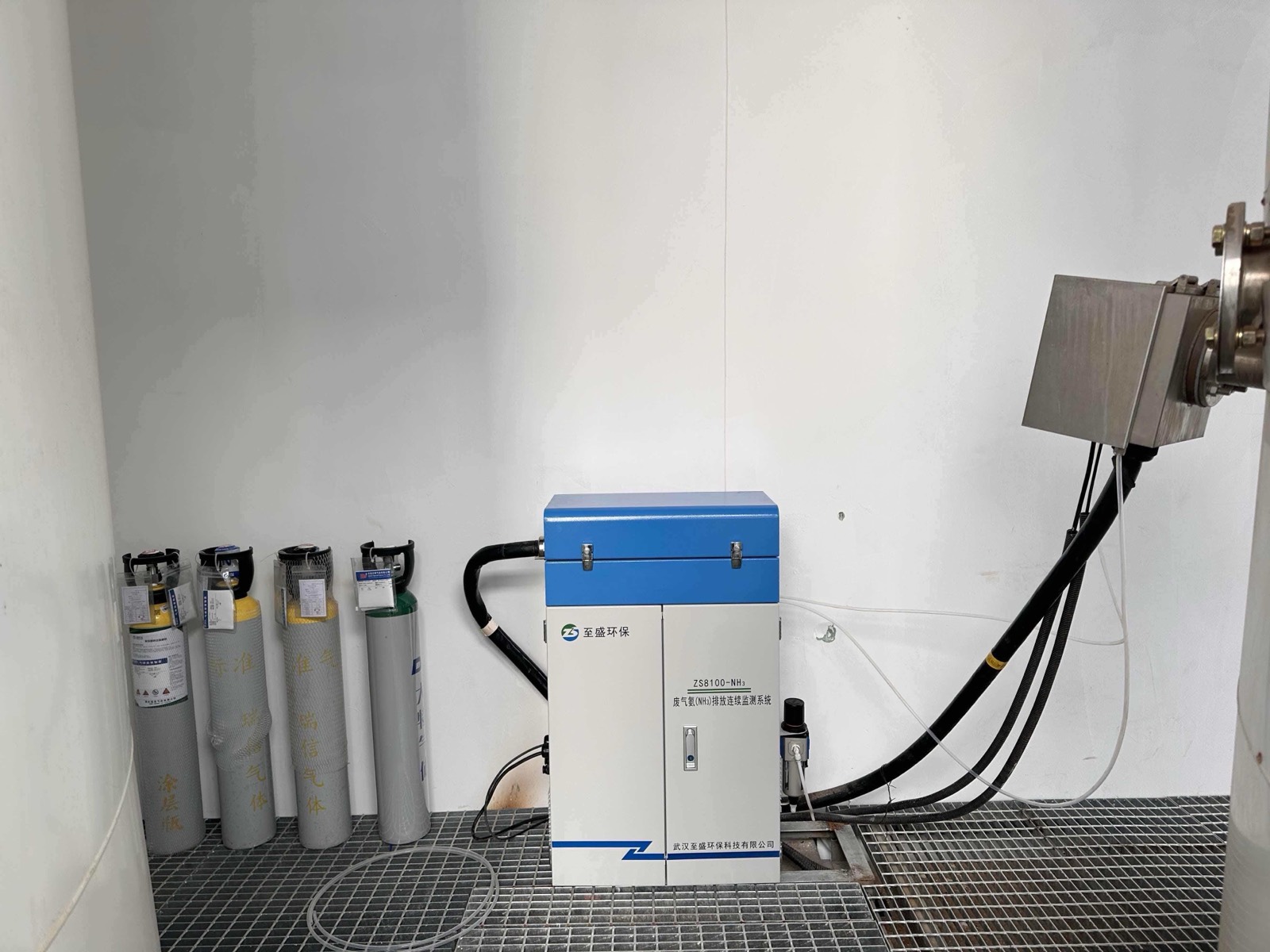
- Wall-mounted UV-DOAS alternative available by project review if cabinet footprint is unavailable or NH₃/Cl₂ must sit in the same unit
Full Technical Specifications
Key Performance
| Metric | Value | Status |
|---|---|---|
| Gases | SO2, NOx, CO, CO2, O2 | confirmed |
| Plus | Dust, Flow, T, P | confirmed |
| Technology | NDIR + UV-DOAS + Paramagnetic | confirmed |
| Availability | >99.5% | confirmed |
| DAHS | Integrated with 5-year data storage | confirmed |
Measurement
| Specification | Value |
|---|---|
| Gases | SO₂, NOₓ, CO, CO₂, O₂ (standard) |
| Plus | Dust, Flow, Temperature, Pressure |
| Technology | NDIR (CO/CO₂) + UV-DOAS (SO₂/NOₓ) + Paramagnetic (O₂) |
| Accuracy | Per EN 15267-3 QAL1 for each channel |
| Availability | >99.5 % |
Physical
| Specification | Value |
|---|---|
| Dimensions | 800 × 2000 × 600 mm (floor-standing cabinet) |
| Weight | 380 kg |
| Housing | Climate-controlled steel cabinet IP54 |
| Sampling | Complete heated extractive system included |
Electrical
| Specification | Value |
|---|---|
| Power | 230 VAC single-phase 50/60 Hz, 2.5 kW (incl. cabinet climate + heated lines) |
| Analog Output | 8 × 4–20 mA |
| Digital | Modbus TCP, OPC-UA, RS-485 |
| DAHS | Integrated with 5-year data storage |
| Display | 15″ industrial HMI touchscreen |
Environmental
| Specification | Value |
|---|---|
| Ambient Temp | −30 °C to +50 °C (cabinet heated/cooled) |
| Sample Temp | 180 °C heated line |
| Stack Temp | Up to 400 °C at probe |
| Calibration | Fully automated zero/span/linearization |
Certifications
| Specification | Value |
|---|---|
| CEMS | EN 14181 QAL1 scope (all channels) — certificate per project |
| EPA | 40 CFR 60/75 field-demonstrated |
| Chinese | HJ 76-2017 |
| TÜV | Type-test scope — confirmed per project |
| MCERTS | MCERTS scope — confirmed per project |
Where This Analyzer Fits
This model is mapped to the following industry applications and process duties.
Deployment Environments
Common process environments where this model is evaluated.
Certification Scope
Standards are listed with scope and status so engineering review can verify the applicable enclosure, area, and safety case.
| Standard | Scope | Variant | Status | Document |
|---|---|---|---|---|
| EN 14181 QAL1 | CEMS scope listed in specifications, certification detail, downloads, and certification badges | Project variant | conditional | Certificate extract on request when in order scope |
| EN 15267-3 | Standard listed in certification detail | Project variant | conditional | Certificate extract on request when in order scope |
| EPA 40 CFR 60 / 75 | Site-level performance test demonstrated after installation | Project variant | conditional | Field demonstration per project |
| HJ 76-2017 / GB/T 16157 | Chinese standards listed in specifications and certification detail | Project variant | conditional | Certificate extract on request when in order scope |
| TÜV / MCERTS | Approvals listed in certification detail | Project variant | conditional | Certificate extract on request when in order scope |
Request Documentation
Request technical datasheets, user manuals, certificates, and application notes for this model.
Evidence Notes
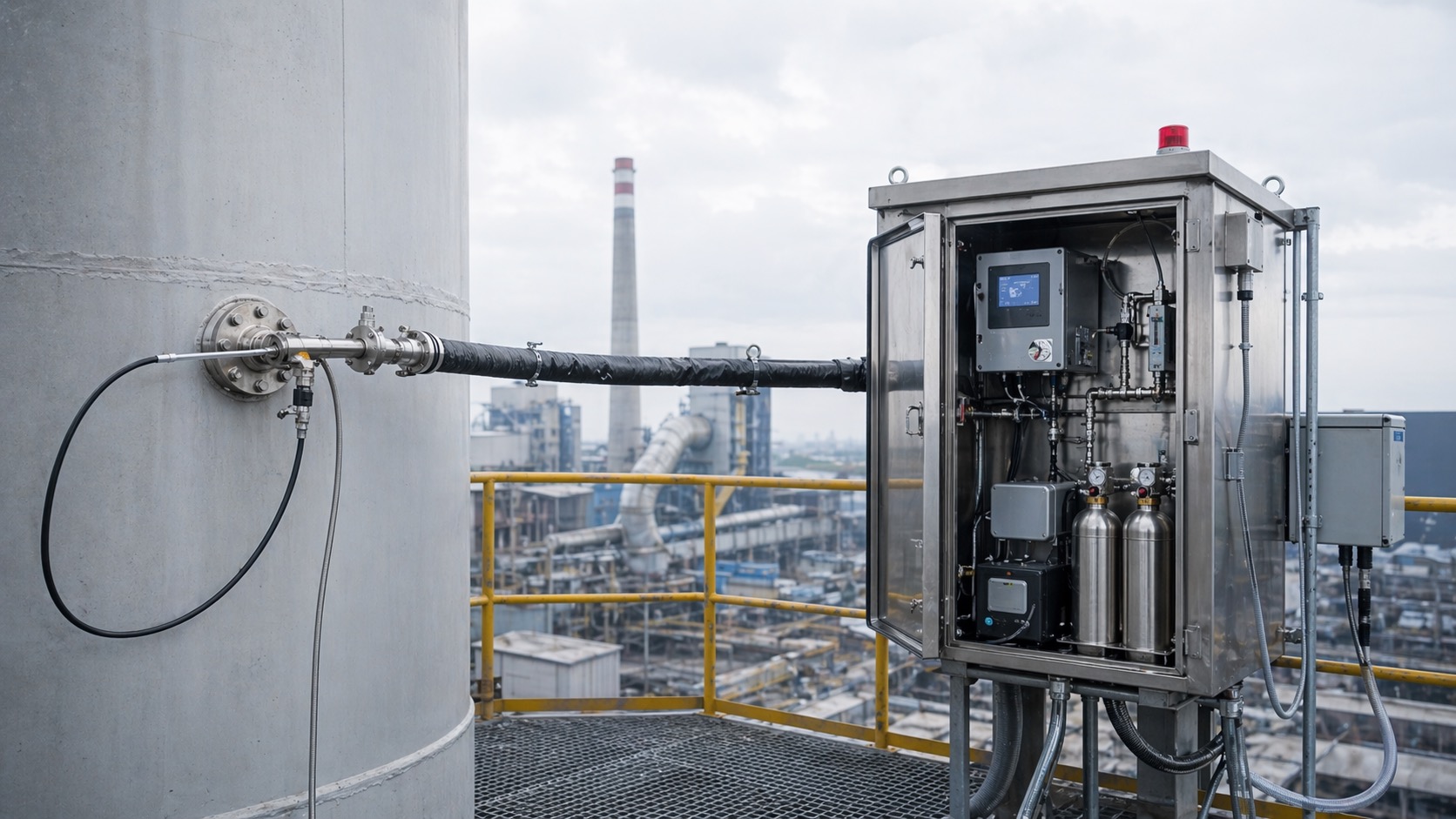
Turnkey CEMS architecture for cement kiln compliance programs
The cement scenario frames ZS-CEMS-300 as a cabinet CEMS with heated extractive sampling, multi-channel gas analysis, dust and flow instruments, DAHS, and automated calibration. The evidence is architecture fit for audit workflows, not a promised deployment duration or acceptance outcome.
Technical & Engineering Details
Secondary engineering detail — expand each topic for the full measurement, envelope, sample-system, calibration, integration, maintenance and application evidence.
01 Measurement Principle and Limits
How the measurement is bounded
Turnkey CEMS combines NDIR channels for CO/CO2, UV-DOAS channels for SO2/NOx, paramagnetic O2, heated extractive sampling, dust/flow instrumentation, DAHS, and automated calibration hardware.
Matrix Limits
- Channels beyond the declared gas list require project configuration
- Wet or high-particulate stacks outside heated sample-system assumptions
- Regulatory scope must match the site permit and local authority requirements
Requires
- Heated extractive sample probe, heated sample line, and sample conditioning kept within CEMS duty
- Certified reference gases and automated zero/span/linearity manifold for audit checks
- DAHS mapping to the required EU, EPA, GB, or site reporting format
Interferents and Limits
- NDIR CO/CO2 channels require humidity and cross-gas compensation review
- UV-DOAS SO2/NOx channels can require spectral-overlap review in mixed acid-gas matrices
- Paramagnetic O2 can be affected by strongly paramagnetic gases at unusual matrix levels
02 Operating Envelope
Use these limits as selection inputs, then confirm sample condition, ambient exposure, and materials before quotation.
- Stack probe duty above 400 C without sampling-system review
- Regulatory reporting without site permit, DAHS, and audit-scope review
- Gas channels beyond SO2, NOx, CO, CO2, and O2 without project configuration
03 Sample System Boundary
Sampling mode, conditioning components, and exclusions define where the analyzer responsibility ends and the sample system begins.
- heated sampling probe
- heated sample line
- sample conditioning
- gas analyzers
- dust monitor
- flow meter
- temperature and pressure sensors
- DAHS
- calibration gas manifold
- climate-controlled cabinet
- Not a portable safety detector or laboratory analyzer
04 Calibration & Validation site-specific
Calibration method, interval, traceability, and audit support for this analyzer.
Zero / Span Method
Automated zero/span/linearization using N2 and certified reference gases
Interval
Daily zero check, weekly span check, quarterly linearity verification
Linearity Check
Quarterly linearity verification
Span Gas Traceability
Certified reference gases
Audit Support
- EN 14181 QAL1 / QAL2 / QAL3 workflow
- EN 15267-3
- EPA 40 CFR 60
- EPA 40 CFR 75
- HJ 76-2017
- GB/T 16157
05 I/O & Integration
Signal outputs and communication interfaces for control-system integration.
Analog Output
8 × 4–20 mA
Digital
Modbus TCP, OPC-UA, RS-485
DAHS
Integrated with 5-year data storage
Display
15″ industrial HMI touchscreen
DAHS Review Note
Confirm protocol map, channel naming, alarm states, and reporting format during project integration review.
06 Maintenance & Spares site-specific
Routine service tasks, consumables, and access requirements for this analyzer; exact intervals are site-specific.
- Replace sample filters and check zero/span gas cylinders monthly
- Inspect optical paths and pump diaphragm quarterly
- Run annual calibration audit and sensor verification according to the site audit plan
- Verify DAHS report formats for EU, EPA, GB, or local permit requirements
- Sample filters
- zero gas
- span gases
- pump diaphragm service parts
- optical cleaning parts
07 Application Evidence
Application context from complex industrial environments.
Application Context
Cement plants with multi-kiln operations upgrading from manual stack testing to continuous monitoring under tightened EU-IED BAT-AEL face short audit windows, and integration with an existing kiln DAHS often blocks vendor lead times.
Architecture Response
A multi-kiln ZS-CEMS-300 architecture is planned around the audit window — installation and QAL2 acceptance coordinated with the accredited test house, while the integrated DAHS generates automated monthly emission-tax reports to support on-time BAT-AEL submission across the full kiln set.
Frequently Asked Questions
What is included in the turnkey CEMS?
Everything: heated sampling probe, heated sample line, sample conditioning, gas analyzers (SO₂, NOₓ, CO, CO₂, O₂), dust monitor, flow meter, temperature/pressure sensors, DAHS, calibration gas manifold, and climate-controlled cabinet.
Does it meet both EU and US EPA standards simultaneously?
The ZS-CEMS-300 is engineered to EN 14181 (EU), EPA 40 CFR 60/75 (US) and HJ 76-2017 (China) requirements; the applicable certificate set is confirmed per project, and EPA Performance Specifications are demonstrated on site after installation. The DAHS generates reports in all formats from the same dataset.
How does the automated calibration work?
The system performs daily zero check (N₂), weekly span check (certified reference gases), and quarterly linearity verification — all fully automated with results logged for QAL2/AST compliance.
What is the cabinet climate control range?
The cabinet maintains internal temperature between +15 °C and +30 °C in ambient conditions from −30 °C to +50 °C. This includes heating, cooling, and humidity control for instrument stability.
How long does installation take?
Typical installation is 2–3 weeks: 1 week mechanical/electrical, 1 week commissioning and QAL2 acceptance testing. Project engineering support is scoped during the project review.
What ongoing maintenance is required?
Monthly: sample filter replacement, zero/span gas cylinder check. Quarterly: optical cleaning, pump diaphragm inspection. Annual: full calibration audit, sensor verification. Annual maintenance cost depends on duty cycle and standard-gas usage — request a site-specific quote for budgetary planning.
Related & Alternatives
Alternative Solutions
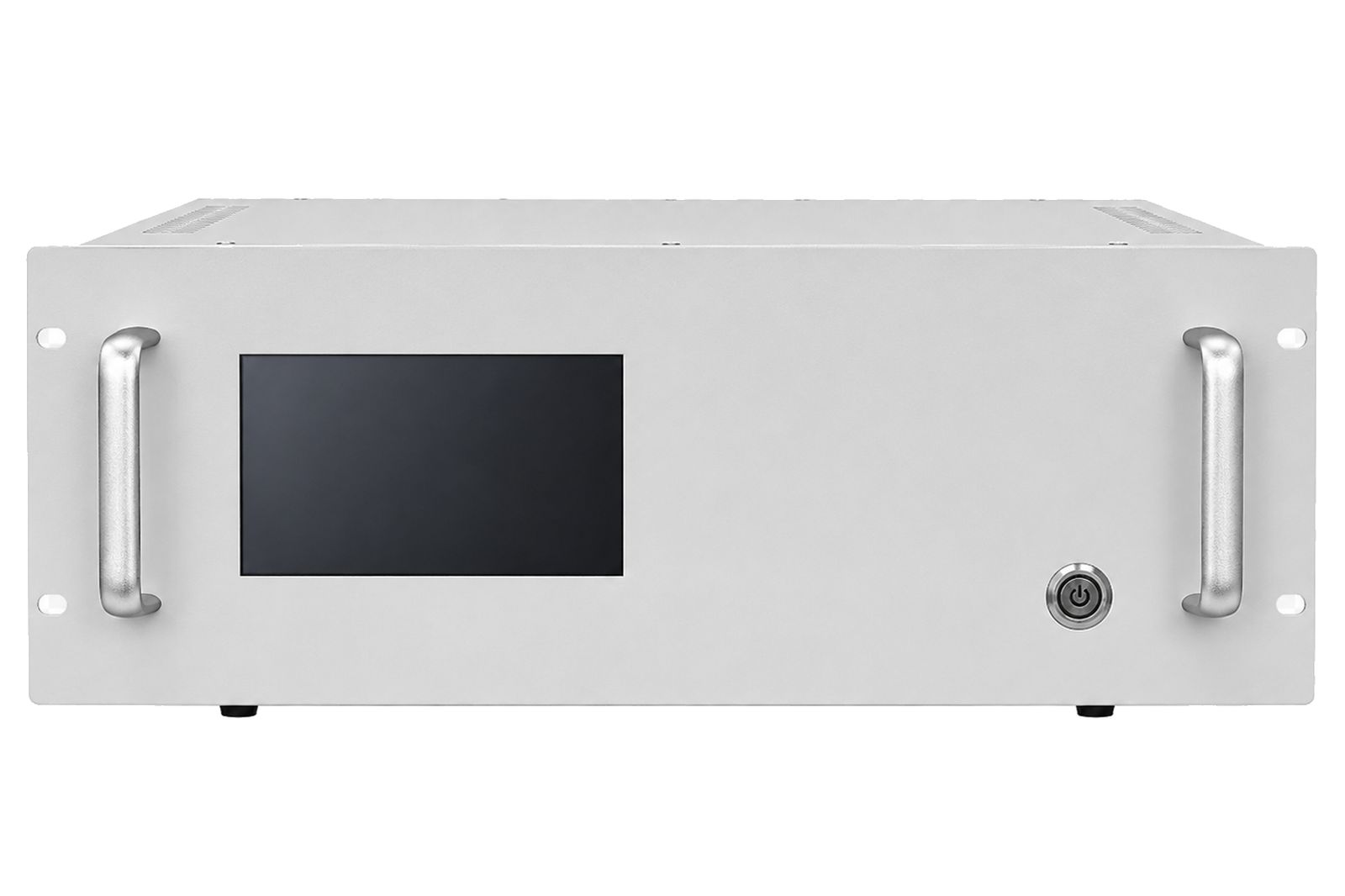
Related Measurement Technologies
Measuring more than just multi-gas? Explore complementary analytical categories.
 CO / CO₂
CO/CO₂ Analyzers
Non-dispersive infrared (NDIR) analyzers for carbon monoxide and carbon dioxide measurement in combustion control, emission monitoring, and indoor air quality applications.
View Products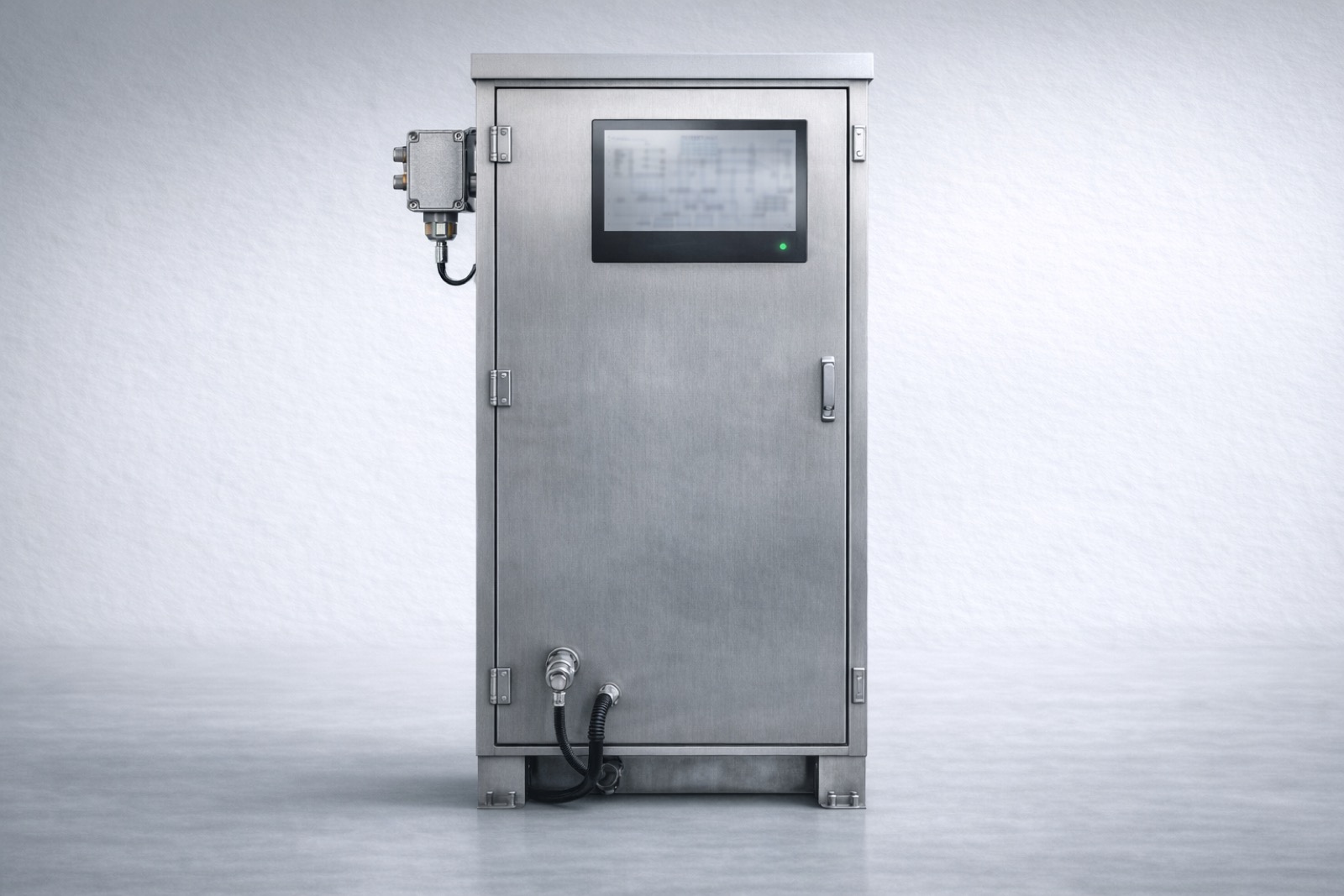 SO₂ / NOₓ
SO₂/NOₓ Analyzers
UV-DOAS and chemiluminescence analyzers for sulfur dioxide and nitrogen oxide measurement, essential for CEMS compliance and flue gas desulfurization control.
View ProductsCompare ZS-CEMS-300 with adjacent options
Review neighboring models by technology, range, accuracy basis, and form factor before moving to quotation.
When this model is preferred
Select ZS-CEMS-300 when its measurement principle, range, and form factor match the process duty and certification scope.
When to consider an alternative technology
Consider another analyzer when the gas matrix, sample temperature, hazardous-area scope, or reporting requirement falls outside the stated envelope.
Review ZS-CEMS-300 against site conditions
Send gas range, sample temperature, pressure, moisture, and certification needs before final model selection.


