
Environmental & Emissions Gas Analysis Solutions
Stack CEMS (SO₂ / NOₓ / HCl / HF / CO / VOC), waste incineration compliance, ambient air-quality, GHG MRV reporting, odor / H₂S, and fenceline monitoring.
Primary buyer: Environmental compliance officer + ambient air-quality regulator / operator + plant EHS / CEMS team
How Environmental & Emissions Buyers Think About Gas Analysis
Environmental buyers span three overlapping layers: stack-side CEMS on utility / industrial / incineration sources under 40 CFR Part 60 + EU IED, ambient air-quality stations under 40 CFR Part 50 + EU 2008/50/EC, and greenhouse-gas MRV reporting under 40 CFR Part 98 + EU ETS Regulation 2018/2066. Each layer has its own reference methods, certification regime (MCERTS / TUV / EN 15267 / EPA PS series), and instrument lineage. GESHINE packages these with UV-DOAS + CLD combined CEMS, UVF SO₂, GFC N₂O for MRV, heated FID for VOC / THC, and in-situ TDLAS process H₂S for odor-control / biogas duty.
Industry Challenges
- Stack CEMS (SO₂ / NOₓ / CO / CO₂ / O₂ / NH₃ slip) on power plants, industrial boilers, cement kilns, waste incinerators — QAL1 / QAL2 / QAL3 discipline under EN 14181
- Waste incineration compliance under EU IED BAT and China GB 18485 — adds HCl, HF, Hg to the stack duty list
- Ambient air-quality monitoring stations — sub-ppb SO₂ (UVF), sub-ppb NO₂ (CLD with photolytic converter), ppb O₃, PM correlation
- Greenhouse-gas MRV reporting under 40 CFR Part 98 / EU ETS — CO₂ (NDIR or GFC), CH₄ (NDIR / TDLAS), N₂O (GFC)
- Fenceline odor / H₂S monitoring at wastewater, pulp and paper, landfill, and sewage treatment
- VOC / total-hydrocarbon compliance under EPA Method 25A / EN 12619 — heated FID is the regulatory reference
- Mercury (Hg) CEMS under EPA Part 63 for utility boilers and cement plants (Hg path served through partner instruments, scoped per project)
Key Gases for Environmental & Emissions
Tap any gas to see the analyzer family, technology options, and selection guide for that measurement target.
SO₂
Sulfur Dioxide
Stack CEMS (Method 6C) and ambient reference method (40 CFR Part 50 App A) — UVF and UV-DOAS deployed depending on duty.
View SO₂ / NOₓ analyzersNOₓ
Nitrogen Oxides
Stack CEMS (Method 7E) and ambient reference (40 CFR Part 50 App F) — CLD is the reference chemistry.
View SO₂ / NOₓ analyzersHCl / HF
Acid Gases
Waste incineration abatement verification — TDLAS with heated Hastelloy / Monel sampling.
View HCl analyzersVOC / THC
Total Hydrocarbons
Method 25A compliance and process-vent reporting — heated FID is the regulatory reference.
View Total Hydrocarbon analyzersN₂O
Nitrous Oxide
GHG MRV under 40 CFR Part 98 / EU ETS for nitric-acid plants, adipic-acid plants, and N₂O abatement — GFC infrared.
View N₂O analyzersH₂S
Hydrogen Sulfide
Odor-control, biogas and landfill H₂S monitoring — in-situ cross-stack TDLAS.
View H₂S analyzersCO / CO₂
Carbon Monoxide / Dioxide
Combustion CEMS, GHG MRV, ambient background — NDIR family.
View CO / CO₂ analyzersO₂
Oxygen
Stack CEMS diluent correction for SO₂ / NOₓ / CO, combustion completeness on waste-incineration lines, and inerting verification on process-vent abatement loops.
View Oxygen analyzersNH₃
Ammonia Slip
Post-SCR / SNCR slip monitoring on waste-incineration, cement, and industrial boiler DeNOx — TDLAS process or UV-DOAS CEMS options.
View Ammonia analyzersSKUs for Environmental & Emissions Duty
Analyzers frequently selected for Environmental & Emissions duty — chosen for the gases, process conditions, and compliance targets typical of this vertical.
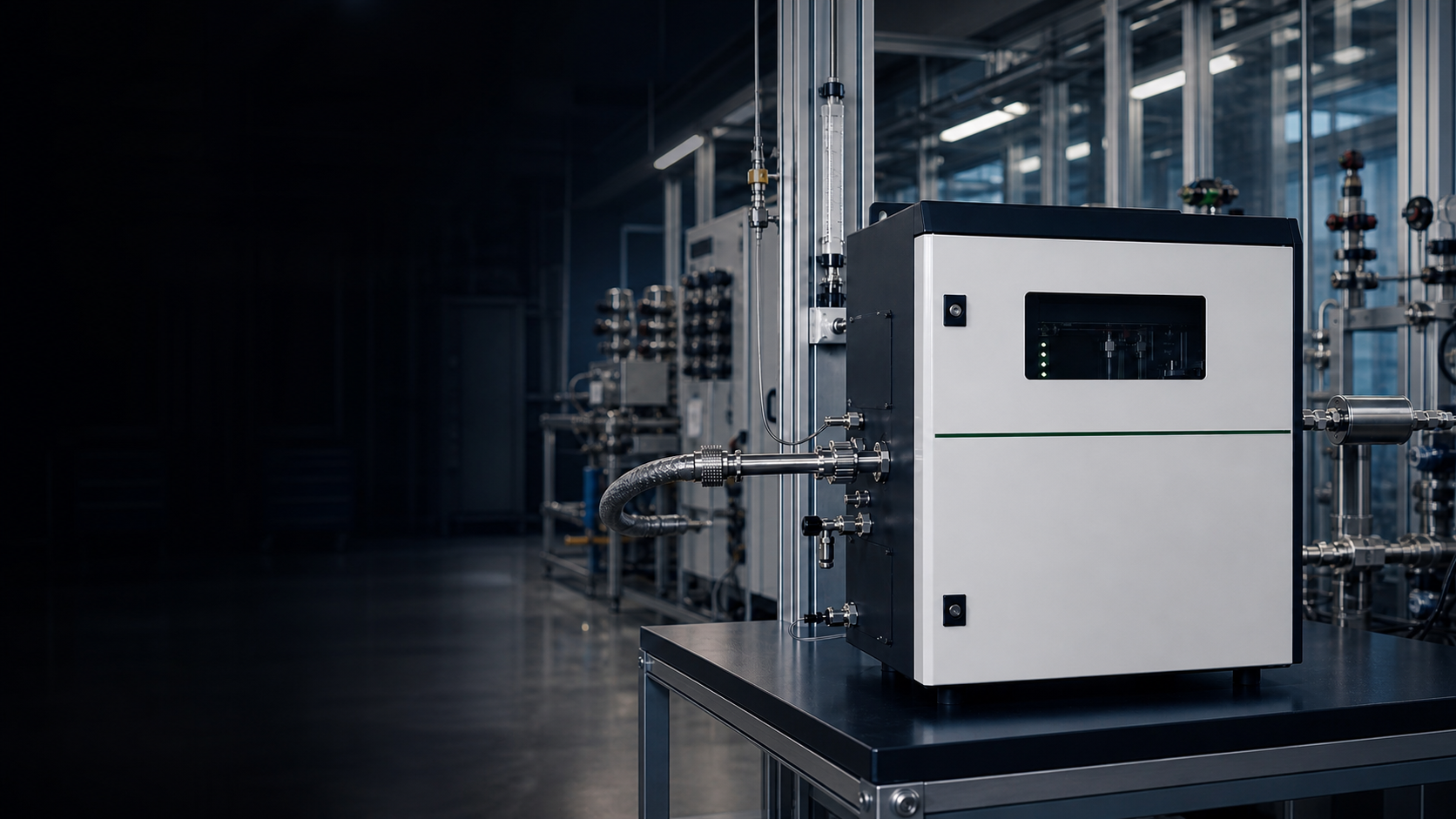 ZS-CEMS-200
ZS-CEMS-200 CEMS SO₂/NOₓ Analyzer
UV-DOAS emission analyzer for continuous SO₂ and NOₓ compliance.
Combined UV-DOAS + CLD CEMS rack for utility / industrial / incineration stack SO₂ / NOₓ / NO₂.
ZS6200-SO2 / ZS6100-NOxZS6200-SO2 / ZS6100-NOx Process SO₂/NOₓ Analyzer
UV fluorescence process analyzer for real-time SO₂ and NOₓ control.
UVF SO₂ + CLD NOₓ reference-method platform for Method 6C / 7E stationary-source reporting.
ZS6500-N2OZS6500-N2O Process Nitrous Oxide Analyzer
GFC infrared nitrous oxide analyzer for greenhouse-gas MRV under 40 CFR Part 98 / EU ETS and N₂O abatement verification.
GFC infrared N₂O analyzer for GHG MRV under 40 CFR Part 98 / EU ETS on nitric-acid and adipic-acid plants.
ZS8300-H2SZS8300-H2S Process H₂S Analyzer
In-situ cross-stack TDLAS analyzer for H₂S in process and biogas gas streams; range configured per application.
In-situ cross-stack TDLAS H₂S analyzer for odor-control, wastewater, and biogas duty.
ZS8600-MGZS8600-MG Multi-Component Multi-Gas Analyzer
Multi-component multi-pass TDLAS analyzer for simultaneous incineration-stack emissions measurement.
Multi-gas extractive analyzer for incineration stack combined NDIR / UV path coverage on smaller plants.
ZS8100-O2ZS8100-O2 Process Oxygen Analyzer
High-accuracy paramagnetic / zirconia O₂ measurement for stack diluent correction.
Paramagnetic / zirconia process O₂ for stack CEMS diluent correction and combustion completeness on waste-incineration lines.
ZS8100-HClZS8100-HCl Process Hydrogen Chloride Analyzer
TDLAS diode-laser HCl analyzer with heated Hastelloy sampling for waste-incineration acid-gas CEMS.
TDLAS HCl analyzer with heated Hastelloy sampling for waste-incineration acid-gas CEMS.
ZS8100-HFZS8100-HF Process Hydrogen Fluoride Analyzer
TDLAS diode-laser HF analyzer with heated Monel / PFA sampling for incineration acid-gas abatement verification.
TDLAS HF analyzer with heated Monel / PFA sampling for waste-incineration acid-gas abatement verification.
Regulatory Framework for Environmental & Emissions
Standards that typically govern Environmental & Emissions monitoring specifications. Per-SKU certification details are listed on each product page.
- US EPA 40 CFR Part 50 — National Primary and Secondary Ambient Air Quality Standards (NAAQS)
- US EPA 40 CFR Part 60 — Standards of Performance for New Stationary Sources (NSPS)
- US EPA 40 CFR Part 63 — National Emission Standards for Hazardous Air Pollutants (NESHAP / MACT)
- US EPA 40 CFR Part 75 — Continuous Emission Monitoring Program (Acid Rain Program)
- US EPA 40 CFR Part 98 — Mandatory Greenhouse Gas Reporting
- EU 2010/75/EU — Industrial Emissions Directive (IED) / BAT-AEL
- EU 2008/50/EC — Ambient Air Quality Directive
- EU 2018/2066 — Regulation on Monitoring and Reporting (EU ETS MRV)
- EN 14181 — QAL1 / QAL2 / QAL3 for CEMS
- EN 15267 — Type approval for CEMS
- MCERTS — UK Environment Agency Certification of Environmental Monitoring Equipment
- China GB 16297 — Integrated emission standard for air pollutants; GB 18485 for waste incineration
Environmental & Emissions Field Experience
Deployments and typical profiles from environmental and emissions monitoring operations.
Chemical-Zone Integrated Ground–Air Monitoring Network
A representative integrated monitoring programme for a riverside chemical zone — a ground-based gas-analyzer grid at the core, extended with aerial patrols and analytics platforms delivered by ecosystem partners — built to close coverage blind zones, compress source attribution from days to under an hour, and drive down fugitive H₂S and VOC levels. GESHINE instruments serve the fixed analyzer layer.
Challenge
Chemical zones on major river basins struggle with fugitive VOC and H₂S emissions from multiple operators. Sparse ground-based stations leave blind zones that compromise emergency response; attributing a specific leak to a specific operator can take more than a day — too slow for either the basin water-protection authority or the zone’s own incident-response obligations.
Solution
- Aerial patrol coverage with multi-spectral sensor payloads (delivered with ecosystem partners) screening the zone footprint for multiple pollutant classes including VOCs, H₂S, and PM₂.₅
- Ground-based infrared gas analyzer stations placed on tank farms, waste-water outfalls, and prevailing-wind boundary points for continuous baseline measurement
- Analytics platform (partner-delivered) correlating live sensor streams into pollution-path maps and pushing early-warning alerts to plant and regulator dashboards
- Integration with the zone’s incident-response playbook so that a sensor excursion opens a workflow rather than a PDF report
Outcome
- Monitoring coverage extended across the zone footprint, closing the historical blind zones
- Source-attribution time compressed from more than a day to well under an hour
- Fence-line trends surface major leaks before plant-alarm thresholds would otherwise fire
- Fugitive emission events identified and closed out through a workflow rather than after-the-fact reports
- Sustained reduction in fence-line H₂S levels, supporting the basin’s compliance targets
- Lower manual patrol workload and O&M burden once continuous monitoring replaces routine walk-downs
Relevant GESHINE Models
Cross-Links Into the Main Catalogue
Explore the broader GESHINE catalogue by gas type or measurement technology.
Gas Categories
Need Engineering Support Around This Project?
Beyond analyzer selection, GESHINE supports system design, site delivery, and lifecycle service for installations like this.
Environmental & Emissions Gas Analysis FAQ
Questions commonly raised during procurement and specification for this industry.
What is the EN 14181 QAL1 / QAL2 / QAL3 framework?
EN 14181 is the European quality assurance framework for CEMS. QAL1 is type-approval of the analyzer by an accredited test house (e.g. MCERTS / TUV / DEKRA). QAL2 is the site-specific calibration of the installed analyzer against parallel reference-method measurements during commissioning. QAL3 is the ongoing zero / span drift monitoring that the plant operator performs between annual surveillance tests (AST). CEMS procurement should pin the target QAL1 certifications explicitly rather than accept marketing claims.
How does GHG MRV reporting differ from stack CEMS?
GHG MRV under 40 CFR Part 98 and EU ETS Regulation 2018/2066 focuses on cumulative greenhouse-gas mass (CO₂, CH₄, N₂O) tied to fuel and production records, whereas stack CEMS focuses on concentration limits for criteria pollutants (SO₂, NOₓ, CO, PM). Many sites run both: CEMS for compliance against hourly / daily limits, MRV reporting for annual inventory. The instrumental reference methods are different — MRV often accepts calculated emissions from fuel analysis plus continuous CO₂ validation, while CEMS requires approved analyzers throughout.
What analyzer combination covers a waste-to-energy plant stack?
A typical EU waste-to-energy stack runs: UV-DOAS or UVF for SO₂; UV-DOAS or CLD for NOₓ; TDLAS or FTIR for HCl (ZS8100-HCl with heated Hastelloy sampling); TDLAS or FTIR for HF (ZS8100-HF); heated FID for VOC / TOC (heated-FID total-hydrocarbon analyzer); and NDIR for CO / CO₂ / O₂ diluent. Mercury is typically handled via a partner-sourced continuous Hg analyzer; GESHINE does not currently offer an in-house Hg CEMS SKU.
Can ambient stations use the same analyzers as stack CEMS?
Only partially. Ambient duty runs at sub-ppb concentrations with long-interval stability under 40 CFR Part 50 reference-method definitions, which means ambient UVF SO₂ and CLD NOₓ instruments are tuned differently from stack-range versions — different reaction-cell geometry, different sample flow, different zero-gas discipline. The technology family is shared (UVF, CLD, NDIR) but the individual instruments are not interchangeable between stack and ambient duty.
What about fenceline and odor monitoring?
H₂S process monitoring at wastewater / pulp / landfill / biogas sites — on digester off-gas, scrubber vents and enclosed collection ducts where a defined optical path exists — uses the in-situ cross-stack TDLAS H₂S analyzer (ZS8300-H2S class), reading H₂S directly across the process gas with no extractive sample train or consumable. Open-air fenceline and perimeter ppb odor monitoring is a distinct ambient duty, served by referenced gold-film or electrochemical methods that can feed a wireless / 4G-uplinked network and a wind-rose-correlated odor model. ZS8600-MG provides a multi-gas cabinet variant for smaller footprints.
What is a greenhouse gas (GHG) analyzer for stack and MRV reporting?
A greenhouse gas analyzer continuously measures the regulated GHG species at a stack — primarily CO₂, with N₂O and CH₄ where the source and fuel require them — for monitoring, reporting, and verification (MRV) under frameworks such as 40 CFR Part 98, the EU ETS (Regulation 2018/2066), and national ETS schemes. CO₂ is typically measured by NDIR and N₂O by gas-filter-correlation infrared; the concentration data combines with stack flow, O₂ / dilution, and QA records in the DAHS to produce the reportable mass-emission rate. GESHINE supplies a CO₂ (NDIR) channel that supports greenhouse-gas reporting where the installed CEMS and QAL scope allow, and an N₂O (GFC) channel as a project-scoped measurement with certification and approval confirmed per project — not a blanket certified channel. See the carbon-dioxide analysis and nitrous-oxide analysis pages for per-gas detail.
Don’t see your scenario? Send the plant, duty, and regulatory framework and application engineering will respond within 48 hours.
Scope an Environmental Monitoring Project
Share the monitoring layer (stack CEMS, ambient air-quality, GHG MRV, fenceline / odor, waste incineration), the target species, the regulatory framework (EPA Part 50 / 60 / 63 / 75 / 98, EU IED BAT, EN 14181 QAL1–QAL3, MCERTS, China GB), and the site conditions. GESHINE application engineers will scope the analyzer stack and certification pathway and return an RFQ within 48 hours.
- Monitoring layer (stack CEMS / ambient / GHG MRV / fenceline / incineration)
- Target species and concentration envelope
- Regulatory framework (see standards list above)
- CEMS vs process duty / safety path
- Sample conditioning envelope (temperature, dust, dew point, corrosives)
- Quantity, project timeline, and integration partner
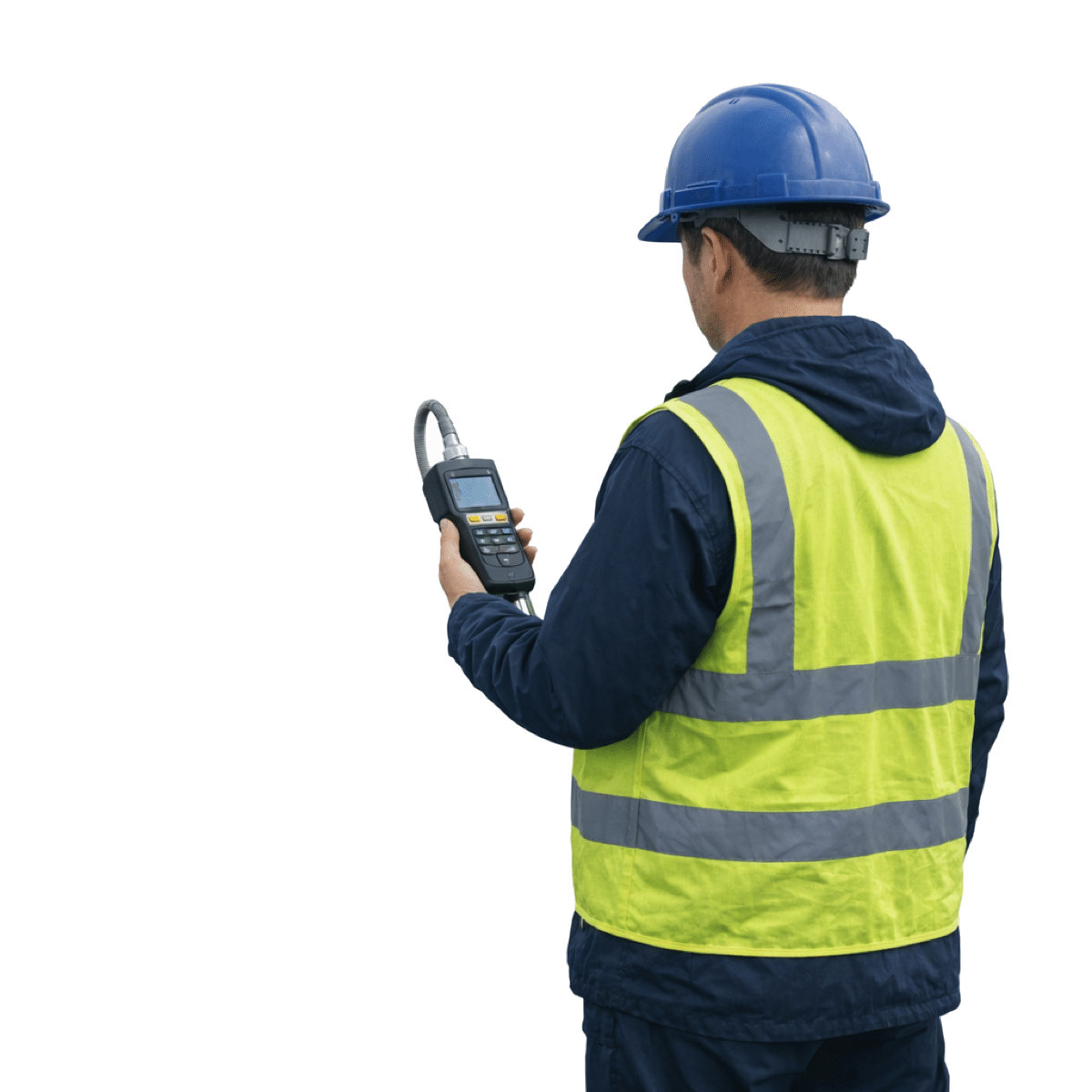
Environmental & Emissions Application Consultation
Application engineering will scope the analyzer stack, sampling skid, and certification pathway for your environmental and emissions monitoring duty.


