

FTIR Gas Analysis: Method, Limits, and the TDLAS Alternative
How Fourier Transform Infrared spectroscopy works · what it measures well · where its validation burden bites · and why GESHINE routes multi-gas hardware to configured TDLAS
Fourier Transform Infrared (FTIR) is a full-spectrum infrared method: a Michelson interferometer records a broadband IR signature, and chemometric models deconvolve overlapping bands into individual IR-active gas concentrations. This guide explains the physics, the calibration and validation work the method demands, and how it compares to single-line TDLAS for real measurement duties.
GESHINE discusses FTIR here as method context only. GESHINE does not manufacture or sell FTIR hardware — our multi-gas measurement hardware uses configured multi-pass TDLAS. Any resolution, range, or sensitivity figures on this page are typical and vendor-dependent, not a GESHINE specification.
Where FTIR Is Useful — and What Validation It Demands
FTIR is a powerful multi-component infrared method, but each strength carries a validation burden. Below are the situations where engineers commonly evaluate FTIR, paired with the verification work each one requires. GESHINE discusses FTIR as method context and does not supply FTIR hardware; for multi-gas measurement, GESHINE scopes configured multi-pass TDLAS.
Many IR-Active Components at Once
A single FTIR acquisition records the full mid-IR spectrum, so several IR-active species — CO, CO₂, NO, NO₂, N₂O, SO₂, HCl, HF, NH₃, H₂O — can be quantified from one measurement cycle. Diatomic homonuclear gases (O₂, N₂, H₂, Cl₂) are IR-inactive and need a different method.
Every reported component needs its own calibration model and verification gas. Channel count is bounded by what the chemometric model was trained on, not by the cell itself — the realistic component list is vendor- and application-dependent.
Low-Level Detection on Long-Path Cells
A long-path (multi-pass) sample cell increases optical path length, which can push gas-dependent limits of detection into the low-ppm or, for some species, sub-ppm range. This is often why FTIR is considered for trace acid gases such as HCl and HF.
Detection limits are gas-specific and matrix-dependent — figures vary by vendor and configuration, so any quoted LOD is illustrative, not a fixed spec. Margin against permit limits (e.g. EU BAT-AEL, US MACT) must be demonstrated per component on the actual matrix.
Resolving Overlapping IR Bands
PLS / CLS chemometric deconvolution uses each gas’s full IR fingerprint, so spectrally overlapping species (H₂O vs HCl, NO vs CO, NH₃ vs H₂O) can be separated mathematically rather than by optical filters — useful in hot, wet flue-gas matrices.
Deconvolution accuracy depends entirely on a calibration model that has seen representative interferent levels. Water vapor in particular must be modeled; an under-trained model can produce false-high or biased readings, so cross-interference performance must be checked against the real flue composition.
One Spectrum, One Calibration Model
Because all components are read from the same spectrum, a single chemometric calibration can cover the modeled channel list, and routine plant work is typically zero verification plus a span check on critical components.
The shared model is also a single point of failure: it must be maintained, periodically re-validated, and re-built if the matrix or component list changes. Regulatory programs (e.g. QAL2/QAL3 under EN 14181) still require ongoing verification regardless of method.
Re-Analyzing Spectra for New Species
Because the full IR spectrum is recorded, an additional IR-active species can in principle be added by extending the calibration model rather than installing new optics — relevant when a previously unregulated pollutant later needs reporting.
“Add a channel by software” still requires a fresh calibration with verification gases for the new species, plus re-validation that adding it did not bias existing channels. It is a metrology task, not a free feature.
How FTIR Works: Michelson Interferometer & Multivariate Calibration
From broadband IR source to deconvolved gas concentration — four physical stages, no moving optical filters.
Fourier Transform Infrared (FTIR) spectroscopy modulates a broadband IR source through a Michelson interferometer and recovers the full IR spectrum from the resulting interferogram — so one acquisition captures every IR-active gas simultaneously, not one band at a time.
A Michelson interferometer modulates a broadband IR source across all wavelengths simultaneously. The resulting interferogram is Fourier-transformed into a full IR spectrum — spectral range and resolution are typical, vendor-dependent figures (often around 4000–400 cm⁻¹ at roughly 1 cm⁻¹ for process instruments). Each gas absorbs at characteristic wavenumbers; multivariate calibration (PLS / CLS) deconvolves overlapping bands into individual concentrations.
In principle, finer resolution helps separate species whose bands overlap — for example HCl from H₂O and NH₃ from H₂O, two of the hardest deconvolutions in wet flue gas. Because FTIR records the whole spectrum at once, a single acquisition can in theory address many IR-active gases, but the achievable accuracy depends entirely on the chemometric model, reference library, and matrix-specific validation rather than on the optics alone.
FTIR Measurement Pipeline
Example IR-Active Gases FTIR Can Address
FTIR can resolve gases with infrared-active vibrational bands. The examples below are illustrative of common emissions and process species — actual gas list, ranges, and detection limits are vendor- and calibration-dependent, and FTIR cannot detect homonuclear diatomics such as O₂, N₂, or H₂.
| Gas | Illustrative Range* | Typical Application Context |
|---|---|---|
| CO | 0–500 ppm | Combustion efficiency, CEMS |
| CO₂ | 0–20 vol% | Combustion / process |
| NO | 0–500 ppm | NOₓ CEMS |
| NO₂ | 0–200 ppm | NOₓ speciation |
| N₂O | 0–100 ppm | Waste incineration / nitric acid |
| SO₂ | 0–500 ppm | SOₓ CEMS, FGD outlet |
| HCl | 0–50 ppm | Waste incineration EU BAT 50 |
| HF | 0–10 ppm | Aluminium / cement / incineration |
| NH₃ | 0–100 ppm | SCR ammonia slip |
| H₂O | 0–40 vol% | Wet-basis correction |
| CH₄ | 0–500 ppm | Greenhouse gas monitoring |
| C₂H₄ | 0–500 ppm | Ethylene cracker |
*Illustrative only — ranges and detection limits depend on the specific FTIR instrument, optical path length, spectral resolution, and chemometric calibration, and vary by vendor. This table is method context, not a GESHINE specification. For multi-gas measurement projects, GESHINE scopes configured multi-pass TDLAS rather than FTIR hardware.
FTIR vs NDIR vs UV-DOAS vs TDLAS: How the Methods Differ
A reference look at how each spectroscopic method handles a gas matrix. FTIR is a capable multi-component laboratory and reference technique; for field multi-gas measurement, GESHINE builds and supplies configured multi-pass TDLAS rather than FTIR hardware.
| Dimension | FTIR (reference method) | NDIR | UV-DOAS | TDLAS (GESHINE route) |
|---|---|---|---|---|
| Principle | Broadband IR + interferometer + multivariate calibration | Single-band IR with optical filter | Differential UV absorption spectroscopy | Narrow-line laser absorption; configurable multi-pass cell, line per target gas |
| Range | ppb–vol%, gas-dependent (typical, vendor-dependent) | ppm–vol% | ppb–ppm for UV-active species | ppb–vol%, configured per target gas |
| Accuracy | Application-dependent; relies on chemometric model validation | ±1–2% FS typical | ±2% FS typical | High selectivity per line; confirmed at engineering review |
| Response Time | 10–60 s (depends on flow & cell volume) | 15–60 s | 10–30 s | <1–10 s (configuration-dependent) |
| Best For | Multi-component reference analysis; low-ppm IR-active pollutants in a lab/reference role | One or two well-defined IR-active gases (CO, CO₂, CH₄) | SO₂, NO, NO₂, H₂S, Cl₂ — UV-active species | Field multi-gas and CEMS duty via configured multi-pass cells; high cross-interference rejection |
| Limitations | Higher upfront cost; ongoing chemometric model upkeep; trained operator preferred | One filter per gas — scales poorly for 4+ components | No coverage of IR-only species (CO, CO₂, CH₄, HF) | One laser line per target; gas set defined during scoping |
Where FTIR Is Typically Used
- Reference or laboratory analysis covering many IR-active species at once
- Speciation of low-ppm IR-active pollutants in a wet, mixed matrix
- Multivariate deconvolution where chemometric model upkeep is acceptable
- Note: GESHINE discusses FTIR as method context and does not supply FTIR hardware
- For single-component duty, see NDIR Gas Analyzers or UV-DOAS Gas Analyzers.
How GESHINE Handles Multi-Gas
- GESHINE supplies configured multi-pass TDLAS for field multi-gas duty, not FTIR hardware
- A laser line is selected per target gas, giving high selectivity and low cross-interference
- The target gas set and ranges are defined together during engineering scoping
- Suited to field, process, and CEMS environments without lab-grade operator overhead
- Compare the configured TDLAS path on Multi-Gas Analyzers.
GESHINE Multi-Gas Hardware Path: Configured TDLAS
GESHINE does not build FTIR instruments. When the real goal is multi-gas measurement, GESHINE scopes configured multi-pass TDLAS and CEMS paths rather than an FTIR purchase.
From FTIR Method to a Real Hardware Decision
If your goal is multi-gas measurement rather than an FTIR instrument purchase, GESHINE scopes configured multi-pass TDLAS and CEMS paths on the multi-gas analyzer page. FTIR remains useful as a reference method for understanding full-spectrum IR and chemometric trade-offs, but the GESHINE hardware route for multi-component duty is TDLAS-based.
When To Route To Configured TDLAS- Stack or process streams that need several gas components measured together
- CEMS shelters where integration, sampling, and reporting matter more than the optical method label
- Projects weighing FTIR against TDLAS and wanting an engineering view of validation burden
- Hot, wet, or interference-prone matrices where method fit should be reviewed before specifying
Why TDLAS, Not FTIR
This page explains FTIR as a measurement method, not as a GESHINE product. For multi-component hardware, GESHINE delivers configured multi-pass TDLAS through the Multi-Gas Analyzers family, sized to the target gases and matrix instead of duplicating a generic spec sheet here.
Where FTIR Is Commonly Evaluated
Six settings where teams typically weigh a multi-component FTIR against single-gas instruments. If your goal is multi-gas measurement rather than an FTIR instrument purchase, GESHINE scopes configured multi-pass TDLAS and CEMS paths for these same duties.
CEMS / Power
Boiler stack multi-pollutant CEMS
Waste Incineration
EU BAT 50 HCl / HF / NH₃ / N₂O compliance
Semiconductor
Process gas monitoring & abatement outlet
Petrochemical
Ethylene cracker, mixed hydrocarbon streams
Research / Pilot
Catalyst evaluation, combustion R&D
Cement & Lime
Kiln stack multi-pollutant + NH₃ slip
Most of these duties are multi-pollutant stack and process-gas monitoring. For those, GESHINE delivers configured multi-pass TDLAS and CEMS scopes rather than FTIR hardware — send us your target gases, sample matrix, moisture, and reporting duty and we will map the right measurement path.
FTIR Method FAQ
How FTIR gas analysis works, where it fits against NDIR and TDLAS, and how GESHINE handles multi-gas measurement — answered straight.
Does GESHINE sell FTIR gas analyzers?
No. GESHINE’s core technology is TDLAS, and we do not manufacture FTIR hardware. This page explains FTIR as a measurement method so you can compare it fairly against the techniques we do build. When the goal is multi-gas measurement, GESHINE delivers it on a configured multi-pass TDLAS path rather than an FTIR instrument.
What is FTIR and how does it measure gas?
Fourier-Transform Infrared (FTIR) spectroscopy passes broadband infrared light through a sample cell and records how much each wavelength is absorbed. A Michelson interferometer modulates the beam, and a Fourier transform converts the raw interferogram into a full IR absorption spectrum. Because every IR-active molecule has a distinct fingerprint, one spectrum can carry information about many gases at once.
Which gases can FTIR detect — and which can it not?
FTIR sees IR-active molecules — those whose vibration changes the dipole moment, such as CO, CO₂, NO, NO₂, N₂O, SO₂, HCl, HF, NH₃, CH₄, and H₂O. Homonuclear diatomics like O₂, N₂, and H₂ are IR-inactive and cannot be measured by infrared absorption at all; those need a different principle (paramagnetic, electrochemical, or thermal-conductivity).
How does FTIR separate gases whose IR bands overlap?
FTIR relies on chemometrics — multivariate models such as PLS (Partial Least Squares) or CLS (Classical Least Squares) that fit the full spectral region rather than a single peak. Overlaps like H₂O against HCl, or NO against CO, are resolved mathematically against reference spectra recorded at the same temperature and pressure. The trade-off is a heavier validation burden: each model has to be built and maintained for the specific matrix it will see.
FTIR vs NDIR — when does the extra complexity pay off?
NDIR is a fixed-wavelength method: simple, rugged, and cost-effective for one or two well-defined gases such as CO and CO₂. FTIR captures the whole spectrum, so it can address many IR-active components at once and add a new component by re-modelling rather than re-engineering hardware. That flexibility comes with more optics, more chemometric maintenance, and a higher cost of ownership — so NDIR usually wins for narrow duties, FTIR for broad multi-component work.
FTIR vs TDLAS — what is the difference?
TDLAS scans a single narrow laser line across one absorption feature, which gives very high selectivity, fast response, and excellent stability for a targeted gas. FTIR scans the broadband spectrum, which suits surveying many components but carries more validation overhead. For multi-component measurement, GESHINE configures multi-pass TDLAS to extend the optical path and cover several target gases — see the multi-gas analyzers page for that hardware path.
What sample conditioning does an FTIR measurement require?
For hot, wet, dust-laden flue gas, FTIR (like most extractive methods) needs a heated sample line and heated filter — typically around 180 °C — to keep condensable and water-soluble species such as H₂O, HCl, HF, and NH₃ in the gas phase all the way to the cell. The same conditioning discipline applies whichever spectroscopic technique you choose; the sampling system is sized to the stack temperature and dust load, not to the analyzer brand.
We need multi-gas CEMS — what should we ask GESHINE for?
Start from the measurement requirement, not the instrument type. Tell us your target gases, the background matrix, moisture, interference risks, and the reporting duty (permit limits, regulation). GESHINE then scopes a configured multi-pass TDLAS or CEMS solution against those needs — and is happy to discuss where FTIR as a method would or would not be the better fit for your application.
Get an Engineering Review: FTIR Method vs GESHINE TDLAS
GESHINE does not sell FTIR hardware. If you are weighing the FTIR method against a configured multi-pass TDLAS or CEMS path, share your application and our engineers will compare what each method actually demands. Helpful details to have ready:
- Target gases & expected concentration range for each component
- Sample matrix & background gases (stack composition, balance gas)
- Moisture content & wet vs dry reporting basis
- Known spectral interference risks & cross-sensitivity concerns
- Reporting duty & regulatory framework (EU BAT / EPA / GB)
- Process temperature, pressure & dust loading
- Hazardous area classification (ATEX zone) if applicable
- Existing analyzer stack to replace or augment, and output protocols
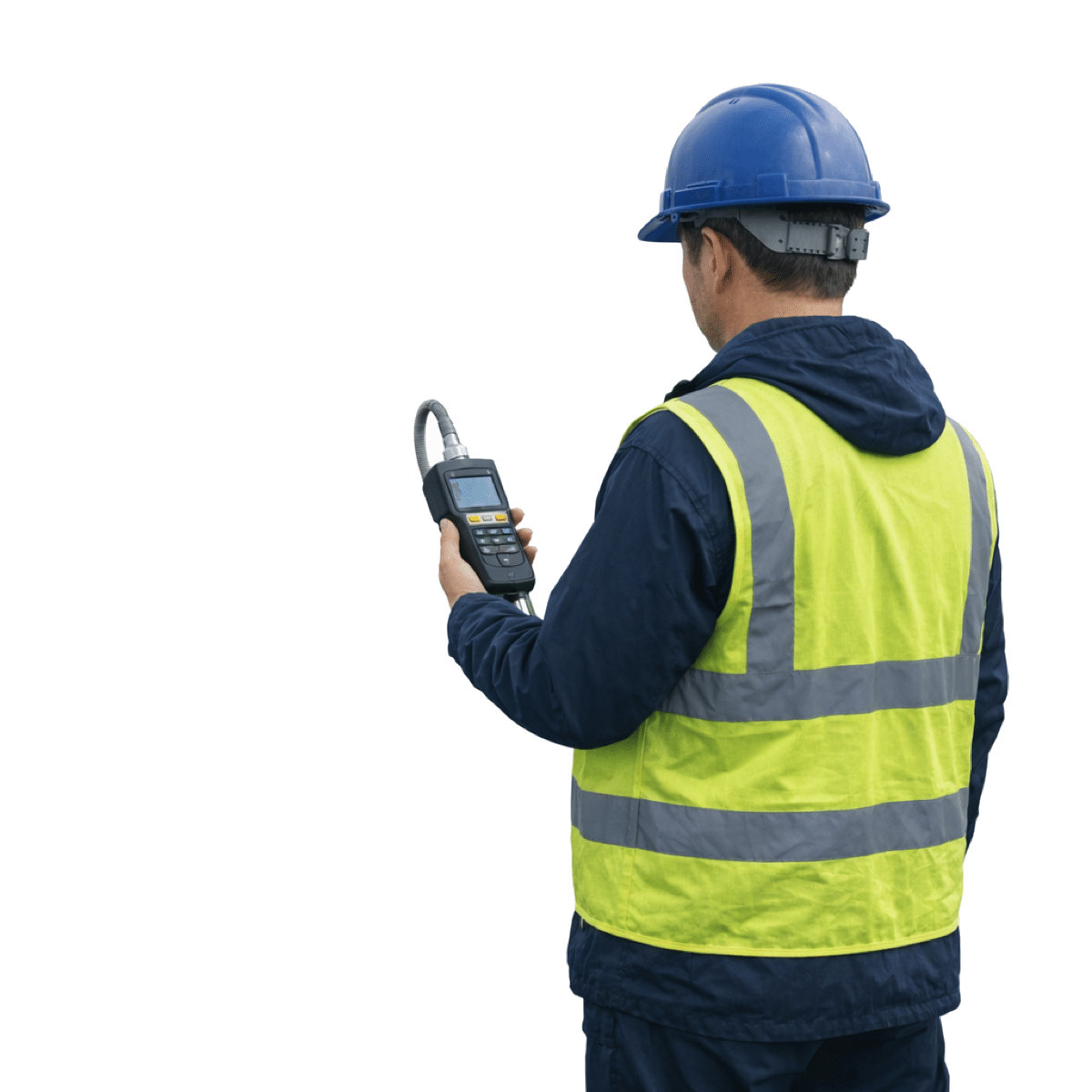
Talk Through Your Multi-Gas Measurement
Tell us your gases, matrix, and reporting duty. GESHINE engineers map the FTIR method’s validation burden against a configured multi-pass TDLAS or CEMS path — so you compare methods on your real application, not a generic datasheet.