
VOC Analyzers — FID, PID and GC-MS Detection Solutions for Compliance, Safety and Speciation
From total VOC screening to speciated analysis — ppb detection for compliance and safety.
Volatile organic compound analyzers using FID, PID, and GC-MS for environmental compliance, fugitive emission monitoring (EPA Method 21 LDAR), workplace safety surveys, and laboratory speciation — covering ppb to ppm detection ranges.
Why One VOC Analyzer Cannot Serve Three Different Measurement Jobs
Environmental-compliance engineers report VOC as total organic carbon to a regulator that specified EPA Method 25A, and Method 25A does not accept an isobutylene-calibrated PID reading as a substitute for a methane- or propane-calibrated flame ionization measurement. Plants that standardize on a portable ppb analyzer for convenience discover at the first stack test that their fence-line number and the reference-method number disagree by a factor that is not measurement error — it is the response-factor physics that separates the two instruments. The remedy is a continuous flame ionization analyzer on the regulated stream, not a louder portable, and the budget line for that analyzer includes a hydrogen fuel-gas supply that runs 30 mL per minute twenty-four hours a day.
Leak-detection-and-repair programs under EPA Method 21 live or die on ppb sensitivity in a field environment. A PID whose lamp has drifted below spec after five thousand hours of service, or whose humidity compensation has never been tuned for the site, produces a component-by-component survey that under-reports leakers and over-reports false positives — the worst combination for a regulator audit. The instrument must hold its 1 ppb isobutylene detection limit across a ten- to ninety-percent humidity range, it must survive Zone 0 classification in a hydrocarbon-laden unit, and it must translate its raw reading through a four-hundred-compound correction-factor library before the leak tag becomes defensible evidence in a repair-by-date record.
Lab speciation chemists report target lists drawn from the ninety-seven Title III compounds under EPA TO-15 at parts-per-billion resolution, and an autosampler that drops a canister every forty-five minutes instead of every twenty-five is the difference between meeting a state-program contract and renegotiating it. A gas chromatograph-mass spectrometer without a thermal-desorption preconcentrator has a detection limit around one part per billion, not the 0.01 ppb the method actually demands — and without a current NIST library the compound-identification confidence that the regulator reviews slides from ninety-eight percent toward eighty-five percent, forcing re-runs the lab has no budget for. Batch throughput, library currency, and 21 CFR Part 11 audit-trail integrity together set whether the instrument pays its twenty-year capital cost back or does not.
What a Wrong VOC Reading Actually Costs
Response-Factor Confusion (FID vs PID)
Flame ionization responds per carbon atom; photoionization responds per ionization cross-section. On the same air stream the two instruments return different absolute numbers, and a plant that uses one for compliance and the other for LDAR will inherit a persistent reconciliation headache that is physics, not a calibration error.
LDAR Survey Under-Reporting
A ppb PID whose humidity compensation is untuned loses 10–30 percent of its reading at high ambient moisture, and a lamp past its 5000-hour service life drifts downward silently. Either condition produces a Method 21 leak survey that misses repairable components and inflates the program liability at the next regulator audit.
TO-15 Canister Leak and Library Drift
A Summa canister with a failed vacuum check, or a GC-MS still running a three-year-old NIST library, pushes compound-identification confidence below the 95 percent threshold most state programs require — forcing re-analysis on work the lab has already billed, and putting the 21 CFR Part 11 audit trail at risk of regulator rejection.
Find Your VOC Toolchain — Route to FID, PID, GC-MS or Engineering Review
This page is a decision hub, not a catalog. Three fundamentally different physics — flame ionization, photoionization and gas chromatography-mass spectrometry — address three different buyers (the compliance engineer chasing EPA Method 25A, the LDAR or industrial-hygiene surveyor chasing Method 21, the laboratory chemist chasing TO-15 speciation), and no single instrument is correct for more than one of them. The router below walks through four decision points — measurement driver, applicable regulation, measurement scale and form-factor constraint — and outputs one of three workflow paths or, when the combination falls outside what any current product can honestly deliver, an engineering-review path instead of a false recommendation.
What drives your VOC measurement?
- Environmental compliance — continuous total-VOC reporting
- LDAR or industrial hygiene — ppb spot-check surveys
- Laboratory speciation — which compounds, at what ppb
The driver fixes the regulation, and the regulation fixes the calibration physics. Continuous total-organic compliance calibrates to methane or propane under Method 25A; LDAR walks use the reference compound required by the applicable Method 21 program, and PID workflows commonly use isobutylene-equivalent calibration plus correction factors; laboratory speciation runs a NIST library match under TO-14A and TO-15. Confusing the three is the single most common specification error on this page, and the router opens with this question because no later step can recover from answering it wrong.
Which regulation applies?
- EPA Method 25A — continuous organic emissions
- EPA Method 21 — LDAR leak-and-repair
- EPA TO-14A / TO-15 — canister speciation
- Internal QA or unregulated screening
The regulation named on the plant permit or the state-program contract determines which instrument is defensible as the reference. A Method 25A permit cannot be closed on PID data; a Method 21 leak tag cannot be written off FID continuous data; a TO-15 canister report cannot be produced without a preconcentrated GC-MS run. Each regulation anchors its own instrument route, and any instrument that is cross-specified against a different method will fail the first audit it sees.
What is your measurement scale?
- ppmC continuous — 1 to 10,000 ppmC (and above)
- ppb spot — 1 ppb to 15,000 ppm
- Sub-ppb speciated — 0.01 to 1 ppb with TO-15 canister
Scale settles the physics. A 10,000 ppmC continuous stream saturates a 10.6 eV PID and overwhelms a GC-MS injection port — it belongs on an FID. A 1 ppb benzene target below PID saturation needs the handheld PID. A 0.01 ppb canister measurement requires the TD-preconcentrated GC-MS — bare GC-MS without the preconcentrator cannot reach that limit and must not be specified as if it could.
What is your form-factor constraint?
- 19-inch rack process analyzer
- Handheld field instrument (ATEX Zone 0 required)
- Laboratory bench (climate-controlled, vibration-isolated)
Form factor rules out the other two physics regardless of the first three answers. An ATEX Zone 0 handheld is only the PID; a climate-controlled bench with a seventy-liter-per-second turbomolecular pump is only the GC-MS; a 19-inch rack with a flame and a hydrogen fuel-gas line is only the FID. When the form factor conflicts with the regulation or the scale, the output is engineering review, not a stretched instrument.
Router Outcomes
Continuous FID Total-VOC Path
Continuous flame ionization linear across five decades, sub-two-second response, methane- or propane-calibrated per EPA Method 25A, in a 19-inch rack or field enclosure with flame-out auto-reignition. Hydrogen fuel gas plus hydrocarbon-free zero air are required supplies — budget the gas-supply line and the periodic jet-cleaning service into the recurring operating cost from day one. Range, enclosure, certifications and supply scope are confirmed per project review.
Send this requirement to engineering review →Portable PID Survey Path
Handheld ppb photoionization survey path for intrinsically safe field work, with hazardous-area certification confirmed against the site classification per project review. A 10.6 eV lamp covers the majority of common VOCs (an 11.7 eV lamp is added for higher-ionization-potential species above 10.6 eV but below 11.7 eV, such as formaldehyde and acetylene, with shorter lamp life), humidity compensation for wet subsurface and outdoor surveys, and a 400-plus-compound correction-factor library that converts the raw isobutylene-calibrated reading into a defensible target-compound concentration.
Send this requirement to engineering review →Laboratory GC-MS Speciation Workflow
Bench-top gas chromatograph-mass spectrometer with a quadrupole mass filter, an autosampler for unattended TO-15 batches and an optimized run time. A thermal-desorption preconcentrator drives the detection limit to the sub-ppb range; without the preconcentrator the bare system is approximately 1 ppb. NIST library reference spectra, 21 CFR Part 11 audit-trail capability for GxP programmes, and helium carrier gas standard with an optional hydrogen-carrier conversion kit — target list, library revision and validation scope confirmed per project review.
Send this requirement to engineering review →Engineering review required
A continuous sub-ppb speciated measurement, an ATEX Zone 0 bench-top, a methane-specific trace measurement (which belongs on the CH₄ TDLAS page), or a multi-component FTIR survey (which belongs on the Multi-Gas page) all fall outside these three paths. Rather than stretch an instrument to a specification it cannot honestly meet, we take those requirements to engineering review: send the gas matrix, the regulatory scope and the form-factor constraint to our application team for a configured recommendation or a pointer to the right product line.
Request engineering review →With a recommended path in hand — or an engineering-review escalation — the next section explains the physics those three paths rest on, and what each of the three technologies genuinely cannot do.
FID vs PID vs GC-MS — Three Different Physics, Three Different Measurements
Flame ionization, photoionization and gas chromatography-mass spectrometry are three disjoint physics, not three variants of one technique. Flame ionization burns carbon atoms in a hydrogen-air flame and counts the ion current; photoionization uses a 10.6 eV ultraviolet photon to ionize any species whose ionization potential sits below that threshold; gas chromatography-mass spectrometry separates a sample on a column, filters each peak by mass-to-charge ratio in a quadrupole, and matches the resulting spectrum to a reference library. Each technology has measurements it fundamentally cannot deliver, and naming those limits is what keeps a specification honest.
FID burns organics in a hydrogen flame, producing ions proportional to carbon content — the gold standard for total VOC. PID uses UV light for rapid ppb-level screening. GC-MS separates and identifies individual compounds for speciated analysis.
- ppb to ppm detection range
- FID: linear over 5 decades
- PID: no-flame operation, intrinsically safe where certified
- GC-MS: speciation against TO-15 target lists drawn from the 97 Title III VOCs
VOC Detection at a Glance
Three Technologies, Six Axes — What Each Can and Cannot Do
| Technology | Principle | Detection Limit | Upper Range | Best For | What It Fails to Do |
|---|---|---|---|---|---|
| Flame Ionization Detection (FID) | High-purity hydrogen fuel gas burns in a hydrogen-air flame at 30 mL per minute; organic carbons in the sample ionize in the flame, and the ion current collected at a biased electrode is linearly proportional to the carbon count (equal response per C, not per compound). | 0.1 ppmC | 10,000 ppmC (configurable to 50,000) | Continuous total-organic compliance — EPA Method 25A fence-line, catalytic-oxidizer destruction-efficiency, solvent-recovery vent monitoring. Linear across five decades of concentration. | Not speciated (one carbon count, not a compound list). Requires continuous hydrogen and zero-air supply. Cannot distinguish methane from non-methane hydrocarbons without a chromatographic pre-column. |
| Photoionization Detection (PID) | A krypton-filled ultraviolet lamp emits 10.6 eV photons (or 11.7 eV for the short-life argon variant); species whose ionization potential sits below the photon energy are ionized, and the raw ion current is converted to a target-compound concentration via a 400-plus-compound correction-factor library. | 1 ppb (isobutylene) | 15,000 ppm (saturates above) | Handheld ppb spot-check — EPA Method 21 LDAR component surveys, OSHA TWA and STEL industrial-hygiene monitoring, HazMat response, soil-vapor-extraction verification. ATEX Zone 0 intrinsically safe field work. | Saturates above roughly 15,000 ppm. Misses species with ionization potential above 10.6 eV (methane IP = 12.6 eV is invisible). Humidity causes 10–30 percent reading error without compensation. Not a compliance reference for Method 25A. |
| Gas Chromatography-Mass Spectrometry (GC-MS) | A Summa canister sample passes through a thermal-desorption preconcentrator, then a programmable GC oven separates the desorbed pulse into a retention-time-resolved stream; a quadrupole mass filter scanning 1–500 amu produces a fragmentation spectrum matched against the NIST 2023 library of 350,000+ reference spectra. | 0.01 ppb (with TD preconcentrator; ~1 ppb bare) | Depends on canister dilution | Laboratory speciation — EPA TO-14A and TO-15 canister analysis, 21 CFR Part 11 pharma solvent-residue QC, ambient-air source profiling, R&D flavor-fragrance characterization. Supports canister GC-MS target lists drawn from the 97 Title III VOCs with library match. | 25 minutes per sample, not a continuous measurement. Lab-bench only — 85 kg, 750 × 550 × 500 mm, climate-controlled, vibration-isolated. Helium 5.0 carrier (or hydrogen-kit conversion) supply dependency. Method-development time is measured in weeks, not hours. |
When to Select Which Technology
When to select which technology: select flame ionization when the measurement is continuous, the regulation is EPA Method 25A, the concentration sits between one ppmC and tens of thousands of ppmC, the answer required is total organic carbon rather than individual compounds, and the site can commit to a hydrogen fuel-gas supply plus hydrocarbon-free zero air for the life of the installation. Select photoionization when the measurement is a spot check or a leak-survey walk, the regulation is EPA Method 21 LDAR or an OSHA industrial-hygiene TWA, the concentration sits between one ppb and roughly fifteen thousand ppm, the compound list sits below 10.6 eV ionization potential (or below 11.7 eV with the short-life lamp), and the field environment requires intrinsically safe Zone 0 certification. Select gas chromatography-mass spectrometry only when the measurement has to name which compounds and at what ppb, the regulation is EPA TO-14A or TO-15 or a 21 CFR Part 11 pharma speciation workflow, the sample is a Summa canister or a sorbent tube rather than a continuous stream, and the lab has the bench space, the climate control, the vibration isolation, the helium (or hydrogen-kit) supply and the method-development time to run it. Where two of those envelopes overlap, engineering review is the honest answer rather than a stretched instrument.
Having named the envelope each technology occupies and the measurements it cannot deliver, the next section walks through how each of the three physics actually converts a gas sample into a number.
How Each of the Three VOC Technologies Actually Measures Organic Carbon
Flame Ionization — Continuous Total VOC
Continuous FID Total-VOCHydrogen-Air Flame at 30 mL/min
High-purity hydrogen fuel gas burns in a hydrogen-air flame at approximately 30 mL per minute, supplemented by hydrocarbon-free zero air at 300 mL per minute. The flame itself produces almost no ion current when the sample stream contains no organic carbon — that clean baseline is what makes the measurement quantitative.
Carbon Combustion to Ion Current
Organic carbons in the sample ionize as they pass through the flame; the liberated ions are collected at a biased electrode, and the resulting current is linearly proportional to the carbon count. A one-carbon molecule and a six-carbon molecule give six times the signal — response is per carbon atom, not per compound, which is why the measurement reads as ppmC rather than ppm.
Linear Across Five Decades
The ion current stays linear from 0.1 ppmC up to 10,000 ppmC (configurable to 50,000 ppmC), spanning five orders of magnitude without saturation. That dynamic range is what allows one FID to cover a routine operating stream and a flare-event spike on the same sample line without reconfiguration — the single largest reason EPA Method 25A names flame ionization as its continuous reference.
Photoionization — Handheld ppb Survey
Portable PID Survey10.6 eV Ultraviolet Lamp
A krypton-filled ultraviolet lamp emits 10.6 eV photons into a measurement cell; the 11.7 eV argon-filled lamp option extends the energy window to compounds with ionization potential above 10.6 eV and below 11.7 eV, such as formaldehyde and acetylene, at the cost of roughly 500 hours of lamp life versus the 5000-hour service life of the 10.6 eV lamp.
Photoionize IP-Below-Threshold Species
A photon with 10.6 eV of energy ionizes any species whose ionization potential sits below that threshold. Aromatics (benzene, toluene, xylene at ~8.8–9.5 eV), chlorinated solvents (trichloroethylene at 9.45 eV) and most oxygenates ionize readily. Methane, at 12.6 eV ionization potential, is invisible to the 10.6 eV lamp — a feature for non-methane hydrocarbon reporting and a blind spot if methane specifically needs to be screened.
Correction-Factor Library and Humidity Compensation
The raw ion current is calibrated against a reference isobutylene gas, so the instrument speaks ppb-isobutylene natively. A correction-factor library containing 400-plus compounds converts the isobutylene-calibrated reading to the concentration of the actual target compound on the survey, and an integrated humidity-compensation sensor removes the 10–30 percent systematic error that ambient moisture otherwise introduces through ultraviolet absorption by water.
GC-MS — Laboratory Speciation
Lab GC-MS SpeciationThermal-Desorption Preconcentrator
A Summa canister sample is metered through a multi-bed adsorbent trap held at −30 °C; trace volatile organics adsorb onto the bed while the bulk sample gas passes through. Flash-heating the trap to 250 °C releases a concentrated pulse of the accumulated sample into the GC column head, driving the effective detection limit down to 0.01 ppb. Without the preconcentrator the bare GC-MS system is approximately 1 ppb — a hundredfold difference that specification copy must never elide.
Chromatographic Separation
A 50–350 °C programmable GC oven separates the desorbed pulse into a retention-time-resolved stream along a capillary column, so compounds that coelute on a short column can be resolved on a longer one or with a tuned temperature ramp. Helium 5.0 at 1.2 mL per minute is the standard carrier gas; an optional hydrogen-carrier conversion kit with appropriate safety interlocks is available for labs addressing current-decade helium-supply risk.
Quadrupole Mass Filter and NIST Library Match
A quadrupole mass filter scans 1–500 amu, producing a fragmentation spectrum for every peak as it elutes. Automated library searching against the NIST 2023 installed mass spectral library — more than 350,000 EI reference spectra — returns probability-ranked matches for each compound, and for EPA TO-15 reporting a 97-target-compound method file with retention-time locks and quantification ions delivers the speciated concentration list the regulator expects.
Three physics, three workflows, three cadences — compared side by side in the decision matrix below, which reduces the selection conversation to thirteen parameters that actually change between the three workflow paths. A flame ionization analyzer, a photoionization detector and a gas chromatograph-mass spectrometer do not share an operating model, a maintenance rhythm, an operating-cost profile or a certification envelope, and the matrix below documents every axis on which they diverge so the buyer can match the engineering brief to the correct instrument without several rounds of back-and-forth on specifications. Where two paths appear plausible the matrix typically settles the decision on one or two rows — most often the detection-limit row, the ongoing-operating-cost row or the form-factor row — and where the matrix does not settle it cleanly, engineering review is the honest answer rather than a stretched specification.
Continuous FID Total-VOC vs Portable PID Survey vs Lab GC-MS Speciation — Side-by-Side
The three VOC analyzers in the GESHINE line are not three tiers of one instrument — they are three disjoint instruments serving three disjoint regulatory tracks. The continuous FID total-VOC path is the continuous flame ionization rack for EPA Method 25A total-organic compliance on a refinery fence-line or a catalytic oxidizer. The portable PID survey path is the handheld ATEX Zone 0 photoionization detector for EPA Method 21 LDAR component surveys and OSHA industrial-hygiene work. The laboratory GC-MS speciation workflow is the bench-top gas chromatograph-mass spectrometer for EPA TO-15 canister speciation and 21 CFR Part 11 pharma speciation. The thirteen-row matrix below lays out every axis on which the three instruments diverge — application, regulation, detection limit, upper range, response or run time, speciation, certification scope, ongoing operating-cost driver, commercial tier, form factor, sample preparation, carrier or fuel gas and operator skill — so the selection conversation narrows to the axis that actually settles the decision.
| Parameter | Continuous FID Total-VOC | Portable PID Survey | Lab GC-MS Speciation |
|---|---|---|---|
| Primary Buyer | Environmental-compliance engineer | LDAR program / industrial hygiene / HazMat | Environmental-lab or research chemist |
| Primary EPA Method | EPA Method 25A (continuous total organic) | EPA Method 21 LDAR (leak-and-repair) | EPA TO-14A / TO-15 (canister speciation) |
| Detection Limit | 0.1 ppmC | 1 ppb (isobutylene-calibrated) | 0.01 ppb with TD preconcentrator (~1 ppb bare) |
| Upper Range | 10,000 ppmC (configurable to 50,000) | 15,000 ppm (saturates above) | Depends on canister dilution |
| Response / Run Time | < 2 s T90 continuous | < 3 s T90 continuous | 25 min per sample (100-position autosampler) |
| Speciation | Total carbon count only (per C, not per compound) | Total ppb, correction-factor-corrected per target | TO-15 target lists drawn from the 97 Title III VOCs, NIST library match |
| Primary Certification | CE + UKCA + EPA Method 25A compliant | ATEX II 1G Ex ia IIC T4 Ga (Zone 0) + IECEx + CSA + FM + MSHA + IP65 | CE + UKCA + EPA TO-14A / TO-15 + 21 CFR Part 11 capable + NIST 2023 |
| Ongoing Operating-Cost Driver | H₂ fuel gas + zero-air supply; recurring utility and FID service line item | 10.6 eV lamp service interval; shorter 11.7 eV lamp interval where used; annual sensor-stack service | Helium 5.0 carrier OR H₂ conversion kit + column + method library |
| Commercial Tier | Mid-tier continuous FID package; quote depends on enclosure, sample handling, I/O and Method 25A support scope | Entry-tier handheld PID package; typically the lowest total-cost-of-ownership tier on this page | Premium laboratory-speciation package; quote depends on TD/preconcentration, autosampler, carrier-gas safety scope, software and method setup |
| Form Factor | 19″ 7U rack, 25 kg (NEMA 4X field enclosure optional) | Handheld 0.7 kg, IP65, 12-hour battery | Bench-top 750 × 550 × 500 mm, 85 kg, vibration-isolated |
| Sample Preparation | Continuous direct-gas inlet; heated sample line for wet streams | Direct-draw internal diaphragm pump; no sample prep | Summa canister plus thermal-desorption preconcentrator + active leak check |
| Fuel / Carrier Gas | High-purity H₂ fuel gas at 30 mL/min + hydrocarbon-free zero air at 300 mL/min | None (ambient air draw) | Helium 5.0 at 1.2 mL/min (or optional H₂ conversion kit) |
| Operator Skill Level | Trained instrument technician (flame-out + calibration) | Safety officer or field technician (bump-gas discipline) | GC-MS-trained lab chemist (method development + library maintenance) |
The matrix narrows the choice in principle. The workflow-path summaries below carry the review dimensions that settle the rest — certification scope, I/O, dimensions and the application context that documents each path in service — so a project can move directly from selection toward a configured specification without losing the regulation-to-path mapping the router established at the top of the page. Exact certifications, ranges and delivery terms are confirmed only in the engineering review and the delivered quotation for the chosen path.
Three VOC Sensing-Principle Paths
Three disjoint measurement routes — continuous FID total-VOC, portable PID survey, and laboratory GC-MS speciation. Configuration, range, certifications and documentation are confirmed per project review.
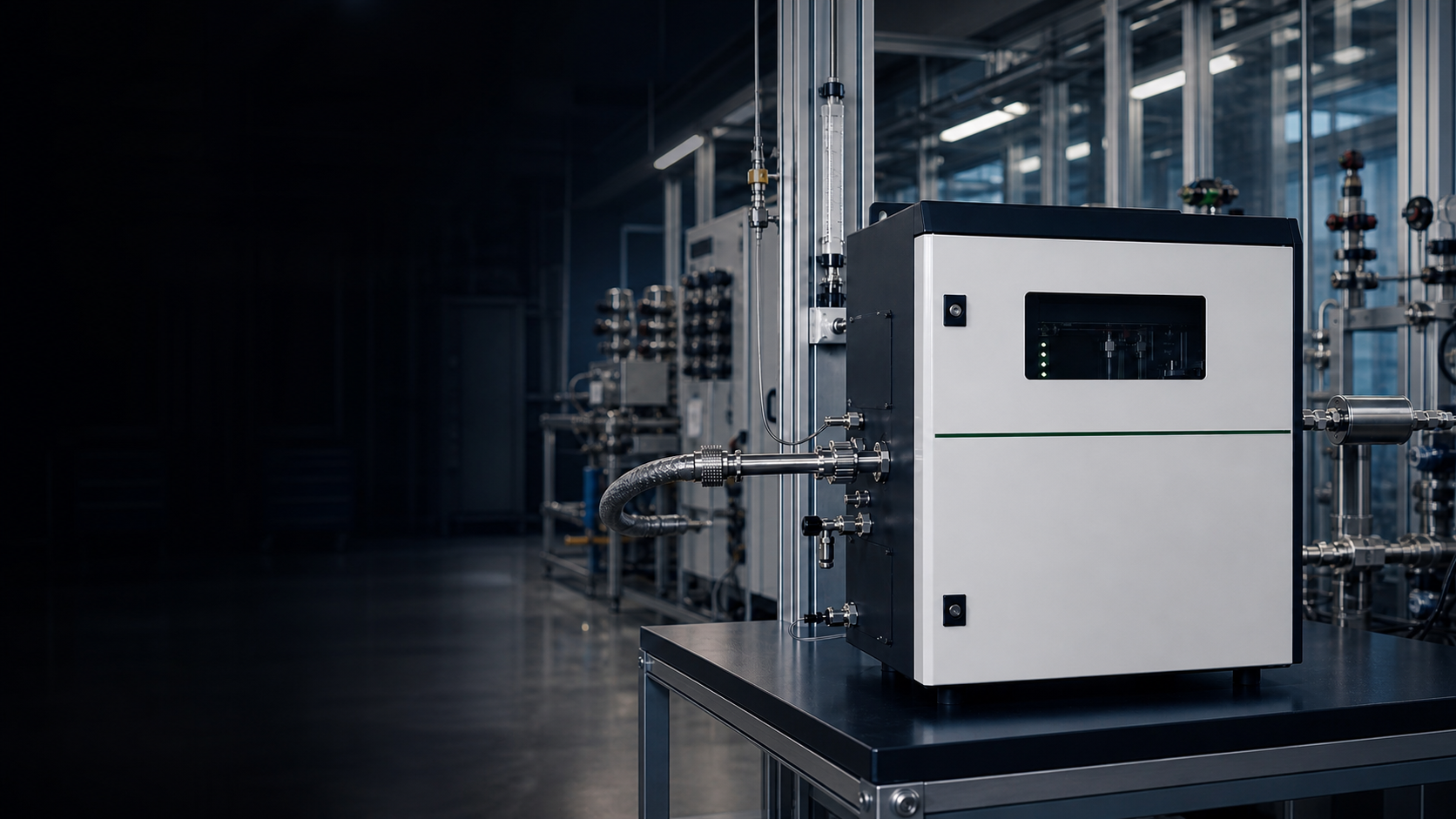 In-line Process
Sensing Principle · FID
Continuous FID Total-VOC
Flame ionization path for continuous total-VOC measurement under EPA Method 25A.
- Driver
- Continuous compliance reporting
- Regulation
- EPA Method 25A
- Scale
- ppmC continuous
- Form Factor
- 19-inch rack / field enclosure
PortableSensing Principle · PID
Portable PID Survey
Handheld photoionization path for ppb-level LDAR and industrial-hygiene surveys under EPA Method 21.
- Driver
- LDAR / IH spot surveys
- Regulation
- EPA Method 21
- Scale
- ppb spot
- Form Factor
- Handheld field instrument
LaboratorySensing Principle · GC-MS
Laboratory GC-MS Speciation
Gas chromatograph-mass spectrometer path for speciated canister VOC analysis under EPA TO-14A / TO-15.
- Driver
- Speciated compound reporting
- Regulation
- EPA TO-14A / TO-15
- Scale
- Sub-ppb speciated
- Form Factor
- Laboratory bench
Extractive, Portable & Laboratory Form Factors for VOC Analysis
Process FID Analyzer
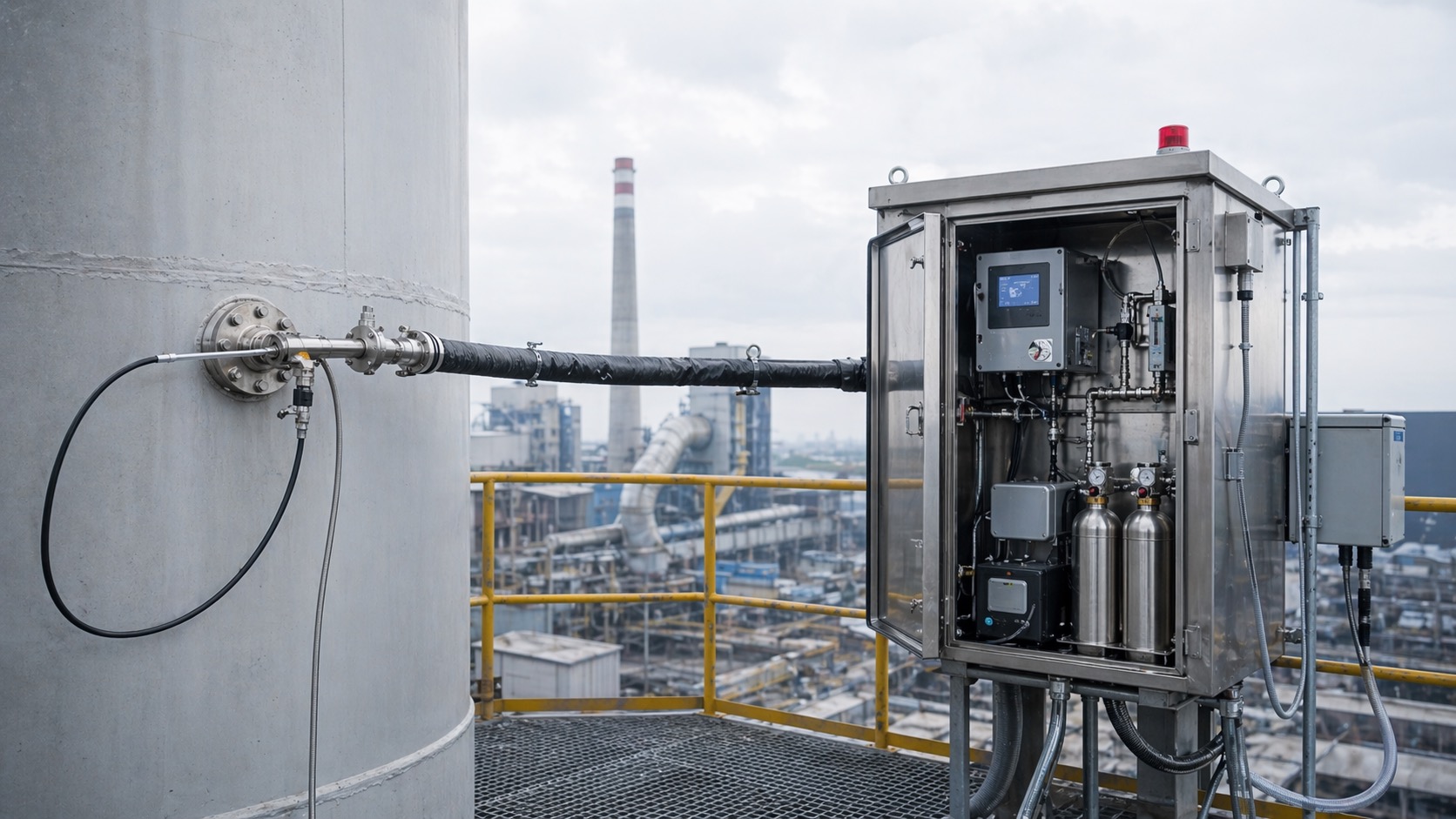
A heated sample line draws process or stack gas to an in-line flame ionization detector that measures total VOC continuously as carbon — the workhorse for compliance and oxidizer-control duty.
Heated sample probe and transfer line above the dew point, particulate filter, regulated hydrogen fuel and zero-air supply, and flow control to the FID burner.
- EPA Method 25A continuous total VOC compliance
- Catalytic oxidizer inlet/outlet and fence-line monitoring
Handheld PID Detector
Battery-powered handheld with an internal pump and UV photoionization lamp. One-button operation and rugged housing for ppb-level field screening, surveys, and workplace exposure checks.
Built-in pump pulls an ambient or duct sample through the lamp chamber. Humidity compensation and compound-specific correction factors set the displayed reading.
- Industrial hygiene and HazMat site surveys
- Leak hunts, soil vapor, and indoor air quality checks
- Entry screening before hot work, in a hazardous-area-rated configuration where certified
Bench-top GC-MS System
A laboratory gas chromatograph-mass spectrometer with thermal desorption that separates and identifies individual compounds, delivering speciated VOC results against the NIST library.
Canister, sorbent tube, or thermal desorption sample, carrier gas (helium or hydrogen), and calibration standards. Optional preconcentration extends the detection floor.
- EPA TO-14A / TO-15 speciated VOC analysis
- Ambient air speciation and source emission profiling
- Cleanroom solvent residue and flavor/fragrance QC
Seven VOC Applications — Clustered by FID Compliance, PID LDAR and GC-MS Speciation
The VOC market is not one market — it is three markets with different regulators, different failure modes and different buyers, and the seven application cards below are clustered by buyer type rather than by industry so each buyer sees the three or two or one application that actually matches the instrument they are specifying. The compliance FID cluster covers continuous Method 25A work on refinery fence-lines, catalytic-oxidizer destruction-efficiency loops and solvent-recovery vents. The LDAR PID cluster covers Method 21 petrochemical leak surveys, soil-vapor-extraction remediation verification and pharma cleanroom industrial-hygiene monitoring. The lab GC-MS cluster documents the state-program TO-15 workflow that anchors the speciation buyer.

Refinery Fence-Line — EPA Method 25A Continuous Compliance
Challenge
Refinery fence-line VOC compliance under EPA Method 25A is structurally hard to hold because plant-operated PID networks saturate above ~2,000 ppm and lose continuous coverage during flare events — which is exactly when the reference-method test and the plant-operated data are most likely to diverge.
Solution
An eight-unit continuous FID total-VOC network on the boundary-line taps, each running EPA Method 25A with propane as the default calibration gas, or methane where accepted by the applicable program, plus a hydrocarbon-free zero-air supply, delivers continuous 0–10,000 ppmC coverage with sub-two-second response and linear behavior across five decades — flare events resolve on the same sample line as the routine stream.

Catalytic Oxidizer — Destruction-Efficiency Monitoring
Challenge
A chemical-plant catalytic oxidizer must document destruction-removal efficiency on a continuous basis, and a single-point measurement at the outlet cannot close the mass balance — the inlet loading swings by a factor of five over a shift, and the outlet ppmC is only meaningful referenced to a concurrent inlet value.
Solution
Two continuous FID total-VOC analyzers, one at the oxidizer inlet and one at the outlet, share a heated sample manifold and report the inlet / outlet ratio natively to the DCS via Modbus RTU. Destruction-efficiency drops below the permit threshold trigger an automatic slow-down of the upstream solvent stream before the exceedance accumulates into an hour-average violation.
Solvent Recovery — Storage-Tank Vent Monitoring
Challenge
A specialty-chemical plant runs a solvent-recovery loop whose vent stream swings from 200 ppmC during steady production to 8,000 ppmC during batch changeover; a PID on that vent saturates during changeover and under-reports the mass-emission calculation the plant must submit to the state regulator.
Solution
A continuous FID total-VOC path with the 50,000 ppmC range configuration mounted in a NEMA 4X field enclosure with climate control and flame-out auto-reignition reports continuous ppmC to the plant historian. The wide-range configuration eliminates the saturation-gap that the PID produced during batch changeover.

Petrochemical LDAR — EPA Method 21 Component Survey
Challenge
A petrochemical LDAR program must document ppb-level leakage on thousands of valves, flanges and pump seals per quarter under EPA Method 21, and the field instrument must carry ATEX Zone 0 classification because the survey walks through Zone 0 and Zone 1 areas on live units — a non-Zone 0 handheld is not admissible.
Solution
The portable PID survey handheld with ATEX II 1G Ex ia IIC T4 Ga (Zone 0), IECEx, CSA, FM and MSHA approvals, 1 ppb isobutylene detection limit, 12-hour battery life and the 400-plus-compound correction-factor library delivers the defensible leak-tag record the regulator reviews. Humidity compensation removes the 10–30 percent ambient-moisture error that Gulf-coast surveys otherwise carry.

Soil-Vapor Extraction — Landfill and Brownfield Remediation
Challenge
A remediation contractor verifying soil-vapor-extraction performance across thirty-plus landfill sites needed to confirm benzene cleanup targets below 5 ppb; the existing portable photoionization units topped out at a 50 ppb detection limit, an order of magnitude too high to close any of the sites against the cleanup target.
Solution
Portable PID survey handhelds at 1 ppb isobutylene detection — five-parts-per-ten-thousand the old floor — confirmed cleanup targets at every site, and the integrated humidity compensation eliminated the wet-subsurface false readings that had plagued the previous instrument set. Site-closure cycle time collapsed by roughly thirty percent. Site result depends on target compound list, humidity, survey cadence, method setup and QA acceptance criteria.

Pharma Cleanroom — Industrial-Hygiene TWA and STEL Monitoring
Challenge
A pharmaceutical cleanroom runs solvent-intensive process steps (toluene wash, dichloromethane extraction) that must stay below OSHA PELs and the tighter ACGIH TLVs; an industrial-hygiene program needs handheld TWA and STEL calculation directly from the instrument rather than hand-transcribed log sheets audited by a third party.
Solution
The portable PID survey path calculates 8-hour TWA and 15-minute STEL exposures natively, compares them against programmable OSHA and ACGIH setpoints, and stores 100,000 data points of zone-tagged history for later audit review. The 11.7 eV lamp option extends the compound window to formaldehyde and acetylene where those solvents are in use.
State-Program Ambient-Air Laboratory — EPA TO-15 Speciation
Challenge
A contract environmental laboratory needed to lift TO-15 throughput from 12 to 40 canister samples per day to meet a state-agency contract deadline; the incumbent bench-top gas chromatograph-mass spectrometer ran 45-minute methods with manual injection, and compound-identification confidence floated around 85 percent against the older library revision.
Solution
The laboratory GC-MS speciation workflow with a 100-position autosampler, a 25-minute optimized TO-15 method and the NIST 2023 mass spectral library delivered forty-plus samples per day unattended and raised identification confidence to 98 percent — enough to close the agency contract without re-analysis of flagged canisters. Site result depends on target compound list, humidity, survey cadence, method setup and QA acceptance criteria.
The seven applications above map every cluster of the installed base. The next section documents the certification scope by workflow path and the three EPA regulatory tracks that govern how each path can be specified, audited and reported.
Certification Scope by Workflow Path — No Pooled Claims
VOC certification does not pool across the category — each workflow path defines its own scope. A blanket claim that every product in a category is, for example, “ATEX certified” is misleading, because a certification applies to a specific instrument and duty rather than to the category as a whole. The continuous FID total-VOC path is typically scoped to CE, UKCA and EPA Method 25A compliance. The portable PID survey path is typically scoped to the intrinsically safe portable stack: ATEX II 1G Ex ia IIC T4 Ga (Zone 0), IECEx, CSA, FM, MSHA and IP65. The laboratory GC-MS speciation workflow is typically scoped to CE, UKCA, EPA TO-14A / TO-15 compliance, 21 CFR Part 11 capability and a current installed mass spectral library. The dimensions below are the certification considerations by detection path; the actual marks, scope and revision are confirmed only in the delivered quotation or certificate pack for the configured path. The three regulatory tracks that follow document the reporting path each route enables.
Continuous FID Total-VOC
Continuous Process FID- CE Marking — European conformity for health, safety and environmental protection
- UKCA — United Kingdom Conformity Assessment (post-Brexit equivalent of CE)
- EPA Method 25A compliant — total gaseous organic compound measurement by FID
- EN 61010-1 — safety requirements for electrical equipment for measurement and laboratory use
- EN 61326-1 — electromagnetic compatibility for measurement, control and laboratory equipment
- ISO 9001:2015 — quality management system covering production
Portable PID Survey
Portable ppb PID- ATEX II 1G Ex ia IIC T4 Ga (Zone 0) — intrinsically safe portable VOC detector scope for the portable PID survey path only
- IECEx — international IEC scheme for explosive atmospheres, harmonized with ATEX
- CSA — Canadian Standards Association certification for hazardous locations
- FM Approvals — Factory Mutual approval for US hazardous-location service
- MSHA — US Mine Safety and Health Administration mine-service approval, where listed in the delivered portable PID survey certificate pack
- IP65 — ingress protection (dust-tight, water-jet protected)
- CE Marking — European conformity
- IEC 60079-0 and IEC 60079-11 — explosive-atmosphere general and intrinsic-safety construction standards for the portable PID survey hazardous-area configuration
- EN 61326-1 — electromagnetic compatibility
Lab GC-MS Speciation
Laboratory GC-MS- CE Marking — European conformity
- UKCA — United Kingdom Conformity Assessment
- EPA Method TO-14A compliant — ambient air VOC measurement by Summa canister
- EPA Method TO-15 compliant — canister GC-MS speciation against target lists drawn from the 97 Title III VOCs
- 21 CFR Part 11 capable — FDA electronic records and audit-trail framework for GxP programmes
- Installed mass spectral library — a current EI reference spectral library is supplied with the speciation workflow; confirm the exact library edition and revision in the delivered quotation
- EN 61010-1 — safety requirements for laboratory electrical equipment
- EN 61326-1 — electromagnetic compatibility
The portable PID survey path is the route that carries an ATEX II 1G Ex ia IIC T4 Ga (Zone 0) intrinsic-safety scope; the exact certificate is available only when confirmed in the delivered certificate pack for the configured unit. The other VOC routes on this page do not inherit that hazardous-area certification; confirm the delivered certificate pack before specifying any hazardous-area installation.
Three Regulatory Tracks — One Workflow Path Each
EPA Method 25A
Continuous FID Total-VOCEPA Method 25A defines continuous total-gaseous-organic measurement by flame ionization detection. Propane is the default organic calibration gas; other appropriate organic calibration gases, including methane where accepted by the applicable program, require the stated response-factor basis and approval path. The method anchors fence-line compliance programmes at refineries and chemical plants, destruction-removal efficiency verification on catalytic oxidizers and thermal oxidizers, and solvent-recovery vent monitoring. Cross-calibrating a Method 25A analyzer to isobutylene (the PID standard) is a compliance failure — the calibration basis is prescribed by the method and the applicable program. The continuous FID total-VOC path is the GESHINE analyzer scoped against this track.
EPA Method 21 (LDAR)
Portable PID SurveyEPA Method 21 defines the component-by-component leak-detection-and-repair (LDAR) procedure for valves, flanges, pump seals and open-ended lines in refinery, chemical and petrochemical service. The field instrument is calibrated with the reference compound specified by the applicable LDAR rule or site program. For portable PID survey workflows, isobutylene-equivalent calibration and correction-factor conversion are common, but the survey record must state the selected reference compound and target-compound basis. The instrument must be walked past every component on the inventory at a defined distance and dwell time; leaker thresholds and repair-by-date obligations follow. OSHA 1910 permissible exposure limits and ACGIH threshold limit values overlay the Method 21 walk whenever industrial-hygiene exposure is a concurrent concern. The portable PID survey path is the GESHINE analyzer scoped against this track.
EPA TO-14A + TO-15
Lab GC-MS SpeciationEPA Methods TO-14A and TO-15 define the canister-based procedure for speciated ambient-air VOC measurement by gas chromatography-mass spectrometry. TO-15 supports canister GC-MS target lists drawn from the 97 Title III VOCs, with the thermal-desorption preconcentrator path required to reach sub-ppb detection limits; TO-14A covers the legacy canister GC target set, commonly described as about 40/41 VOCs depending on xylene grouping, with looser canister-preparation requirements. 21 CFR Part 11 electronic records and audit-trail controls overlay the GC-MS workflow in pharmaceutical GxP and regulated-environmental laboratories. The laboratory GC-MS speciation workflow is the GESHINE analyzer scoped against this track, including the NIST 2023 installed library that supports identification confidence; it can be configured with a 97-target TO-15 method file — confirm the delivered target list and calibration mix at quotation.
Three Disjoint Scopes — Why This Page Refuses to Pool Them
The three certification scopes and the three regulatory tracks above are not three views of one certification pool — they are three disjoint scopes, one per workflow path, and the page is explicit about this because the cost of a miscoded certification claim is a failed audit rather than a correction in a future printing of the datasheet. ATEX Zone 0 is an assertion on the portable PID survey path alone; the continuous FID total-VOC path carries no ATEX classification, and the laboratory GC-MS speciation workflow is a laboratory-grade bench platform that expects a climate-controlled environment rather than a hazardous-area location. EPA Method 25A is an assertion on the continuous FID total-VOC path alone; the photoionization handheld is not a Method 25A reference instrument regardless of how much it saves on instrument cost, and the laboratory GC-MS is not a continuous analyzer. EPA TO-14A and TO-15 and 21 CFR Part 11 are assertions on the laboratory GC-MS speciation workflow alone. Where a site programme requires coverage across two of the three tracks, the standard configuration is two instruments running in parallel — each doing what it is scoped for — not one instrument stretched across two methods.
With certification scope by workflow path and per-application regulatory tracks documented, the remaining commercial decision is the five-year total cost of ownership, which also diverges across the three workflow paths and is accordingly discussed as three separate cost profiles rather than a single blended calculator.
Five-Year Total Cost of Ownership — Three Tables, Not One
One total-cost-of-ownership calculator cannot serve three disjoint operating models. PID operating cost is driven mainly by lamp life, sensor-stack service, bump gas and calibration accessories. FID operating cost is driven by continuous hydrogen fuel gas, hydrocarbon-free zero air, jet service and detector refurbishment. GC-MS operating cost is driven by carrier gas, trap and column consumables, vacuum service, library / method maintenance and analyst time, and it is typically an order of magnitude above the FID path. Below are three independent five-year cost-driver tables followed by a helium-supply note for the GC-MS buyer.
Continuous FID Total-VOC
Initial analyzer package: process-rack FID hardware, Method 25A setup, enclosure and integration scope; quoted per range, sample handling, utilities and reporting package.
Hydrogen fuel gas + zero-air supply (annual)
High-purity H₂ at 30 mL/min plus hydrocarbon-free zero air at 300 mL/min — single largest recurring line item, one cylinder roughly every three months per unit.
Quarterly jet cleaning
Flame jet and collector electrode service on a 3-month interval; consumable replacement if the jet shows coking on the wet-stream installations.
Annual detector refurbishment
Ignitor coil, ion collector, flame arrestor — scheduled annual replacement to hold <2 s T90 and 5-decade linearity.
Five-year cost is driven by hydrogen fuel gas, zero-air supply, jet / detector service, calibration gases and sample-line maintenance; generally mid-tier among the three VOC paths. Hydrogen is the single biggest recurring line item and the reason any “no consumable chemicals” claim on this page must always be paired with the caveat that gaseous H₂ and zero air are consumed continuously. Budget the gas-supply logistics from day one of the project, not after commissioning.
Portable PID Survey
Initial handheld PID package: portable detector, lamp option, calibration accessories and data logging; lowest entry and page-level cost-of-ownership tier.
10.6 eV lamp replacement (every 5,000 hr)
One lamp roughly every two years at 8 hr/day duty cycle; the 11.7 eV lamp option (~500 hr life) changes this line item significantly if that lamp is in use.
Sensor electrode stack (annual clean/replace)
Monthly clean, annual replacement — user-serviceable in the field; longer life on indoor-air work than on soil-vapor or refinery survey duty.
Isobutylene bump gas + calibration kit
Factory-certified isobutylene reference cylinder at 100 ppm; daily bump check is LDAR-mandated before surveys.
Five-year cost is driven mainly by lamp and sensor consumables, calibration gas, filters and bump-test workflow; typically the lowest total-cost-of-ownership tier on this page. Lamp-life-limited but otherwise predictable; battery replacement at year three is included inside the sensor-stack line when ordered with the service package.
Lab GC-MS Speciation
Initial laboratory GC-MS package: bench system, TD/preconcentration, autosampler, carrier-gas safety scope, software and method setup; premium laboratory-speciation tier.
Helium 5.0 carrier gas (annual)
Helium 5.0 at 1.2 mL/min — driven by lab-location helium supply contract and 2024–2026 global helium-supply volatility; see helium note below.
Hydrogen-carrier conversion kit (one-time, optional)
Optional conversion with appropriate safety interlocks; displaces the helium dependency with a modest annual hydrogen supply line plus the one-time kit cost.
Turbomolecular-pump service (annual)
70 L/s turbomolecular pump — scheduled annual service plus oil change; rotor inspection at year three.
GC column replacement
Capillary column every 6–12 months depending on matrix aggressiveness; TO-15-specific columns command a modest premium over general-purpose.
NIST library + method-library subscription
NIST revision updates plus proprietary method-file curation; subscription renews identification confidence against the latest reference spectra.
Five-year cost is driven by carrier gas, traps / columns, tune standards, vacuum service, autosampler service, software / library maintenance and analyst method time; typically an order of magnitude above the FID path. Helium is the single biggest movable line item.
Helium-Supply Note — GC-MS Buyers
Helium 5.0 supply is the single variable most likely to move a laboratory GC-MS speciation workflow budget. Continued 2024–2026 helium price and availability volatility has pushed contract pricing materially upward, and lab-location-specific contracts now swing per-year carrier gas cost by a factor of two or more between supply regions. The optional hydrogen-carrier conversion kit is a one-time conversion-kit line item with safety-interlock review, method-development work and retention-time re-locking, and it displaces the helium dependency with a modest annual hydrogen supply line. Where lab real estate, local fire code or internal EHS policy disallows hydrogen, helium remains the standard carrier; where those constraints permit the conversion, quote the helium and hydrogen-carrier workflows separately and compare them against the lab’s own carrier-gas contract.
Three five-year cost tables feed one procurement conversation. The next block documents the commercial tiers against which these five-year profiles should be read, plus the lead-time, warranty and after-sales scope that close out the commercial decision.
VOC Analyzer Selection Wizard
Prefer a guided walk through driver, regulation, scale and form factor? The four-step router above settles most selections; for an interactive selector across the full GESHINE range, use our engineering tools — or send the application brief and let an engineer route it.
Pricing, Lead Time & After-Sales Support
Commercial Tiers — Contact GESHINE for a Budgetary Quote
Portable PID LDAR / Screening
Handheld photoionization detector for LDAR leak surveys, industrial-hygiene TWA / STEL monitoring, HazMat response, soil-vapor-extraction verification and indoor-air quality audits. Price moves with lamp choice, calibration accessories, hazardous-area certificate pack, data logging and service package. Recurring operating cost is dominated by lamp and sensor-stack consumables plus bump-gas workflow, making it typically the lowest total-cost-of-ownership tier on this page. Contact GESHINE for a budgetary quote.
Continuous Process FID
Continuous flame ionization analyzer for EPA Method 25A fence-line, catalytic-oxidizer destruction-efficiency and solvent-recovery vent duty. Price moves with enclosure, heated sample handling, flame-out auto-reignition hardware, utility supply, I/O and commissioning scope. Hydrogen fuel gas and hydrocarbon-free zero air are defining recurring line items and must be budgeted from commissioning. Contact GESHINE for a budgetary quote.
Laboratory GC-MS Speciation
Bench-top gas chromatograph-mass spectrometer for EPA TO-14A / TO-15 canister speciation, GxP solvent-residue workflows and research applications. Price moves with TD/preconcentration, autosampler scope, software and library revision, method-development time, carrier-gas safety review and Part 11-capable validation support. Helium is the standard carrier gas; hydrogen carrier is a separate conversion path where site fire code and EHS policy permit it. Contact GESHINE for a budgetary quote.
How a VOC Quote Converges
Buyer Advisory
Published price ranges converge to a specific quotation only when the buyer sends the gas matrix, the regulatory scope, the sample-conditioning boundary conditions and the integration target along with the request. A VOC quote that arrives from a bare datasheet tends to be specified for a harder environment than the site actually requires, which inflates both capital and lead time without buying any additional measurement quality. Tell us whether the FID ships into a climate-controlled shelter or an outdoor NEMA 4X enclosure, whether the PID survey scope includes Zone 0 classified units or a building-interior industrial-hygiene walk, and whether the GC-MS runs TO-15 state-program work or 21 CFR Part 11 pharma work — and the quote converges in one or two iterations rather than five. The single most expensive misspecification on this page is an instrument scoped against the wrong EPA method because the buyer did not know which method the site permit actually referenced.
What Moves the Price
The largest price-mover on this page is not the instrument alone; it is the supply and integration infrastructure around it. A continuous FID total-VOC quote moves with outdoor enclosure, heated sample line, utility supply, DCS integration and Method 25A zero / span commissioning scope. A laboratory GC-MS speciation quote moves with method development, carrier-gas choice, TD/preconcentration, autosampler scope, library / software revision and Part 11-capable validation support. Carrier-gas choice can move annual operating cost by a material multiple, so quote helium and hydrogen-carrier workflows separately. The portable PID survey path is least sensitive to these second-order infrastructure costs, which is why it is the entry-point configuration for many LDAR programs.
Lead Time
Standard configuration
Typically 4–6 weeks from order confirmation for the portable PID survey handheld and 6–8 weeks for the continuous FID total-VOC rack analyzer with factory Method 25A calibration and production test report, normally with a factory calibration certificate traceable to national metrology standards. Use these as planning windows for the review; the committed lead time and inclusions are confirmed only in the delivered quotation for the configured path.
Custom field configuration
Add 2–4 weeks when the order bundles a NEMA 4X outdoor enclosure, a heated sampling probe plus heat-traced line, or HART 7 licensing for DCS integration into the FID delivery package.
GC-MS with method development
10–14 weeks for the laboratory GC-MS speciation bench platform, plus a separate 4–6 week method-development engagement when the lab is opening a TO-15 or 21 CFR Part 11 programme from a standing start rather than replacing an incumbent. Method-development scope covers column selection, retention-time locks, 97-compound method file and library search parameters.
MOQ and pilot units
Single units are available as evaluation or pilot orders on all three workflow paths. Volume pricing typically applies once a PID survey fleet or an FID monitoring network reaches a few units, while GC-MS benches are usually quoted singly; framework-agreement pricing is available for multi-year capital-budget programmes. Exact unit thresholds, volume terms and pilot conditions are confirmed only in the delivered quotation for the configured path.
Warranty
Standard factory warranty
A typical standard warranty runs 24 months from commissioning (or 30 months from shipment, whichever expires first) covering electronics, detector assemblies, sample-path hardware and optical components on all three workflow paths; FID covers flame arrestor and ion collector, PID covers lamp and sensor stack, GC-MS covers quadrupole, turbopump and MS interface. The exact warranty term, coverage and start date are confirmed only in the delivered quotation or warranty document for the configured path.
Extended warranty options
36- and 60-month extended warranties available at order. FID package adds scheduled quarterly jet cleaning plus annual detector refurbishment. PID package adds annual lamp replacement plus sensor-stack service. GC-MS package adds annual turbopump service plus library subscription maintenance.
Calibration traceability
A configured instrument is normally supplied with factory calibration documentation. The selected reference gas, traceability chain and calibration compound are confirmed only in the delivered certificate pack or service agreement for the configured path. For FID Method 25A work, document the approved propane or methane basis; for PID work, document the reference compound and correction-factor basis required by the applicable LDAR or industrial-hygiene program; for GC-MS, document the tune mix, target list and installed library revision.
Out-of-warranty service
Fixed-rate detector refurbishment, lamp replacement programmes and GC-MS interface cleaning are offered to keep units in service for ten-plus years. FID flame arrestors and PID lamps are stocked for a 48-hour dispatch target, subject to destination and customs constraints; GC-MS columns, septa, filaments and tune-mix standards are stocked against the installed base.
After-Sales Scope
Technical Support & Remote Diagnostics
Application engineers are reachable by phone and email on a next-business-day first-response target across all three workflow paths. Network-connected FID and GC-MS installations support remote diagnostics over Modbus TCP or Ethernet, letting the GESHINE service desk review flame-state records, daily zero/span trends, autosampler logs and library-match statistics without scheduling a site visit — the same capability substantially collapses mean-time-to-diagnosis on field issues.
Calibration Support
Three workflow paths, three calibration chains, none of them interchangeable. Continuous FID total-VOC service follows the approved Method 25A calibration basis for the site. Portable PID survey service follows the reference compound specified by the LDAR or industrial-hygiene program; isobutylene-equivalent calibration and correction factors are common for PID workflows but should be stated in the survey record. Laboratory GC-MS speciation service documents the tune mix, target list and installed library revision. The service agreement should identify any NIST-traceable reference cylinders or other traceability documents supplied with the project; never cross-substitute isobutylene onto the FID or methane onto the PID.
Spare Parts — 48-Hour Dispatch Target
PID 10.6 eV and 11.7 eV lamps, sensor-stack kits and isobutylene bump-gas cylinders; FID hydrogen regulators, flame arrestors, ignitor coils and jet assemblies; GC-MS capillary columns, septa, filaments, source cleaning kits and turbopump oil are all stocked for a 48-hour dispatch target from the factory, subject to destination and customs constraints. Customs documentation for cross-border shipments is pre-assembled by the logistics desk, and the 5-year spares package is available at order so the site does not depend on emergency procurement when a wear part reaches end of life.
On-Site Commissioning & Method Validation
FID commissioning configures the Method 25A zero-span routine, the flame-out auto-reignition logic and the DCS 4–20 mA and Modbus integration at the plant. PID commissioning trains the LDAR team on Method 21 walk discipline, bump-gas cadence, correction-factor selection and TWA/STEL programming. GC-MS commissioning delivers the TO-15 method file, the 21 CFR Part 11 audit-trail configuration where the programme is GxP and the first-week unattended batch validation against reference canisters.
Gas Supply Management (VOC-unique)
This line item does not appear on the moisture, CO/CO₂, H₂S, ammonia or chlorine pages — it is specific to the VOC toolchain and it is the single most common post-install support gap. FID: hydrogen cylinder rotation scheduling plus hydrocarbon-free zero-air generator service. GC-MS: helium 5.0 contract review plus advisory on the optional hydrogen-carrier conversion kit against lab fire code and EHS policy. PID: isobutylene bump-gas resupply and factory-certified reference cylinders. The service desk carries a running log of supply-cadence history per site so cylinders never run dry on a live survey or a live stack-test window.
Operator Training & Method-Library Updates
PID correction-factor-library updates ship quarterly with new compounds and refined factors. GC-MS installed-library revisions and method-library updates ship according to the service agreement, alongside methodological guidance on rebuilding the 97-compound TO-15 method file. FID operator training covers flame-out auto-reignition behavior, hydrogen-cylinder handover discipline, the methane-versus-propane calibration-gas choice under Method 25A and the zero-air-generator inspection cycle. Remote refresher modules are available through a customer portal with recorded sessions and per-user assessment worksheets.
Further commercial, integration and technical questions — including the physics of FID-versus-PID disagreement, the 10.6 eV versus 11.7 eV lamp decision, hydrogen-cylinder logistics, Summa canister preparation and the helium-versus-hydrogen carrier gas choice — are covered in the frequently asked questions below. If your specific question is not addressed, the RFQ form brings an application engineer into the thread.
Frequently Asked Questions
From FID-vs-PID physics to EPA Method 21 LDAR, TO-15 speciation, lamp choice, hydrogen logistics and carrier-gas strategy.
QWhy does my FID and my PID disagree on the same sample stream?
The two instruments do not measure the same quantity. Flame ionization counts carbon atoms — it responds per carbon, not per compound, and reports ppmC as total carbon. Photoionization counts ionization events at 10.6 eV photon energy — it responds per compound cross-section, calibrated to isobutylene, and reports target-compound ppb after a correction-factor conversion. On the same air stream the two numbers will not match, and a plant that uses one for EPA Method 25A compliance and the other for EPA Method 21 LDAR will see a persistent offset that is physics, not a calibration drift. The remedy is explicit reporting scope on each instrument, not a forced calibration.
QDoes an FID detect methane, and does that matter for NMHC reporting?
Yes, flame ionization detects methane — it responds to every hydrocarbon carbon, and methane is one carbon. That is a feature for total hydrocarbon (THC) reporting under EPA Method 25A, and it is a problem for non-methane hydrocarbon (NMHC) reporting because the instrument cannot distinguish the methane fraction from the rest. Plants that need NMHC specifically run a chromatographic pre-column ahead of the FID to separate methane (retention time locked) from the non-methane peaks and subtract. If the site is reporting THC under Method 25A, the bare FID is correct as configured; if the site is reporting NMHC, specify the pre-column option or the dual-FID THC-minus-methane configuration with the RFQ.
QHow do I choose between a 10.6 eV and 11.7 eV PID lamp?
Start with the 10.6 eV lamp — it covers the overwhelming majority of common VOCs (aromatics, chlorinated solvents, most oxygenates) at approximately 5,000 hours of lamp service life, and it is the default reference for EPA Method 21 LDAR work. Add an 11.7 eV lamp only when the target compound list includes species above 10.6 eV ionization potential — formaldehyde at 10.88 eV, acetylene at 11.4 eV, methyl chloride — and accept that the 11.7 eV lamp life is roughly 500 hours rather than 5,000. Most sites carry one of each and swap per survey. Running only the 11.7 eV lamp as the default lamp is an expensive procurement pattern and rarely justified. Keep the correction-factor library and calibration basis tied to the target compound list rather than treating 11.7 eV as a universal upgrade; the portable PID survey path supports both lamp options, available by project review.
QHow does hydrogen supply logistics work for a continuous FID total-VOC installation?
The FID burns high-purity hydrogen fuel gas at 30 mL per minute plus hydrocarbon-free zero air at 300 mL per minute, continuously. One standard hydrogen cylinder supports approximately three months of continuous service per analyzer; a multi-unit site typically runs a manifold with two cylinders on each service and a cylinder-change alarm in the DCS. Hydrogen may be supplied from cylinders, a hydrogen generator (which substitutes a water line and a power line for the cylinder delivery schedule), or a liquid hydrogen skid for very large sites. Flame-out detection triggers automatic re-ignition within two seconds and closes the hydrogen solenoid valve on a failed re-ignition sequence, so the supply logistics include the refill cadence and the flame-out response procedure together.
QHow do I prepare a Summa canister for an EPA TO-15 run?
A Summa or other passivated stainless-steel canister for TO-15 work must be cleaned to the sub-ppb level before sample collection, pressure-checked to the vendor specification, labeled with lot and clean date and then evacuated to the regulated starting vacuum. Sample collection uses a calibrated flow controller for either instantaneous or integrated (8- or 24-hour) draws; canister vacuum at the end of the draw must land inside the window the laboratory quality-assurance procedure defines. A pre-run leak check on the canister valve is mandatory — a failed leak check invalidates the sample before analysis and is one of the most common rejection causes on state-agency audits. Store canisters below 25 °C pre-analysis to minimize compound losses.
QHow do I handle 2024–2026 helium price and availability volatility on a laboratory GC-MS speciation workflow?
Three options cover the helium-supply risk. First, lock a multi-year helium contract with the current supplier to smooth price spikes and delivery windows. Second, negotiate a split contract across two suppliers so a supply disruption on one does not halt the lab. Third, convert the laboratory GC-MS speciation workflow to hydrogen carrier using the optional conversion kit with its safety interlocks and retrain the lab on hydrogen handling discipline — method-development work is required for retention-time re-locks but the library match is preserved. The conversion is a one-time kit line item that displaces the helium dependency with a modest annual hydrogen supply line, with the trade-off of hydrogen storage, venting and local fire-code review. EHS policy and lab real estate settle which of the three routes is right per site.
QWhy does the GC-MS need a thermal-desorption preconcentrator for 0.01 ppb?
Bare GC-MS detection limit on a direct canister injection sits around 1 ppb for most TO-15 target compounds — the mass spectrometer has finite ion-source sensitivity and a finite dynamic range per scan, and 1 ppb is roughly what that hardware delivers without concentration enhancement. The thermal-desorption preconcentrator accumulates volatile organics from a metered canister draw onto a multi-bed adsorbent trap held at −30 °C, then flash-heats the trap to 250 °C to release the concentrated pulse into the GC column. The effective detection limit drops to 0.01 ppb — approximately a hundredfold improvement — and that is the product configuration used for demanding sub-ppb TO-15 programs; the validated method detection limit still depends on compound, mode, matrix and QA acceptance criteria. Any specification claiming 0.01 ppb must explicitly name the preconcentrator; dropping the caveat overclaims the instrument by two orders of magnitude.
QDoes the laboratory GC-MS speciation workflow support 21 CFR Part 11 audit trails for GxP labs?
The laboratory GC-MS speciation workflow software can be supplied with Part 11-capable controls for electronic records, audit trails, user access, electronic signatures and method-change history. Final Part 11 compliance is a customer-validated GxP workflow: the laboratory must execute IQ/OQ/PQ, approve SOPs, manage roles and passwords, review audit trails and tie the electronic records to the applicable predicate-rule requirements. GESHINE can provide commissioning and validation-document templates, but the customer’s Quality unit owns the validated state. Non-GxP labs can run the same software with the audit-trail features disabled where the data quality obligation does not apply.
QHow do TWA and STEL calculations work on the portable PID survey path for OSHA monitoring?
The portable PID survey path calculates the 8-hour time-weighted average (TWA) and the 15-minute short-term exposure limit (STEL) natively from the live reading history — the operator enters the applicable OSHA permissible exposure limit and ACGIH threshold limit value for the target compound at the start of the shift, and the instrument raises a local and logged alarm when either the TWA or the STEL crosses setpoint. Zone-tagged readings on the 100,000-point data log support the industrial-hygiene report-writing workflow without manual transcription. The correction-factor library converts the raw isobutylene-calibrated reading into the correct compound-specific concentration before the TWA or STEL calculation runs, so the setpoints apply to the actual compound rather than to an isobutylene-equivalent.
QWhat is the difference between EPA Method 25 and EPA Method 25A?
EPA Method 25 is the integrated total-gaseous-non-methane-organic-compound measurement — the sample is collected into an evacuated vessel and oxidized off-line into CO₂, with the carbon content back-calculated. It is a laboratory batch method, not a continuous on-stack instrument. EPA Method 25A is the continuous total-gaseous-organic measurement by flame ionization detection, calibrated with propane as the default calibration gas (methane where accepted by the applicable program), producing a live stack-gas ppmC reading on a 4–20 mA or Modbus output. The continuous FID total-VOC path is a Method 25A measurement; Method 25 is a different analytical workflow that does not live in the continuous analyzer category. Plants confused between the two end up specifying the wrong instrument for the wrong reporting cadence. The two methods are not interchangeable, and the site permit will name exactly one of them.
QPortable VOC analyzer vs fixed continuous VOC monitor — when do I need which?
Choose a portable VOC analyzer for mobile, short-duration work and a fixed continuous monitor for unattended, long-term measurement. A portable VOC analyzer — typically a PID — is the right tool for leak-detection surveys (LDAR), industrial-hygiene spot checks, confined-space screening and fence-line walkabouts, where battery operation, fast warm-up and one-hand use matter more than years of unattended uptime. A fixed continuous VOC monitor stays mounted on a stack, vent or process line, running around the clock with a calibrated traceable output into the DCS or emissions record — the right tool for regulatory continuous monitoring, process control and permanent area surveillance. The decision is duty cycle, not capability: if a person carries it point to point, specify portable; if it must hold a measurement unattended for months and feed a control or compliance system, specify the fixed monitor. Many programmes use portables for surveys and a fixed monitor at the regulated point.
QWhat is TVOC, and how does it differ from speciated VOC reporting?
TVOC is a single lumped number for total volatile organic compounds; speciated VOC reporting breaks the same sample into individual named compounds. A TVOC reading — from a PID or FID — sums the response of everything volatile in the sample into one figure (often reported as an isobutylene- or methane-equivalent), which is fast, continuous and ideal for trend, leak and exposure screening, but it cannot tell you which compounds are present. Speciated reporting uses a GC or GC-MS to separate and quantify each compound individually, which is what regulations targeting specific hazardous air pollutants (HAPs) or a benzene limit require, at the cost of a slower, batch-style analysis. Use TVOC when you need a fast continuous indicator of how much; use speciation when the permit or risk assessment needs which compound and at what concentration. The two are complementary, not interchangeable.
QDoes a VOC analyzer measure total hydrocarbons (THC) too?
Not exactly — a VOC analyzer and a total-hydrocarbon (THC) analyzer overlap but measure differently defined quantities. A VOC analyzer (PID or FID) targets volatile organic compounds; a THC analyzer (almost always FID) reports total hydrocarbons as a carbon-equivalent (ppmC), including methane unless a non-methane cutter is fitted. The key differences are methane and the reporting basis: VOC frameworks usually exclude methane because it is not photochemically reactive in the smog sense, while THC by FID includes it unless NMHC is measured separately; and THC is reported as ppmC carbon while a PID VOC reading is compound-referenced. An FID can therefore serve both duties with the right configuration, but a PID-based VOC analyzer does not respond to methane or short alkanes at all. If your requirement is written as THC or NMHC under EPA Method 25A, see our total hydrocarbon analyzers for the FID-based scope.
QHow do I choose between FID and PID for VOC measurement?
The two answer different questions. FID burns the sample in a hydrogen flame and responds to almost any organic carbon, which makes it well suited to continuous total VOC and regulated total-hydrocarbon reporting. PID uses a UV lamp to ionize compounds below the lamp energy, giving a fast, no-flame ppb-level reading that is ideal for portable surveys and entry screening (with an intrinsically safe, hazardous-area-rated configuration where certified for the site classification). As a general guide, choose FID for fixed compliance and process duty and PID for handheld field work; many sites use both.
QWhat is EPA Method 25A?
EPA Method 25A is a reference procedure for measuring total gaseous organic concentration in stack and process gas using a flame ionization analyzer, reported as carbon (for example, ppmC). It is widely used to demonstrate the performance of thermal and catalytic oxidizers and to report total VOC from regulated sources. Because the result is a total-carbon figure rather than a compound breakdown, it is typically paired with the continuous FID total-VOC path.
QWhat is EPA Method 21 LDAR?
Method 21 is the EPA procedure for detecting volatile organic leaks from equipment components — valves, flanges, pumps, and connectors — as part of a Leak Detection and Repair (LDAR) program. A portable analyzer is moved along the component interface, and readings above a defined leak threshold trigger repair and re-monitoring. Portable FID or PID analyzers are commonly used; the choice depends on the target compounds, the applicable threshold, and site safety requirements.
QWhat is GC-MS TO-15 analysis?
EPA Method TO-15 is a reference method for determining individual volatile organic compounds in ambient air collected in specially prepared canisters, analyzed by gas chromatography-mass spectrometry. It defines target lists commonly drawn from the 97 Title III VOCs and quality-control criteria for identification and quantification. Unlike FID or PID, which report a total reading, TO-15 on a laboratory GC-MS speciation workflow resolves the mixture into named compounds with individual concentrations.
QWhat is the difference between ppb and ppmC units?
ppb (parts per billion) is a concentration expressed per molecule of the compound, the unit PID surveys and TO-15 results typically use. ppmC (parts per million as carbon) normalizes the reading to carbon atoms, which is how FID total-VOC results are commonly reported under Method 25A — a molecule with more carbon atoms contributes proportionally more signal. Because the bases differ, ppb and ppmC are not directly interchangeable without knowing the compound and its carbon number; always confirm which basis a specification refers to.
QCan an intrinsically safe portable VOC detector enter a hazardous area?
A PID detector with no flame can be built to an intrinsic-safety rating, which is why handheld PIDs are common for entry and survey work in potentially flammable atmospheres. Whether a specific unit may enter a given hazardous area depends on its certification and the area’s classification (for example, the relevant zone and gas group), so always verify the instrument’s marking against the site classification and follow local procedures before entry.
QWhat is a PID correction factor?
A PID is usually calibrated to a reference gas (often isobutylene), and each compound ionizes with a different efficiency under the lamp. A correction factor (or response factor) scales the displayed reading to the actual concentration of the compound being measured. Applying the correct factor for the target compound — the portable PID survey path carries a library of 400+ — is important for accurate results; without it, readings reflect the calibration gas rather than the species present.
Standards & References
- EPA Method 25A — Determination of total gaseous organic concentration using a flame ionization analyzer (40 CFR 60 Appendix A-7)
- EPA Method 21 — Determination of volatile organic compound leaks (40 CFR 60 Appendix A-7, LDAR leak-and-repair)
- EPA Method TO-14A — Determination of volatile organic compounds in ambient air using specially prepared canisters with subsequent analysis by gas chromatography
- EPA Method TO-15 — Determination of volatile organic compounds in air collected in specially prepared canisters and analyzed by gas chromatography-mass spectrometry
- OSHA 29 CFR 1910.1000 — Air contaminants and permissible exposure limits
- 21 CFR Part 11 — Electronic records; electronic signatures (FDA GxP audit-trail framework applicable to GC-MS speciation in pharmaceutical laboratories)
- NIST 2023 installed mass spectral library — more than 350,000 EI reference spectra for compound identification; confirm the installed library revision at quotation because NIST26 is now the current NIST release
- ACGIH Threshold Limit Values (TLV) — Annual booklet of recommended exposure limits for chemical substances
- IEC 60079-0 / IEC 60079-11 — Explosive atmospheres — general requirements and intrinsic-safety construction standards for the portable PID survey hazardous-area configuration where certified
- EN 61010-1 — Safety requirements for electrical equipment for measurement, control and laboratory use
- EN 61326-1 — Electrical equipment for measurement, control and laboratory use — EMC requirements
- ISO 9001:2015 — Quality management systems requirements (production framework for all three workflow paths)
Integration, Not Invention — The GESHINE VOC Posture
GESHINE does not claim to have invented flame ionization, photoionization or quadrupole mass spectrometry, and the VOC page reads differently from the moisture or carbon-oxide pages for that reason. Our claim to expertise in this category is integration: sampling conditioning for refinery fence-line and kiln-exhaust service, heated sample-line transport for wet streams that would condense in an unheated inlet, hydrogen and zero-air supply logistics for continuous FID service, intrinsically safe field-instrument selection for Zone 0 LDAR work, method-development and library-maintenance support for TO-15 canister programmes and 21 CFR Part 11-capable validation support for GxP laboratories. The underlying sensor physics — the flame, the 10.6 eV lamp, the quadrupole — are mature and externally-sourced. Where a site measurement fits a different physics better, the honest recommendation is the other category: methane-specific trace work belongs on our TDLAS page, multi-component FTIR work belongs on the Multi-Gas page, and trace oxygen belongs on the oxygen page rather than squeezed onto this one.
Why GESHINE for VOC Analyzers
Three detection technologies — FID, PID, and GC-MS — matched to total-VOC compliance, portable safety screening, and laboratory speciation.
Three Detection Technologies
Process FID for continuous total VOC, no-flame portable PID for ppb field screening, and laboratory GC-MS for speciation — one supplier covering compliance, safety, and lab analysis.
Application Engineering Support
From technology selection through commissioning — GESHINE engineers help match FID, PID, or GC-MS to your compound list, range, and compliance target, and advise on correction factors and integration.
Compliance-Ready Methods
FID supports EPA Method 25A continuous total VOC, portable PID supports Method 21 LDAR leak screening, and the GC-MS system is built for EPA TO-14A/TO-15 speciated analysis against the NIST library.
Manufacturer Direct
Direct access to the engineering team that designed and built your analyzer. Shorter lead times, competitive pricing, and factory-level technical support including spare parts and field service.
Ready to Specify a VOC Analyzer Toolchain?
Tell us whether the measurement is for EPA Method 25A total-organic compliance, EPA Method 21 LDAR surveys or EPA TO-15 canister speciation, and share the concentration range, certification scope and site form-factor constraint. Our application engineers will return a configured quotation within 48 hours, including hydrogen or helium supply-logistics line items that are easy to miss in early quotations. To match the right VOC analyzer to your duty point, please have these details ready:
- Target compounds or compound list, and whether you need total VOC or speciation
- Concentration range (ppb, ppm, or ppmC) and required detection limit
- Measurement goal: continuous compliance, portable screening, or lab speciation
- Sample matrix (humidity, particulates, background gases)
- Compliance regime (EPA Method 21 LDAR, Method 25A, TO-14A / TO-15)
- Form factor: in-line process FID, portable PID handheld, or bench-top GC-MS
- For PID: required lamp energy (10.6 eV / 11.7 eV) and target correction factors
- Hazardous area classification (zone / gas group, if applicable)
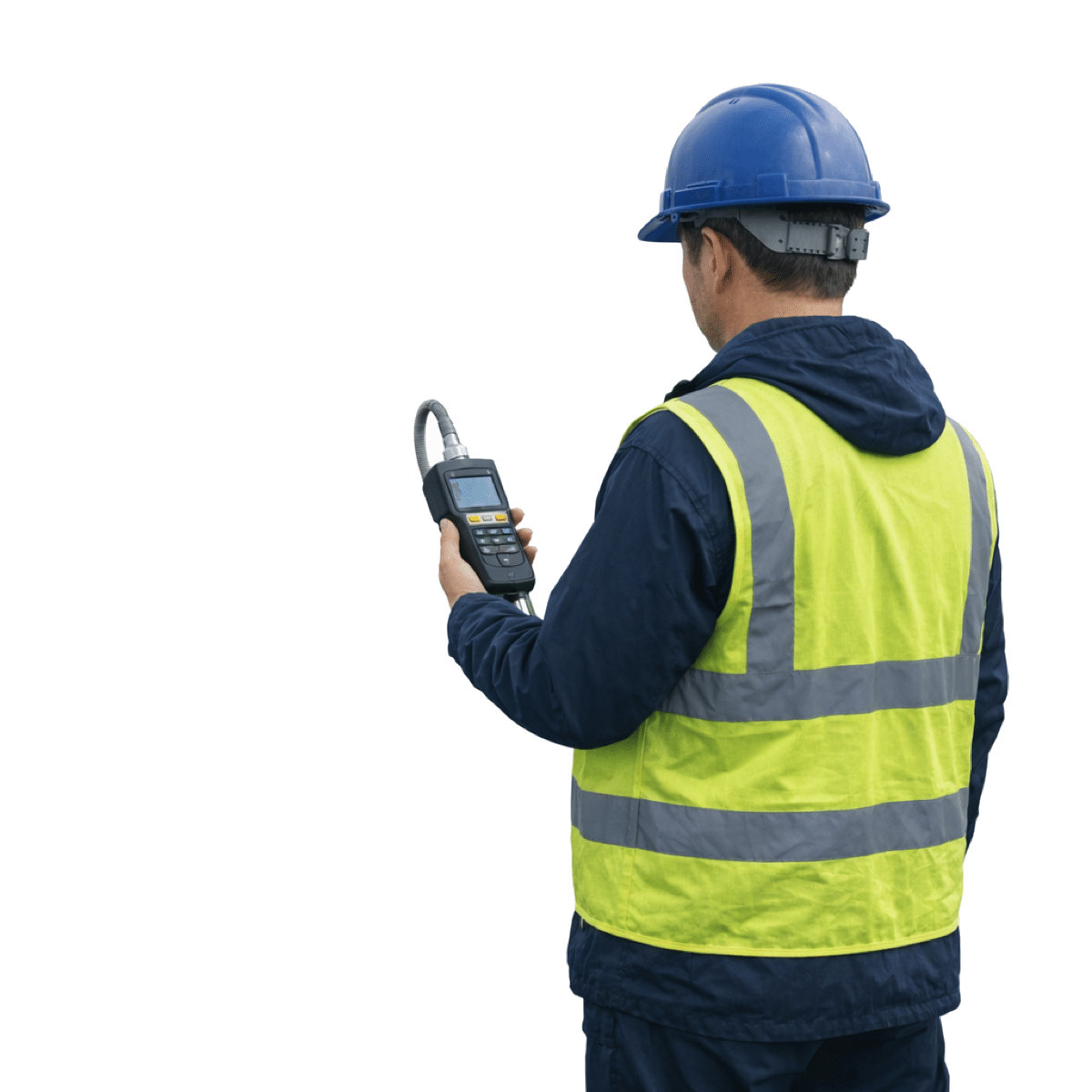
Get VOC Application Consultation
Our application engineers specialize in FID, PID, and GC-MS selection, EPA Method 21 / 25A and TO-15 compliance, and PID correction-factor guidance.


